TagSAMP(217)
Articles tagged with the Sustainable Airport Master Plan.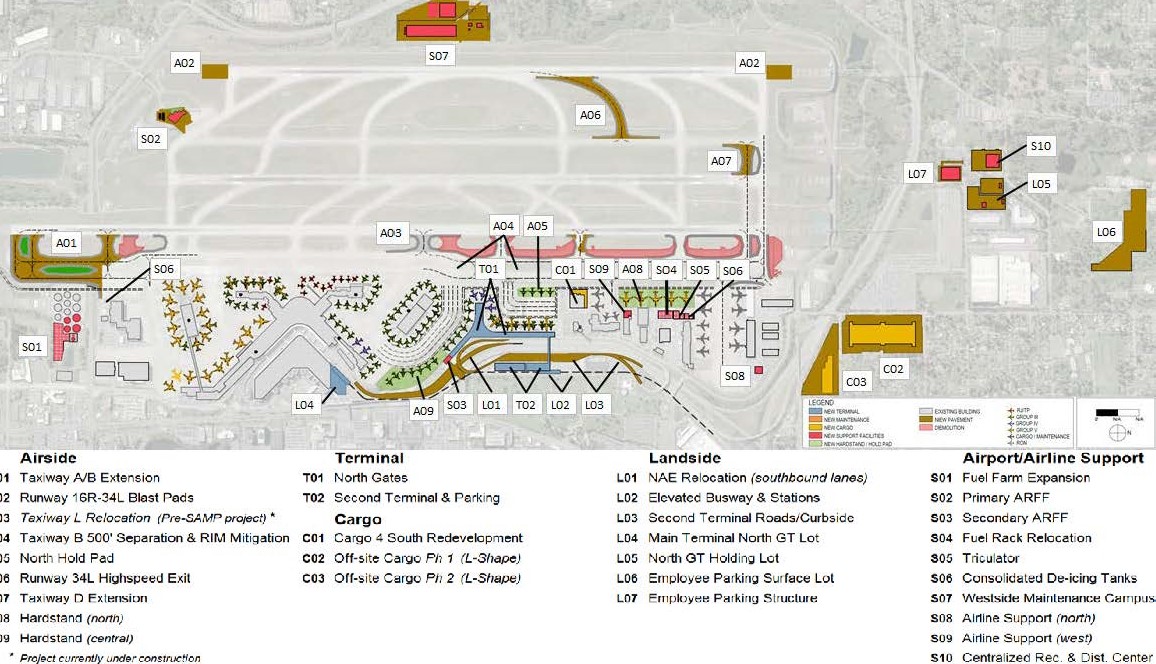
-
 2018-05-15 00:00
SAMP Executive Summary Leigh Fisher
-
 2018-05-07 00:00
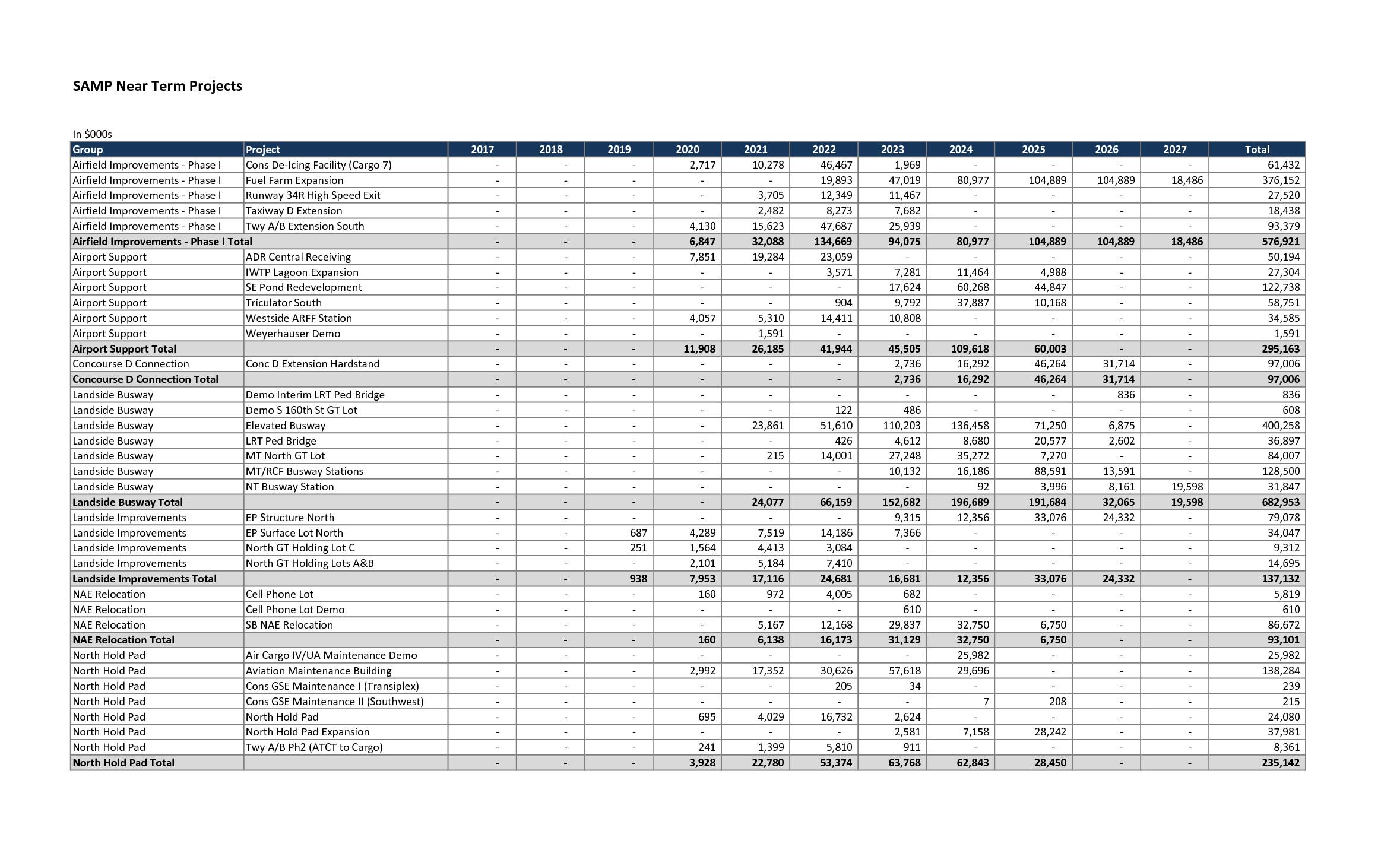
SAMP Near Term Projects Phase 1
10/15/18 Per the Director of Aviation Finance and Budget: I am attaching the budget for Phase 1 of SAMP, and the analysis of the potential impacts modeled under three scenarios presented to the commission at a work session on May 7, 2018. The commission presentation shows the potential CPE impacts for each of the three -
 2018-03-12 00:00
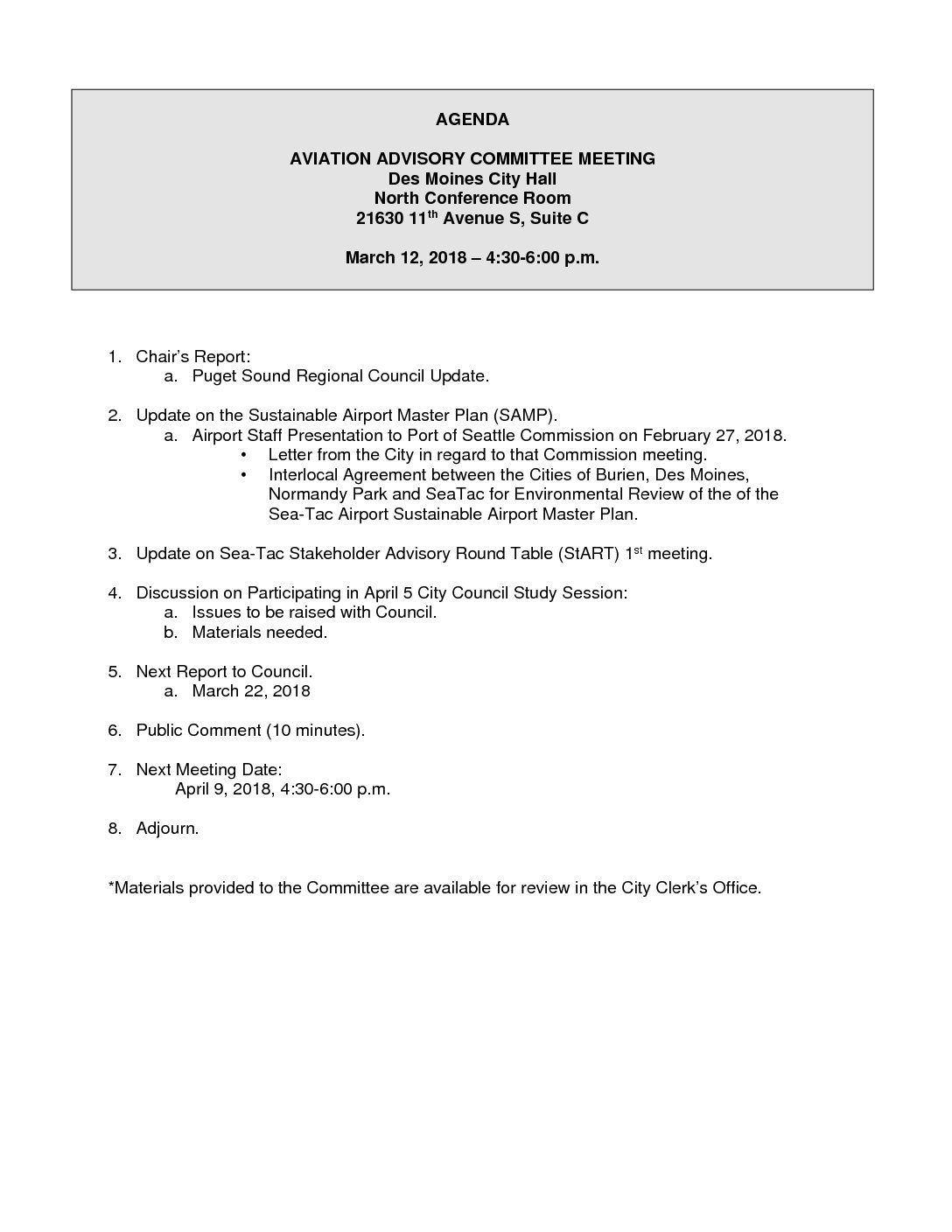
Des Moines Aviation Committee 03/12/18
2. Update on the Sustainable Airport Master Plan (SAMP). a. Airport Staff Presentation to Port of Seattle Commission on February 27, 2018. • Letter from the City in regard to that Commission meeting. • Interlocal Agreement between the Cities of Burien, Des Moines, Normandy Park and SeaTac for Environmental Review of the of the Sea-Tac Airport Sustainable Airport Master Plan. 3. Update on Sea-Tac Stakeholder Advisory Round Table (StART) 1st meeting. 4. Discussion on Participating in April 5 City Council Study Session: a. Issues to be raised with Council. b. Materials needed. 5. Next Report to Council. a. March 22, 2018 6. Public Comment (10 minutes). 7. Next Meeting Date: April 9, 2018, 4:30-6:00 p.m. 8. Adjourn. *Materials provided to the Committee are available for review in the City Clerk’s Office. AGENDA AVIATION ADVISORY COMMITTEE MEETING Des Moines City Hall North Conference Room 21630 11th Avenue S, Suite C March 12, 2018 – 4:30-6:00 p.m. -
 2017-07-25 00:00
SAMP Update Washington State Transportation Commission July 25, 2017
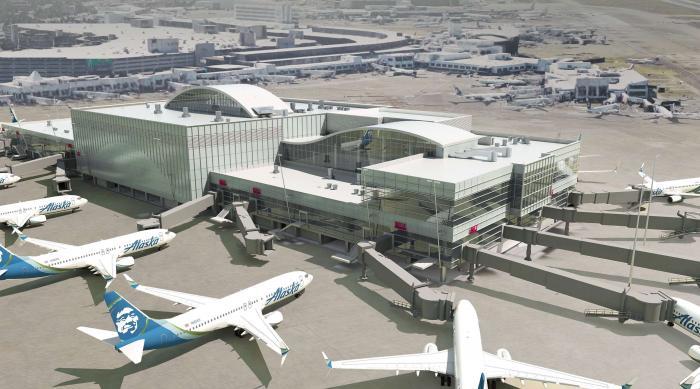
• $220 million in retail and service sales • 170,000 jobs related to airport activity 2015 2016 Sea-Tac Airport Today NorthSTAR – North Satellite Renovation • North Satellite Renovation • Increase gates from 12 to 20 • Add 180,000 sq ft • Double dining and retail space • Renovated interior to be cost-effective, environmentally friendly, & express NW culture Budget: $636,000,000 Projected Opening: 2021 Begin Work in 2016 South Satellite Renovation • Structural (Seismic) Upgrades • HVAC Upgrades • LEED • Improved/positive passenger experience • Interior Renovations • Repurposing of current Federal Inspection Service Space • Airport Dining and Retail Upgrades Construction Schedule Early Works: 2020 – 2022 Major Construction: 2022 – 2026 Budget: TBD Baggage Optimization • Existing configuration is at capacity • Current system inflexible for airline relocation • Improved configuration will accommodate airport growth • New system will support airline and gate relocation -
 2017-02-03 20:46
Sea-Tac Airport breaks ground on multi-million dollar expansion
North Terminal will gain 201,000 sq. ft.; Dining and shopping areas will expand 02/03/2017 Officials from the Port of Seattle and Sea-Tac Airport broke ground on Feb. 3 on a multi-million dollar project that will expand and update much of the facility’s aging North Satellite plus double the dining and shopping areas. More than 201,000 -
2017-01-30 22:34
Sea-Tac Airport Sustainable Airport Master Plan Update
The Port of Seattle’s Sustainable Airport Master Plan (SAMP) is wading through a process to plan for airport growth for passenger and cargo service at Seattle-Tacoma International Airport over the next 20 years. The plan looks at what types of actions should be taken to accommodate and mitigate growth of airport operations. The Port of -
 2016-11-06 00:00
Aviation Capacity Air Freight Meeting Notes
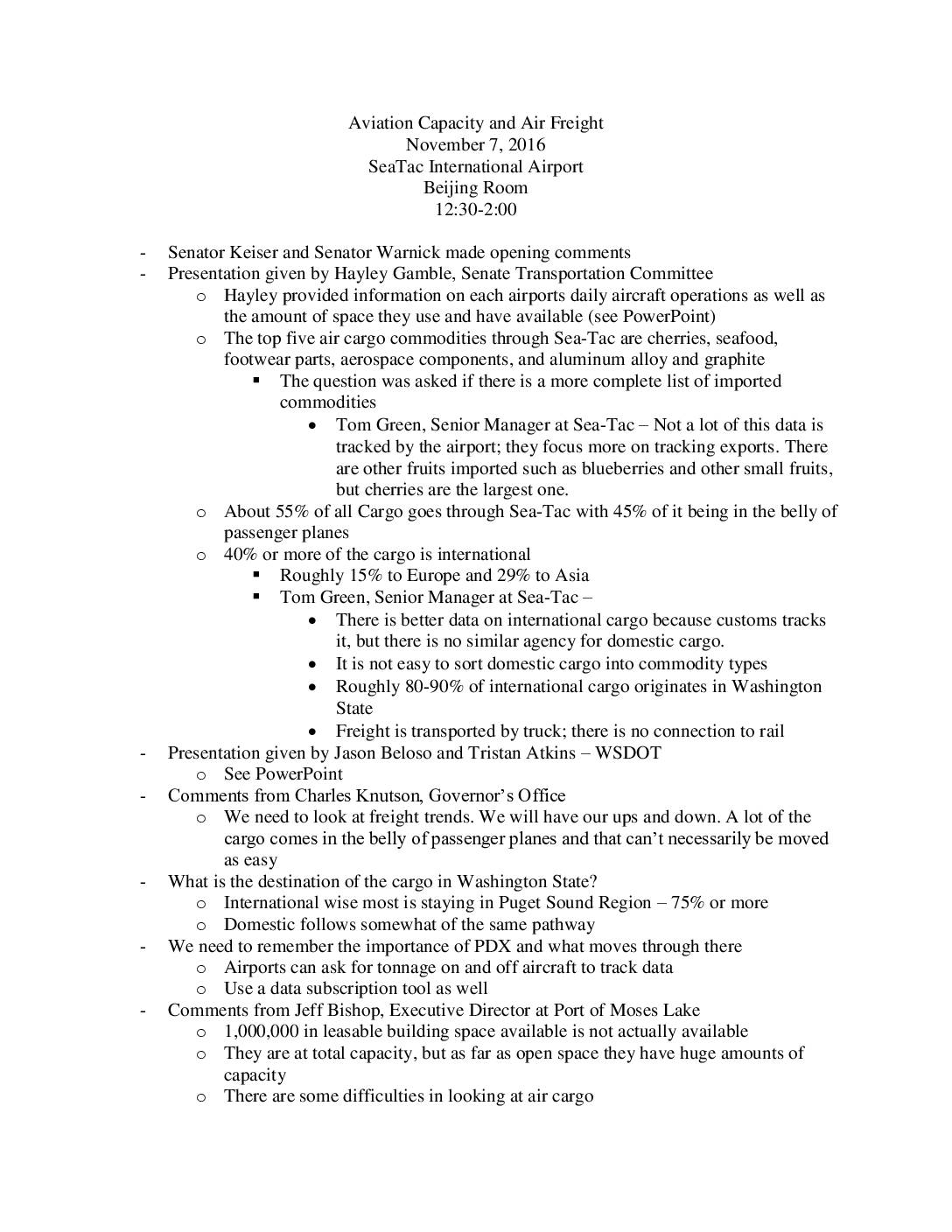
- Senator Keiser and Senator Warnick made opening comments - Presentation given by Hayley Gamble, Senate Transportation Committee o Hayley provided information on each airports daily aircraft operations as well as the amount of space they use and have available (see PowerPoint) o The top five air cargo commodities through Sea-Tac are cherries, seafood, footwear parts, aerospace components, and aluminum alloy and graphite The question was asked if there is a more complete list of imported commodities Tom Green, Senior Manager at Sea-Tac – Not a lot of this data is tracked by the airport; they focus more on tracking exports. There are other fruits imported such as blueberries and other small fruits, but cherries are the largest one. o About 55% of all Cargo goes through Sea-Tac with 45% of it being in the belly of passenger planes o 40% or more of the cargo is international Roughly 15% to Europe and 29% to Asia Tom Green, Senior Manager at Sea-Tac – There is better data on international cargo because customs tracks it, but there is no similar agency for domestic cargo. It is not easy to sort domestic cargo into commodity types Roughly 80-90% of international cargo originates in Washington State Freight is transported by truck; there is no connection to rail - Presentation given by Jason Beloso and Tristan Atkins – WSDOT o See PowerPoint - Comments from Charles Knutson, Governor’s Office o We need to look at freight… -
2016-10-09 23:37
Seattle-Tacoma Airport Master Plan Development
Seattle-Tacoma (Sea-Tac) International Airport, one of the fastest growing and busiest airports in the US, served more than 42 million passengers and 332,000 metric ton (mt) of air cargo in 2015. Project Type Airport master plan Location Seattle-Tacoma International Airport, Washington, US Estimated Investment $1.645bn Start of Construction Q1 2017 Expected Completion 2021 Seattle-Tacoma (Sea-Tac) -
 2016-07-20 00:00
SAMP Presentation to Washington State Transportation Commission July 20, 2016
Washington State Transportation Commission| July 20, 2016 Major Current Projects: • North Satellite Expansion • International Arrivals Facility • 16C Reconstruction • Baggage System Reconstruction Fastest Growing Large Hub Airport in the U.S. Sea-Tac Airport Today 37.5 million passengers Up 7.7% 340,000 flight operations Up 7.3% 42.3 million passengers Up 12.9% 381,000 flight operations Up 12% • $220 million in retail and service sales • 170,000 jobs related to airport activity 2014 2015 Region’s Economy Driving Rapid Growth in Recent Years Master Plan -- Unconstrained Activity Forecast What is Needed to Meet Demand Airfield • Increase 88 operations per hour to 120 without adding runways • Move more planes faster with more gates and aircraft Terminal • Adding 8 gates now to the existing 92 gates o Still need 35 more gates • Add hold rooms and security processing for 43 new gates while handling existing passenger traffic • Potentially build a second terminal to serve most of the new gates Landside • Remove bottlenecks and chokepoints on roadways and drives • Plan for roadway network to serve potential second terminal Unconstrained Forecast Implications Environmental, Airspace, and Land Use Constraints Limit Expansion Options Development Constraints Planning Process Resulting in Capital Program and Plan of Finance Master Plan Context Long-range plan (e.g. SAMP) • Campus-wide, comprehensive plan • Facility requirements in 5-year increments to 20 years • Alternatives analysis • Narrow to Preferred Alternative(s) • 20-year facilities development plan o Balance capacity to 3-runway airfield o Phasing plan for level…