TagBAC(100)
-
 2024-05-06
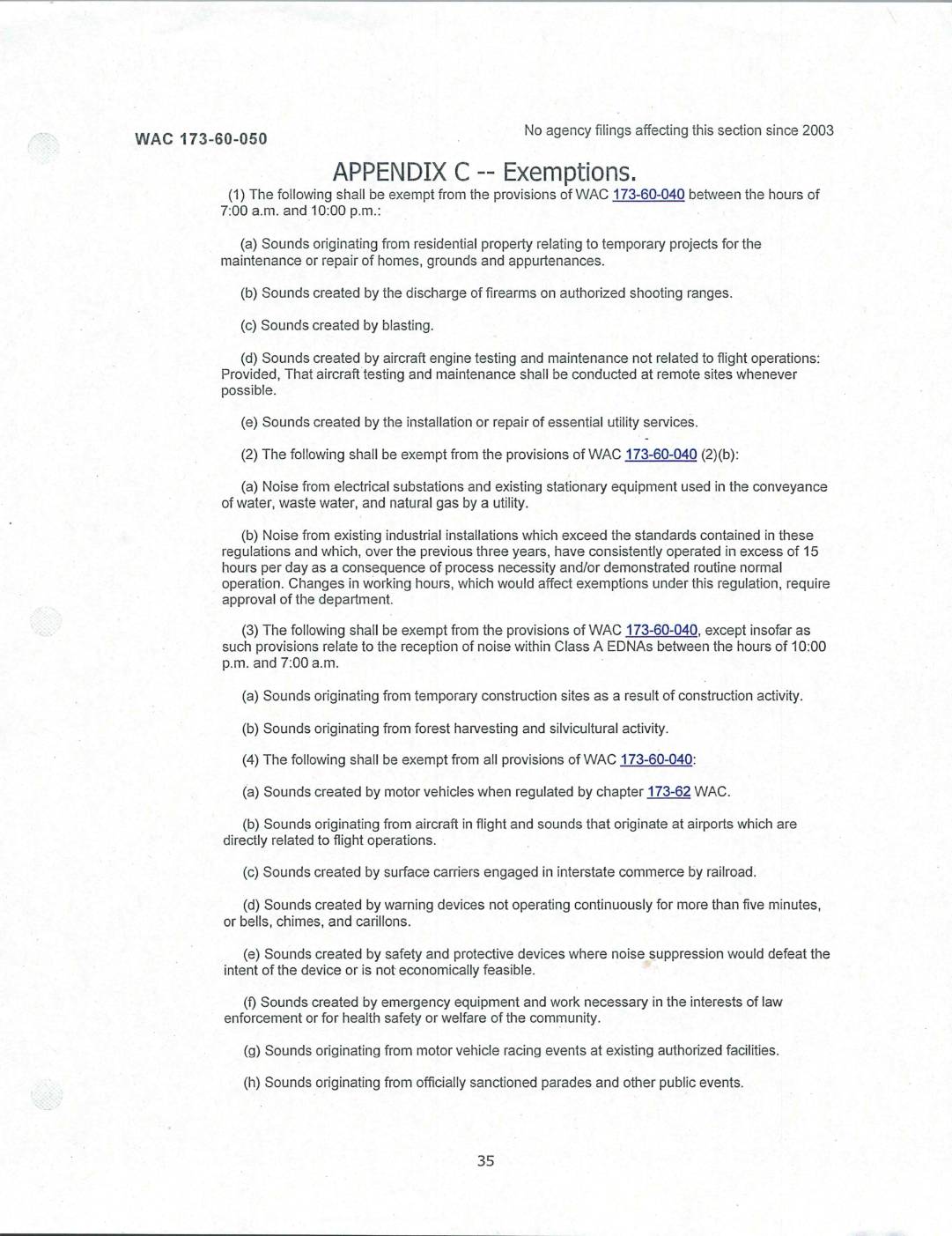
WAC 173-60-050 appendix C — Exemptions
This document covers Washington State noise regulation exemptions under WAC 173-60-050, listing activities exempt from standard noise limits—such as construction, aircraft flight operations, emergency equipment, hunting, and railroad traffic—along with time-based conditions (e.g., 7 a.m. to 10 p.m.) that apply to some exemptions. It also includes a Growth Management Act county map showing which Washington counties are mandated to plan, opting to plan, or planning only for critical areas and resource lands. Together, these materials provide regulatory context for noise policy and land-use planning relevant to airport-adjacent communities like those near Sea-Tac. -
 2024-05-06
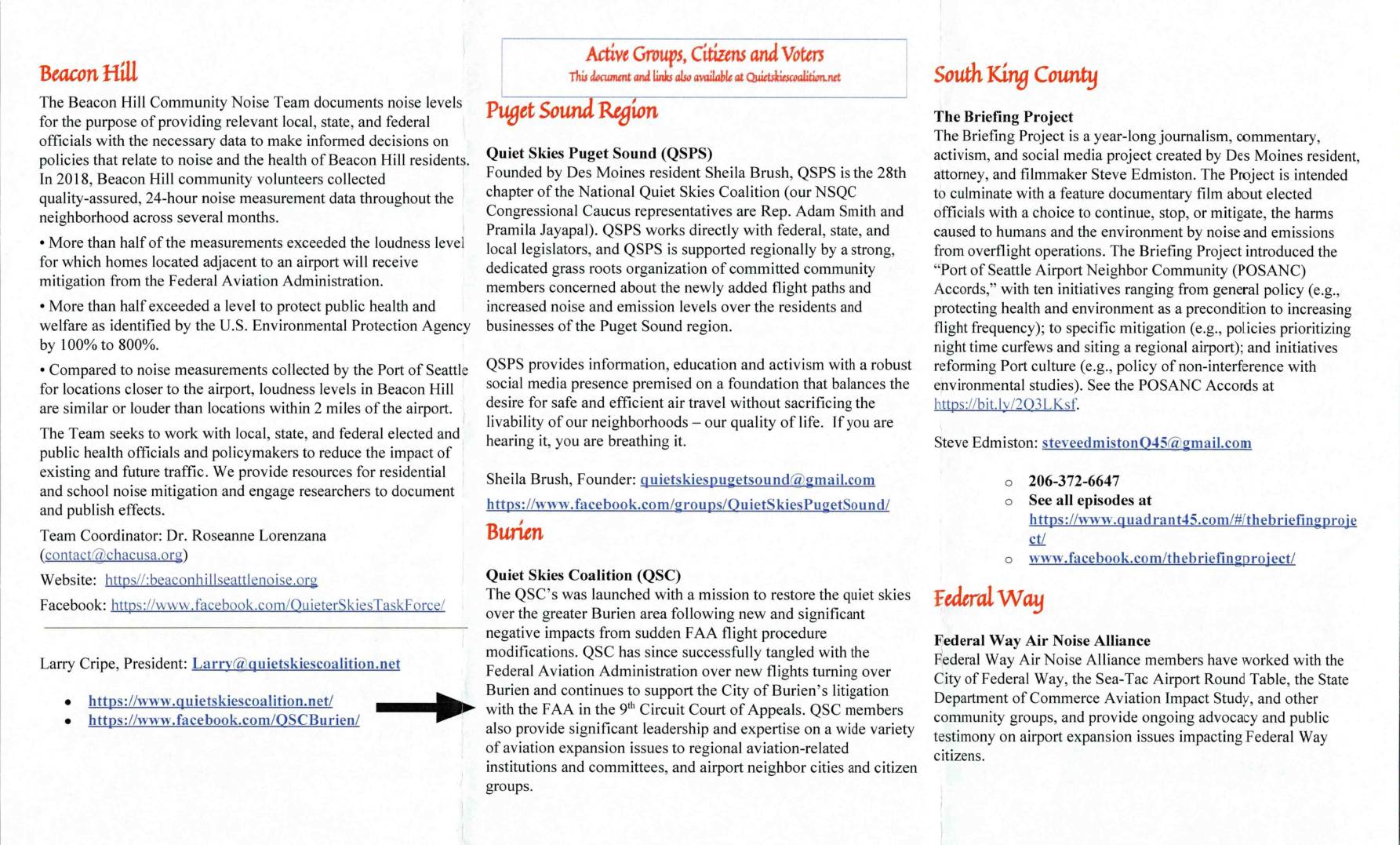
Active groups, citizens and voters
This document profiles multiple community groups across the greater Seattle-Puget Sound region that are actively working to address noise and air pollution caused by increased air traffic around Sea-Tac International Airport. Groups such as the Beacon Hill Community Noise Team, Quiet Skies Coalition, and North End Neighbors Airplane Noise Group document noise levels, engage with federal and local policymakers, and pursue legal and legislative remedies against FAA flight path decisions. Their efforts range from collecting scientific noise data and producing documentary films to filing litigation and advocating for night-time curfews and regional airport alternatives. -
 2024-05-06
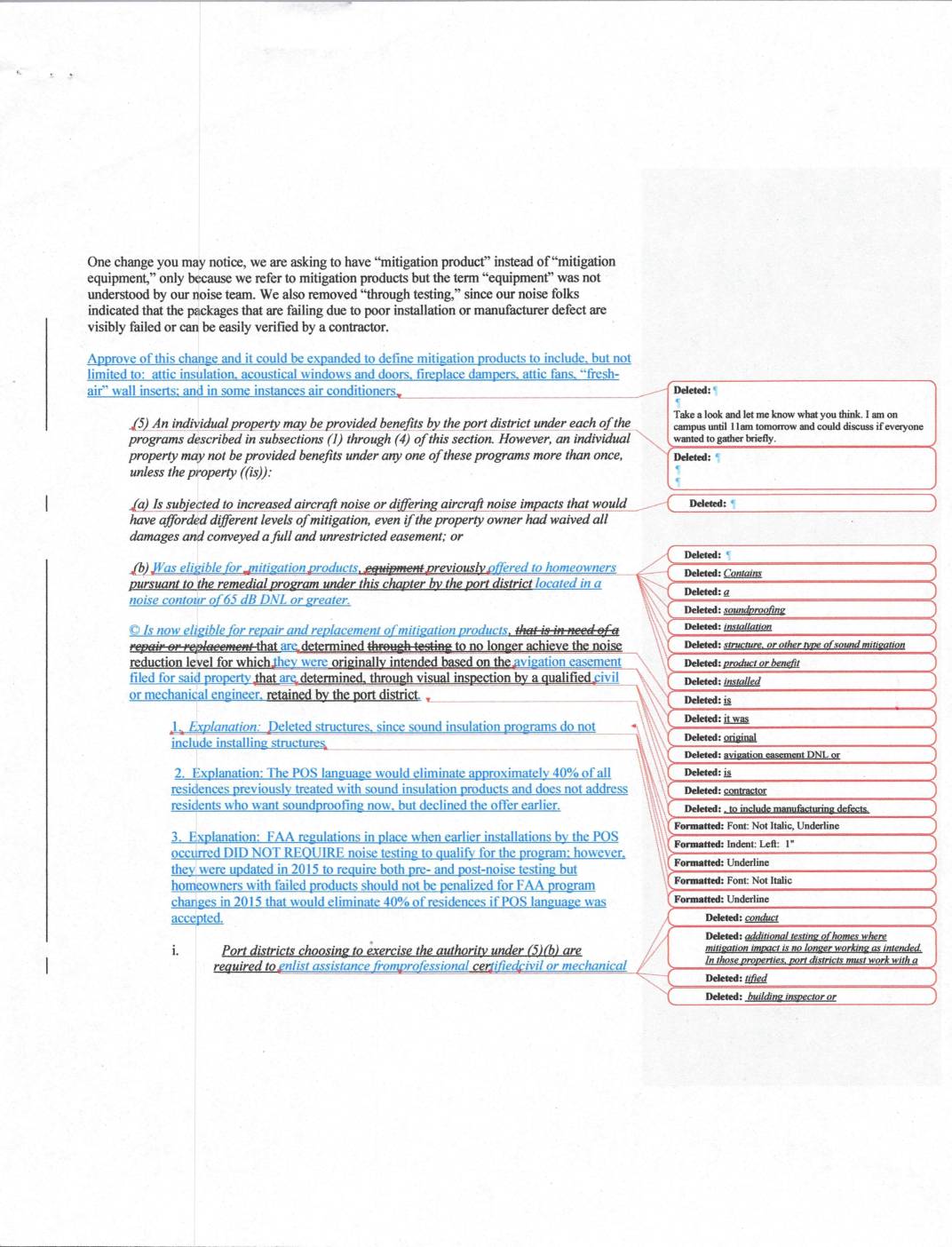
Proposed language changes to noise mitigation product repair and replacement program
This document outlines proposed changes to Washington State legislation governing airport noise mitigation programs, replacing the term 'mitigation equipment' with 'mitigation product' and expanding the definition to include items such as acoustical windows, attic insulation, and air conditioners. It addresses eligibility rules allowing previously treated properties to receive repeat benefits when mitigation products have visibly failed or no longer achieve their intended noise reduction levels, and argues that homeowners should not be penalized by 2015 FAA testing requirement changes that would otherwise disqualify approximately 40% of previously treated residences. The document also recommends that qualified civil or mechanical engineers, rather than general contractors, be enlisted to assess whether product failures have caused additional hazards or structural damage. -
 2024-05-06
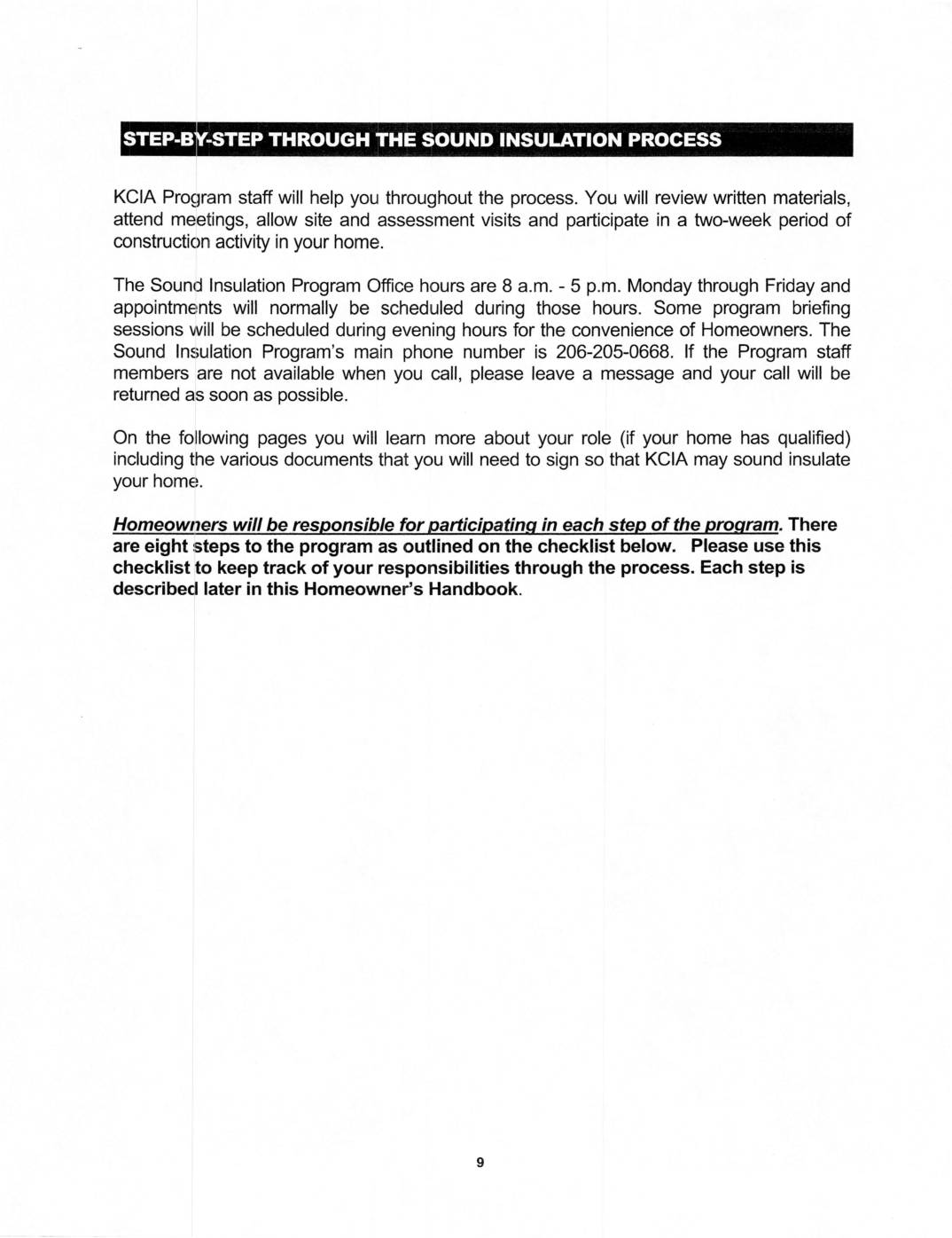
Step-by-step through the sound insulation process
This document outlines the step-by-step Sound Insulation Program offered by King County International Airport (KCIA) to eligible homeowners affected by aircraft noise near Sea-Tac Airport. Participation is free and voluntary, involving eight key steps: attending a homeowner briefing, submitting required paperwork, completing assessment visits, approving a scope of work, signing a program contract and avigation easement, coordinating construction, completing a final inspection, and submitting a post-construction survey. Homeowners can contact the program office at 206-205-0668 during business hours for assistance or to make alternative arrangements if they cannot attend scheduled briefings. -
 2024-05-06
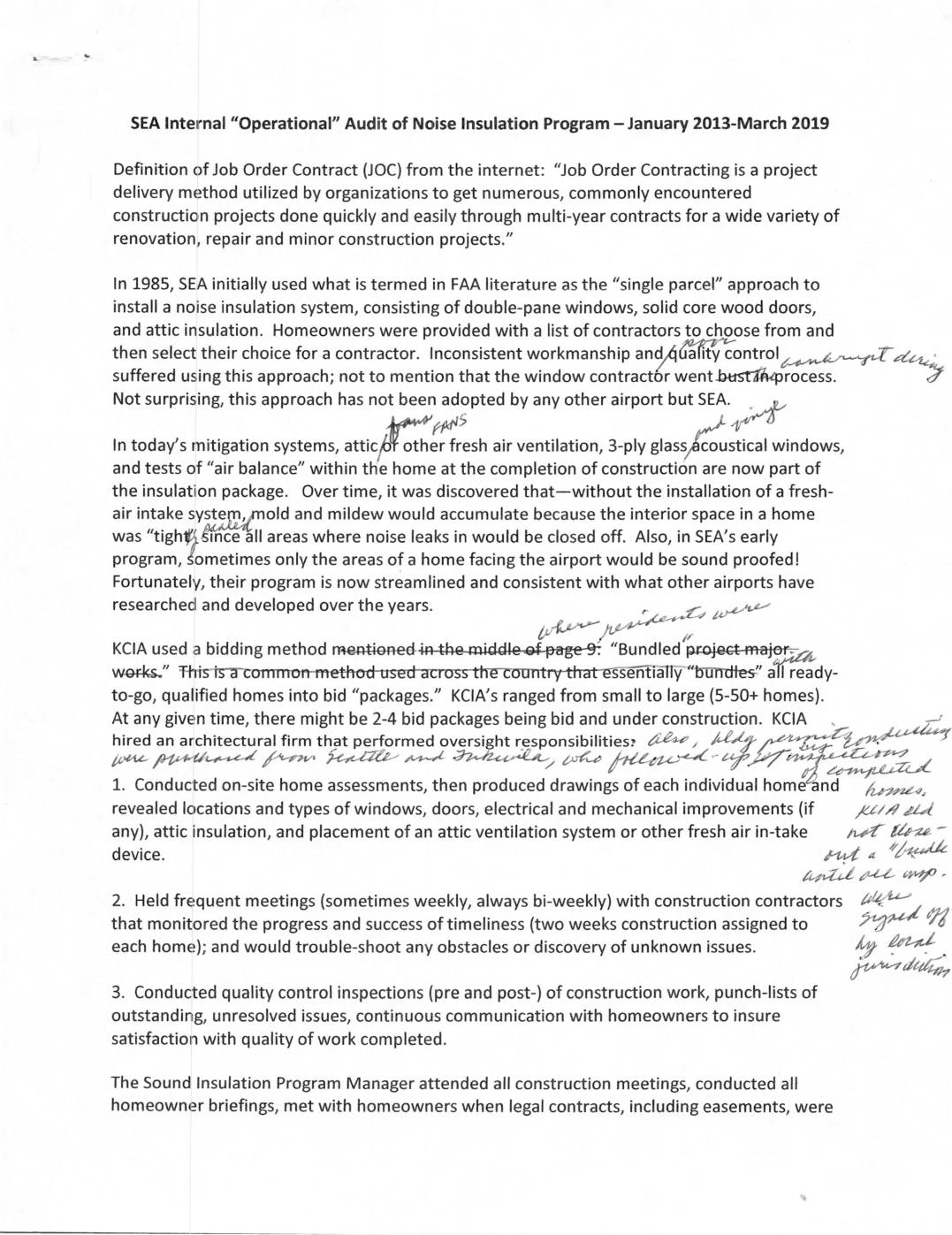
SEA internal “operational” audit of noise insulation program – January 2013-March 2019
This internal audit reviews Sea-Tac Airport's (SEA) Noise Insulation Program from January 2013 to March 2019, comparing its construction and management practices to those of other airports. The audit finds recurring problems with inconsistent workmanship, weak internal accountability, and poor communication between management, contractors, and homeowners dating back to the program's origins in 1985. Key recommendations emphasize the need for more frequent oversight, stronger payment controls, and clearer reporting standards to improve program efficiency and homeowner satisfaction. -
 2024-05-06
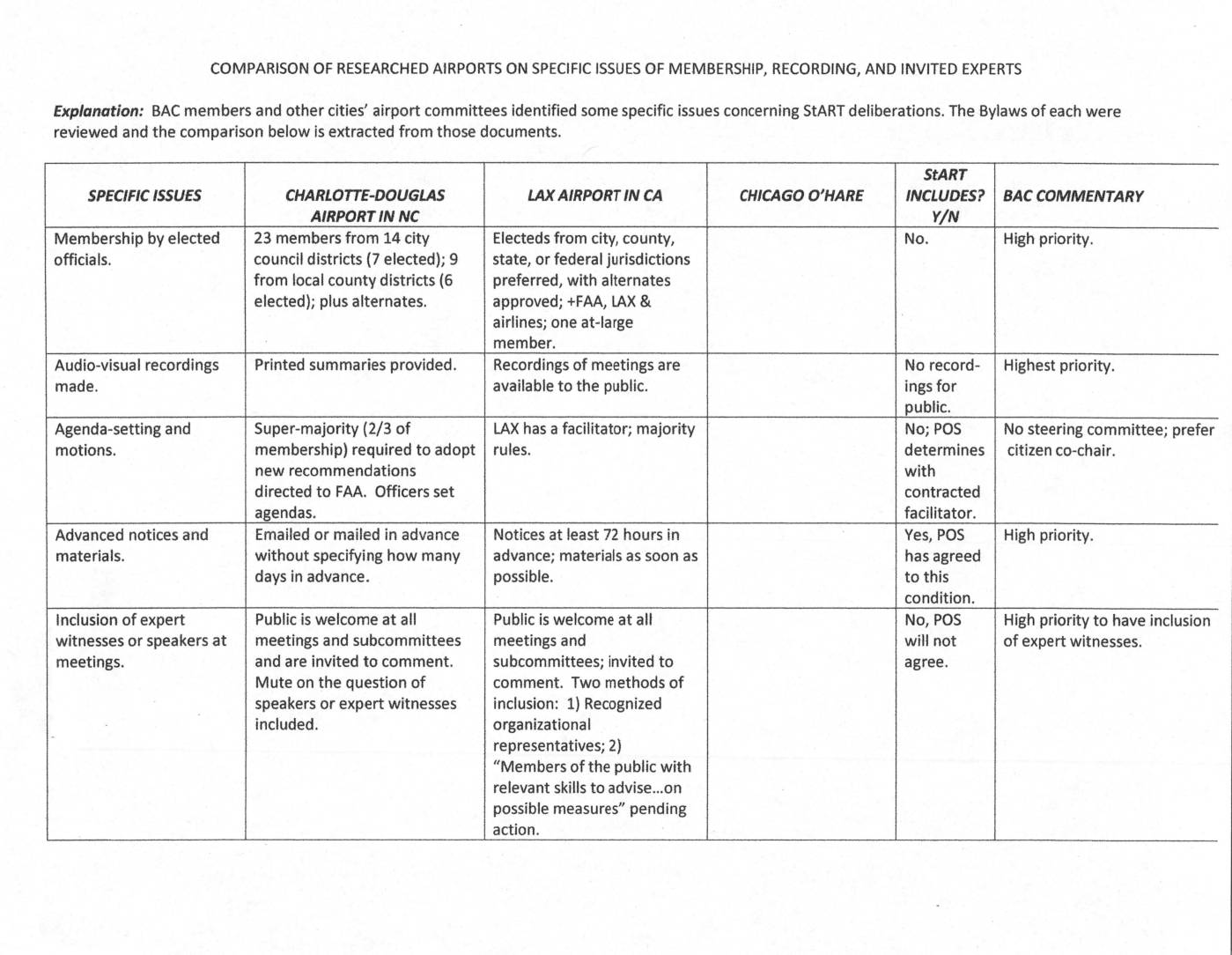
Comparison of researched airports on specific issues of membership, recording, and invited experts
This document compares how three major airports — Charlotte-Douglas (NC), Los Angeles (LAX), and Chicago O'Hare — structure their community noise roundtable committees, covering issues such as elected-official membership, public audio-visual recordings, agenda-setting procedures, advance notice requirements, and inclusion of expert witnesses. The comparison was prepared by the BAC (Boeing Airport Committee) to inform the development of Sea-Tac's StART (Sea-Tac Airport Roundtable) process, highlighting where the airport's operating partner (POS) agreed or refused to adopt practices used elsewhere. Key findings show that LAX's model — featuring public recordings, 72-hour advance notices, and two pathways for expert public participation — was rated highest priority for adoption, while POS declined to allow recordings or invite expert witnesses. -
 2024-05-06
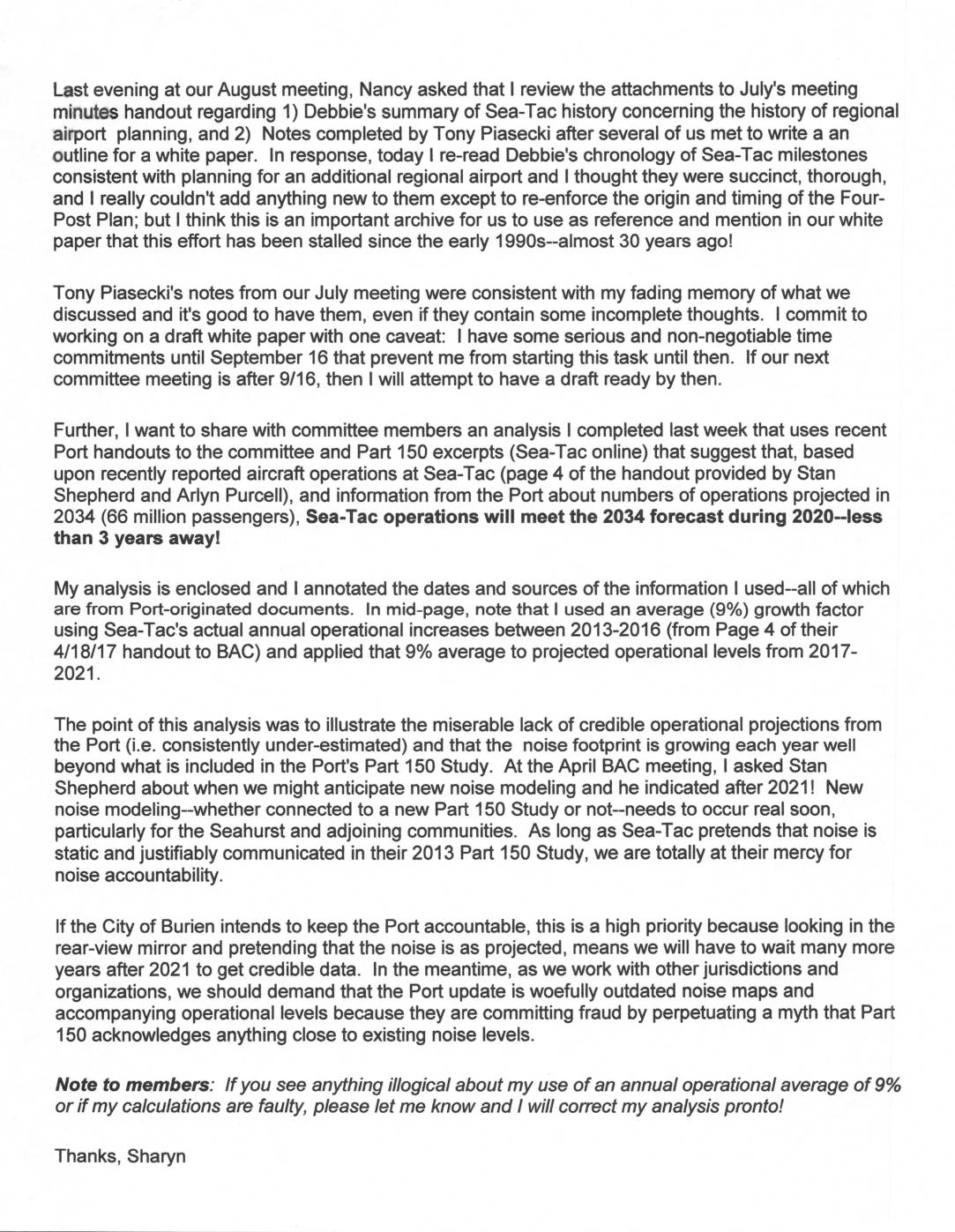
Sharyn’s analysis of Sea-Tac operational levels and noise modeling concerns
A Burien Airport Committee member named Sharyn argues that Sea-Tac Airport's 2013 Part 150 noise study is dangerously outdated, as actual flight operations have been growing at roughly 9% per year — far outpacing the Port's own projections. Her analysis suggests Sea-Tac will reach its 2034 capacity forecast as early as 2020, meaning real noise impacts on surrounding communities like Seahurst are already well beyond what official noise maps show. She calls on the City of Burien to demand that the Port update its noise modeling immediately rather than waiting until after 2021. -
 2024-02-05
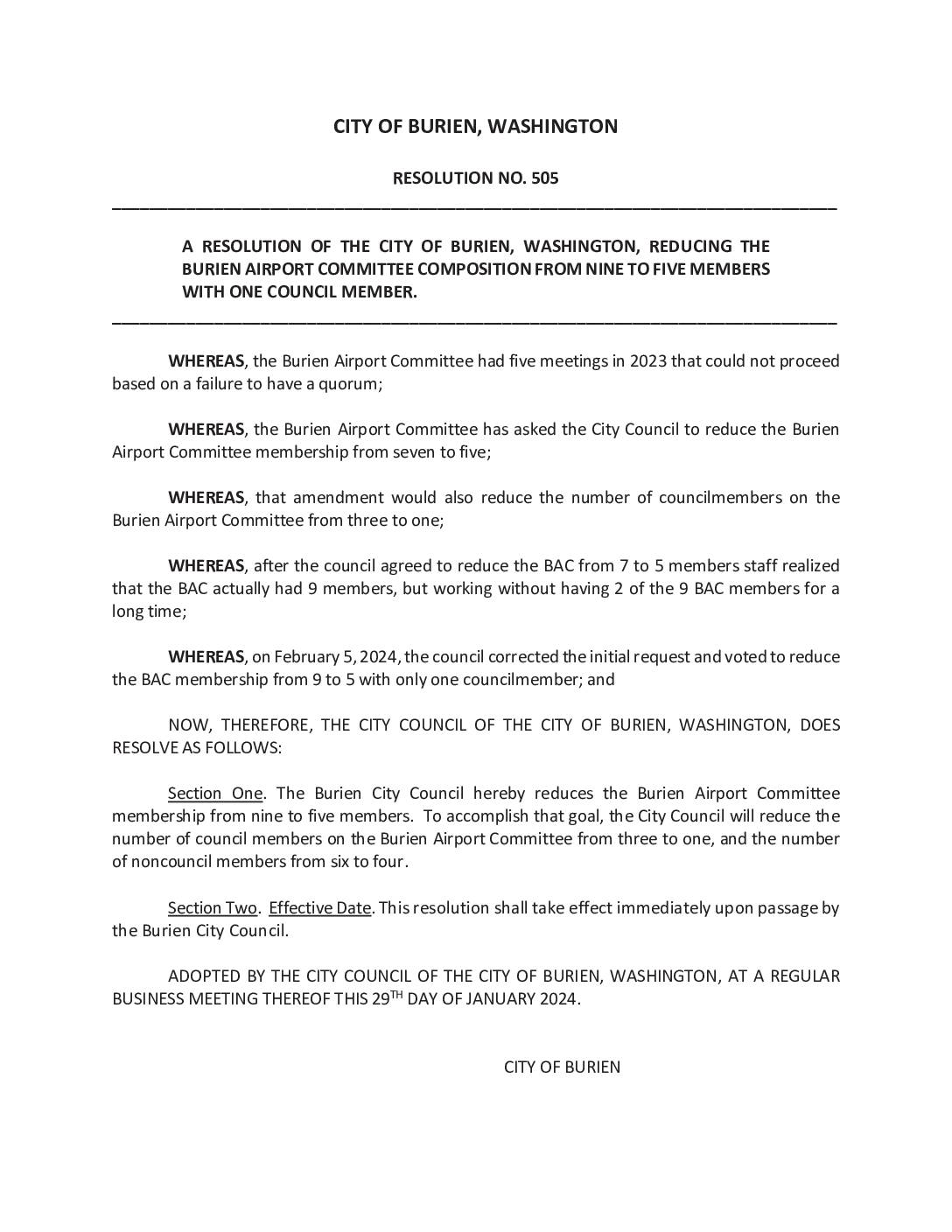
Resolution No. 505: Reducing the Burien Airport Committee composition from nine to five members with one council member
The City of Burien, Washington passed Resolution No. 505 in early 2024 to shrink the Burien Airport Committee (BAC) from nine members down to five, including reducing council representation from three members to one. The change was prompted by the committee's repeated inability to hold meetings in 2023 due to a lack of quorum. The restructured committee will consist of one council member and four non-council members. -
 2023-05-01
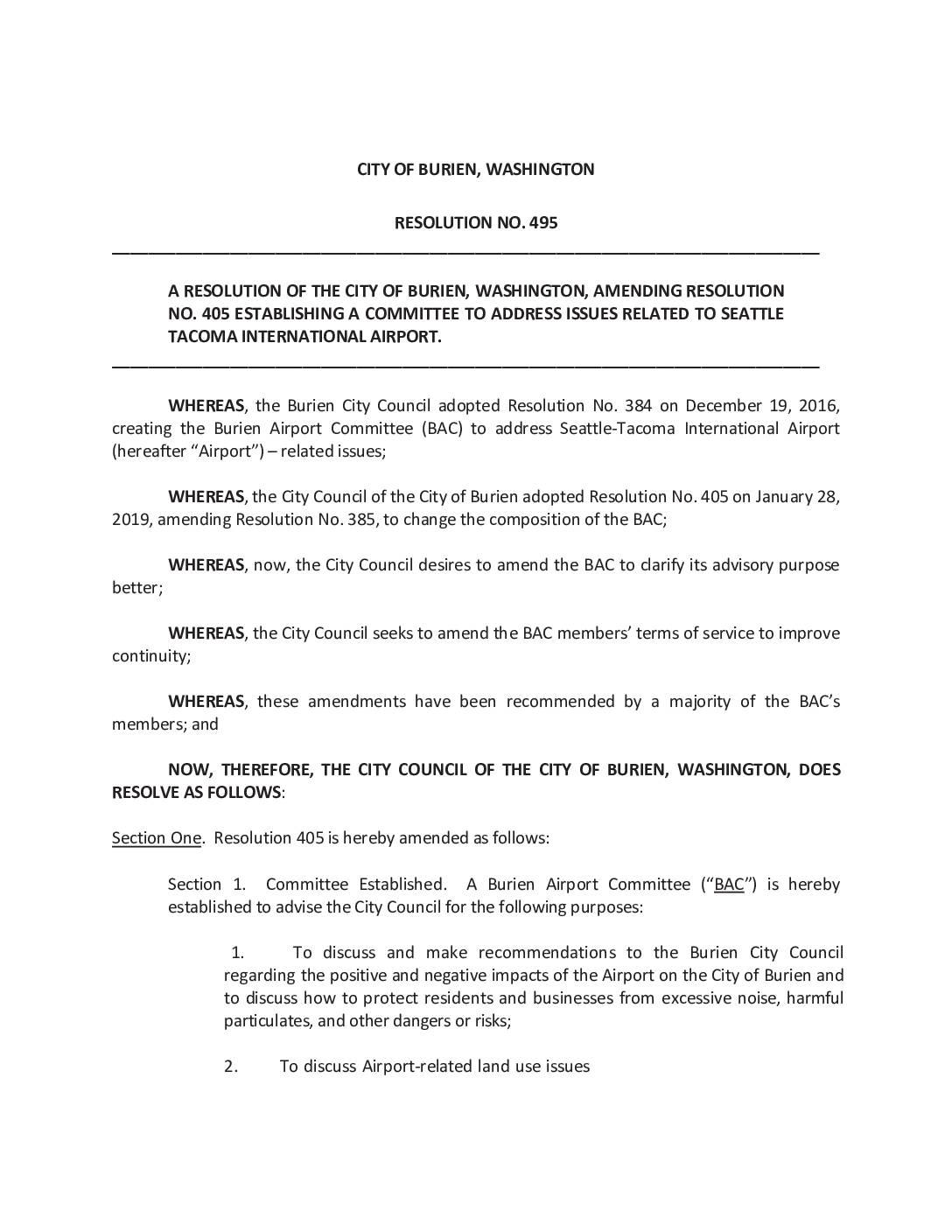
Resolution No. 495: A resolution of the City of Burien, Washington, amending Resolution No. 405 establishing a committee to address issues related to Seattle Tacoma International Airport
The City of Burien, Washington passed Resolution No. 495 on May 1, 2023, updating the structure and purpose of its Burien Airport Committee (BAC), an advisory body focused on Seattle-Tacoma International Airport issues. The resolution clarifies the BAC's role in advising the City Council on airport noise, harmful particulates, land use, traffic impacts, and related agreements with the Port of Seattle. It also adjusts committee membership rules, setting terms of two years for up to six resident and business representatives alongside one to three Councilmembers. -
 2023-03-21
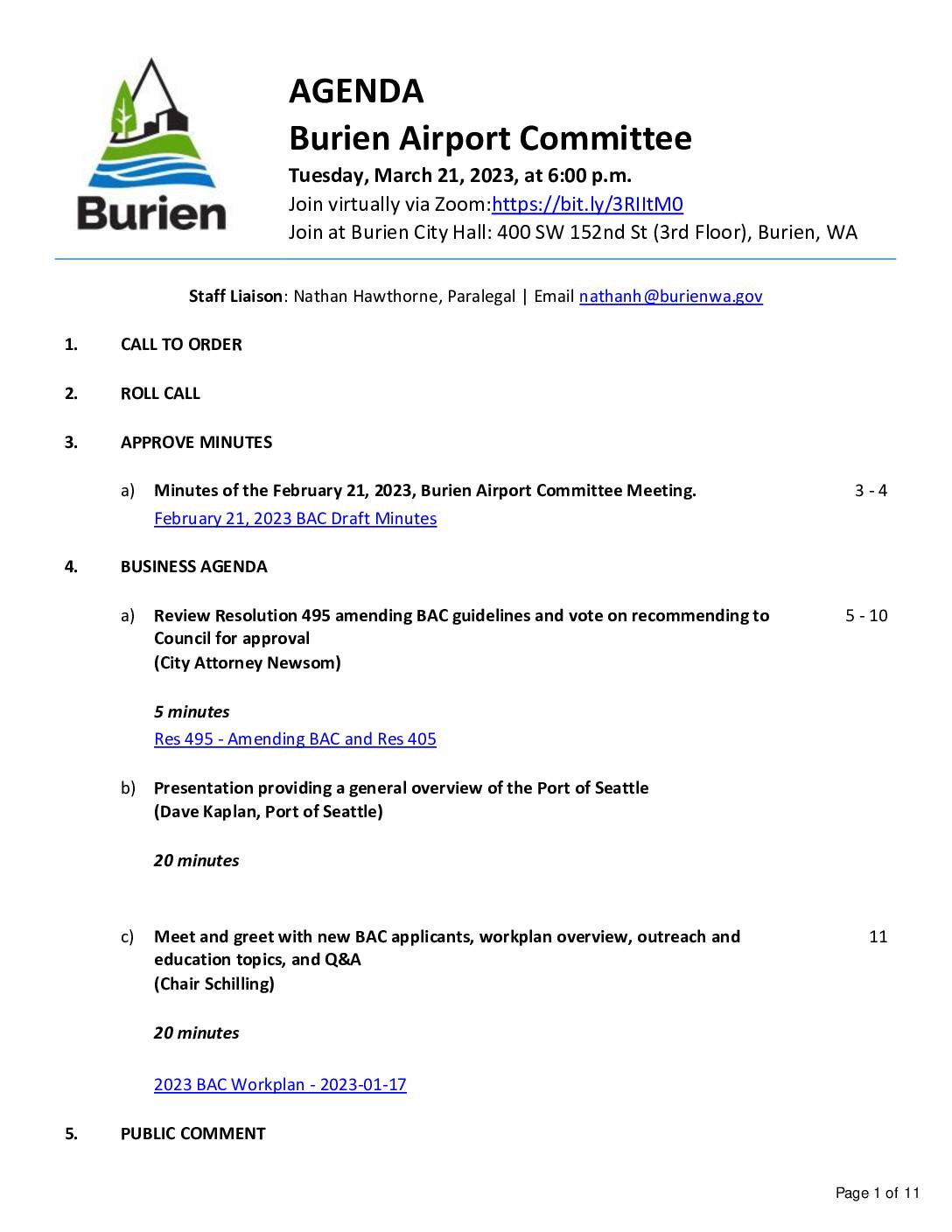
Burien Airport Committee agenda, March 21, 2023
The Burien Airport Committee held its March 21, 2023 meeting to review and vote on Resolution 495, which proposed amendments to the committee's governing guidelines, and to receive a general overview presentation about the Port of Seattle. The agenda also included a meet-and-greet with new committee applicants and a discussion of the 2023 workplan focused on outreach and education related to Sea-Tac Airport noise issues. Draft minutes from the February 21, 2023 meeting were also reviewed, reflecting prior discussions on committee structure and a U.S. Senate Commerce Committee request for policy priorities on aviation matters.