TagWashington State Department Of Health(16)
-
 2015-08-01
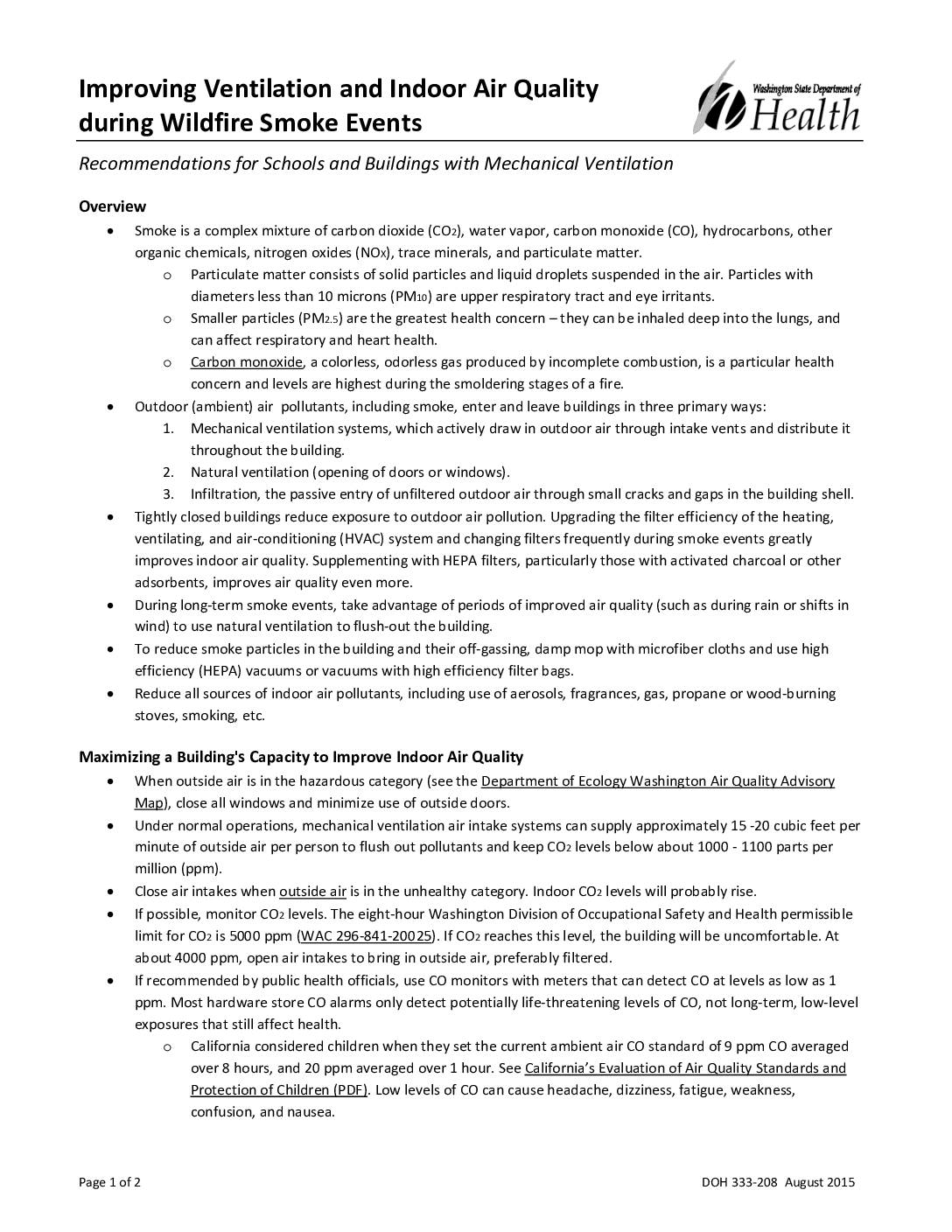
Improving ventilation and indoor air quality during wildfire smoke events
This Washington State Department of Health guide provides recommendations for schools and buildings on how to maintain healthy indoor air quality during wildfire smoke events. It advises closing windows and air intakes when outdoor air quality is hazardous, upgrading HVAC filters, and using portable HEPA air cleaners to reduce fine particles and gases from smoke. Building managers are also encouraged to monitor carbon dioxide and carbon monoxide levels indoors and take steps to flush out buildings during periods of improved outdoor air quality. -
 2006-01-01
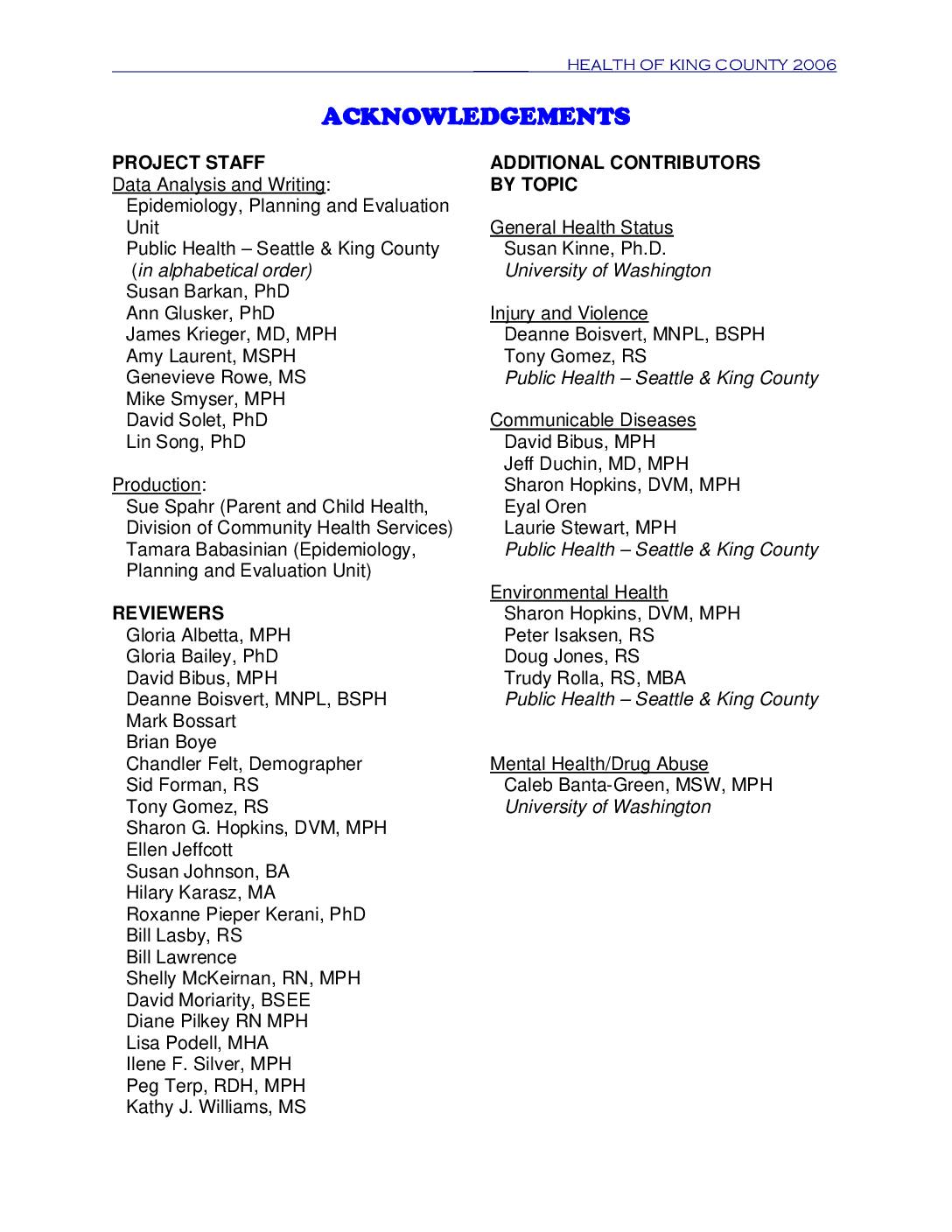
Health of King County 2006
The Health of King County 2006 report provides a broad overview of the health status of King County, Washington residents, drawing on public health data from vital records, hospital discharges, and surveys. While King County residents generally enjoy better health than the rest of Washington State and the US, the report highlights growing concerns including rising rates of obesity, diabetes, and chronic diseases such as cancer, heart disease, and stroke. Chronic diseases accounted for 21,000 hospitalizations in 2004 at a cost of $531 million, with cancer, heart disease, and stroke alone responsible for more than half of all deaths in the county. -
 2000-03-01
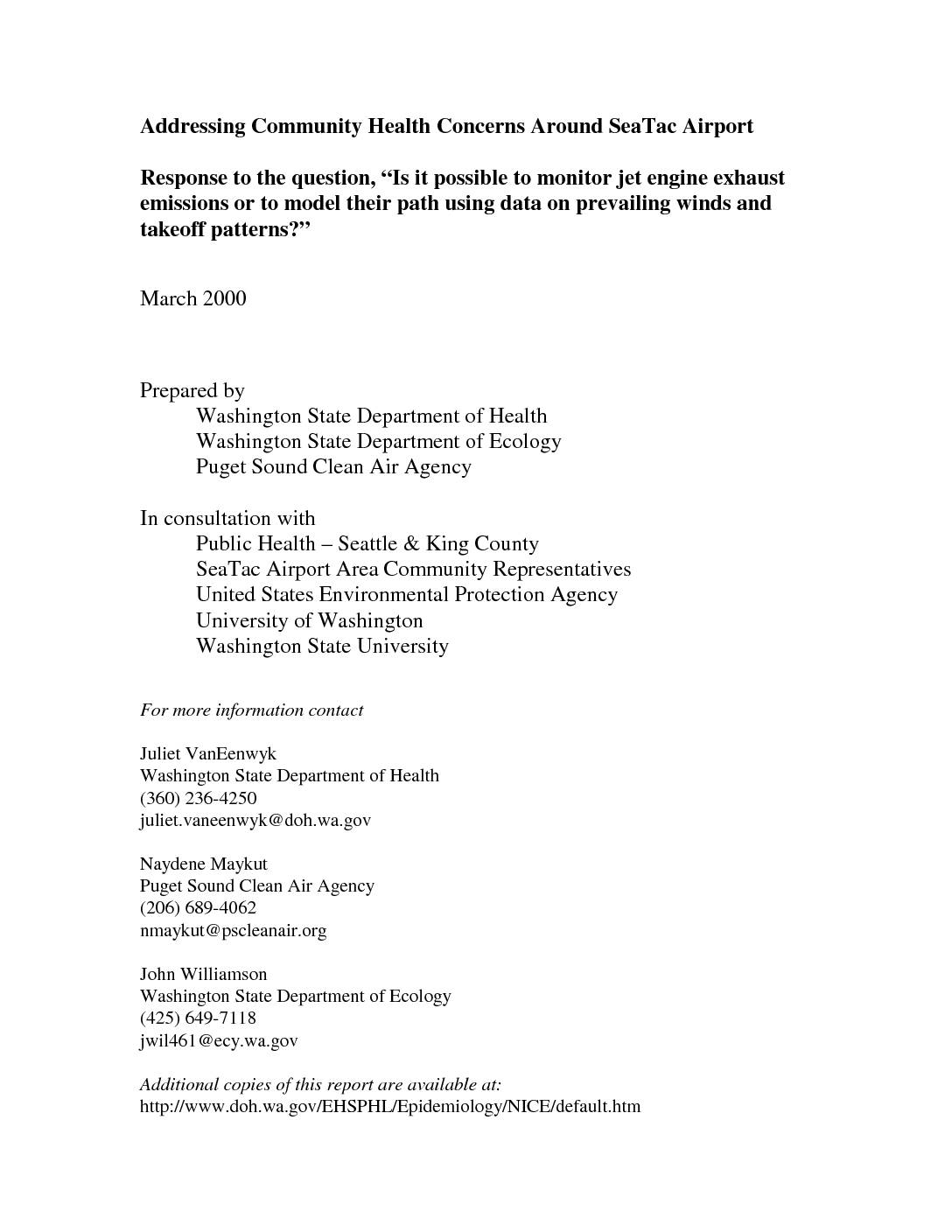
Addressing community health concerns around SeaTac Airport: Response to the question, ‘Is it possible to monitor jet engine exhaust emissions or to model their path using data on prevailing winds and takeoff patterns?’
This March 2000 report, prepared by Washington State health and environmental agencies, examines whether jet engine exhaust emissions from Seattle-Tacoma International Airport can be monitored or modeled using wind and takeoff data. It reviews previous air quality studies, outlines health and environmental justice concerns for nearby communities, and recommends a structured air quality monitoring study with specific methods, data analysis approaches, and estimated costs. The report was developed in consultation with community representatives, the EPA, and local universities. -
 1999-12-01
Addressing Community Health Concerns Around Sea-Tac Airport: Second Report on the Work Plan Proposed in August 1998
This December 1999 report from the Washington State Department of Health and Public Health – Seattle & King County examines community health concerns in neighborhoods surrounding SeaTac International Airport. It investigates whether cancer rates, particularly glioblastoma (a brain tumor) and breast cancer, are elevated near the airport, and explores potential links to jet engine exhaust emissions. The report also addresses respiratory health issues in local schools and outlines efforts to monitor or model the path of aircraft emissions over the surrounding communities. -
 1999-12-01
Addressing community health concerns around Sea-Tac Airport: Second report on the work plan proposed in August 1998
This December 1999 report from the Washington State Department of Health investigates community health concerns near Seattle-Tacoma (SeaTac) International Airport, focusing on whether cancer rates—particularly glioblastoma and breast cancer—are elevated in surrounding neighborhoods. The report examines potential links between jet engine exhaust emissions and health outcomes, reviews air quality studies, and assesses respiratory disease risks, especially for schools located under flight paths. It was prepared collaboratively by state and county public health officials alongside community representatives. -
 1998-08-01
The Health of King County: Highlights, August 1998
A 1998 public health report from the Seattle-King County Department of Public Health summarizing key health trends among King County residents. The report highlights both improvements, such as declining infant mortality, increased prenatal care access, falling teen birth rates, and reduced AIDS cases and sexually transmitted diseases, as well as ongoing challenges including chronic illnesses, drug-related deaths, smoking, obesity, and persistent health inequities across racial and socioeconomic groups.