TagRegional Aviation Baseline Study(27)
-
 2020-09-20
Regional Aviation Baseline Study
The Regional Aviation Baseline Study, produced by the Puget Sound Regional Council, examines the current state and future challenges of aviation in the Puget Sound region, covering scenario development, airport analysis, and public engagement. The study highlights near-term disruptions to air travel, noting that passenger volume at Seattle-Tacoma International Airport dropped to just 27% of normal levels during the COVID-19 pandemic, with daily travelers falling to 17,200 and aircraft operations declining from 1,160 to 840 takeoffs and landings per day. The findings provide a foundation for regional planning decisions related to airport capacity, operations, and policy. -
 2020-07-23
Regional Aviation Baseline Study Presentation
The Regional Aviation Baseline Study, conducted by the Puget Sound Regional Council, examines aviation activity and infrastructure across the Puget Sound region. The study covers scenario development, economic analysis, and a detailed assessment of the region's airports, including major facilities like Sea-Tac. It provides a foundational framework for understanding current and future aviation capacity, demand, and related policy considerations in the greater Seattle area. -
 2020-06-09
Regional Aviation Baseline Study
The Regional Aviation Baseline Study, conducted by the Puget Sound Regional Council, examines 29 airports across King, Snohomish, Kitsap, and Pierce counties to understand how aviation activities interact with communities and the broader regional economy. The study identifies each airport's role, gathers stakeholder input on aviation and airspace constraints, and establishes a foundation for future regional aviation planning. Sea-Tac Airport is the region's primary large hub, and the study provides context for understanding the broader network of aviation activity that shapes noise and land-use policy decisions across the central Puget Sound area. -
 2020-06-01
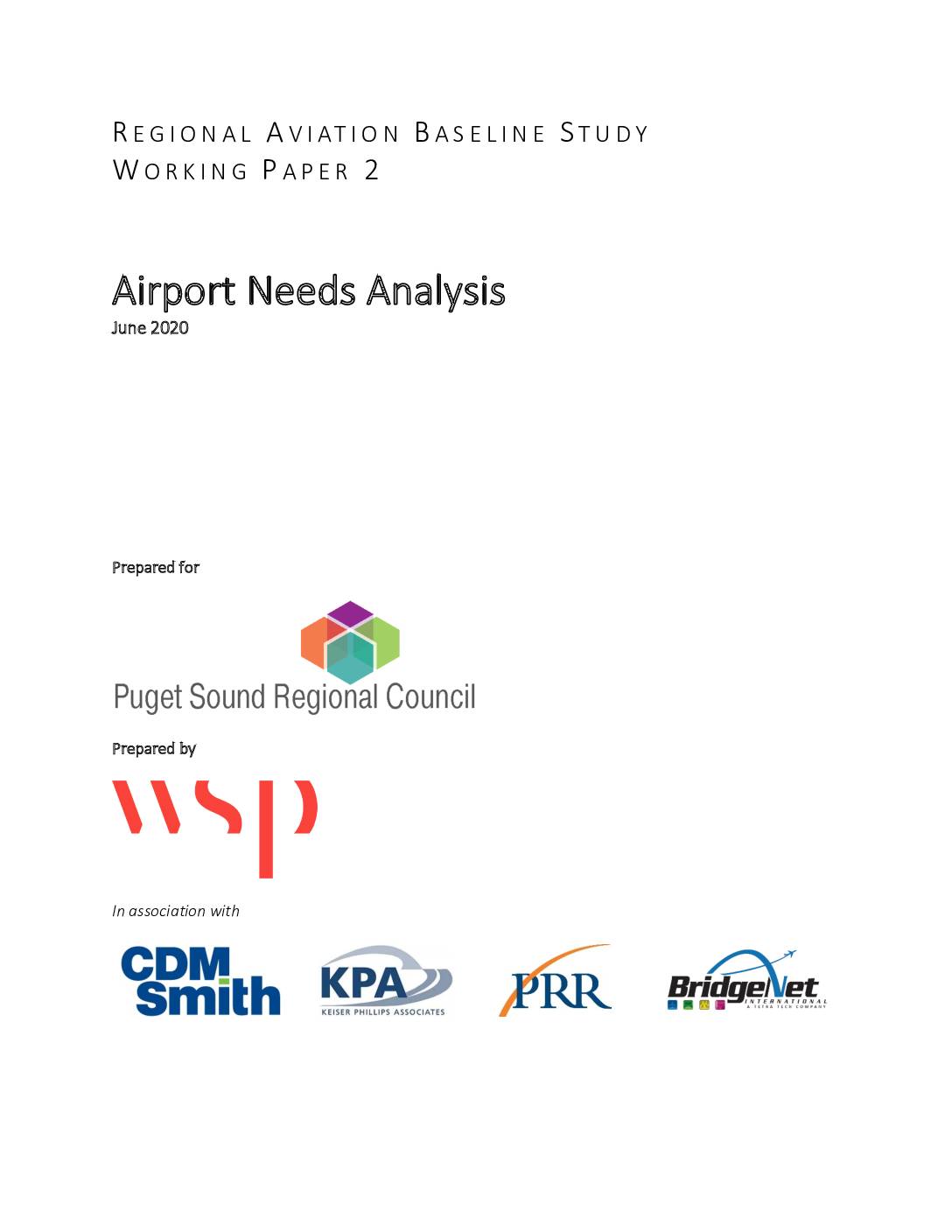
Regional Aviation Baseline Study: Working Paper 2 — Airport Needs Analysis
This June 2020 working paper, prepared by WSP for the Puget Sound Regional Council, analyzes the aviation needs of the greater Seattle-Tacoma region across commercial passenger service, air cargo, and general aviation. It evaluates current airport performance, benchmarks regional airports against comparable systems, and identifies infrastructure challenges and opportunities to meet future demand. The study assesses system-wide requirements and multimodal access needs to guide long-term regional aviation planning. -
 2020-04-07
Regional Aviation Baseline Study: Technical Workshop #3 Presentation
This document presents Technical Workshop #3 of the Regional Aviation Baseline Study, held on April 7, 2020 via BlueJeans video conferencing. The workshop covered study status updates, development and evaluation of aviation scenarios (including current planned development and options to accommodate 50–100% of future demand gaps), and airport evaluation criteria. Participants reviewed potential supplemental airports and discussed next steps for the regional aviation planning process. -
 2020-03-26
Regional Aviation Baseline Study
The Regional Aviation Baseline Study, conducted by the Puget Sound Regional Council, examines 29 airports across King, Snohomish, Kitsap, and Pierce counties to understand how aviation activities interact with communities and the broader regional economy. The study identifies each airport's role, gathers stakeholder input on aviation and airspace constraints, and sets the groundwork for future regional aviation planning. While Sea-Tac Airport serves as the region's primary large hub, the study provides context for understanding how operations across all regional airports—and their associated noise and community impacts—fit into the larger Puget Sound air transportation network. -
 2019-10-24
Regional Aviation Baseline Study
The Regional Aviation Baseline Study, published October 24, 2019 by the Puget Sound Regional Council, examines the roles and interactions of 29 airports across the central Puget Sound region, including Sea-Tac, Boeing Field, and Tacoma Narrows. The study aims to provide a regional perspective on how aviation activities affect communities and the broader economy, while gathering stakeholder input on aviation and airspace constraints. Its findings are intended to identify future aviation needs and inform long-term regional planning efforts. -
 2019-10-10
Regional Aviation Baseline Study: Technical Workshop #2 Presentation
This document presents the agenda and materials for the second technical workshop of the Regional Aviation Baseline Study, held on October 10, 2019. The workshop covered key aviation metrics across commercial service, air cargo, general aviation, and multimodal access, as well as an analysis of regional aviation needs including capacity versus demand, challenges, and opportunities by sector. A regional airspace analysis and discussion of next steps were also included. -
 2019-07-01
Regional Aviation Baseline Study: Working Paper 1 — Airport and Aviation Activity
This 2019 Working Paper, prepared by WSP for the Puget Sound Regional Council, examines airport and aviation activity across the greater Seattle-Tacoma region as part of a Regional Aviation Baseline Study. It covers commercial aviation, general aviation, and air cargo trends and forecasts, along with multimodal access and economic context for the region's airports. The study establishes baseline data and metrics to inform future regional aviation planning and policy decisions. -
 2019-06-27
Regional Aviation Baseline Study
The Regional Aviation Baseline Study, published June 27, 2019 by the Puget Sound Regional Council, examines the roles and interactions of 29 airports across the central Puget Sound region, including Sea-Tac as the area's sole large hub. The study aims to gather stakeholder input on aviation and airspace constraints, assess how airport activities affect surrounding communities and the broader economy, and lay the groundwork for future regional aviation planning.