TagNEPA(390)
-
2024_10_22_SM_Packet_Supplemental (11a SAMP EA Presentation)_28
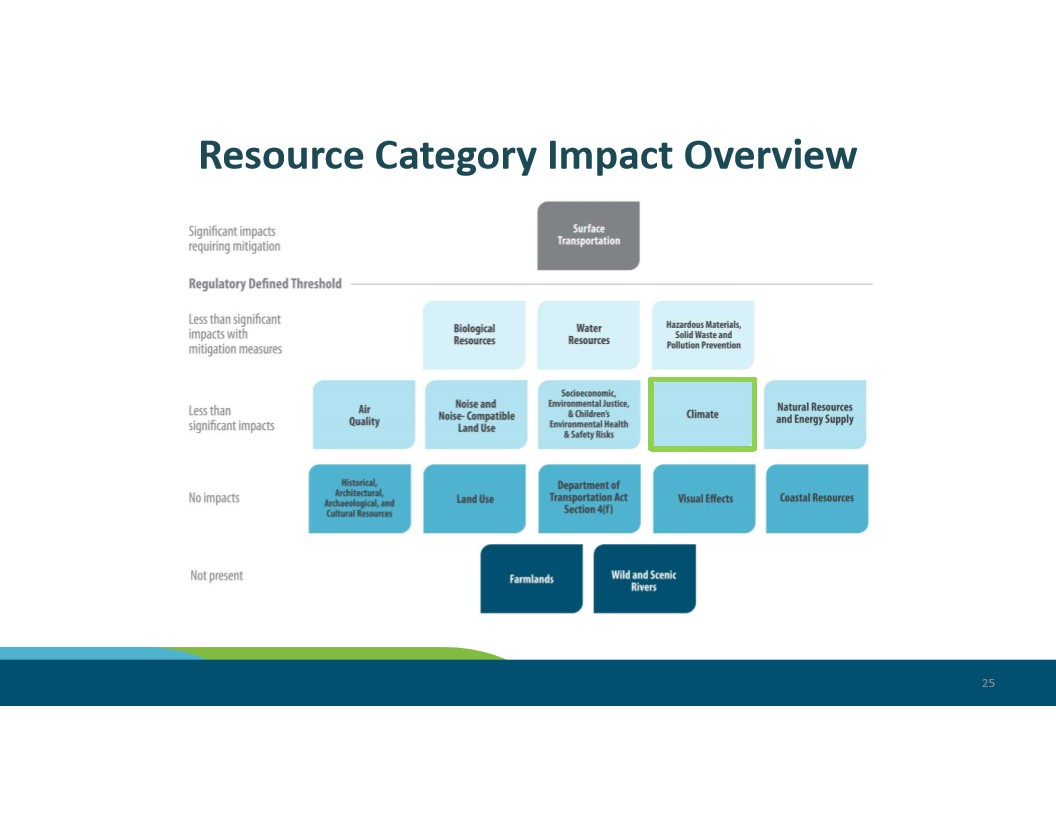
A presentation slide titled 'Resource Category Impact Overview' organizing environmental resource categories into impact tiers ranging from 'Significant impacts requiring mitigation' (Surface Transportation) down through 'Less than significant impacts,' 'No impacts,' and 'Not present.' Climate is highlighted with a green border under 'Less than significant impacts,' and Farmlands and Wild and Scenic Rivers are marked as 'Not present.' -
2024_10_22_SM_Packet_Supplemental (11a SAMP EA Presentation)_27
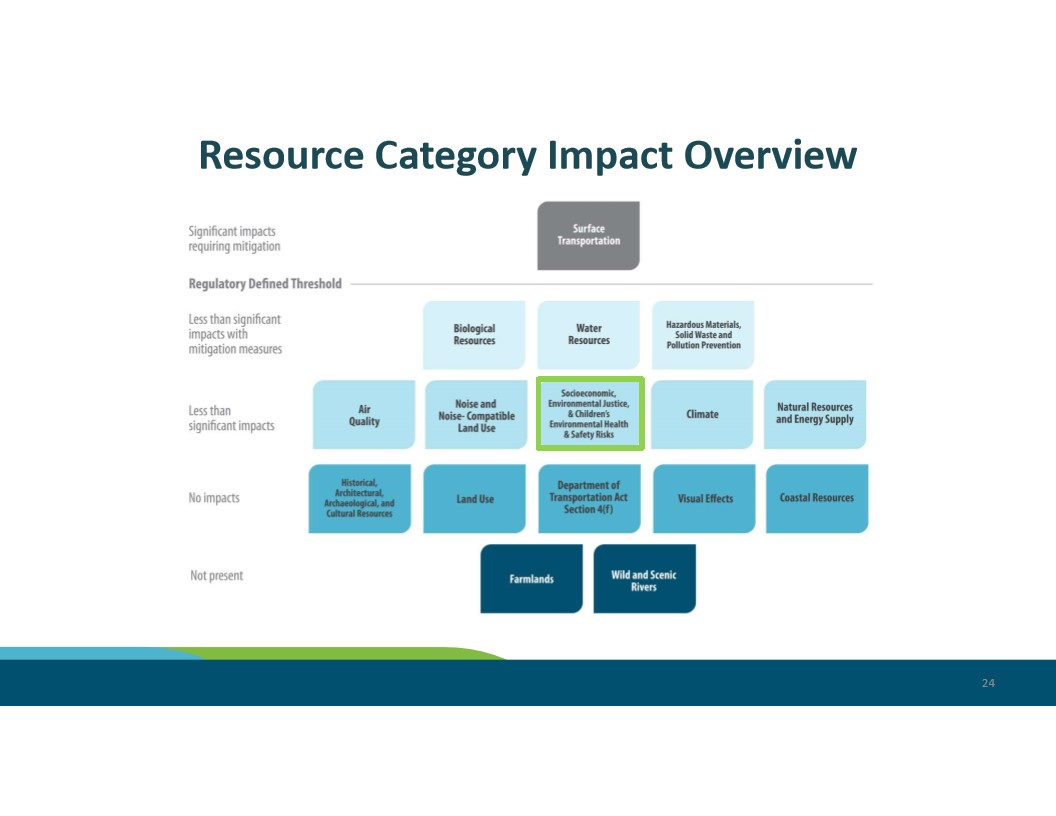
A presentation slide titled 'Resource Category Impact Overview' displaying a tiered impact matrix categorizing environmental resource areas by level of significance, ranging from 'Significant impacts requiring mitigation' (Surface Transportation) down to 'Not present' (Farmlands; Wild and Scenic Rivers). Categories include Biological Resources, Water Resources, Air Quality, Climate, Land Use, Visual Effects, and Socioeconomic/Environmental Justice among others, with the latter highlighted in a green border under 'Less than significant impacts.' -
2024_10_22_SM_Packet_Supplemental (11a SAMP EA Presentation)_26
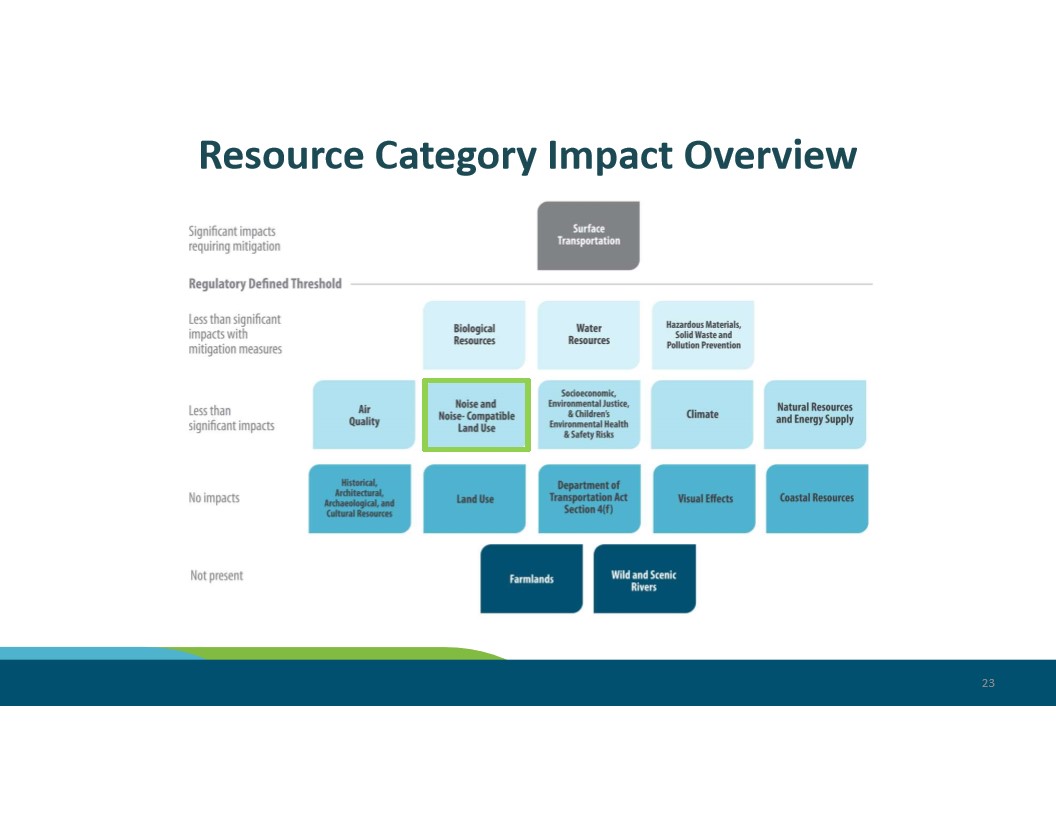
A presentation slide titled 'Resource Category Impact Overview' displaying a tiered impact matrix categorizing environmental resource areas from 'Significant impacts requiring mitigation' (Surface Transportation) down through 'Less than significant,' 'No impacts,' and 'Not present' (Farmlands, Wild and Scenic Rivers). Categories include Biological Resources, Water Resources, Noise and Noise-Compatible Land Use, Climate, Visual Effects, and Coastal Resources, among others. -
2024_10_22_SM_Packet_Supplemental (11a SAMP EA Presentation)_24
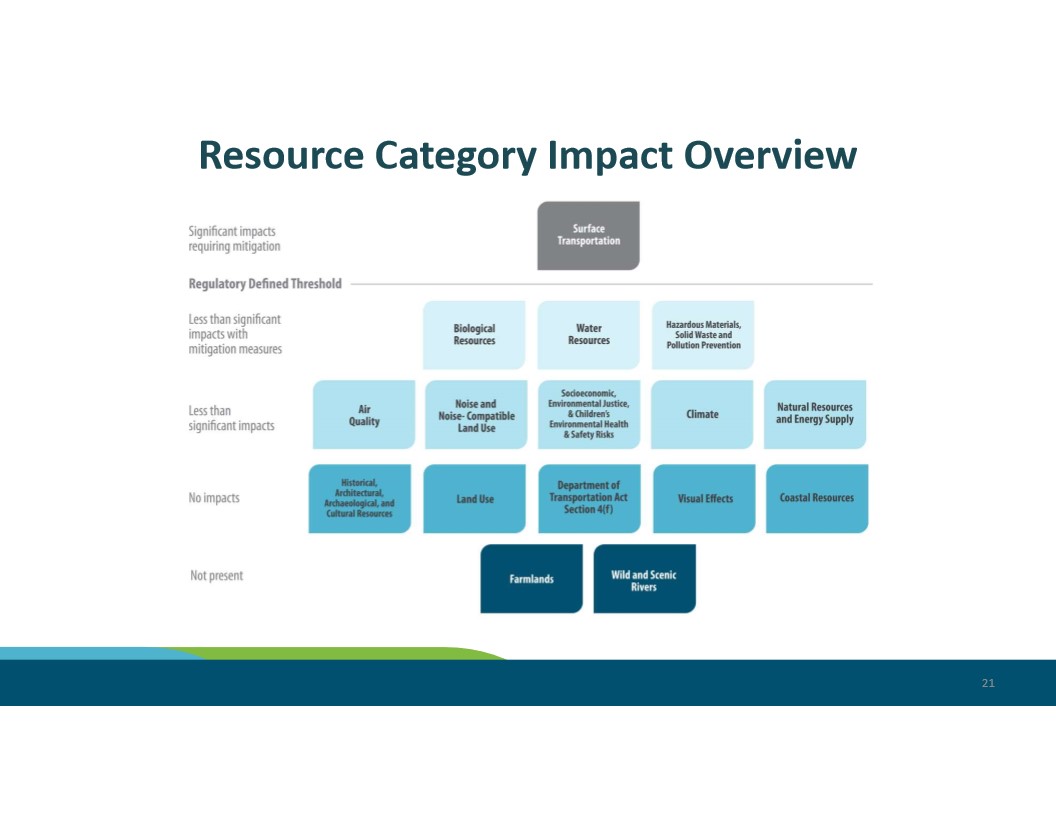
A presentation slide titled 'Resource Category Impact Overview' showing a tiered matrix of environmental resource categories ranked by impact level, from 'Significant impacts requiring mitigation' (Surface Transportation) down through 'Less than significant impacts with mitigation measures,' 'Less than significant impacts,' 'No impacts,' and 'Not present' (Farmlands, Wild and Scenic Rivers). The slide appears to be from an environmental impact or NEPA-related assessment document, page 21. -
2024_10_22_SM_Packet_Supplemental (11a SAMP EA Presentation)_25
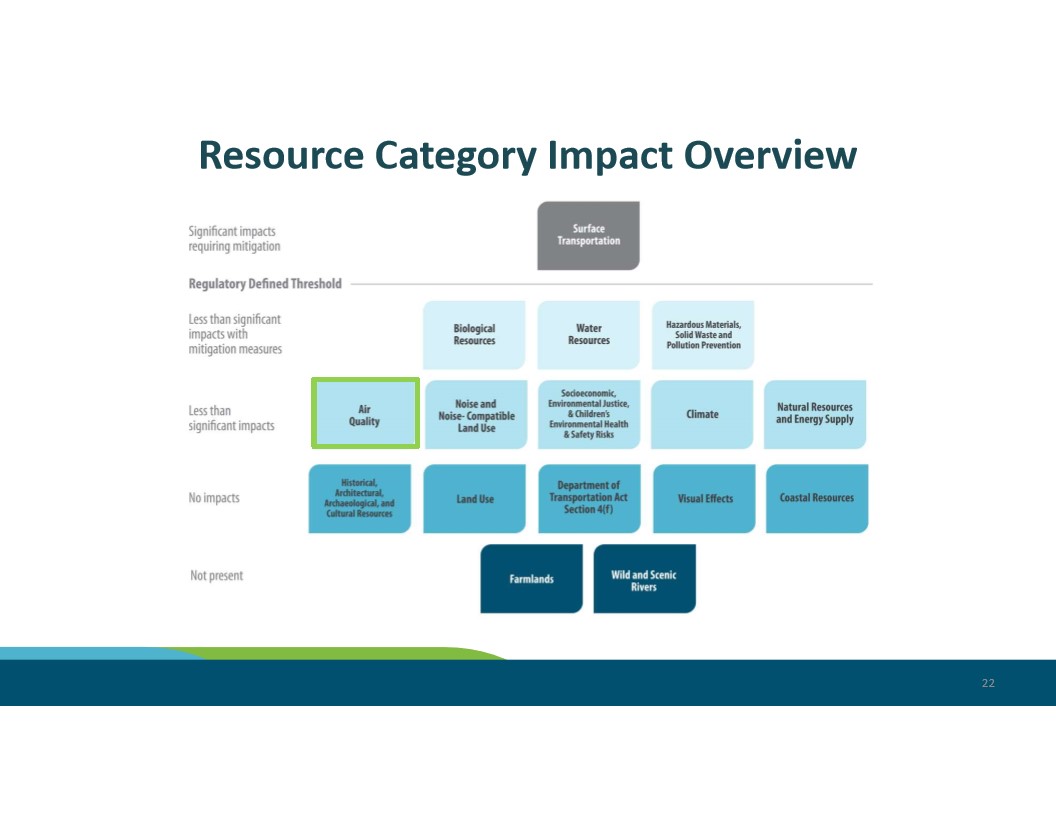
A presentation slide titled 'Resource Category Impact Overview' categorizes environmental resource impacts into five tiers: significant impacts requiring mitigation (Surface Transportation), less than significant with mitigation (Biological Resources, Water Resources, Hazardous Materials), less than significant (Air Quality, Noise, Climate, etc.), no impacts (Land Use, Visual Effects, Coastal Resources, etc.), and not present (Farmlands, Wild and Scenic Rivers). No organization logo or project name is visible on this slide. -
2024_10_22_SM_Packet_Supplemental (11a SAMP EA Presentation)_23
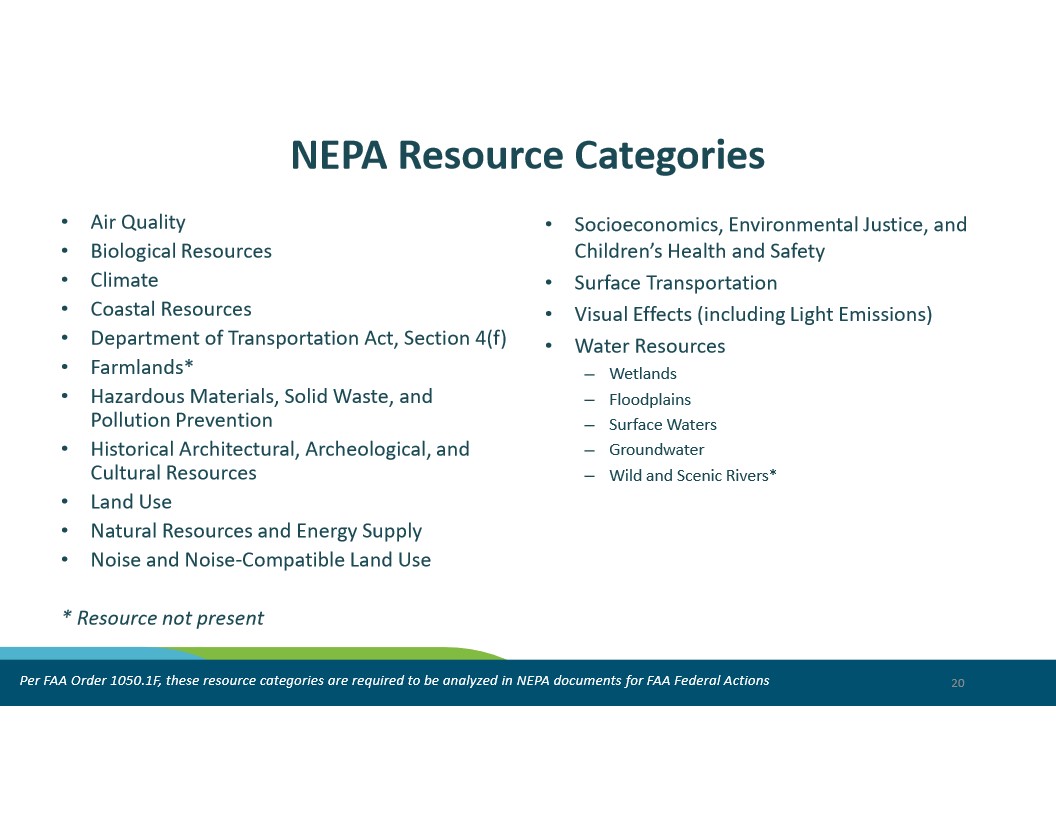
This slide lists the NEPA resource categories required to be analyzed in environmental documents for FAA Federal Actions per FAA Order 1050.1F. Categories include Air Quality, Biological Resources, Climate, Coastal Resources, Noise and Noise-Compatible Land Use, Water Resources (with subcategories), and others; items marked with an asterisk (Farmlands, Wild and Scenic Rivers) are noted as resources not present. -
2024_10_22_SM_Packet_Supplemental (11a SAMP EA Presentation)_22
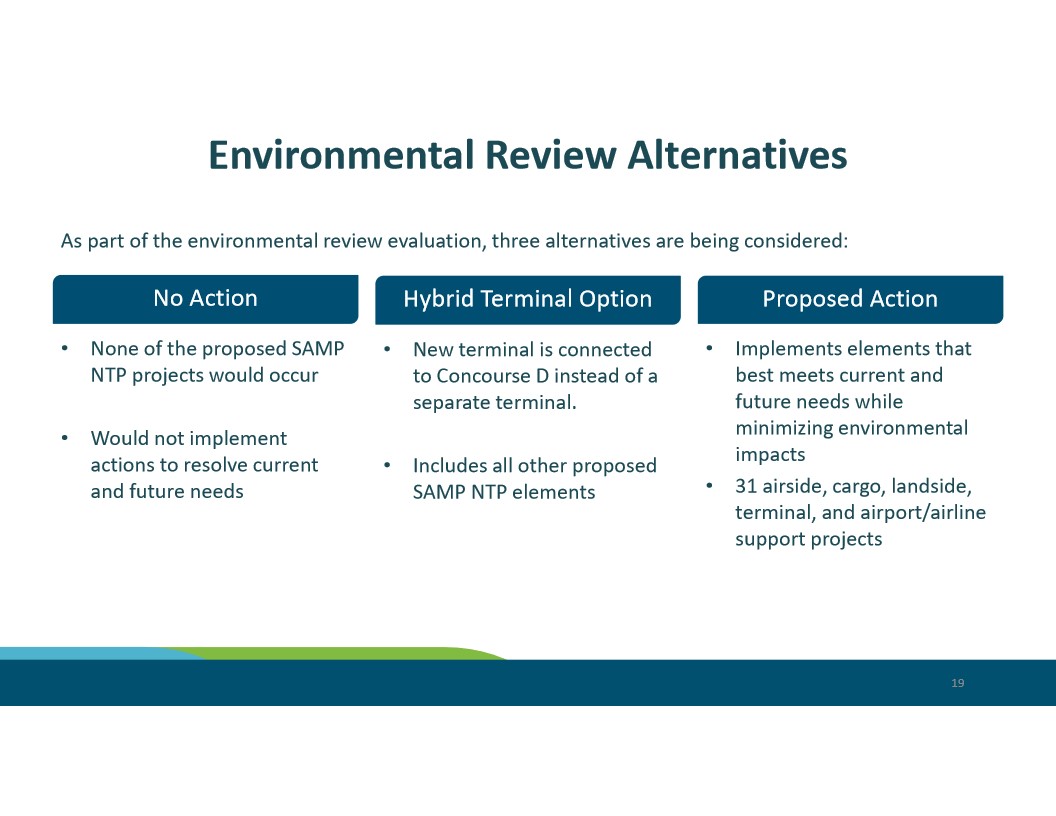
Slide 19 from a Sea-Tac Airport presentation outlines three alternatives under the Sustainable Airport Master Plan (SAMP) Near-Term Projects (NTP) environmental review evaluation: No Action (no SAMP NTP projects occur), Hybrid Terminal Option (new terminal connected to Concourse D), and Proposed Action (31 airside, cargo, landside, terminal, and airport/airline support projects minimizing environmental impacts). -
2024_10_22_SM_Packet_Supplemental (11a SAMP EA Presentation)_21
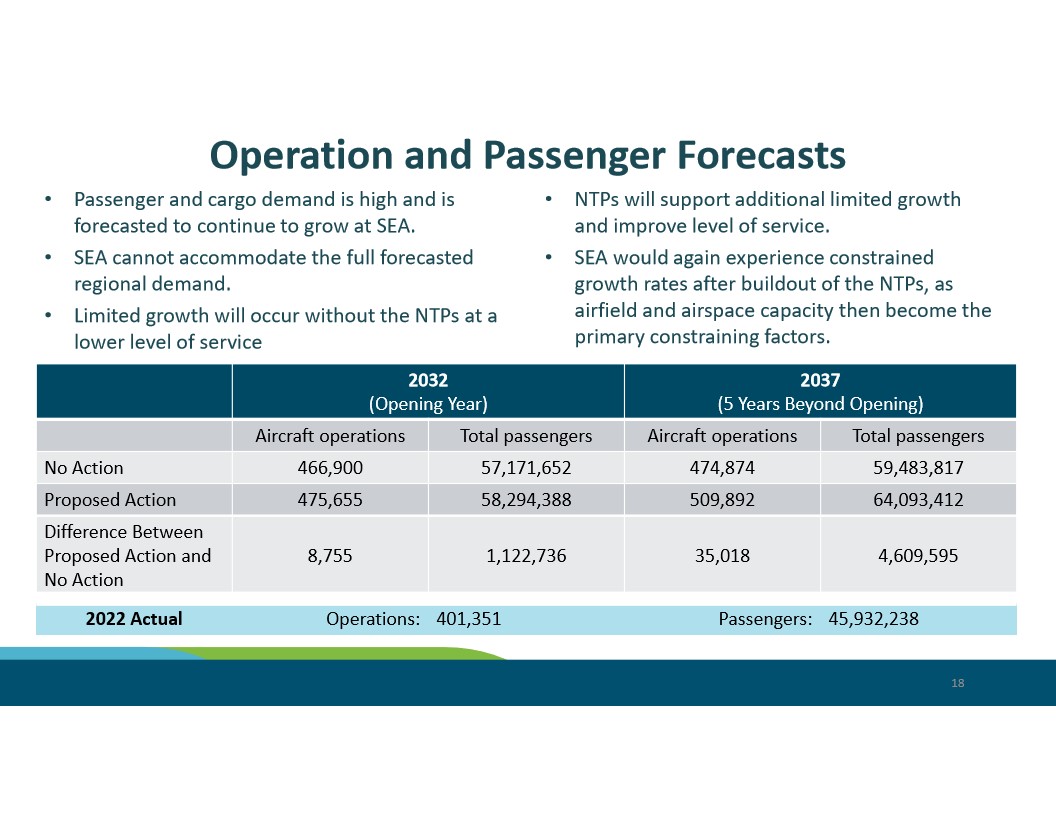
Slide 18 from a Sea-Tac Airport planning presentation showing operation and passenger forecast data for 2032 (opening year) and 2037 (5 years beyond opening) under 'No Action' and 'Proposed Action' (NTP – New Terminal/Concourse Program) scenarios. The 2022 actual baseline shows 401,351 operations and 45,932,238 passengers, with the Proposed Action projecting 509,892 operations and 64,093,412 total passengers by 2037. -
2024_10_22_SM_Packet_Supplemental (11a SAMP EA Presentation)_20
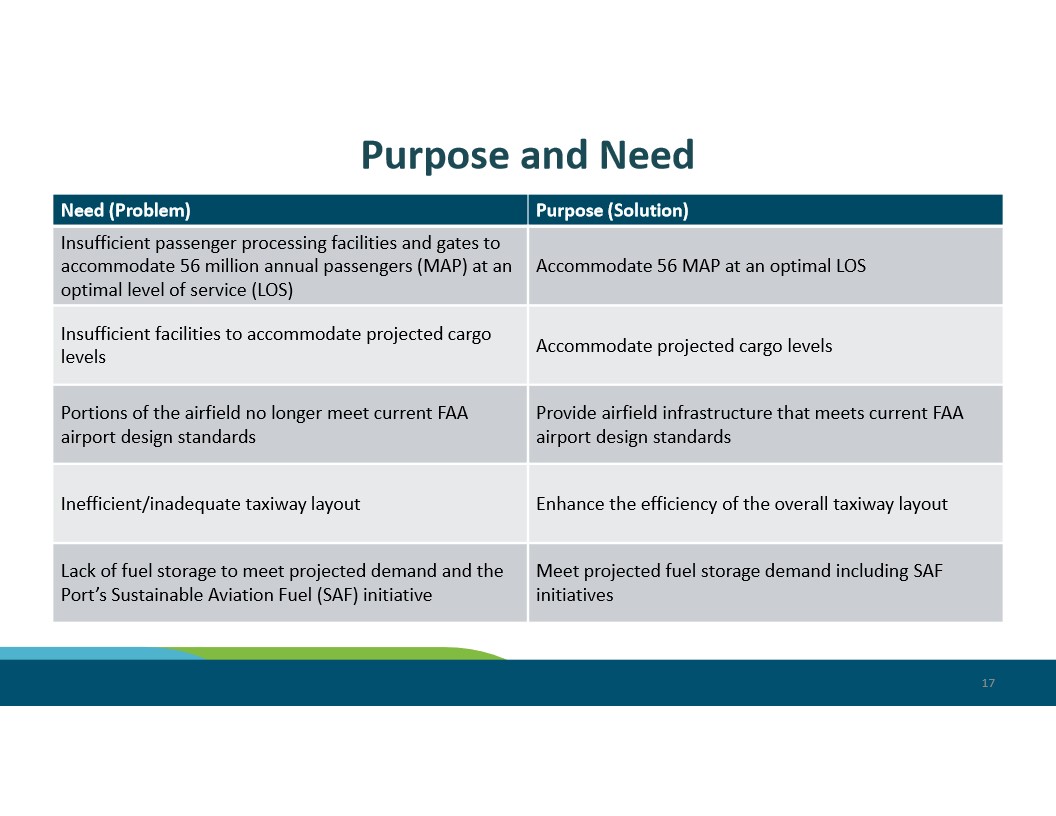
Slide 17 from a Sea-Tac Airport planning presentation outlines five needs and corresponding purposes, including accommodating 56 million annual passengers at an optimal level of service, meeting projected cargo levels, bringing airfield infrastructure into compliance with current FAA airport design standards, improving taxiway layout efficiency, and addressing fuel storage needs including the Port's Sustainable Aviation Fuel (SAF) initiative. -
2024_10_22_SM_Packet_Supplemental (11a SAMP EA Presentation)_19
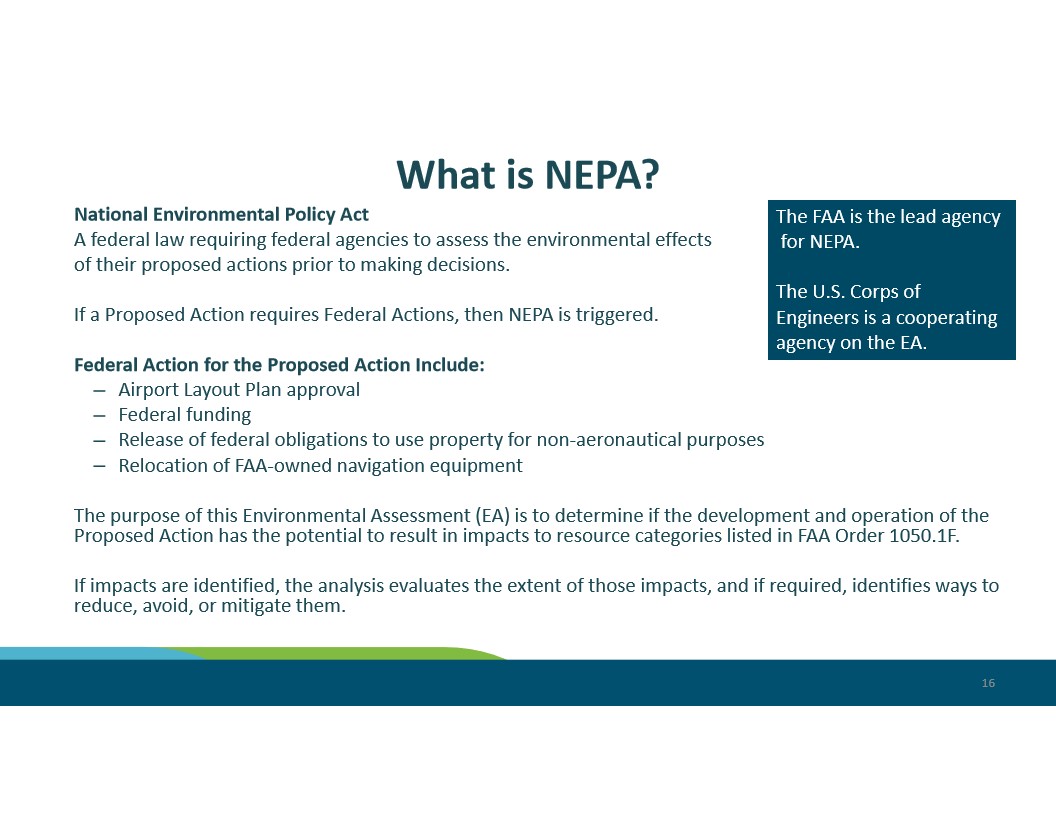
Slide 16 from an FAA-led Environmental Assessment (EA) presentation explaining the National Environmental Policy Act (NEPA), noting the FAA as lead agency and the U.S. Army Corps of Engineers as cooperating agency. It outlines federal actions triggering NEPA review—including Airport Layout Plan approval, federal funding, and relocation of FAA-owned navigation equipment—and references FAA Order 1050.1F as the governing framework for resource impact categories.