TagLandrum & Brown(6)
-
 2026-02-25 00:00
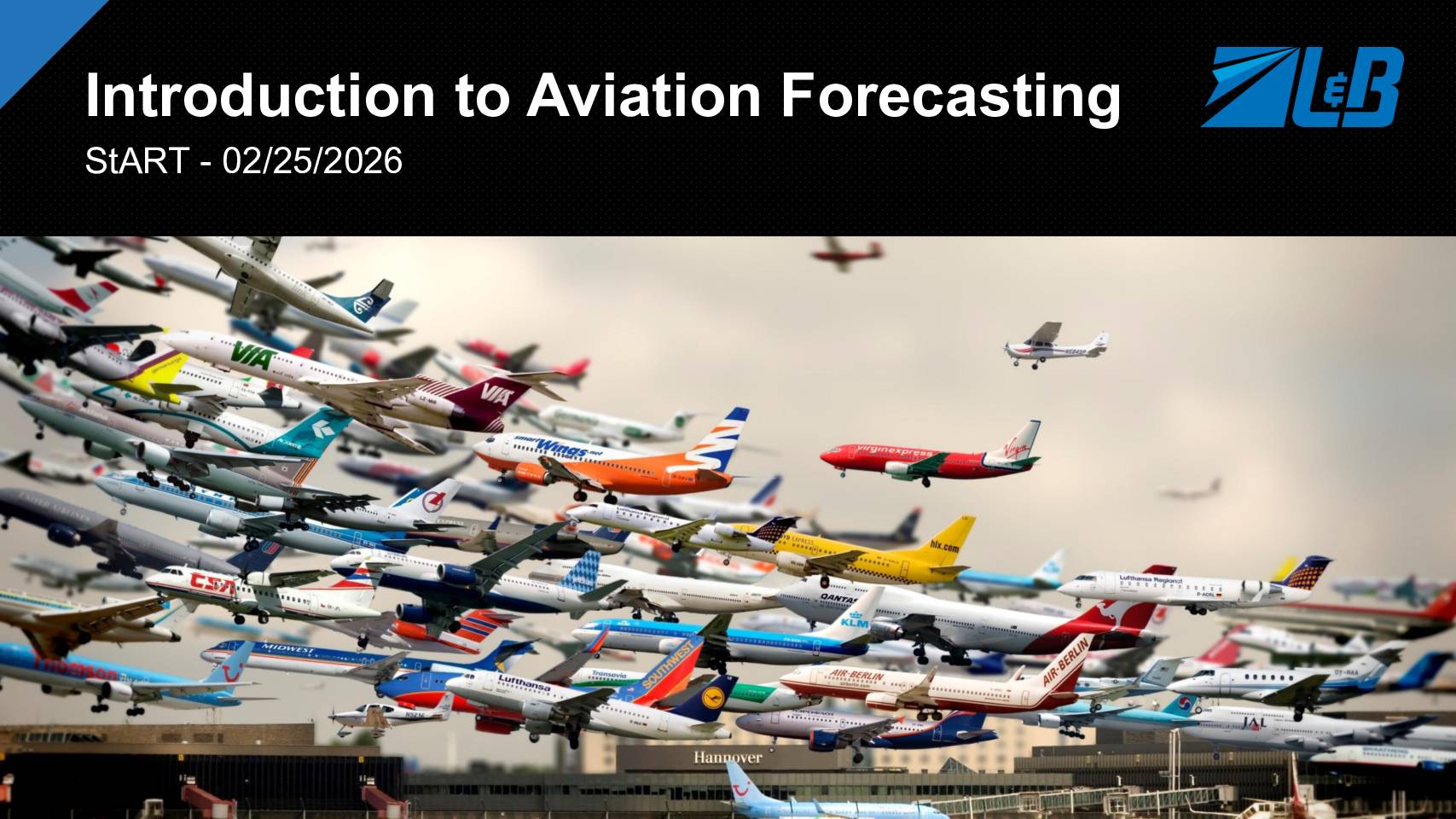
StART L&B Introduction to Aviation Forecasting
An educational presentation introducing aviation forecasting concepts for airport planning. Covers the airport planning process including passenger demand forecasting, identifying constraints, and developing alternatives to meet future aviation needs. -
 2022-08-24 15:45
Port of Seattle Part 150 Your Comments Are Welcome Post Card
-
2018-09-11 17:07
Port Of Seattle Video: SAMP Explanation from Landrum & Brown
Communications Manager Perry Cooper interviews Rob Allen, Executive VP of Landrum & Brown, the consultants hired to prepare the Environmental Impact Statement (EIS). -
 2018-07-31 21:02
Part 150 2013 Study Appendix F – Supplemental Noise Analysis
Landrum & Brown Team Appendix F – Supplemental Noise Analysis October 2013 Page F-1 APPENDIX F SUPPLEMENTAL NOISE ANALYSIS This appendix presents the results of the supplemental noise analysis that was prepared for this Part 150 Study using the Federal Aviation Administration’s (FAA’s) Integrated Noise Model (INM) Version 7.0b. This analysis was prepared for informational purposes only. According to FAA guidelines, supplemental noise metrics cannot be used to justify noise mitigation measures. However, this information can be of value to describe marginal noise impacts that are related to daily living activities, particularly speech and sleep. The Day-Night Average Sound Level (DNL) is the standard noise metric used for environmental noise analysis in the U.S., and as such is the metric upon which noise impacts and potential noise mitigation measures are evaluated. Information on the DNL noise exposure contours that were prepared for this Study is included in Chapter Three, Section 3.6 of this document. During the course of the Study, citizens at public forums asked for specific supplemental metrics to be run. This Appendix presents those supplemental metrics: Time Above Level (TA) – The “time above,” or TA, metric indicates the amount of time that sound at a particular location exceeds a given sound level threshold. TA is often expressed in terms of the total time per day that the threshold is exceeded. The TA metric explicitly provides information about the duration of sound events, although it conveys no information about the peak levels during the period of observation. Exhibit… -
 2018-07-31 21:01
Sea-Tac Part 2013 150 Noise Compatibility Study: Chapter 1 (Inventory)
Landrum & Brown Team Chapter One – Inventory October 2013 Page 1-1 CHAPTER ONE INVENTORY Seattle-Tacoma International Airport (Sea-Tac Airport) is the primary air transportation hub of Washington State and the Northwest United States. The Airport is located within King County and the City of SeaTac, approximately miles south of downtown Seattle and approximately 20 miles north of the City of Tacoma. As of May 2012, Sea-Tac Airport was served by 25 commercial passenger airlines with scheduled passenger service. There are also several scheduled all-cargo carriers serving Sea-Tac Airport. Sea-Tac Airport provides non-stop air service to 71 cities within the United States and 17 additional cities worldwide. In terms of passenger activity, in 2011 Sea-Tac Airport was the 16th busiest airport in the United States and is the primary commercial service airport for the Pacific Northwest. In terms of operations, it was the 23th busiest airport in the United States in 2011. It is the only airport that provides primary scheduled commercial service in the Puget Sound Region. The generalized location of Sea-Tac Airport is illustrated on Exhibit 1-1, Airport Location Map. Sea-Tac Airport is owned and operated by the Port of Seattle (Port), which is led by a five-member governing body called the Port of Seattle Commission (Commission). The Commission is elected at large to direct Port policy. The Port district boundaries are contiguous with those of King County. The Managing Director of the Aviation Division is responsible for the day-to-day operations of Sea-Tac Airport. While state enabling legislation… -
2013-10-15 20:29
Informal Runway Use Agreement (Appendix I 2013 Part 150 Study)
Appendix I from the 2013 Part 150 Study by Landrum & Brown. A Letter Of Agreement (LOA) where the Port Of Seattle agrees to using the Third Runway primarily for overflows and bad weather. Note the very official looking signature of the Port CEO, Tay Yoshitani. Also note that it is described as an ‘informal