TagConformity(39)
-
 2023-07-23
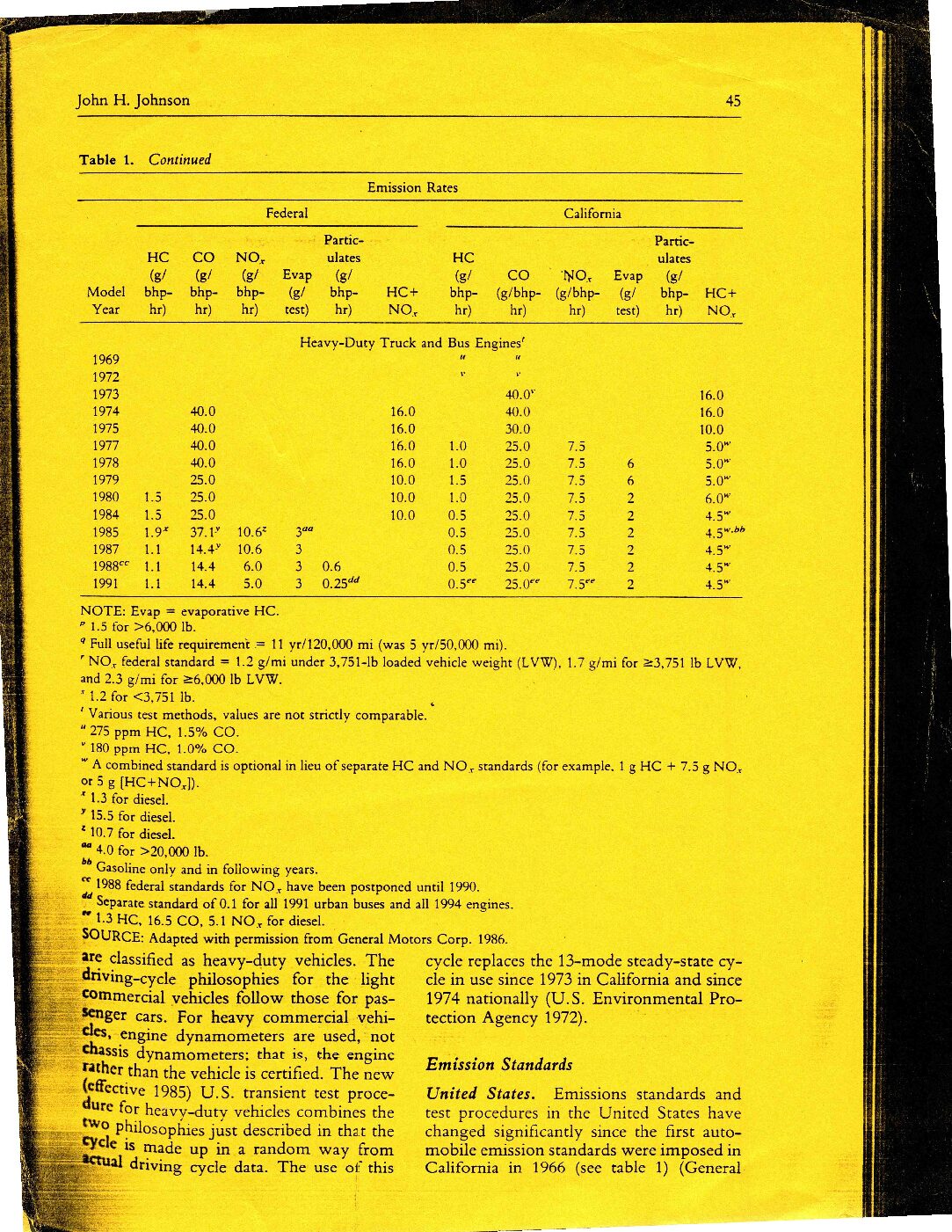
Heavy-duty truck and bus engine emission rates and standards: Federal and California
This document, authored by John H. Johnson, presents federal and California emission standards for heavy-duty trucks and bus engines from 1969 through 1991, covering pollutants such as hydrocarbons (HC), carbon monoxide (CO), nitrogen oxides (NOx), and particulates measured in grams per brake horsepower-hour. It traces the evolution of U.S. vehicle emission regulations, noting that standards have tightened significantly since California first imposed automobile emission limits in 1966. The table also details changes in testing procedures, including the shift to a transient test cycle for heavy-duty vehicles effective in 1985. -
 2023-07-23
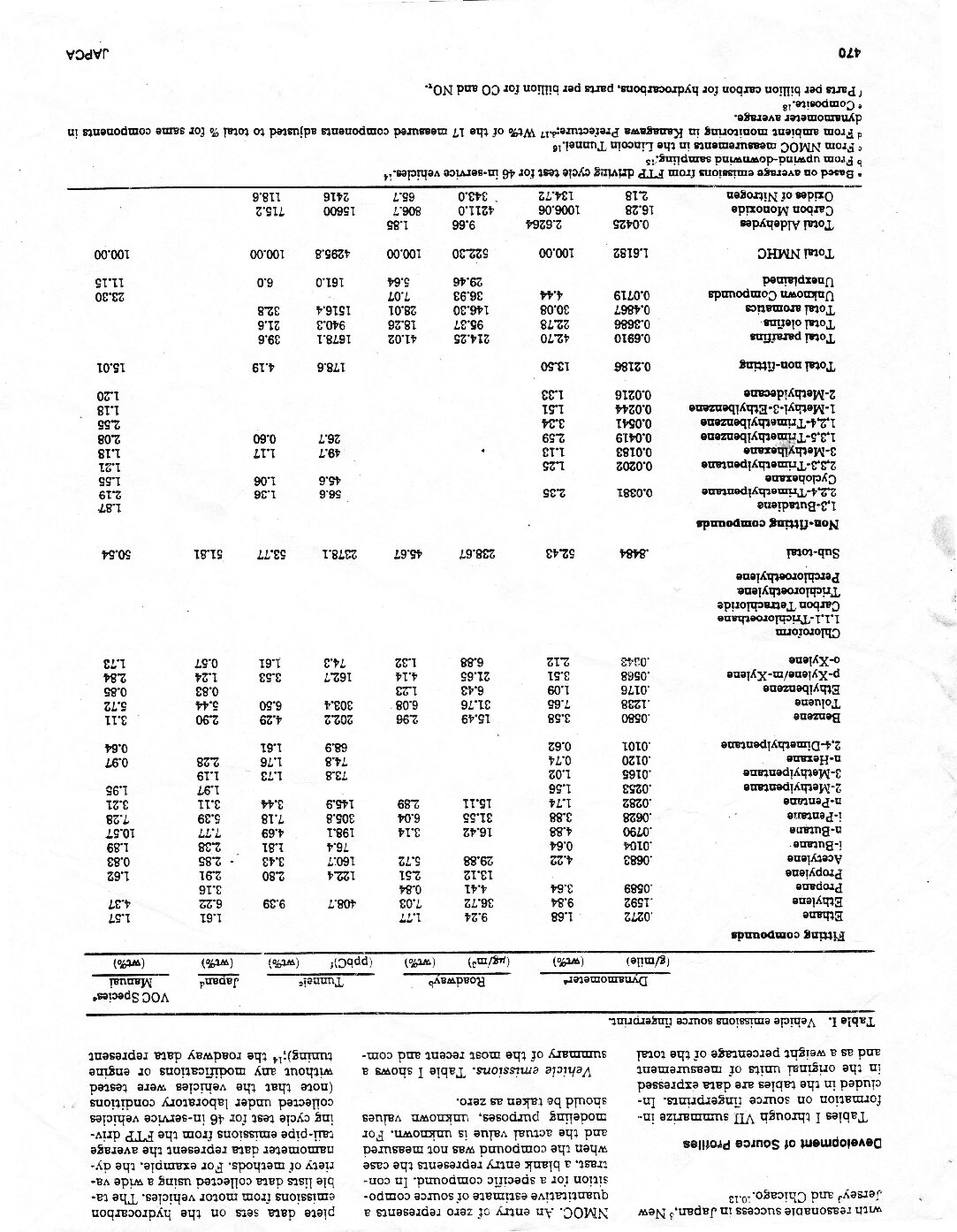
Vehicle emissions source fingerprints
This document examines air quality concerns related to a proposed third runway at Seattle-Tacoma (Sea-Tac) Airport, highlighting a discrepancy of 6,703 tons per year between two independent emissions estimates — a gap more than three times the 1994 FEIS projections. The author argues that predicted violations of Carbon Monoxide and NO2 standards were left unaddressed in the airport's conformity determination, undermining the goals of the State Implementation Plan. A third-party review of the conflicting studies is called for, along with stronger regulatory accountability for identifying airport air-quality hot spots. -
 2023-07-23
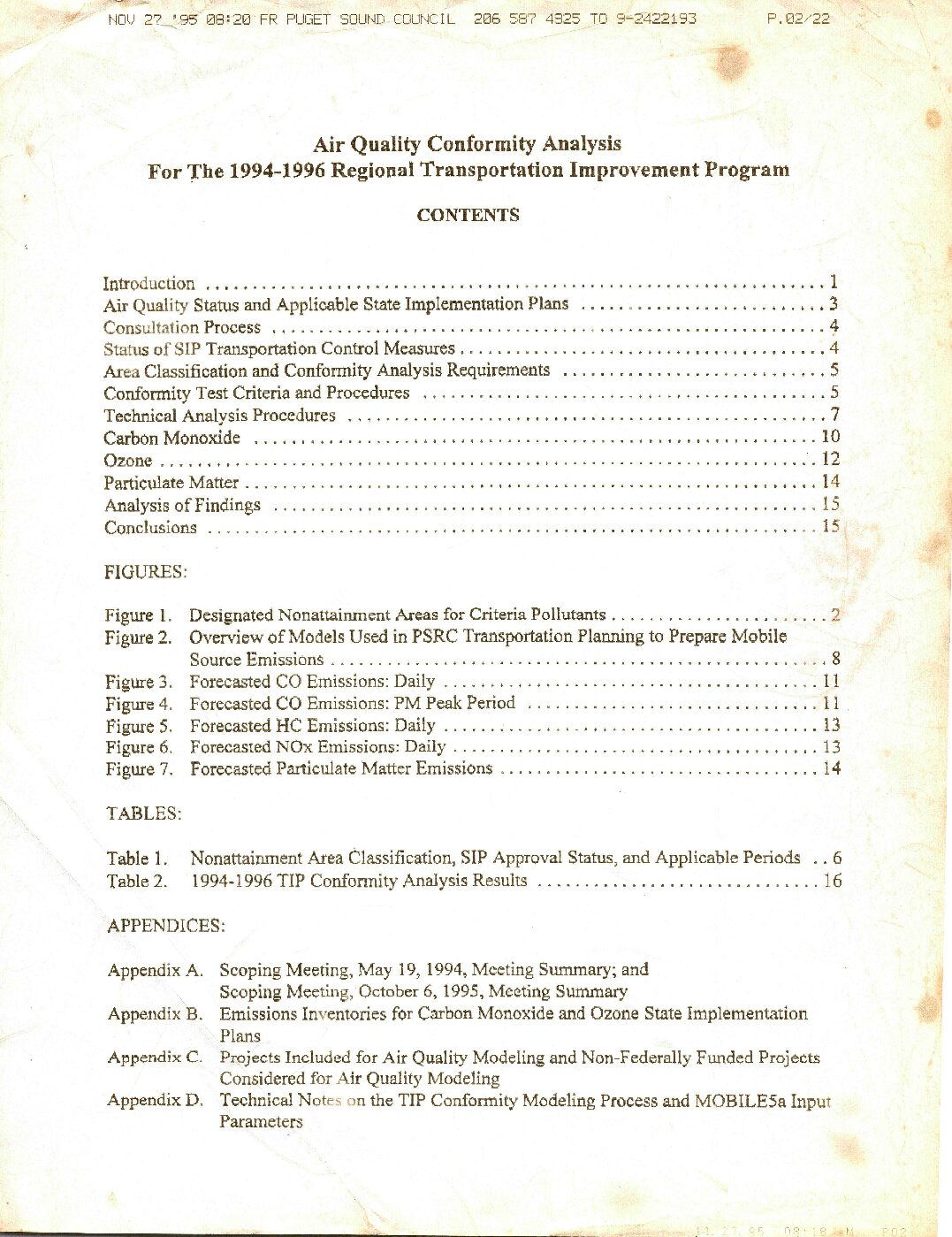
Air quality conformity analysis for the 1994-1996 Regional Transportation Improvement Program
This document presents an Air Quality Conformity Analysis for the 1994-1996 Regional Transportation Improvement Program, examining whether planned transportation projects in the Puget Sound region comply with state and federal clean air standards. It includes emissions forecasts for pollutants such as carbon monoxide, ozone, and particulate matter, and outlines the criteria and procedures used to evaluate conformity with State Implementation Plans. The analysis was conducted in accordance with Washington State's Clean Air Conformity Act (Chapter 173-420 WAC) and the federal Clean Air Act. -
 2023-07-23
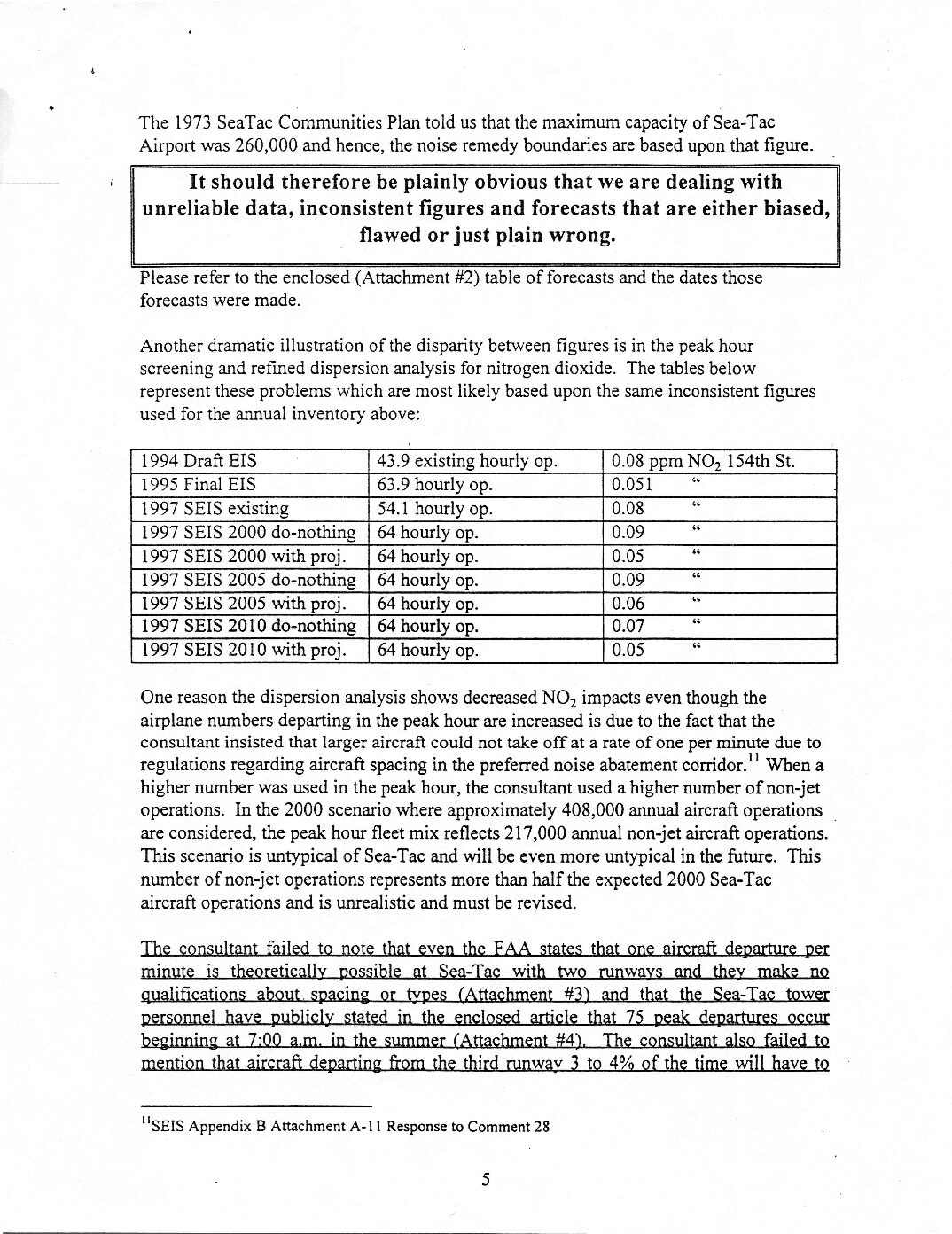
Comments on Sea-Tac Airport third runway SEIS: Air quality and nitrogen dioxide analysis
This document raises concerns about unreliable and inconsistent data used in environmental impact studies for Sea-Tac Airport's third runway, including flawed forecasts for aircraft operations and disputed nitrogen dioxide dispersion analyses. Critics argue that the studies underestimated peak-hour departure rates and used unrealistic fleet mix figures, leading to artificially low pollution impact projections. A separate health risk analysis linked airport expansion to significant increases in cancer and respiratory disease risk for nearby residents and airport workers. -
 2023-07-23
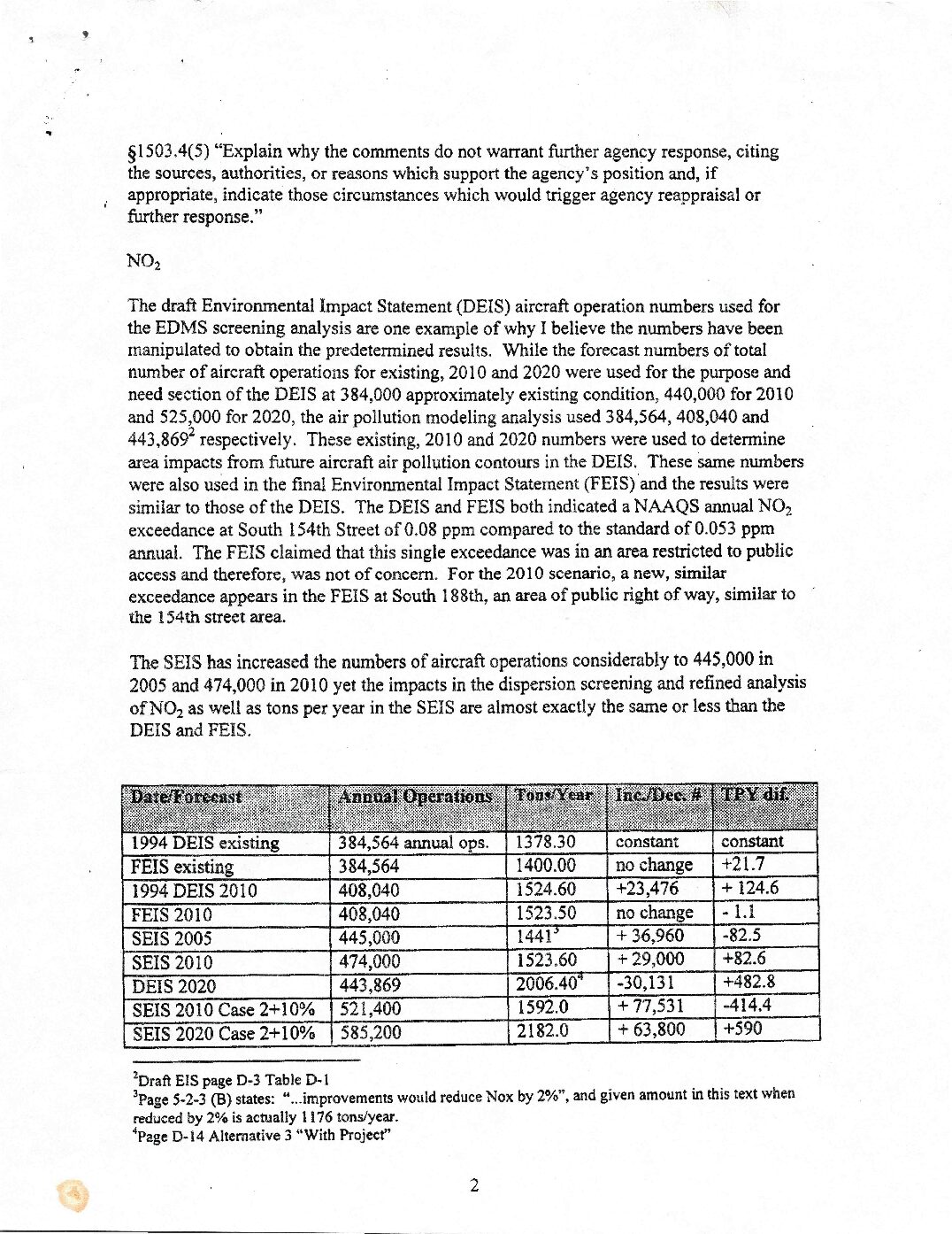
NO2 analysis: Aircraft operations and NOx emissions discrepancies in DEIS, FEIS, and SEIS
A commenter challenges the air quality analysis in the Draft, Final, and Supplemental Environmental Impact Statements for Sea-Tac Airport expansion, arguing that NOx pollution totals were manipulated to stay below regulatory thresholds. Despite aircraft operations increasing significantly from roughly 384,000 to as many as 585,000 per year across the three documents, the reported tons-per-year of nitrogen oxides remained nearly flat or even decreased, which the commenter contends defies logic and contradicts the DEIS's own statements that newer, larger aircraft produce higher NOx emissions. The commenter also highlights a discrepancy between the DEIS claim that 525,000 annual operations would occur with or without a new runway and the SEIS claim that the airport is capped at 460,000 operations without one. -
 2023-07-23
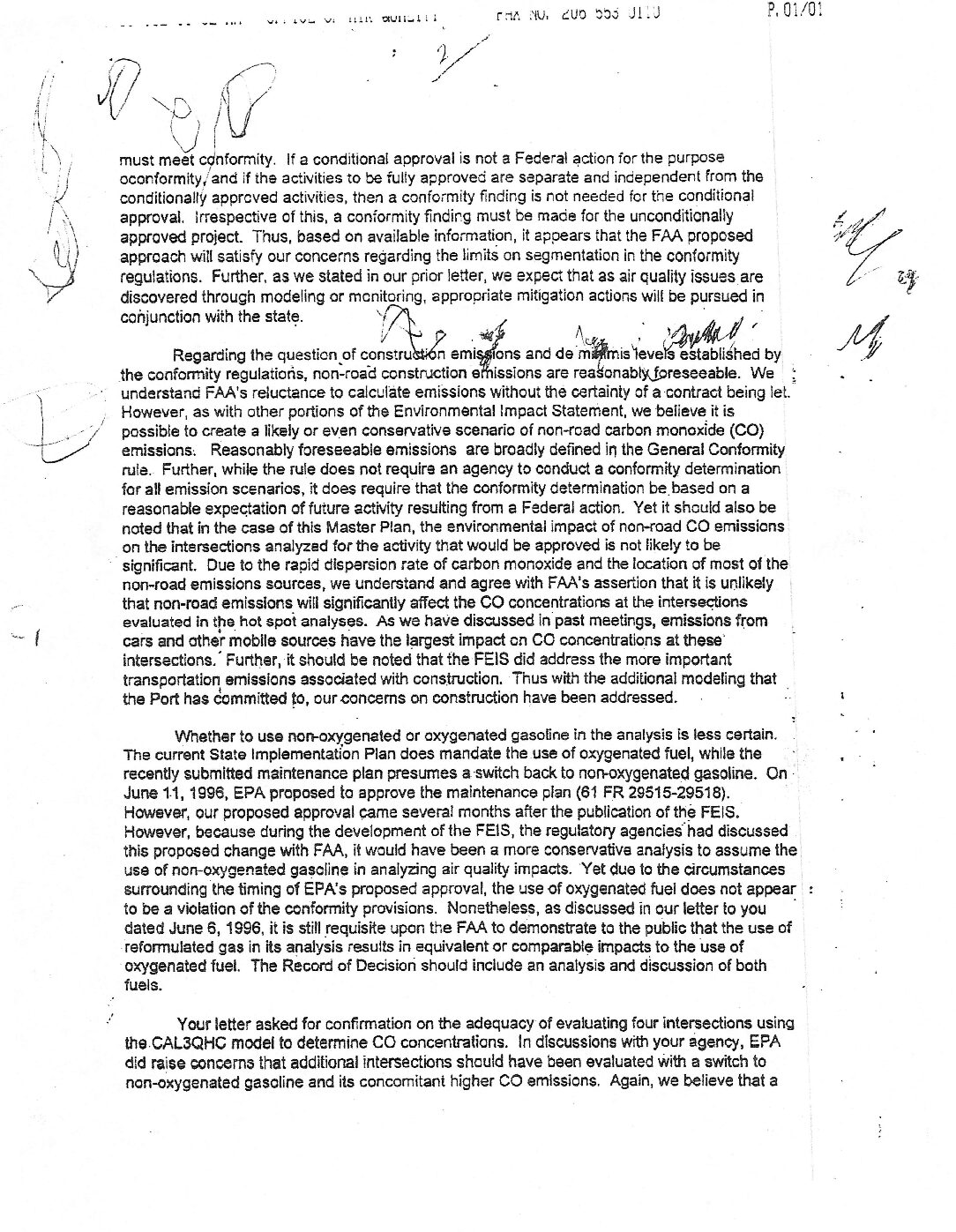
Air quality conformity analysis for Sea-Tac Airport Master Plan update
This document contains regulatory correspondence and public comments regarding air quality concerns related to Sea-Tac Airport's expansion Master Plan, focusing on carbon monoxide emissions, conformity determinations, and environmental impact analyses. Key issues include predicted CO level exceedances at nearby intersections along International Boulevard, questions about cumulative emissions from multiple nearby projects, and disputes between WSDOT and Port consultant air quality models. EPA and other agencies weigh in on construction emissions, fuel type assumptions, and the adequacy of intersection modeling used in the Final Environmental Impact Statement. -
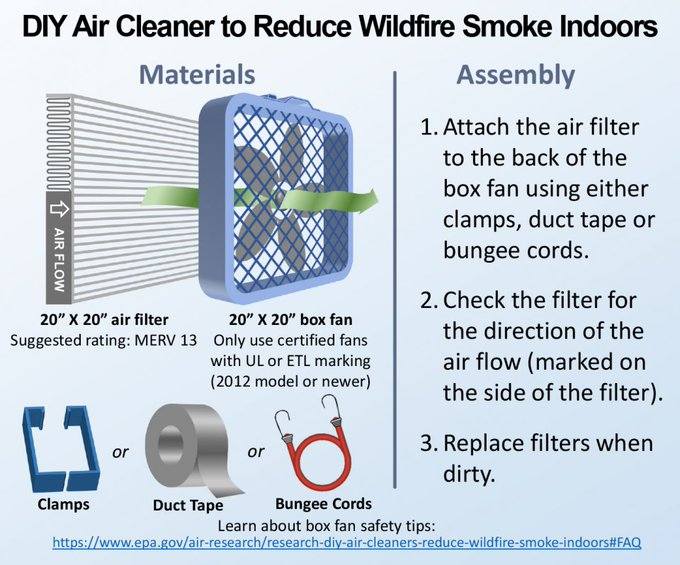
EPA DIY Box Fan Air Cleaner Infographic
An infographic from the U.S. Environmental Protection Agency (EPA) explaining how to build a DIY air cleaner using a 20x20 inch MERV 13 air filter attached to a 20x20 inch box fan (UL or ETL certified, 2012 or newer) with clamps, duct tape, or bungee cords. The assembly instructions and a reference URL to the EPA website are included. -
 2022-09-01
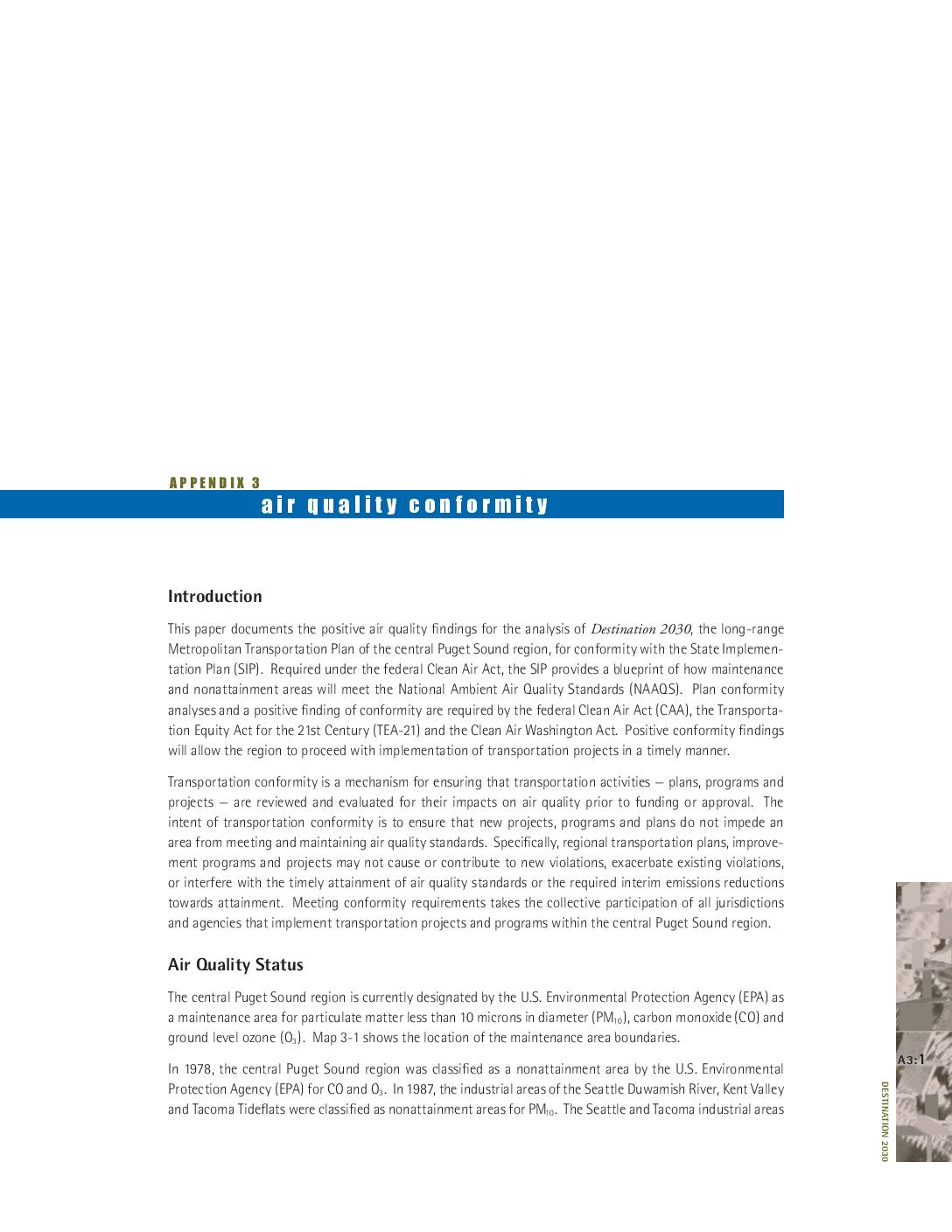
Destination 2030: Air quality conformity
This document outlines the air quality conformity analysis for Destination 2030, the long-range transportation plan for the central Puget Sound region, ensuring that planned transportation projects meet federal and state clean air standards. The region, previously designated as a nonattainment area for carbon monoxide, ozone, and particulate matter, was redesignated as a maintenance area after meeting federal air quality standards, with EPA approvals granted between 1996 and 2001. The conformity process involved consultation with agencies including the EPA, FHWA, and Washington State Department of Ecology to ensure new transportation projects do not cause or worsen air quality violations. -
 1998-02-03
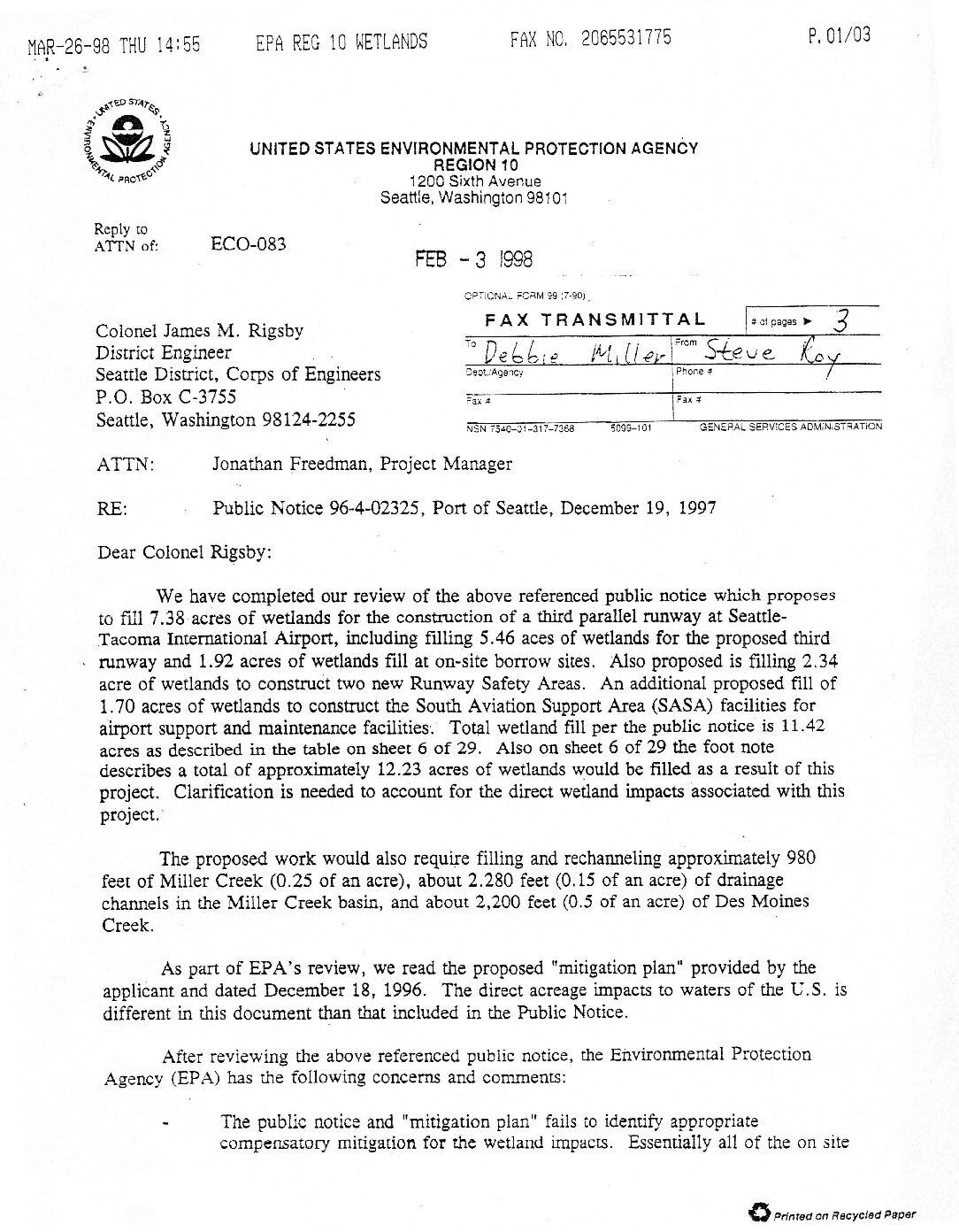
EPA Region 10 letter to Army Corps of Engineers regarding Public Notice 96-4-02325, Port Of Seattle third runway project
In February 1998, the U.S. Environmental Protection Agency (EPA) Region 10 raised serious concerns about a proposed permit to fill over 11 acres of wetlands and rechanneling sections of Miller Creek and Des Moines Creek as part of the construction of a third parallel runway at Seattle-Tacoma International Airport. The EPA criticized the applicant's mitigation plan for directing compensation to an off-site location in the Green River Valley rather than within the affected watersheds, and also questioned the necessity of wetland fills planned for the South Aviation Support Area and on-site borrow sites. Based on these concerns, the EPA recommended the permit be denied as proposed, while expressing willingness to meet with the applicant and the Army Corps of Engineers to explore alternatives. -
 1997-07-03
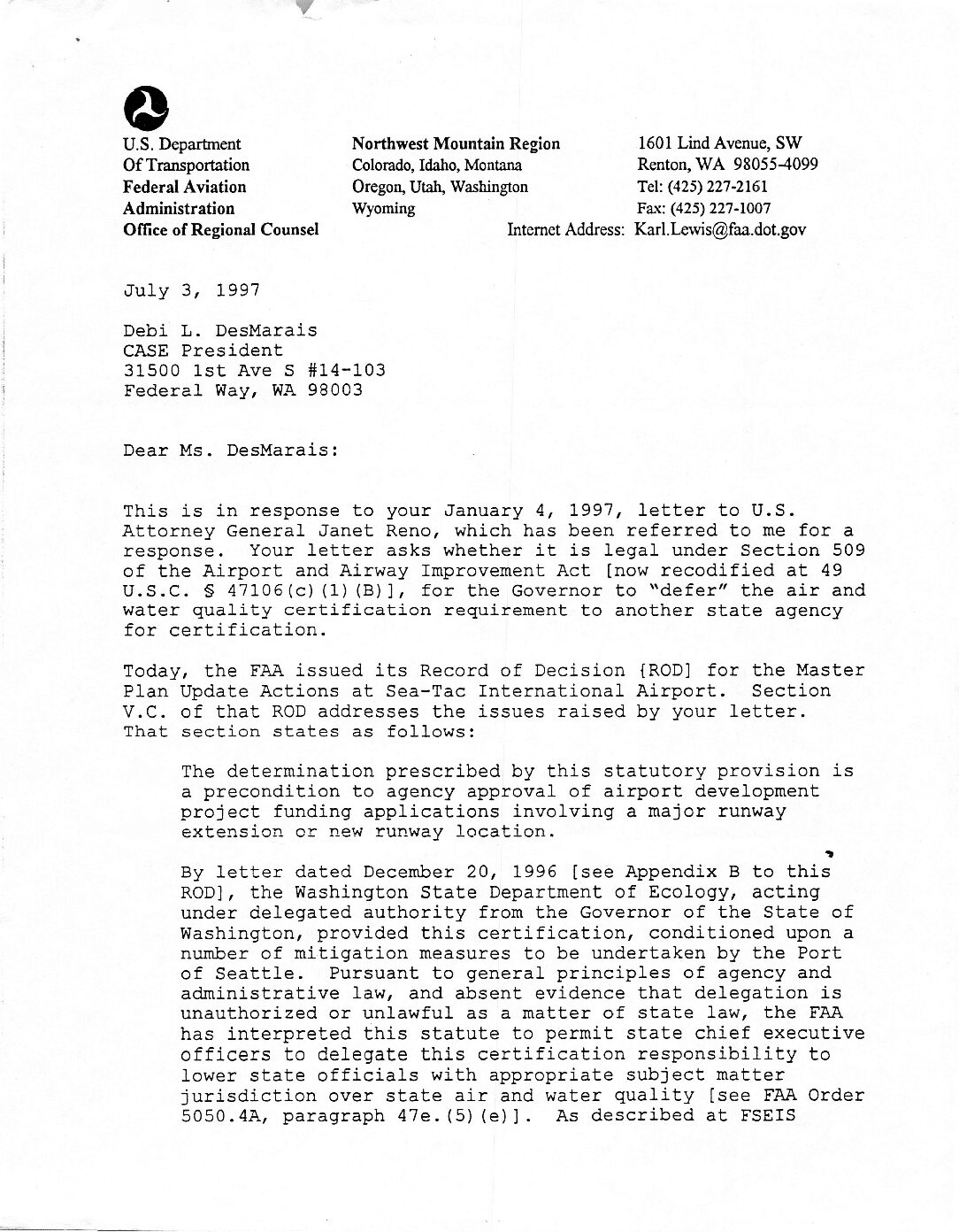
FAA response to CASE President regarding air and water quality certification for Sea-Tac Airport Master Plan Update
These 1996-1997 federal documents address environmental certification and air quality compliance issues related to the Sea-Tac International Airport Master Plan expansion, including the proposed third runway. The FAA confirmed that Washington State's Governor legally delegated air and water quality certification authority to the Department of Ecology, and later provided direct certification himself following public controversy. The EPA also weighed in on how Clean Air Act conformity rules applied to the FAA's phased approval approach for various airport development projects.