Story Highlights
- Airlines at Seattle-Tacoma International Airport consumed 709.46 million gallons of jet fuel in 2025.
- Alaska Airlines and Delta Air Lines purchased over 388 million gallons combined last year.
- The Port of Seattle plans to expand fuel storage capacity to meet sustainability goals.
Airlines flying out of Seattle-Tacoma International Airport hit a new high for jet fuel use last year.
SeaTac Fuel Facilities, which oversees aircraft fueling at the airport, reported 709.46 million gallons of fuel used in 2025, up 2.4% from 692.18 million in 2024, according to a new financial audit filed with the Port of Seattle, which oversees the airport.
The total, which rose despite a nearly two-week fueling shutdown in November due to a pipeline leak, offers a behind-the-scenes glimpse at how fuel consumption use is changing at the airport as more international carriers add service.
A spokesperson for the FSM Group, which manages the Sea-Tac fuel consortium, did not respond to a request for comment Monday.
SeaTac Fuel Facilities is a limited liability company to which airlines that use Sea-Tac Airport belong. New airlines pay a $1,000 capital contribution and then a $75,000 fee to become members. And the consortium pays $663,138 in monthly rent to the Port of Seattle.
Over the years, the amount of fuel consumed at Sea-Tac has quickly grown, up 62% from the 437.55 million gallons in 2003, when the company first signed a lease at the airport. During that period, fuel consumption growth has far outpaced the increase in annual flights, which have climbed from 169,965 in 2004 (the earliest available full year of Cirium data) to 208,148 in 2025, for an increase of 22%.
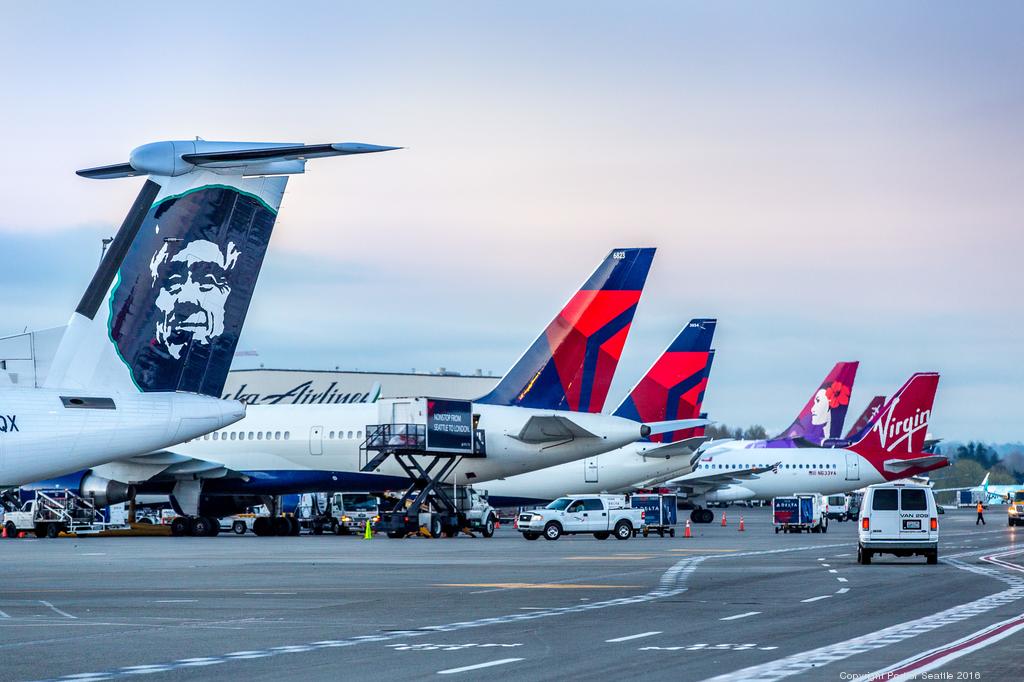
Alaska Airlines and Delta Air Lines — the two largest carriers at Sea-Tac by passenger volume — are the largest SeaTac Fuel Facilities customers, last year purchasing 237.48 million and 150.84 million gallons of jet fuel, respectively, or about 55% of the total. Prices hovered between $2 and $2.50 per gallon in 2025, spiking to as high as $4.88 during the war in Iran, according to Airlines for America, a trade association.
Despite accounting for more than 50% of all flights from Sea-Tac, Alaska purchased only about 33% of all fuel. That’s likely due to the fact that Alaska’s flights are primarily shorter domestic routes, with carriers that serve more long-haul destinations buying proportionally more fuel.
In 2025, with the exception of the pandemic-driven plunge in air travel in 2020, fuel use at Sea-Tac climbed at its lowest rate since 2012, when fuel consumption fell slightly.
Though the airport has attracted a bevy of new routes, it is now encountering capacity challenges due to its tight 2,500-acre footprint. The port is currently underway with an effort to add a new terminal and expand fuel storage.
Currently, Sea-Tac can hold about 17 million gallons of jet fuel, or about seven days of reserves, according to the port. The agency wants to expand the facility so it can hold between 22 million to 31 million gallons at capacity.
Part of that reasoning, the port says, is to help it meet its self-imposed goal of having sustainable aviation fuel, a more environmentally friendly fuel alternative made from recycled organic material, that can be blended into the fuel at a 10% concentration.