TagUltrafine Particulates(77)
-
2024-08-07
Study suggests ultrafine particles linked to 1,100 deaths per year in Montreal and Toronto
Study followed 1.5 million people over 15 years Joe Bongiorno · The Canadian Press · Posted: Aug 07, 2024 3:49 PM PDT | Last Updated: August 7 McGill professor breaks down how vehicle and industry pollution affect our health Duration 4:46 Scott Weichenthal is with McGill University’s department of epidemiology and biostatistics, and is the -
 2024-08-05
Ultrafine particles linked to over 1,000 deaths per year in Canada’s two largest cities
A first-of-its kind study conducted in Canada’s two largest cities by McGill-led researchers has linked about 1,100 premature deaths per year to an unregulated air pollutant. Ultrafine particles (UFPs) primarily come from vehicle emissions and industrial activities. Canada’s federal and provincial governments have not set concentration limits for UFPs, as they have for larger fine -
 2024-06-26
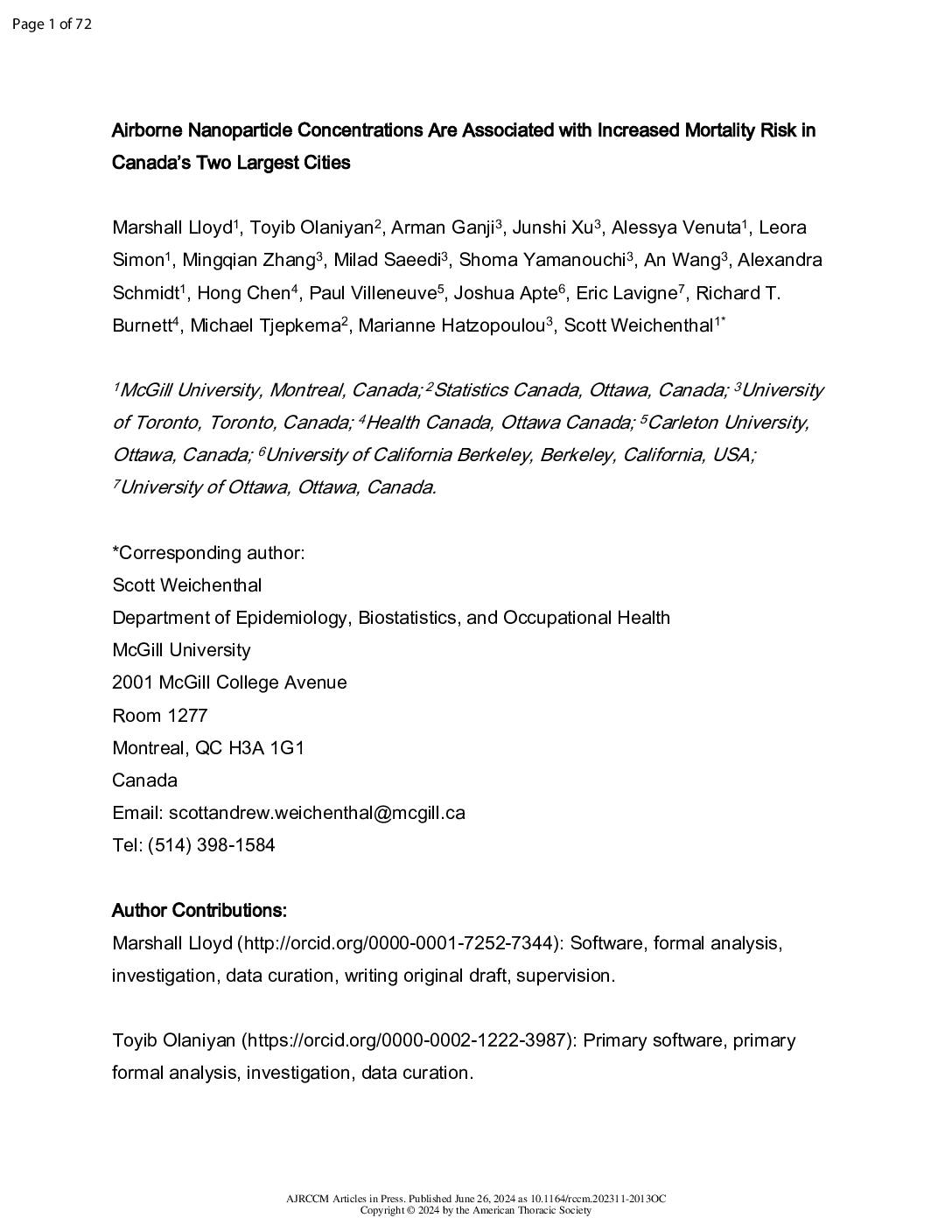
Airborne nanoparticle concentrations are associated with increased mortality risk in Canada’s two largest cities
A Canadian research study found that exposure to airborne nanoparticles is linked to higher mortality risk in Toronto and Montreal. The study, published in 2024 and funded by the Health Effects Institute, analyzed particle concentration data across Canada's two largest cities to assess long-term health impacts. While focused on urban air quality in Canada, the findings contribute to broader scientific understanding of how fine airborne particles from traffic and other sources affect public health. -
Airport workers asking Sacramento to mandate airlines report jet fuel emissions
Sid Garcia Wednesday, June 5, 2024 12:57PM A new study has detailed the health effects of jet fuel emissions on airport workers and people living near an airport or flight path. A new study has detailed the health effects of jet fuel emissions on airport workers and people living near an airport or flight path. -
Researcher Probes Ultrafine Particles’ Ties to Airfield Activity
Researchers have identified concentrations of ultrafine particles in Bedford neighborhoods that may be connected to aircraft operations at Hanscom Field. Dr. Neelakshi Hudda, a research assistant professor in civil and environmental engineering at Tufts University, shared preliminary findings at a virtual meeting of the Hanscom Field Advisory Commission on Tuesday. The health implications are uncertain, -
Beautiful Sunsets vs. Particulate Matter
Limit your exposure to particulate matter. Limit your cumulative risk. The smoke from wildfires has once again blanketed the areas around Sea-Tac Airport, creating PM2.5 air quality readings often seen more in Third World countries. Unfortunately, most of us are highly biased to only perceive dangers we can see. For example, many of you will -
 2023-07-10
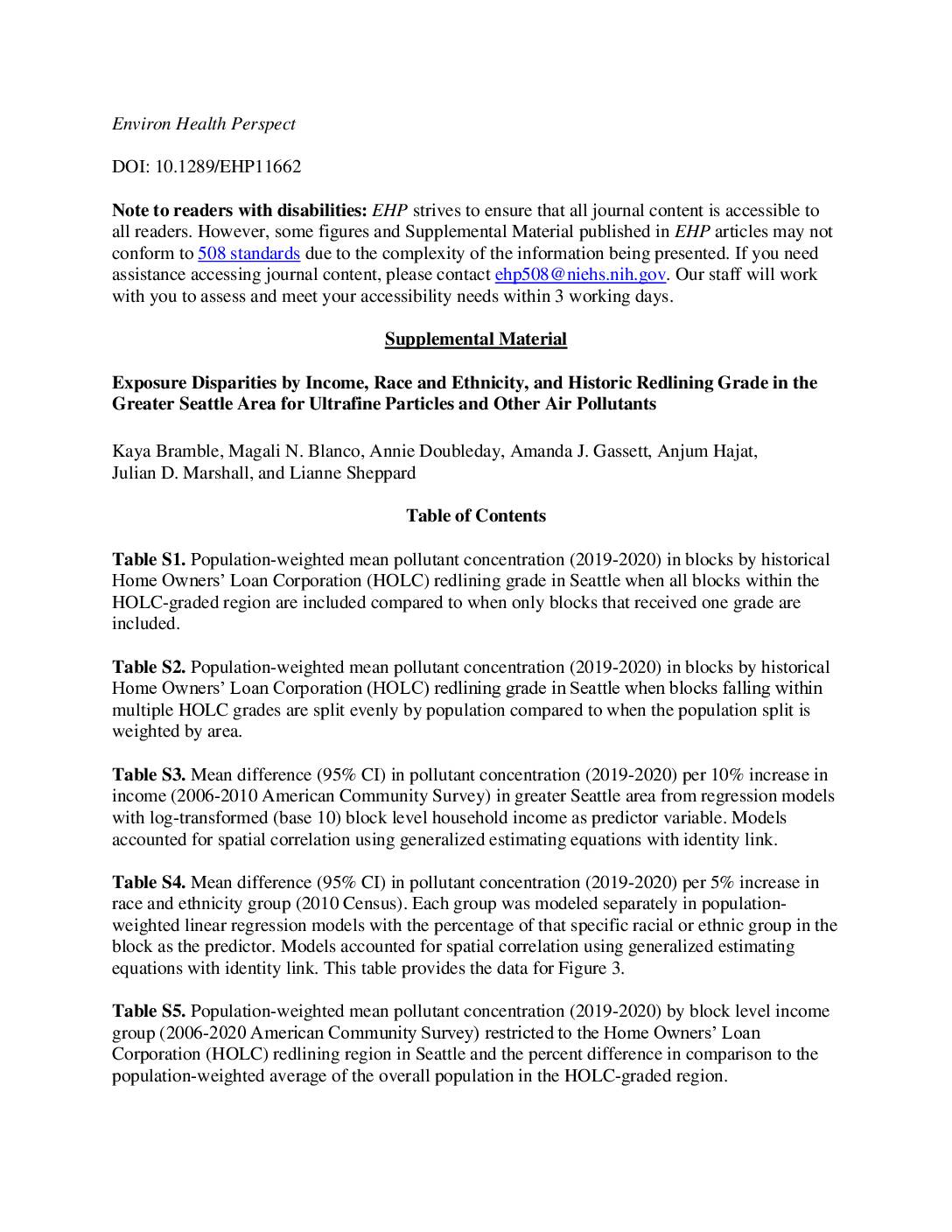
Exposure disparities by income, race and ethnicity, and historic redlining grade in the greater Seattle area for ultrafine particles and other air pollutants: supplemental material
https://ehp.niehs.nih.gov/doi/full/10.1289/EHP11662 -
 2023-07-10
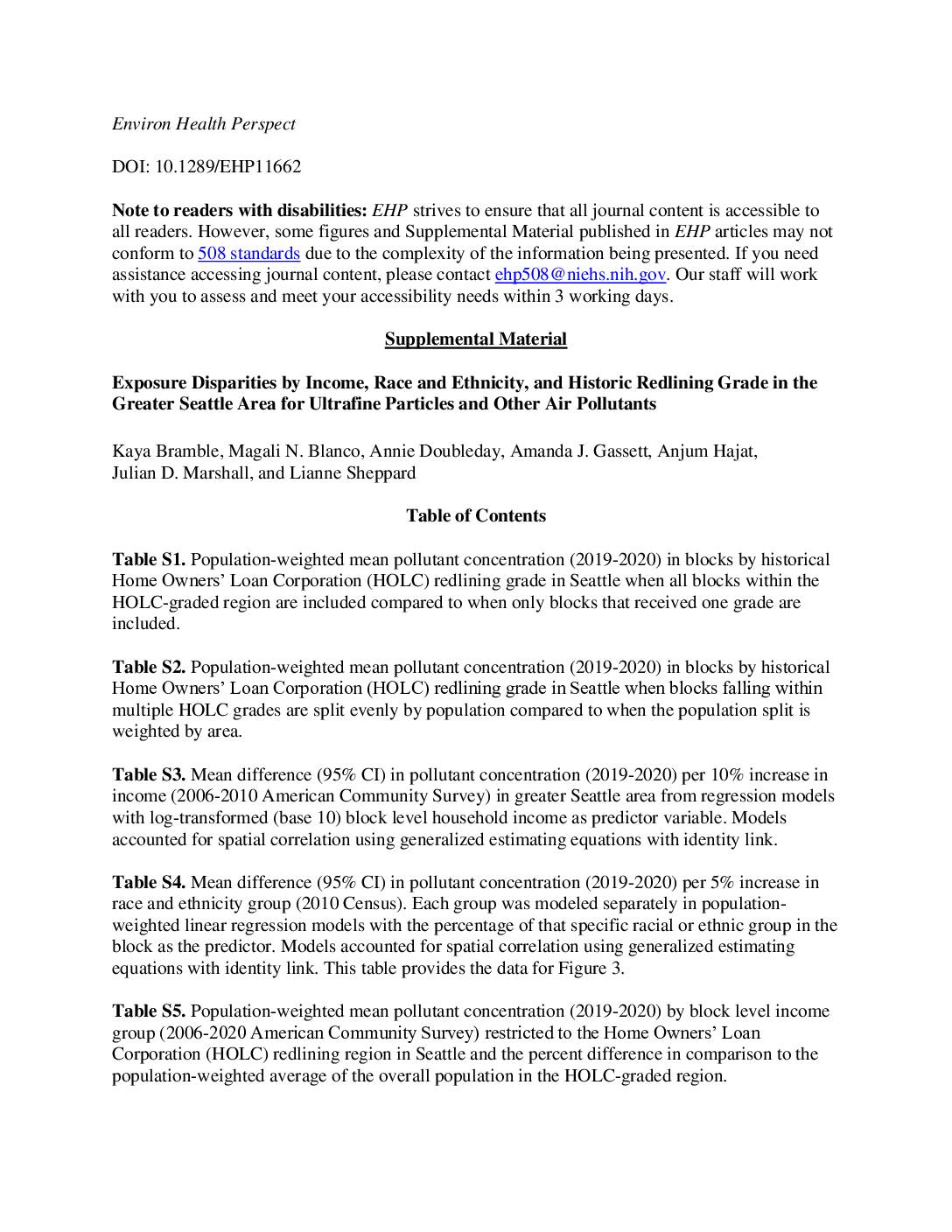
Supplemental material: Exposure disparities by income, race and ethnicity, and historic redlining grade in the greater Seattle area for ultrafine particles and other air pollutants
This environmental health study examines how exposure to ultrafine particles and other air pollutants varies across the greater Seattle area based on income, race and ethnicity, and historical redlining grades assigned by the Home Owners' Loan Corporation (HOLC). Researchers analyzed pollutant concentration data from 2019-2020 alongside census and demographic data to identify disparities between communities. The supplemental materials include statistical tables and scatterplots supporting the main findings on environmental inequality across Seattle neighborhoods. -
 2023-07-05
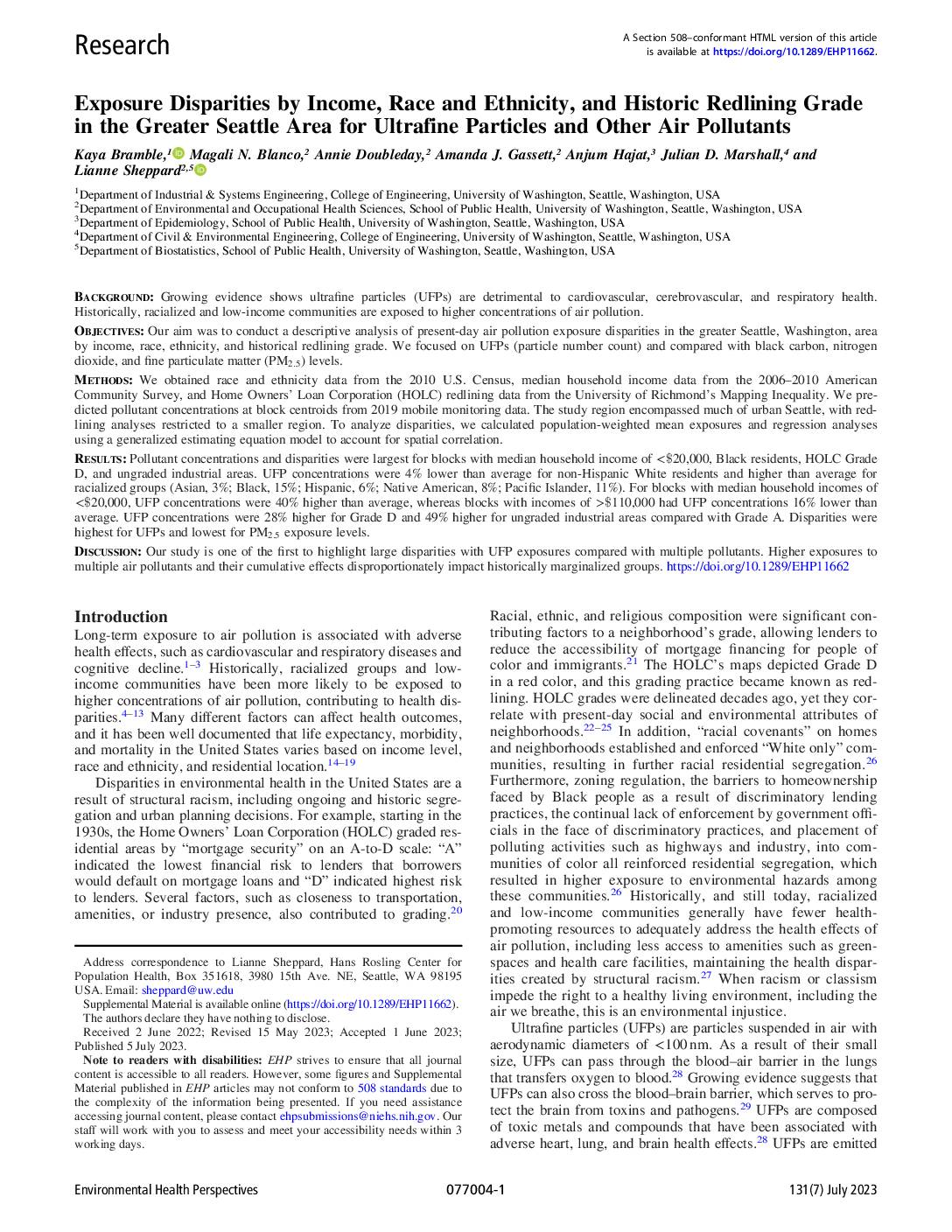
Exposure disparities by income, race and ethnicity, and historic redlining grade in the greater Seattle area for ultrafine particles and other air pollutants
A University of Washington study found that low-income and minority communities in the greater Seattle area are exposed to significantly higher levels of ultrafine particles (UFPs) and other air pollutants compared to wealthier, predominantly white neighborhoods. The research also revealed that neighborhoods historically designated as 'hazardous' under 1930s redlining practices continue to experience disproportionately poor air quality today. Disparities were most pronounced for UFPs, which are tiny particles linked to heart, lung, and brain health problems, and least pronounced for fine particulate matter (PM2.5). -
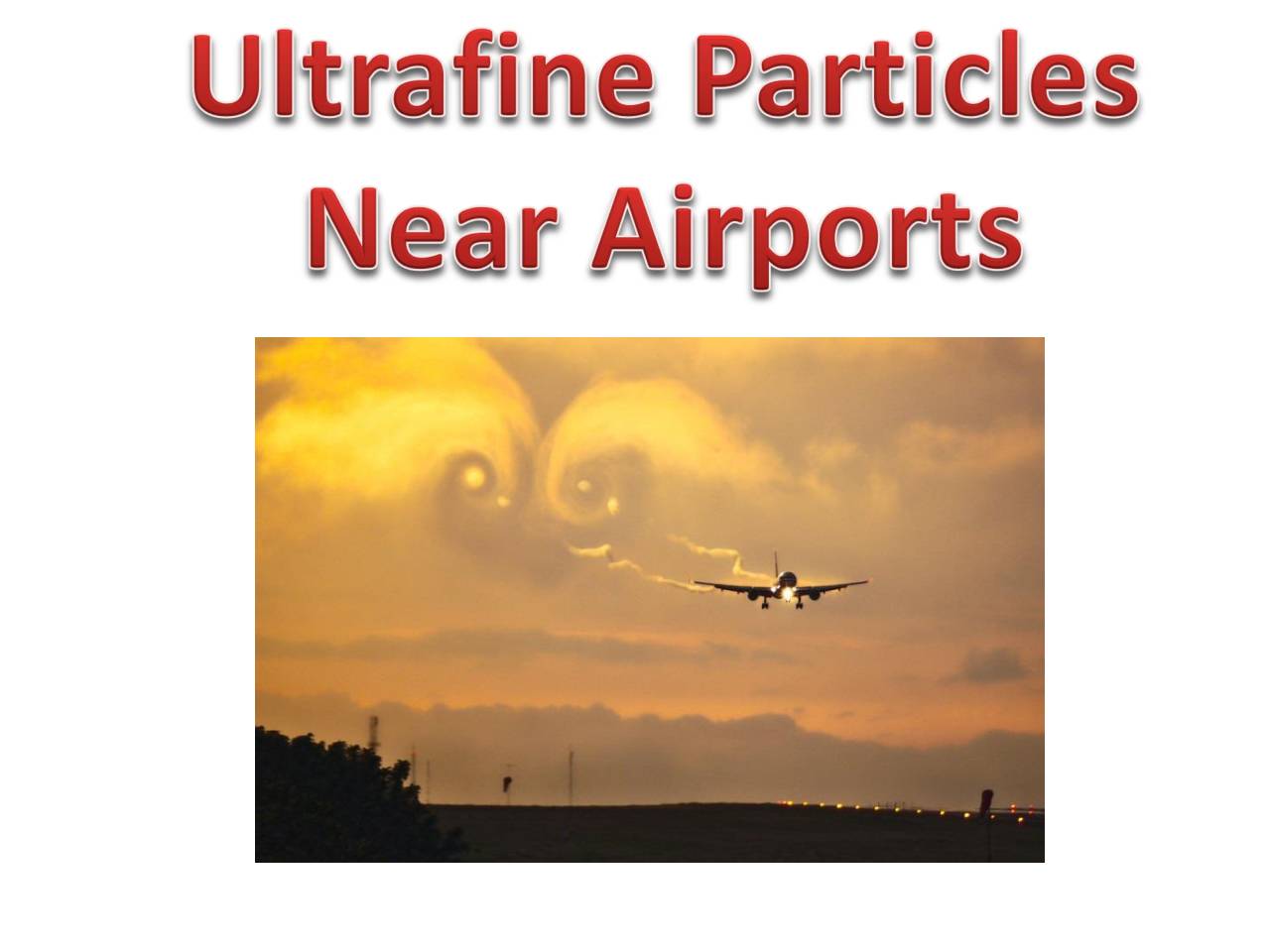 2023-06-07
Ultrafine particles near airports
The University of Washington School of Public Health was directed by Washington State to study ultrafine particle air pollution near Sea-Tac Airport, the state's busiest international airport. The study assessed air quality within 10 miles of the airport along flight paths, distinguishing between aircraft and other pollution sources, and comparing affected areas with unaffected ones. Findings were shared with local governments and community members, with a final report due December 1, 2019.