TagNoise Pollution(9)
-
 2025-12-09 00:27
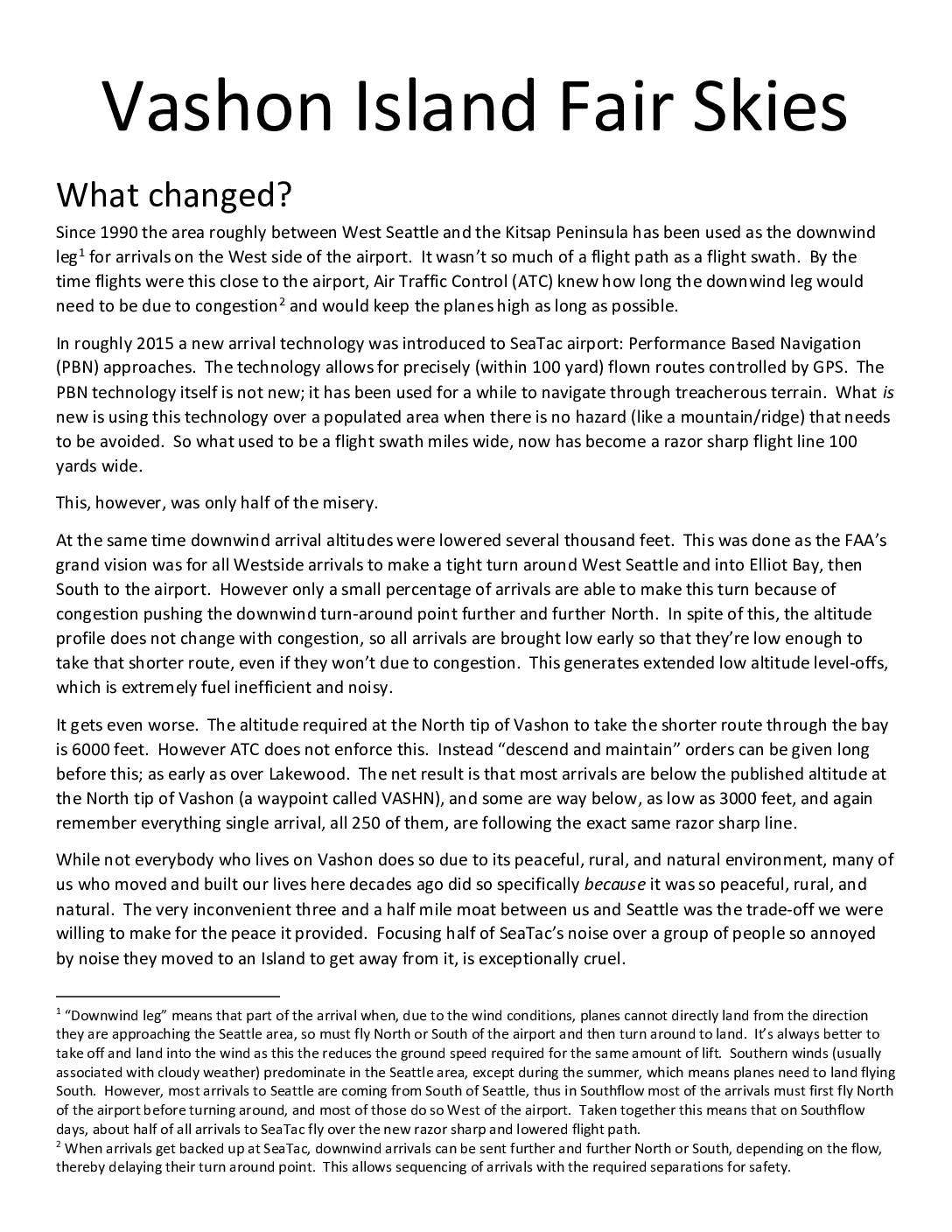
Vashon Island Fair Skies – What changed?
A document explaining changes to aircraft arrival patterns at SeaTac airport around 2015, including the introduction of Performance Based Navigation (PBN) technology and lowered flight altitudes. The changes concentrated flight paths over Vashon Island in a narrow corridor, causing increased noise pollution for residents who chose to live there for its peaceful environment. -
 2025-12-09 00:27
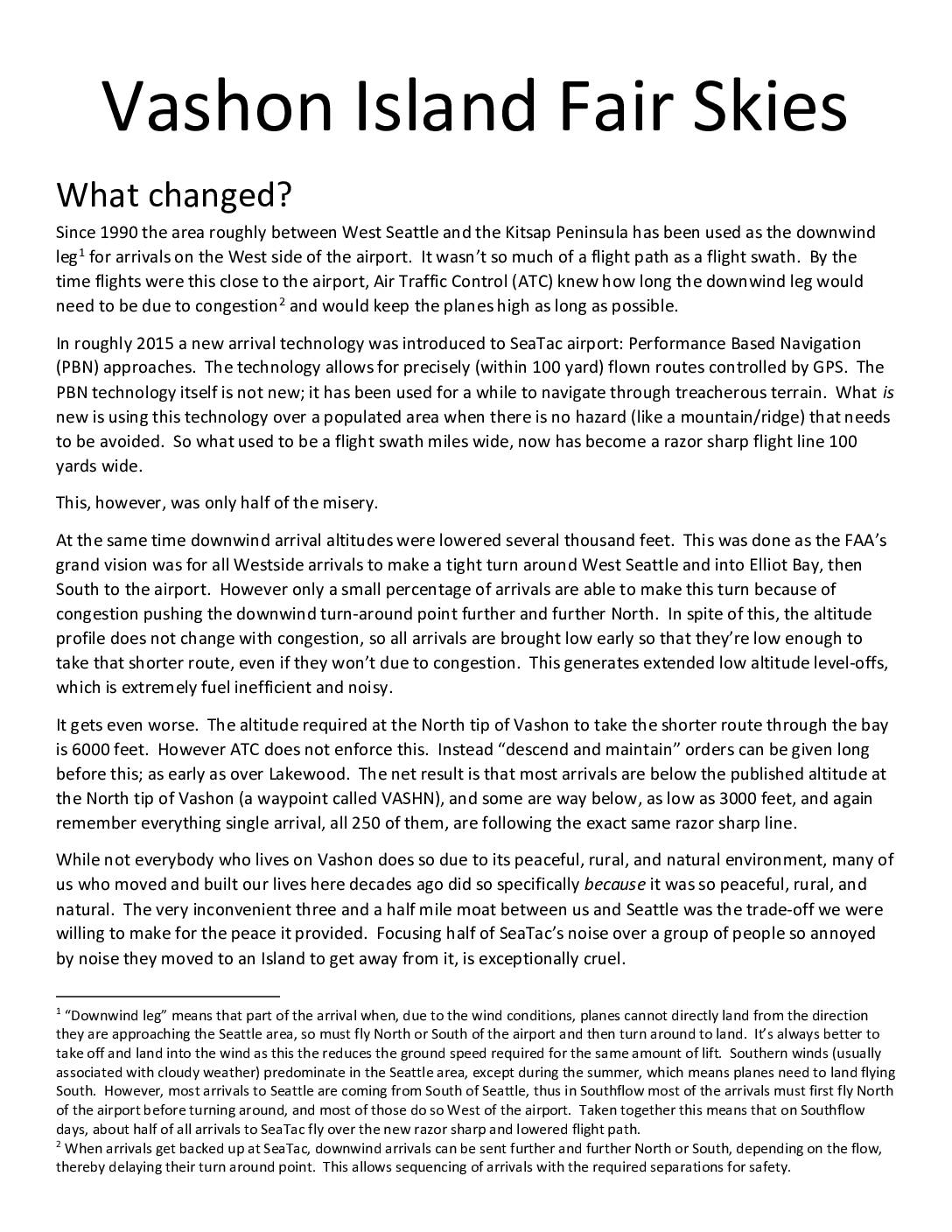
Vashon Island Fair Skies – What changed?
A document explaining changes to aircraft arrival patterns at SeaTac airport around 2015, including the introduction of Performance Based Navigation (PBN) technology and lowered flight altitudes. The changes concentrated flight paths over Vashon Island in a narrow corridor, causing increased noise pollution for residents who chose to live there for its peaceful environment. -
 2025-10-07 21:25
City of Burien Council Meeting – Zoom Screenshot
Zoom recording of Burien council meeting; Councilmember Linda Akey speaking: "With no consideration for the inevitable impact on the citizens of Burien." -
2019-11-05 11:44
From Lawn Mowers To Rock Concerts, Our ‘Deafening World’ Is Hurting Our Ears
Public Health Heard on Fresh Air Dave Davies Download Transcript Harsh ambient sound from even small household appliances, such as food processors and hair dryers, can reach levels that lead to permanent damage, hearing specialists say. Our ears are complicated, delicate instruments that largely evolved in far quieter times than the age we currently inhabit -
 2002-09-01 00:00
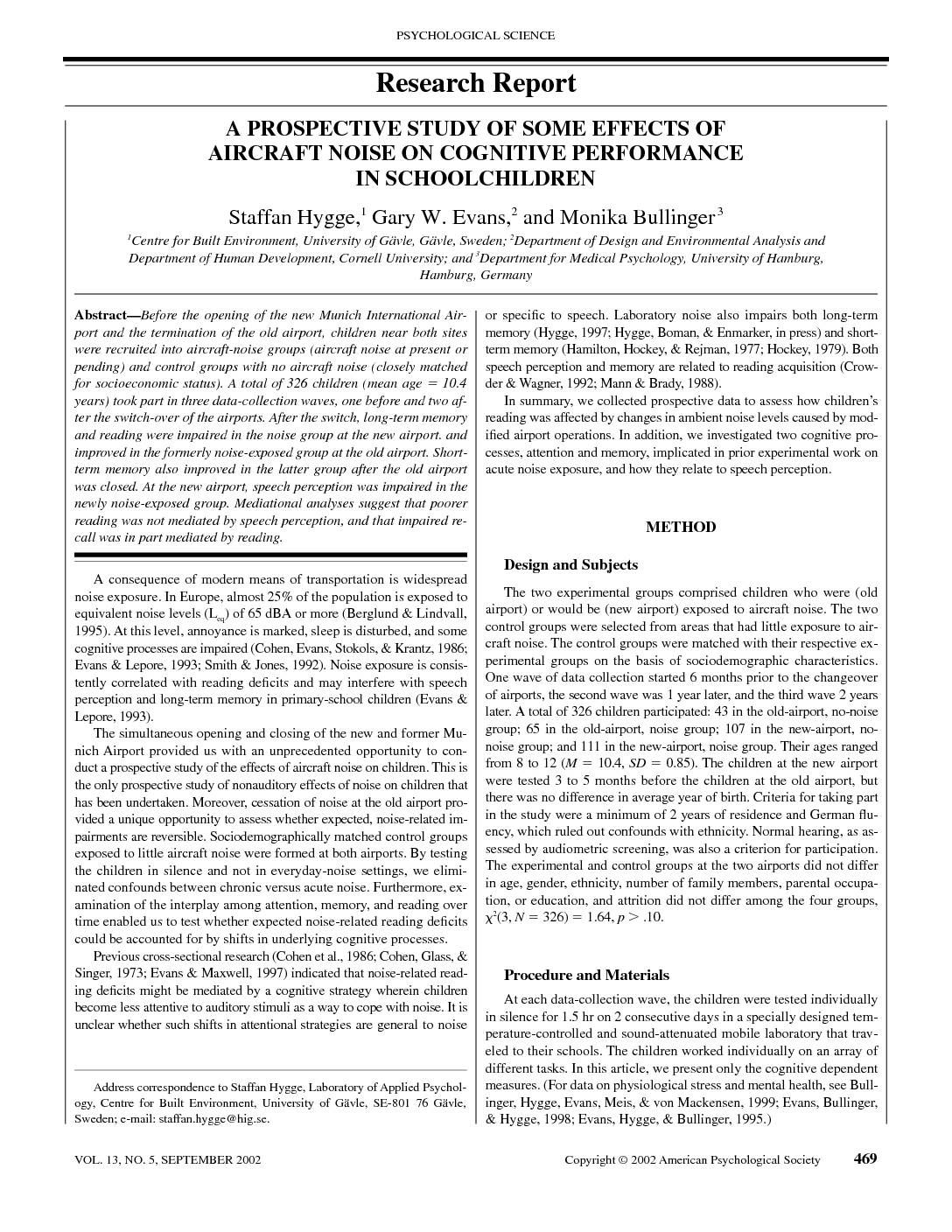
A prospective study of some effects of aircraft noise on cognitive performance in schoolchildren
VOL. 13, NO. 5, SEPTEMBER 2002 Copyright © 2002 American Psychological Society 469 A PROSPECTIVE STUDY OF SOME EFFECTS OF AIRCRAFT NOISE ON COGNITIVE PERFORMANCE IN SCHOOLCHILDREN Staffan Hygge, -
 1997-05-01 00:00
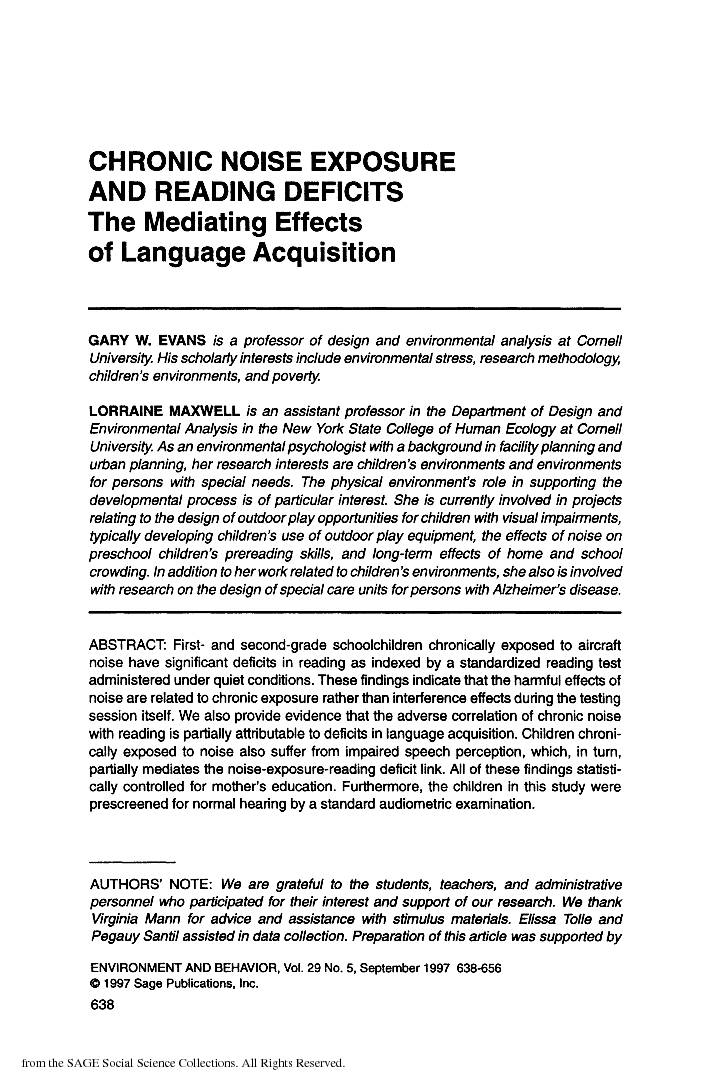
Chronic Noise Exposure and Reading Deficits Cornell May 1997
ABSTRACT: First- and second-grade schoolchildren chronically exposed to aircraft noise have significant deficits in reading as indexed by a standardized reading test administered under quiet conditions. These findings indicate that the harmful effects of noise are related to chronic exposure rather than interference effects during the testing session itself. We also provide evidence that the -
1997-04-28 15:09
Kids near airports don’t read as well because they tune out speech, Cornell study finds
Children in schools bombarded by frequent aircraft noise don’t learn to read as well as children in quiet schools, Cornell University researchers have confirmed. And they have discovered one major reason: kids tune out speech in the racket. “We’ve known for a long time that chronic noise is having a devastating effect on the academic -
 1975-12-15 00:00
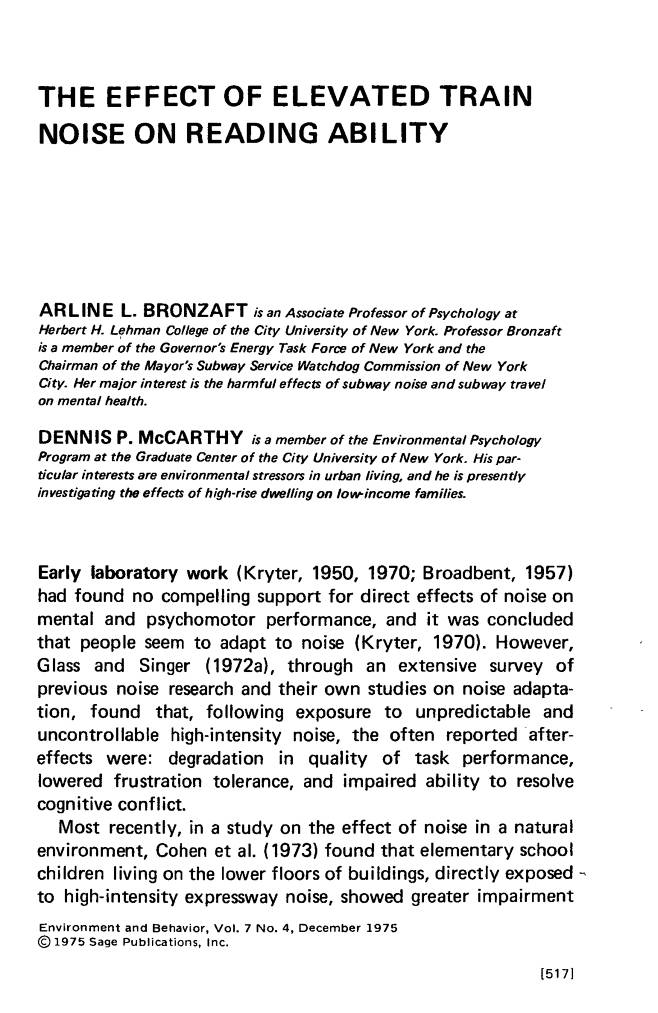
The Effect of Elevated Train Noise On Reading Ability
ARLINE L. BRONZAFT is an Associate Professor of Psychology at Herbert H. Lehman College of the City University of New York. Professor Bronzaft is a member of the Governor’s Energy Task Force of New York and the Chairman of the Mayor’s Subway Service Watchdog Commission of New York City. Her major interest is the harmful effects of subway noise and subway travel on mental health. DENNIS P. McCARTHY is a member of the Environmental Psychology Program at the Graduate Center of the City University of New York. His par- ticular interests are environmental stressors in urban living, and he is presently investigating the effects of high-rise dwelling on low-income families. Early laboratory work (Kryter, 1950, 1970; Broadbent, 1957) had found no compelling support for direct effects of noise on mental and psychomotor performance, and it was concluded that people seem to adapt to noise (Kryter, 1970). However, G lass and Singer (1972a), through an extensive survey of previous noise research and their own studies on noise adapta- tion, found that, following exposure to unpredictable and uncontrollable high-intensity noise, the often reported after- effects were: degradation in quality of task performance, lowered frustration tolerance, and impaired ability to resolve cogn itive conflict. Most recently, in a study on the effect of noise in a natural environment, Cohen et al. (1973) found that elementary school children living on the lower floors of buildings, directly exposed - to high-intensity expressway noise, showed greater impairment Environment and Behavior, Vol. 7 No. 4, December 1975…