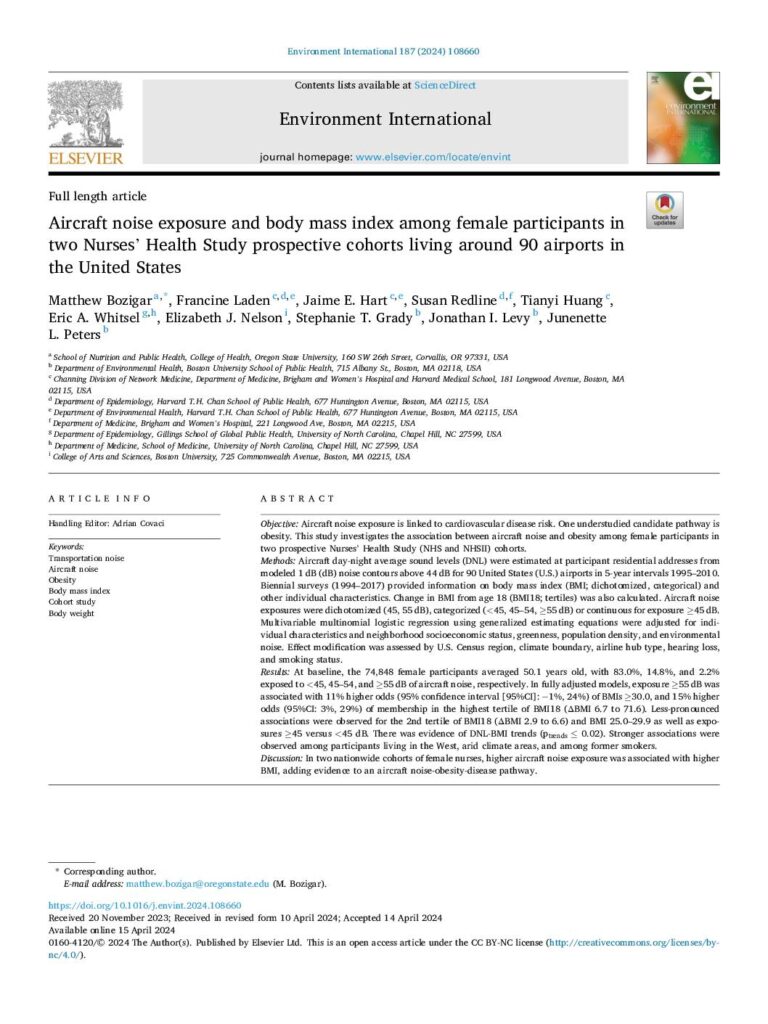
A large study of nearly 75,000 female nurses living near 90 U.S. airports found that those exposed to higher levels of aircraft noise were more likely to have higher body mass index (BMI) and greater weight gain since age 18. Women exposed to the loudest aircraft noise (55 decibels or more) had an 11% higher chance of being obese and a 15% higher chance of falling into the highest category of weight gain compared to those in quieter areas. The findings suggest that chronic aircraft noise exposure — such as that experienced by residents near Sea-Tac Airport — may contribute to obesity risk, potentially through stress-related pathways including disrupted sleep and hormonal changes.Open full document
Notes
This study investigates the association between aircraft noise exposure and body mass index (BMI) among 74,848 female nurses in two prospective U.S. cohorts (NHS and NHSII) living near 90 major airports. Using day-night average sound level (DNL) estimates and biennial survey data from 1994–2017, the study found that exposure to ≥55 dB of aircraft noise was associated with 11% higher odds of BMI ≥30.0 and 15% higher odds of membership in the highest tertile of BMI change since age 18. The findings add evidence to an aircraft noise–obesity–disease pathway.