Evaluation of Alternative Measures: Chapter 7, Shared Airspace Study

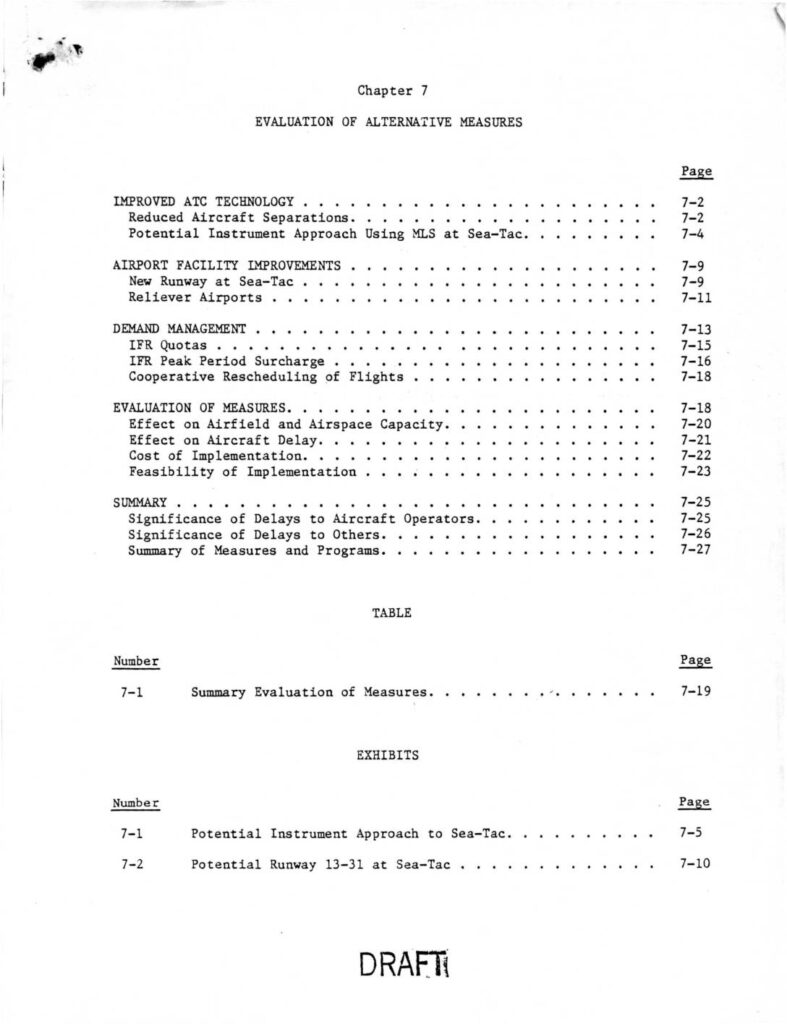
This draft chapter evaluates alternative measures to reduce growing aircraft delays caused by airspace interactions between Seattle-Tacoma International Airport (Sea-Tac) and Boeing Field, which are projected to worsen significantly between 1990 and 2000. Three main approaches are examined: improving air traffic control (ATC) technology to allow reduced aircraft separations, expanding airport facilities through new runways or reliever airports, and managing demand through flight quotas or peak-period pricing. The chapter concludes that a combination of these measures will likely be necessary, and that action should begin immediately since implementation could take until 1990 when the delays are expected to become critical.

Notes

Chapter 7 of the Shared Airspace Study evaluating alternative measures to reduce aircraft delays resulting from airspace interactions between Sea-Tac Airport and Boeing Field (King County International Airport). Analyzes three categories of measures: Improved ATC Technology (reduced aircraft separations, MLS instrument approach procedures), Airport Facility Improvements (new Runway 13-31 at Sea-Tac, reliever airports), and Demand Management (IFR quotas, IFR peak period surcharges, cooperative rescheduling of flights). Evaluates each measure’s effect on airfield and airspace capacity, aircraft delay, cost of implementation, and feasibility of implementation. References the 1982 National Airspace System Plan. Delays projected to increase rapidly from 1990 to year 2000.

V V