Notes
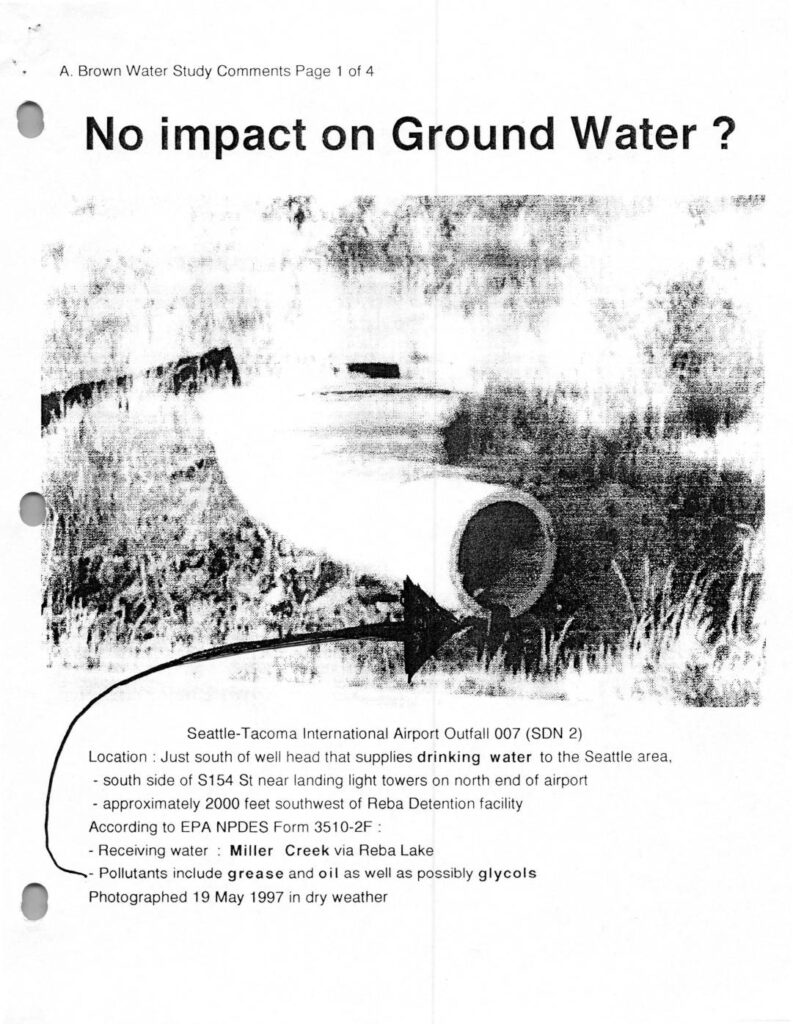
Letter dated 8 June 1997 from A. Brown (239 SW 189 Pl, Seattle, WA 98166) to Washington State Department of Ecology (Roger Nye, Bellevue WA), commenting on the DOE and Port of Seattle Agreement for Ground Water Study at Seattle-Tacoma International Airport. Documents Outfall 007 (SDN 2) discharging oil, grease, and glycols (ethylene glycol, propylene glycol) into Miller Creek via Reba Lake, photographed 19 May 1997 in dry weather on the south side of S154 St near landing light towers, approximately 2000 feet southwest of Reba Detention facility and adjacent to a drinking water wellhead. Argues the ground water study area is too small, failing to include the fuel depot, outfalls, Lake Reba, Walker Creek contamination, and ~500 abandoned underground tanks. Raises concerns about NPDES permit compliance, absence of required detention liner for over 20 years, untreated glycol releases, jet fuel leaks to aquifer, and the 80 billion pounds of fill associated with the Third Runway Master Plan Update. References EPA NPDES Form 3510-2F, peat bogs, seismic anomalies, SASA maintenance facility, and Des Moines excavation of over 12 million cubic yards.