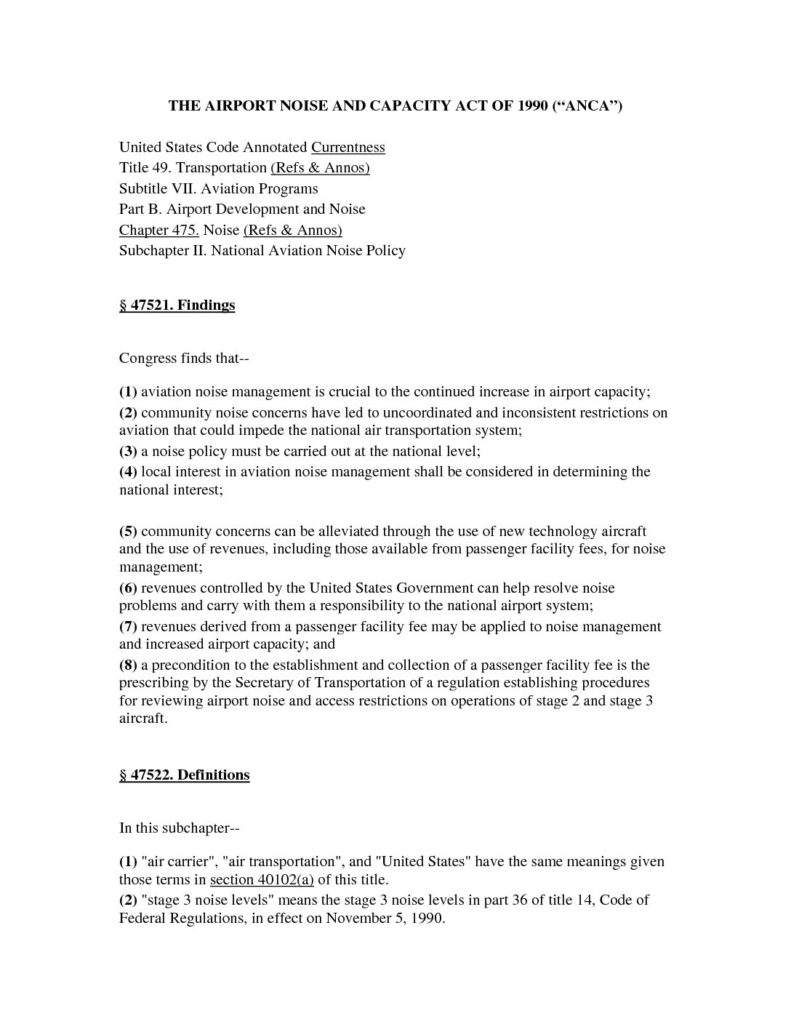
The Airport Noise and Capacity Act of 1990 (ANCA) established a national framework for managing aviation noise, requiring the Secretary of Transportation to create a uniform noise policy that phases out louder Stage 2 aircraft and regulates restrictions on quieter Stage 3 aircraft. The law ensures that any local airport noise restrictions—such as limits on flight hours or aircraft operations—go through a formal federal review process to prevent inconsistent, patchwork rules that could disrupt the national air transportation system. Passenger facility fees collected at airports may be used to fund noise reduction efforts and increase airport capacity.Open full document
Notes
The Airport Noise and Capacity Act of 1990 (ANCA) establishes a national aviation noise policy framework, requiring the Secretary of Transportation to create regulations for reviewing airport noise and access restrictions on stage 2 and stage 3 aircraft operations. The Act sets out congressional findings linking noise management to airport capacity, directs a detailed economic analysis of stage 2 aircraft phaseout impacts, and establishes criteria and procedures for approving or disapproving airport noise and access restrictions. It also conditions the establishment of passenger facility fees on the Secretary prescribing noise review regulations.