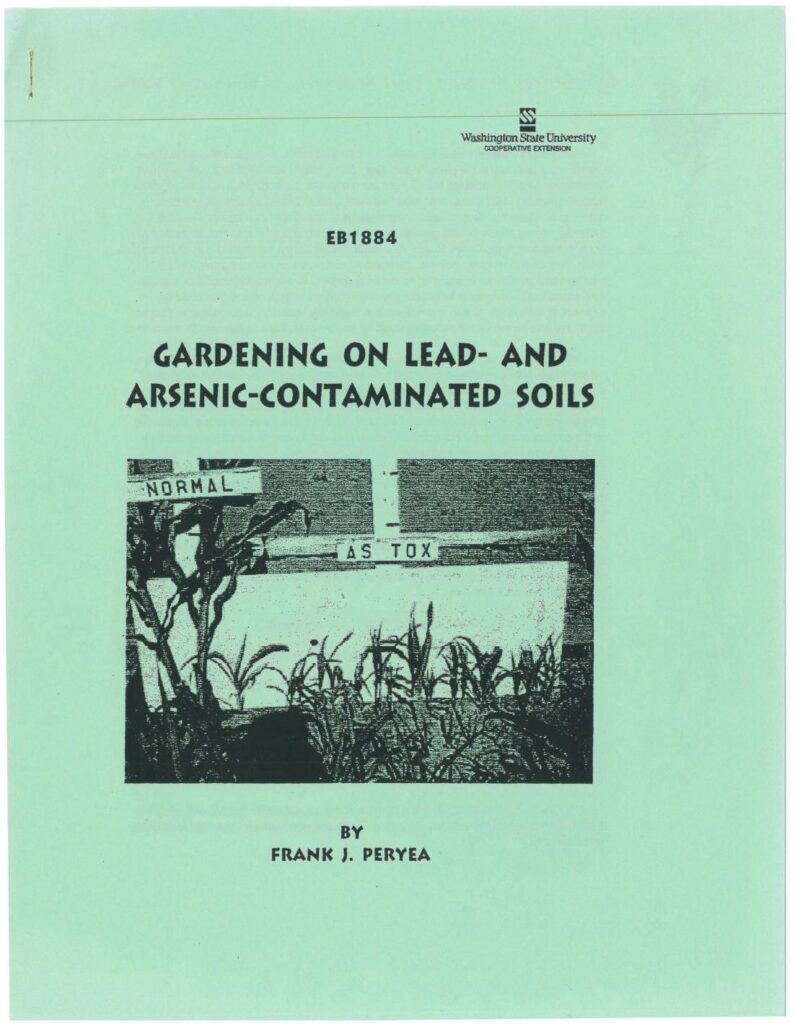
This Washington State University Extension bulletin explains how lead and arsenic can contaminate home garden soils through historical sources such as lead-based paint, leaded gasoline, and arsenical pesticides, and why this poses health risks especially for children. It provides guidance on identifying contaminated soils through chemical testing and offers practical steps gardeners can take to reduce their exposure to these toxic elements.Open full document
Notes
This Washington State University Cooperative Extension bulletin explains why some soils contain elevated levels of lead and arsenic due to human activities such as leaded gasoline, lead-based paint, and arsenical pesticides. It provides guidance on how to identify contaminated soils through chemical testing and outlines steps gardeners can take to minimize exposure risks when gardening on such soils.