The Airport Communities Podcast
On May 22, 2026 the Sustainable Airport Master Plan DEIS was released and a sixty day public comment period began.
In Ep #32, we said that the most basic ‘do’ is public health. As a society, Public health is the one thing, we all agree should not be traded away. Those are individual impacts.
Socioeconomics, Environmental Justice, Children’s Health
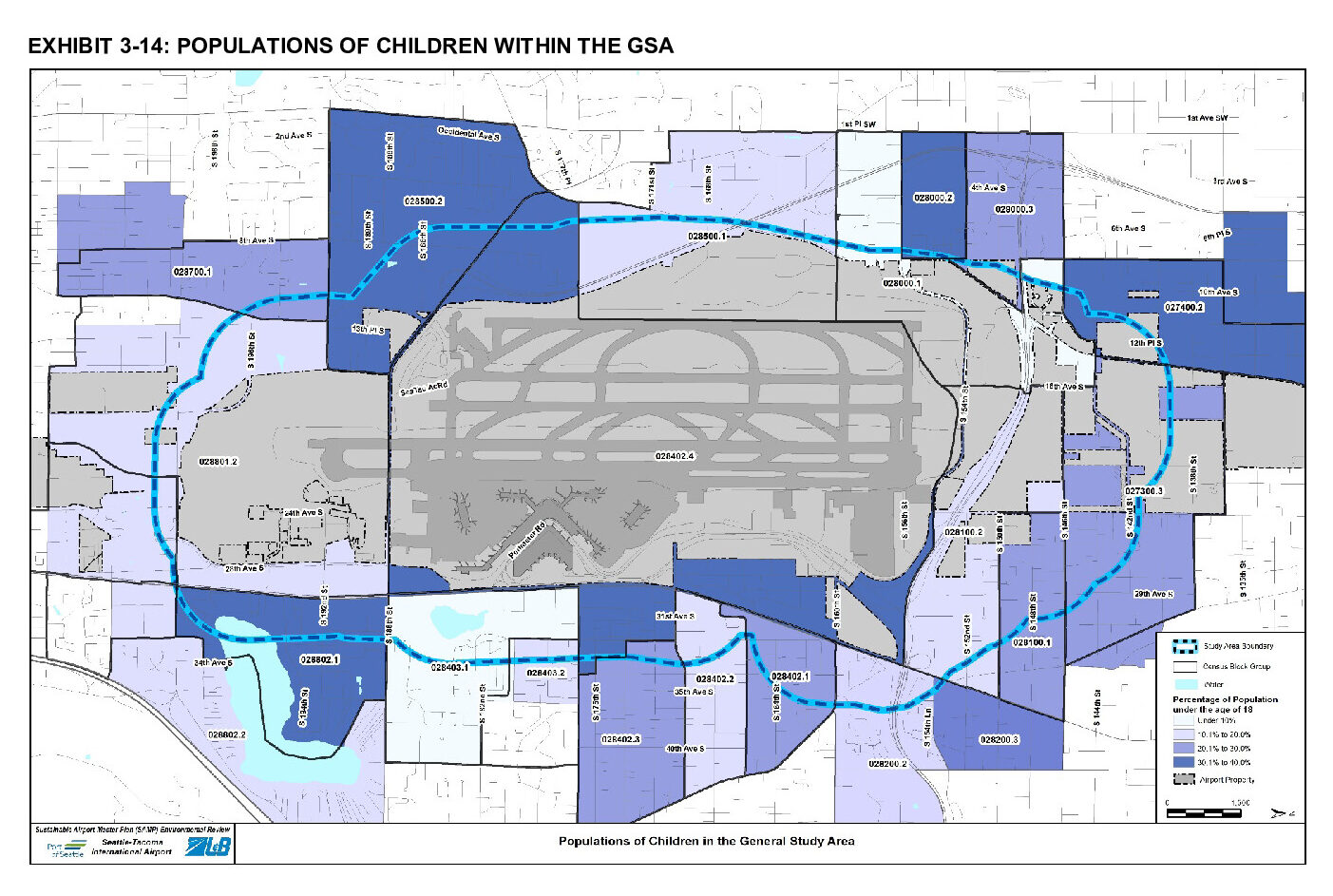
But both NEPA and SEPA address community harms–the collective impacts, especially on children, and particularly in Appendix K. Unfortunately, the FAA rigged the game in several key ways, including confining the study area for impacts on children to the census tracks immediately connected to the runways. How many people live near the runways? Not. Too. Many.
They also accepted the Port’s Economic Impact Study as its sole exhibit. It is riddled with exaggerations and claims that cannot be true. But even worse is that it takes the Greater Good argument to extremes with sections talking about commercial fishing and its partnerships with the Port of Tacoma. What does any of that have to do with any of communities under the flight path?
To add insult to injury, in early 2025, President Trump issued a series of executive orders removing most of what remained from consideration.
The Port promised: SEPA will be different
In our last episode we said that more research was necessary for aviation emissions and noise, that those gaps were the Port’s get out of jail free card on NEPA, and that the Port had promised to do better in SEPA. But did not.
On Socioeconomics, they did not even try to do better. The entire chapter is a straight copy/paste from the NEPA document.
Still, your comment must include Appendix K. It may seem harder to quantify community impacts than noise or air or water pollution, in some ways it’s much easier.
The promise was, “As we do better, you’ll do better.” That was what they said back in 1975 to respond to the second runway and the non-stop construction ever since.
We now have decades of lived experience — first predicted in the 1997 HOK Study that this was never true. The only research left to do is to put numbers to that decline.
What does that mean for us? Most of us do not make the connection, but we depend on our cities in order to flourish as individuals and as a community. So much of what we count on to thrive depends on roads, water, parks, recreation, public safety — the services municipalities provide. And yet, if the airport has been such a boon for surrounding communities why do we struggle so much with declining service levels and budget deficits.
The Port cannot control flight paths, but socioeconomics is an area that cannot be constrained by the FAA. Your comments should contrast the ongoing benefits to King County with those constant struggles for your local government.
Topics
- 2025 – FAA SAMP NEPA Final ROD/FONSI
- 2025 – Port of Seattle press release on SAMP-NTP/SAMP-SEPA DEIS
- 2026 – SAMP/SEPA Draft EIS
- Appendix K Socioeconomics, Environmental Justice, and Children’s Health
- 2018 – Port of Seattle Economic Impact Study (airport only)
- 1997 – HOK Study
- 1976 – Sea-Tac Communities Plan
To learn how you can make a difference:
- STNI.info/subscribe
- Find us on all the best platforms, including Apple and Spotify, or subscribe via SSAppleSpotifyYoutube