Targets all the right problems. Almost no chance of passing.
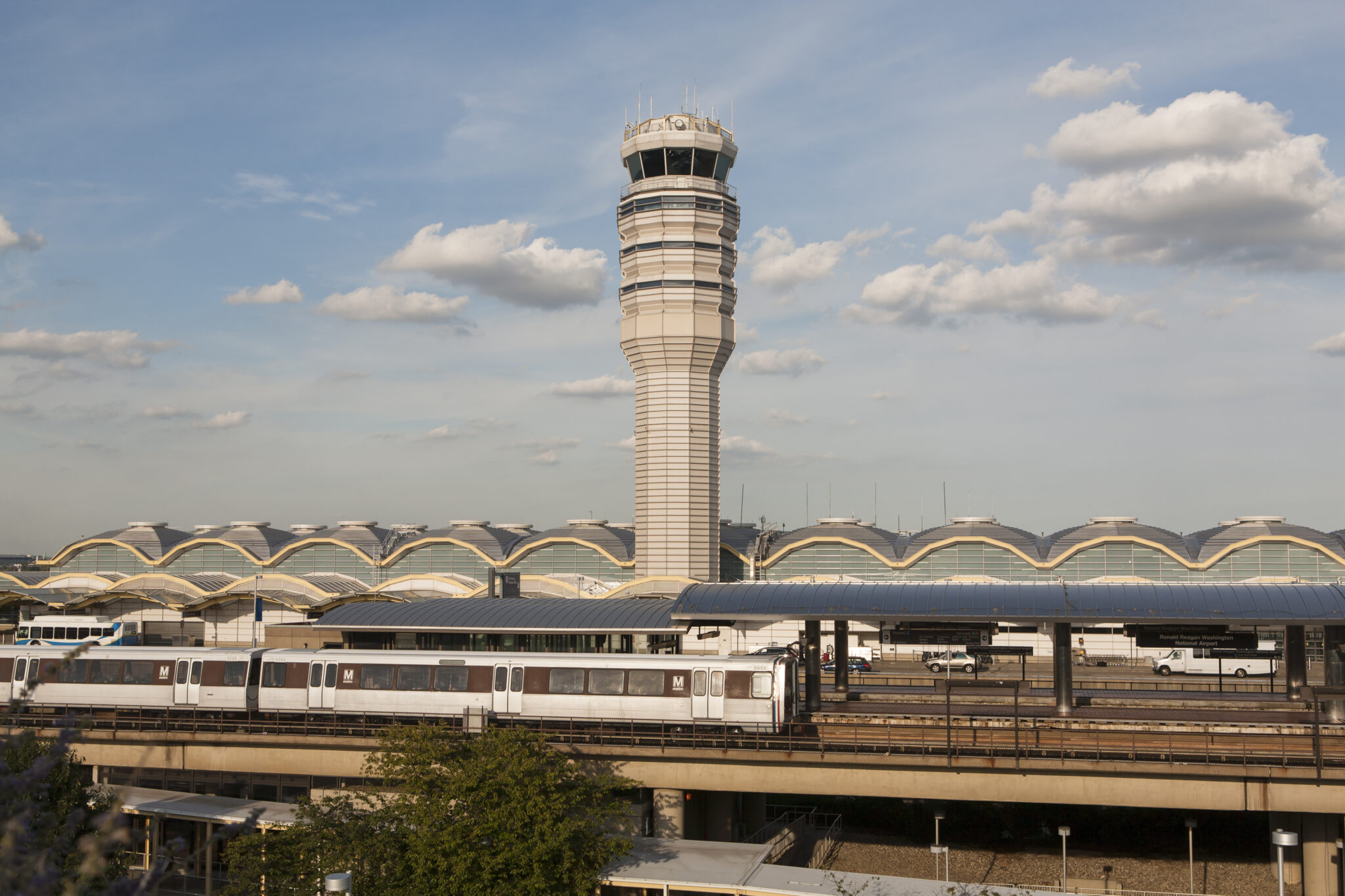
On September 10, Senators Tim Kaine and Mark Warner introduced the DCA Air Safety Act, a response to the January 2025 midair collision near Reagan National that killed 67 people. It is the single most direct statement for rational airport management in four decades. It states plainly: an airport has been scheduled past the point of safety, and the fix is to schedule fewer airplanes.
What the bill does
- It orders the FAA to cut DCA’s Airport Arrival Rate to no more than 28 aircraft in any rolling 60 minutes.
- It requires binding 30-minute interval caps within 180 days, so operations are spread across the hour instead of piled into it.
- It eliminates 30 slots over five years—at least 26 of them beyond-perimeter exemptions—phased in at six per year starting in 2028 and finished by the end of 2032.
- And it forces a public process: a proposed elimination list, a 60-day comment period, a final list within 120 days of close.
DCA has added 64 daily flights since 2000. On the night of the collision, one controller worked 29 aircraft across 18 minutes, including six takeoffs or landings in a five-minute span. The NTSB report found that airspace congestion and controller workload contributed to the crash.
Slots and banking, in plain terms
A slot is permission to operate at a specific time. Slot control means a federal ceiling on how many of those exist per hour. Banking—the bill calls it clustering—is what airlines do inside that ceiling: they jam arrivals and departures into tight windows in order to maximize profits. It is good for hub economics. It is bad for controllers. And it is bad for anyone under the flight path, because the peaks, especially in the early morning and at night is what hurts residents most.
Kaine and Warner went after both. Unheard of. Scheduling has been treated as untouchable, with all efforts focused on technology fixes instead.
What this means here
Sea-Tac is not slot-controlled. Almost no American airport is—DCA, JFK and LaGuardia are the exceptions–by acts of Congress dating back before 1990. (Airports were allowed to add themselves to that list–tellingly, the Port of Seattle chose not to do so.)
Because of that, today, the Port of Seattle has no authority to cap operations, and FAA grant assurances push in the opposite direction: accept the traffic that shows up. That is why the SAMP begins with an unconstrained demand forecast and asks only how much building will be necessary to make it happen. Demand management is not on the table.
Banking is real at Sea-Tac. Alaska and Delta both build connecting waves, and a DNL average of noise levels is designed to smooth away those harms. So, the two tools this bill reaches for—an hourly ceiling and a ban on clustering—are the two tools our region has been told for thirty five years do not exist.
Why it will not pass
However, since 1990, Congress has never supported slot control.
The bill also provides 26 “beyond-perimeter exemptions.” These are the nonstops that connect DCA to the West—including the west coast. They exist because members from other states want to get home without a connection, and they have never chosen to vote for any inconvenience.
Both sponsors represent Virginia. DCA is their local airport. They do not need a beyond-perimeter slot to get home. We do not accuse either of bad faith—the safety case here is real and they have been making it since well before the crash. However, the politics are a structural fact, and the whole story. The people who set capacity at DCA are the people who use DCA. Nobody votes to lengthen their own trip home.
Even this bill could be considered cautious. Sixty-seven people died. The NTSB put the system congestion in writing. And the response is six slots a year, starting two years from now, finishing in 2032.
The bill notes that daily operations have increased by 64 since 2000. At Sea-Tac the daily increase has been over twice that.
We truly want to cheer for the best airport legislation in four decades. But the lesson for us is not “call your senator.” It is that capacity at American airports only gets discussed after a catastrophe and even then only at that one airport.