How we got here
On Friday, May 22, the Port of Seattle will release the Draft SEPA Environmental Impact Statement for the Sustainable Airport Master Plan Near-Term Projects. (SAMP-NTP SEPA/EIS) That mouthful is the next milestone towards the largest and longest airport expansion in Sea-Tac history. Thirteen years in one minute.
 2012–2017: The long runway to a master plan
Four years after the Third Runway opened, the Port began talking about the next round of airport expansion as part of its Century Agenda. By 2015, that talk had a name: the Sustainable Airport Master Plan, or SAMP. The Port spent the next three years researching, presenting dozens of options in a series of workshops, and describing the SAMP as a twenty-year blueprint for passenger and cargo growth.
Concurrently, several major projects originally expected to be part of the SAMP were built separately — before that review process.
 2018: Two parts, one process
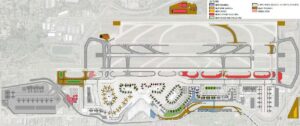
The Port completed the planning for a two-phase approach: Near-Term Projects by 2027, followed by Long-Term Projects in 2032.
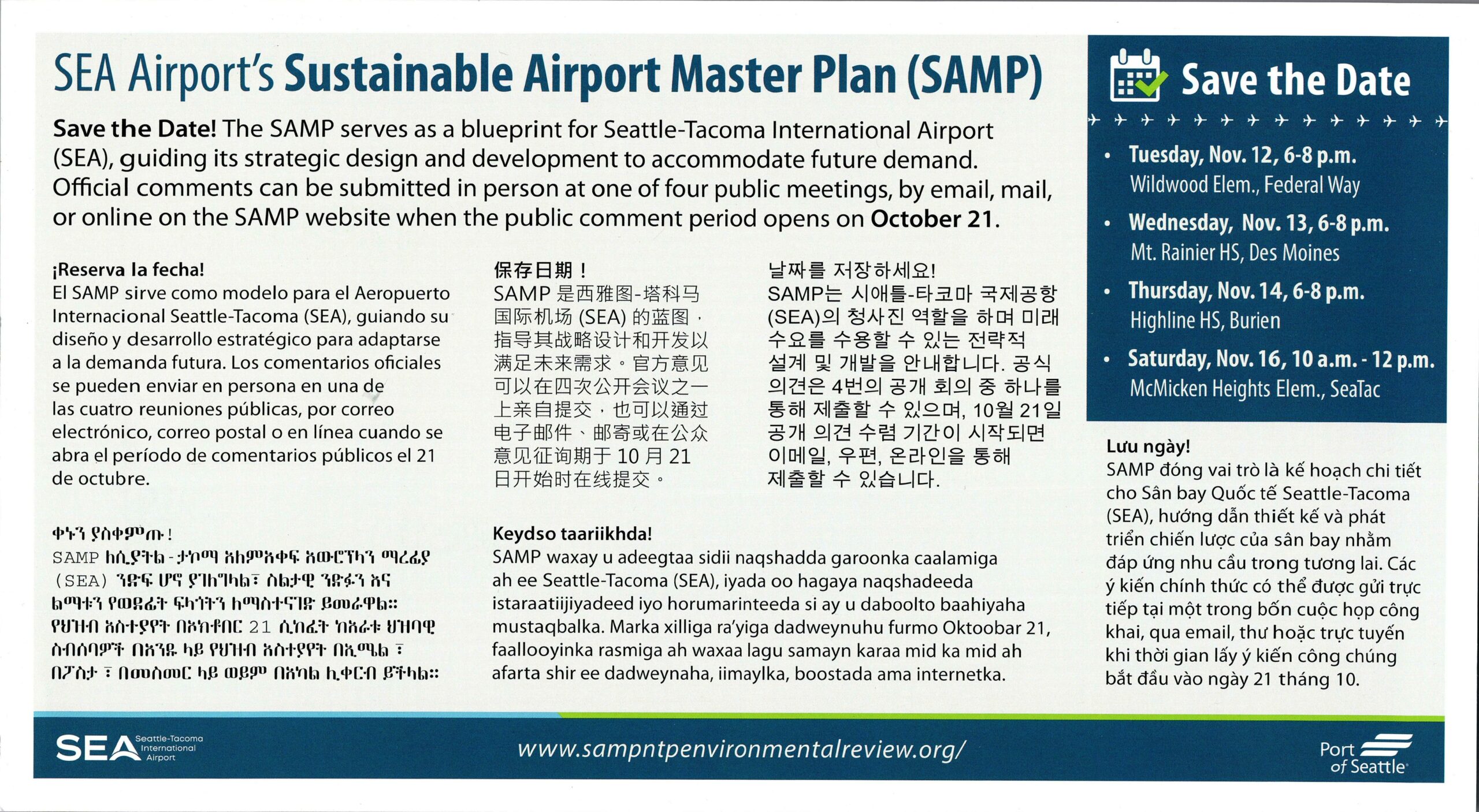
In July, the Port and FAA began formal environmental scoping for the Near-Term Projects. At the time, the Port talked about a single combined federal/state EIS (NEPA/SEPA) and led the public to expect that environmental review would begin soon. Delays began almost immediately.
 2020: COVID puts the process on hold
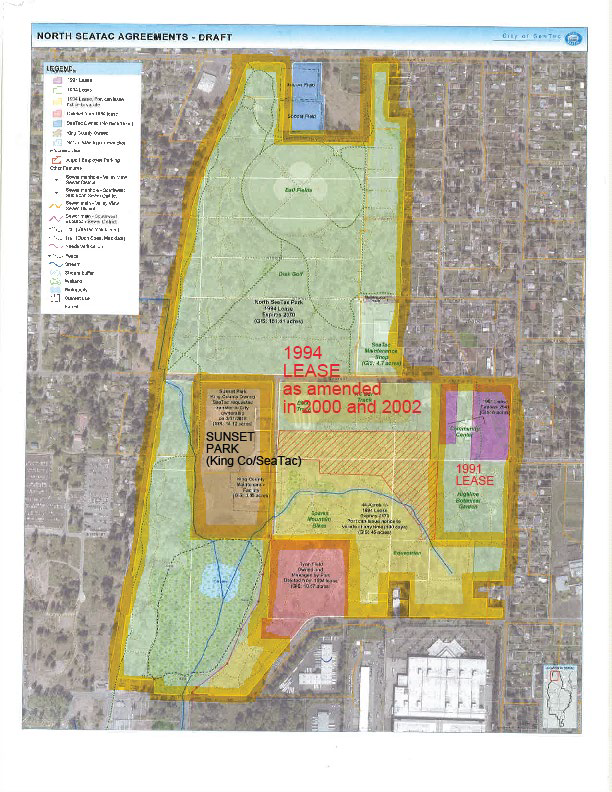
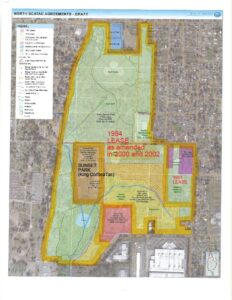
The pandemic put the process on hold. Critics argued the forecasts should be revisited before any plan moved forward. The most controversial piece — an employee parking project that would have taken part of North SeaTac Park — was dropped.
 2022: The second airport question
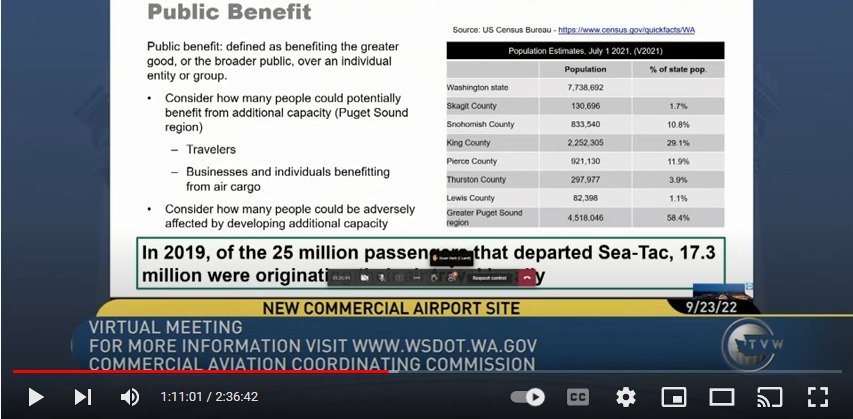
The state Commercial Aviation Coordinating Commission (CACC) reopened the bigger question the SAMP had quietly assumed away: should the region’s aviation future stay concentrated at Sea-Tac, or should future growth be distributed elsewhere? That question was not answered before the group was shut down in 2024.
 2023–2024: Environmental review reappears
After years of delay, the FAA releases the draft federal (NEPA) Environmental Assessment (EA). An EA is a far less rigorous review than an environmental impact statement (EIS). Projects once framed for 2027 had slipped to 2032. The Long-Term Projects were now mentioned as only a “vision” — but with exactly the same drawings.
 2025: FAA issues a FONSI
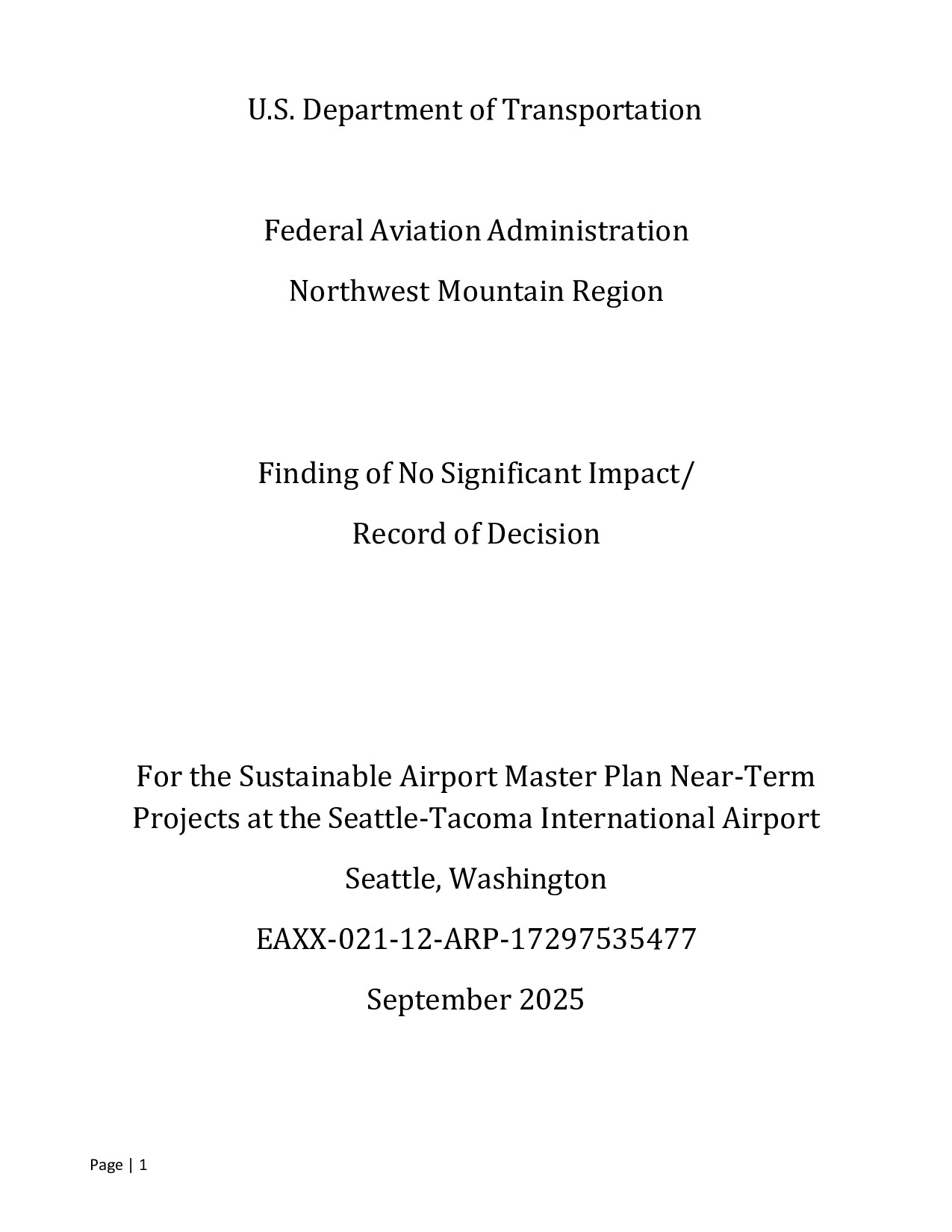
In April, President Trump issued executive removing two review categories from consideration — environmental justice and cumulative impacts.
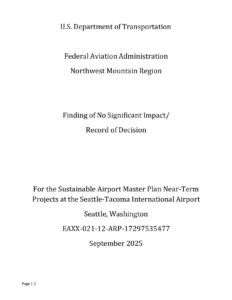
In September, the FAA issued a Finding of No Significant Impact and Record of Decision for the federal NEPA process, concluding that no mitigation of any kind was required except for modifications to a few traffic intersections.
The Port signaled that preparation of the state (SEPA) document would begin immediately and that it would consider categories omitted from the NEPA process, such as cumulative impacts.
May 22, 2026: Draft SEPA opens public comment
Next Friday’s release will begin a 30 day public comment period to help decide whether these same projects should be approved by the Port under state regulations. This will reopen debate over the cumulative effects of aircraft noise, ultrafine particles, greenhouse gas emissions, roadway traffic, and induced aviation demand. It will also revisit a question the region has never confronted: what it means to keep concentrating growth at Sea-Tac.
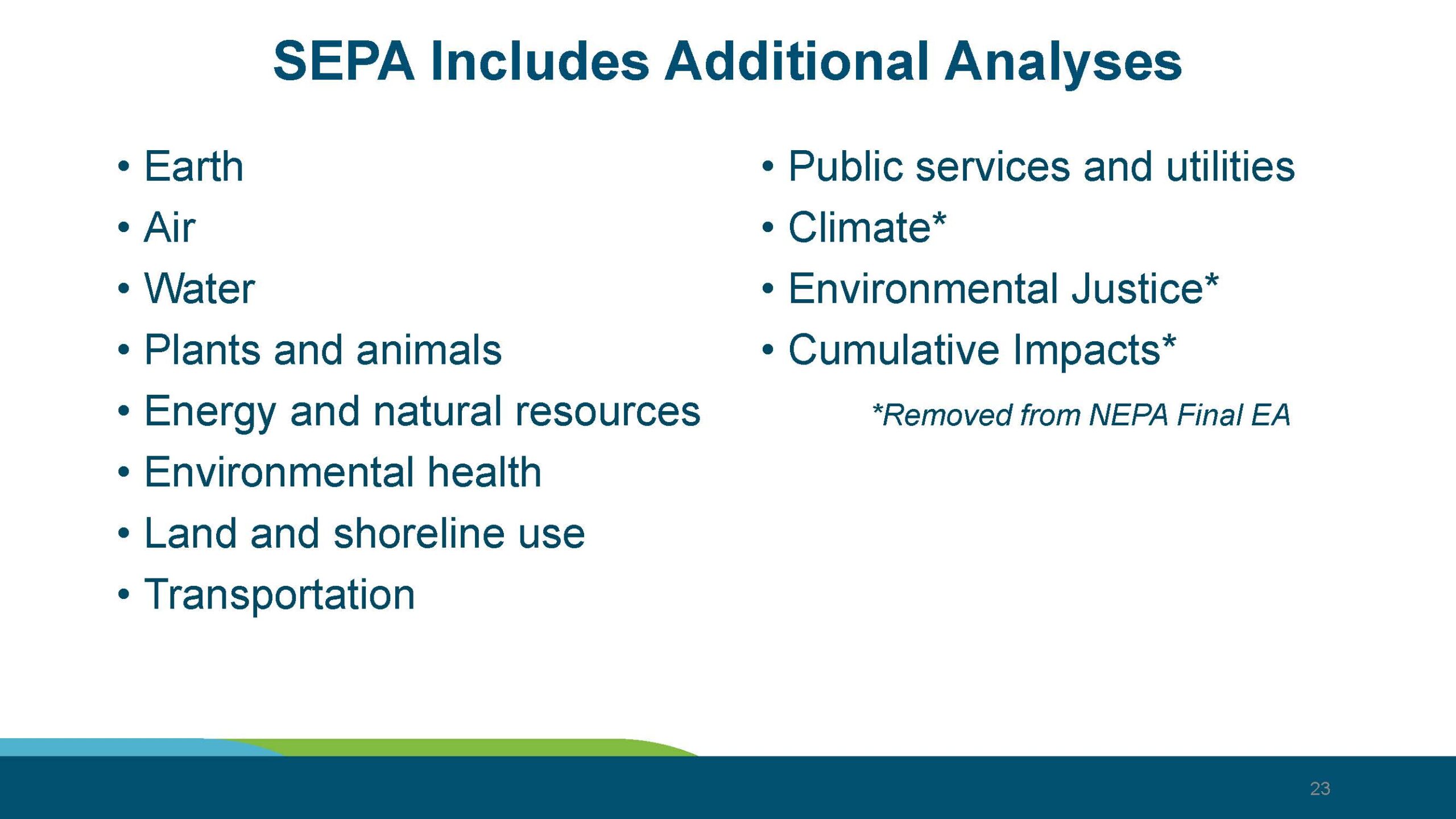
However, while the FAA was the decision maker for NEPA, the Port of Seattle is itself responsible for approving SEPA. More fundamentally, it will test whether a system in which the regulator is funded by the expansion it’s regulating can produce outcomes fair to communities under the flight path.