The Des Moines Air Quality Monitoring Station (AQMS) will provide long-term, community-centered measurements of ultrafine particles and other air pollutants south of Sea-Tac Airport. Building on UW’s Mobile ObserVations of Ultrafine Particles (MOV-UP) study, the station will help distinguish local aircraft-related pollution from broader regional sources.
The station at a glance

< 100 nm
Ultrafine particle diameter.

10–20 nm
Particle range indicative of aircraft emissions.

5
UFP, PM2.5, black carbon, NO₂ and CO.

2
Monitoring sites at opposite ends of Sea-Tac Airport.
Ultrafine particles and health
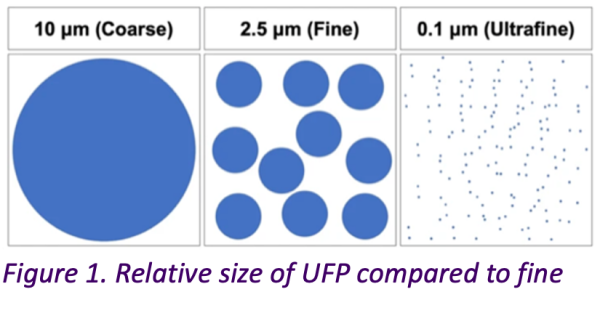
Ultrafine particles are smaller than 100 nanometers and may affect health. Aircraft emissions carry a distinct particle-size signature, so measuring particle size helps separate aircraft pollution from other sources.
Instruments
Measured pollutants and instruments
The Des Moines AQMS continuously measures key air pollutants from transportation and other combustion sources. Together, these measurements help track local air quality and how it changes with weather and airport operations.
 A
A
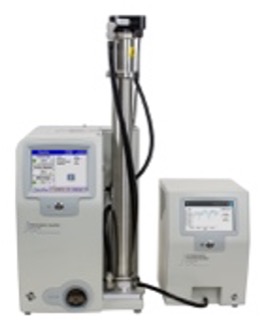
Ultrafine particles
Particle count with particle-size information.
Scanning Mobility Particle Sizer TSI 3938 with water-based CPC
 B
B
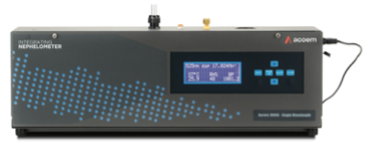
Fine particulate matter
Measures PM2.5 particles in the air.
Nephelometer Aurora 1000
 C
C
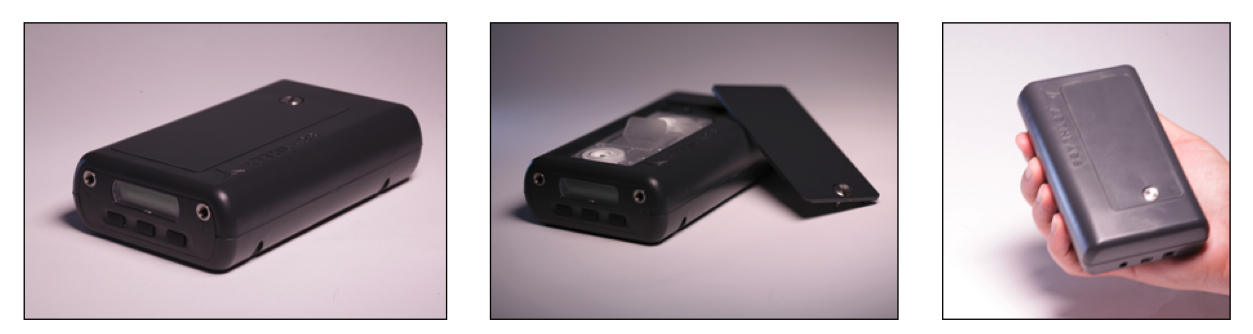
Black carbon
Soot from transportation and other combustion sources.
microAethalometer MA200
 D
D
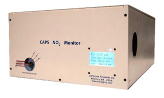
Nitrogen dioxide
A marker of traffic and other combustion.
Aerodyne Research CAPS NO₂
 E
E
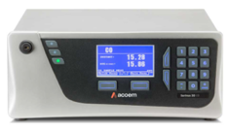
Carbon monoxide
Another tracer of combustion sources.
Serinus 30 analyzer
Insights
Insights into local air pollution
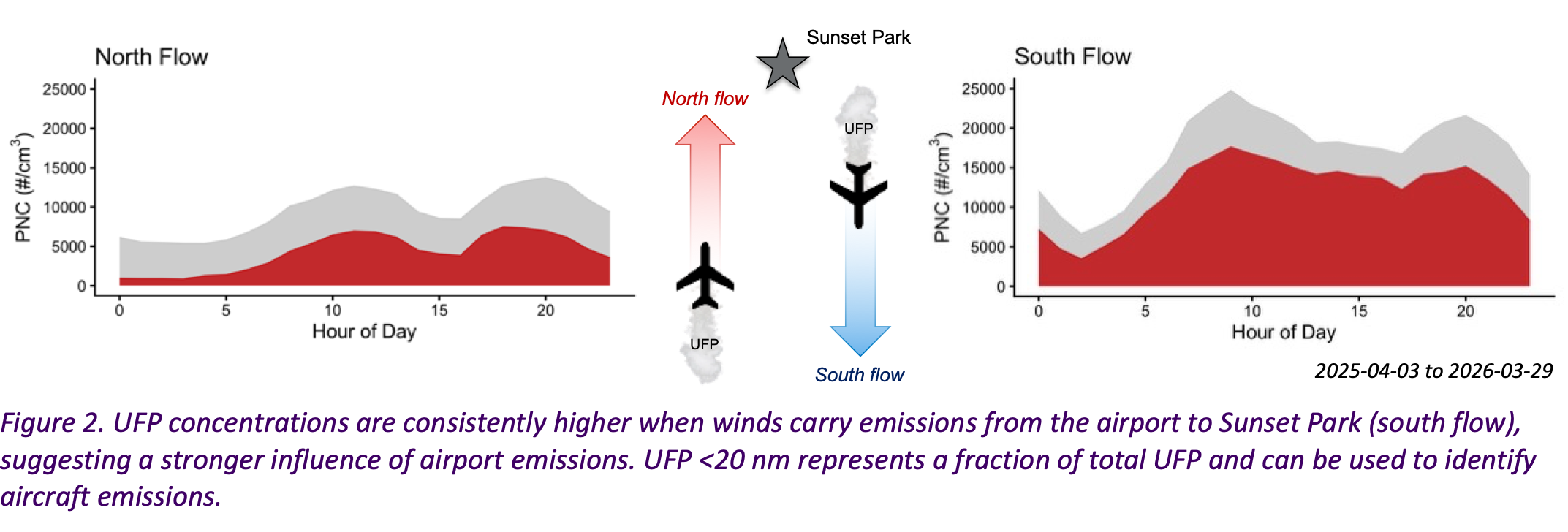
Des Moines AQMS uniquely measures both ultrafine particle number concentrations and particle-size distributions. Because different sources emit particles of different sizes, particle-size distributions serve as a source fingerprint.
The new AQMS near the southern runway provides a unique opportunity to quantify aircraft impacts during north-flow operations.
Community
Community significance
A unique monitoring network
Two monitoring stations at opposite ends of Sea-Tac Airport provide a more complete picture of airport-related air pollution under different wind and runway-operation conditions.
Tracking changes over time
Long-term monitoring will help evaluate how aircraft emissions change as technologies and fuels, including sustainable aviation fuel, continue to evolve.
Working together
The AQMS reflects a collaborative effort among state agencies, community stakeholders and researchers to improve understanding of local air quality.
A community Advisory Board
An Advisory Board will help ensure the project addresses community priorities and that findings are shared with residents.
Monitoring network
Station locations
Stations at opposite ends of the airport allow researchers to compare ultrafine particle patterns under different wind directions and runway operations.
Tip: hover or tab to each marker on the map to see the site and the agency that operates it.
UFP AQMS locations in the Greater Seattle Area with entities managing each site
Data access
Community data access
Community members can view current measurements and explore available data in the public Des Moines air-quality dashboard.
Funding
Funding acknowledgment
This project is supported through Washington’s Climate Commitment Act in partnership with the City of Des Moines, as a Local Community Project sponsored in Legislative District 33 and administered by the Washington State Department of Commerce.
Project partners
Supporting organizations