Expansive airport bill gets warm first hearing
Our Take
Senator Tina Orwall introduced her bill with an emotional anecdote as to the harms of childhood asthma–and the health benefits of proper air filters. This was a good idea considering the bill’s complexity. We applaud the legislative aide responsible for summarizing its contents.
The bill received a sympathetic first hearing from legislators, with comments on a range of tangential issues such as Sustainable Aviation Fuel and Electric Aviation.
The majority of public commenters also spoke in generalities rather than the specifics of the bill–the overall impacts of Sea-Tac Airport and concerns over future expansion.
We found three comments most notable. First from the City of Des Moines planning director, who highlighted its laudable goal of promoting environmental justice while asking for changes to direct attention more towards cities. We agree. As it stands the bill casts far too wide a net. For example, SB5652 calls for a twenty six (!) person committee to manage its recommendations.
Speaking with concerns were the present and former Port lobbyists. Their remarks should not be dismissed. They have identified weaknesses in the bill which can and should be addressed without removing its efficacy–the size of the committee being one of them.
We will have a full analysis soon, but our initial take, though positive, is also somewhat mixed. The size of the committee is emblematic of the bill as a whole. It’s a lot.
- The Port’s lobbyist had no choice but to admit the failings of previous attempts by the Port to address sound insulation issues on its own. It’s been two years since the Port unveiled its SIRRPP and to date only three systems have been identified as ‘worthy’ of repair. Zero have been fixed. This bill pushes the Port to do something. However, we are not sure if the something is the right something.
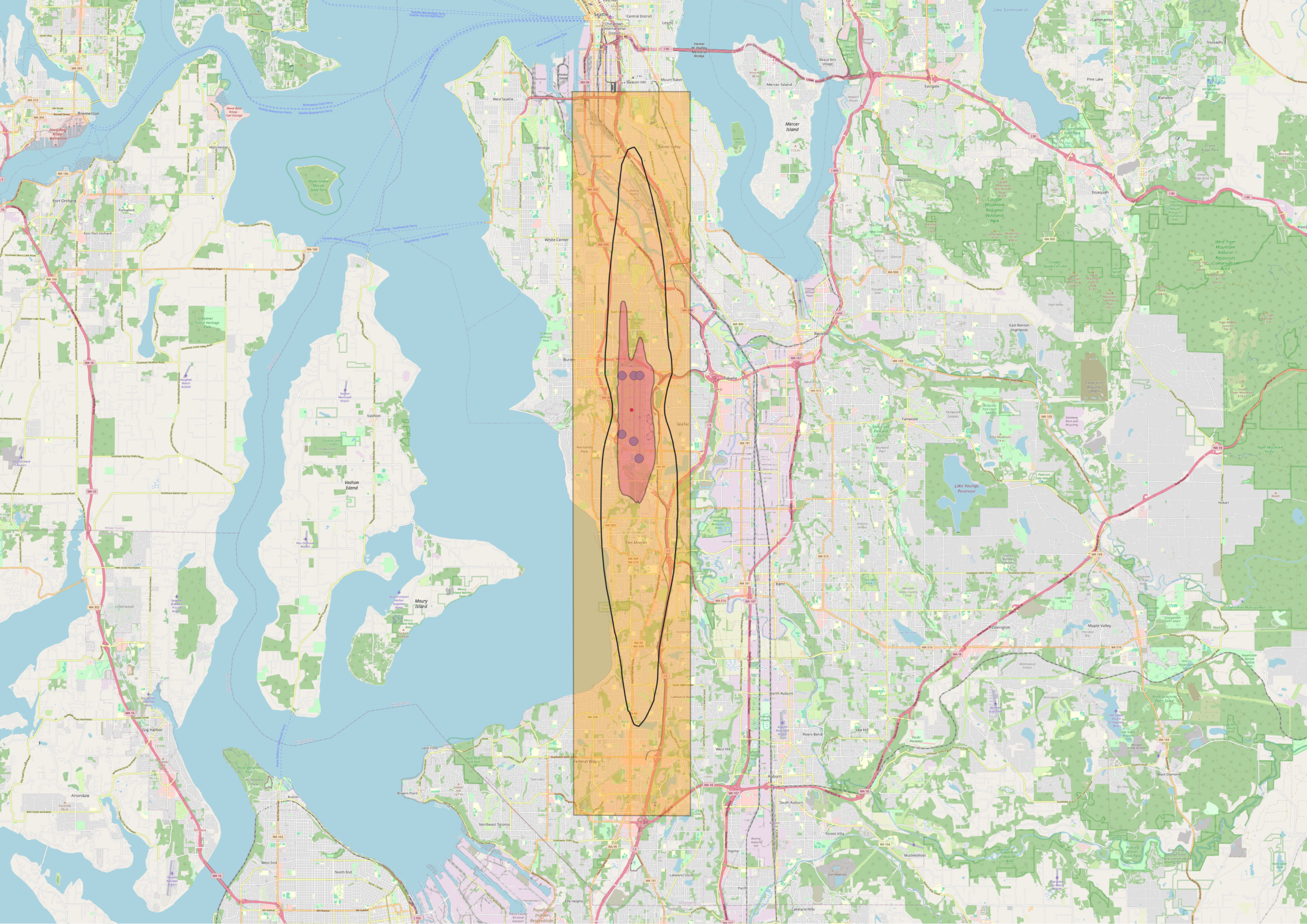
- The bill establishes that very large committee. It tasks UW to create summary data on health impacts and help guide the committee towards a mitigation plan for the entire state-defined RCW 53.54 aviation impacted area. This is 92 square miles–from Beacon Hill down to Federal Way, including KCIA airspace. That’s a lot of territory. And a lot of potential overlaps.
- In concert with another upcoming bill (SB6240), SB5652 also attempts to provide a funding mechanism for both Port Packages and health impacts. Again, we completely agree that a lot of money is needed. But again, we are not sure if the proposed mechanism, which is also complex, is the best path forward for the near term.
We give Senator Orwall very high marks. Her passion and continuity over the past decade have been remarkable. With each passing year, airport communities have fewer and fewer genuine allies. Unfortunately, the interests of local activists seem as broad as that area. How to address these issues often leads to a kitchen-sink approach–when a more targeted approach might be more appropriate.
Nevertheless, if the bill can be given clearer focus, we believe it could be a game changer.
My name is JC Harris. Here today on behalf of Sea-Tac Noise Info, a group representing over 1,300 homeowners with sound insulation systems known as Port Packages. We need your help.
When the Third Runway was permitted in 1997, there were just over 300 such homes. By 2005, that number had grown to 9,000.
There’s a saying in engineering: you can have it fast, cheap, and good. Pick two. The entire program was fraught from the beginning. Hundreds of complaints ignored. Warranties almost never honored.
The state is working desperately to encourage housing, especially that most valued commodity: middle housing. The homes around the airport are that precious middle housing. In exchange for that affordability, homeowners deserve a modicum of respite from over 600 operations a day, now often 43 seconds apart.
That daily experience is not annoyance. It is public health. And preservation of public health is the minimum we can offer people in exchange for the benefits the airport provides to the entire state.
We deeply appreciate Senator Orwall sponsorship, I urge you to move it forward, and I thank you for your time.
Transcript
machine-generatedChair Shewmake (0:00) Good morning to presenters and all those who are watching live from TVW to the Senate Environment, Energy, and Technology Committee meeting this morning. We are going to go a little out of order because we have one of our favorite prime sponsors. They’re all my favorite. And so we’re first going to hear 5652. Staff, can we please get a briefing?
Committee Staff (0:28) Thank you, Madam Chair, members of committee. Senate Bill 5652 relates to reducing environmental and health disparities and improving the health of Washington state residents in large port districts. The committee heard the original bill last session and the hearing today is on a proposed substitute which is posted in the EBB.
As background, port districts in Washington that operate an airport serving more than 900 scheduled jet flights per day are authorized to undertake noise abatement programs to alleviate the impact of jet noise on the surrounding area. These programs may only be undertaken in an impacted area as defined in state law. For several years, the Port of Seattle and the Federal Aviation Administration or FAA have contracted to install noise mitigation retrofits such as double or triple paned windows, often referred to as port packages at qualifying properties to address significant noise from airport operations. In 2024, the legislature established the Port District Equity Fund. The fund is administered by the Department of Commerce and is used to provide grants to eligible port districts for noise mitigation programs. In 2019 and 2020 respectively, the University of Washington and the King County Department of Public Health released separate studies regarding the air quality and health effects on communities near the SeaTac airport. More information on these studies is included in the bill report.
Turning to the proposed substitute before you, it requires the University of Washington Department of Environmental and Health Sciences, which I’ll just refer to as UW, to research and develop tools to evaluate the human and environmental health impacts of aviation activity near the SeaTac airport. UW must complete this work by June 1st, 2027, using a variety of techniques, data, and community participation. By July 1st, 2027, Commerce must convene and facilitate a work group comprised of several specified representatives from the Port of Seattle, UW, state and local agencies, municipalities, and community. The work group is assigned several tasks, including reviewing UW’s research and tools, and creating and updating a mitigation plan. Then by December 1st, 2027, based on the mitigation plan and after consultation with the work group, the King County Department of Public Health must, among other things, implement priority one-year mitigation strategy pilot projects, assess them, determine which are most viable for broader implementation, and submit findings to the work group.
Commerce must also administer a new grant program to assist qualifying organizations in broadly implementing these projects, and qualifying organizations include the Port of Seattle, community organizations, certain municipalities, and others represented on the work group. Funding from the port district equity fund may be used for the grant program. And the Port of Seattle is granted authority and required to expend funds to mitigate aviation related air quality and noise impacts, including to remedy deficient port packages. And finally, by July 1st, 2028, the state auditor must conduct a comprehensive evaluation of the Port of Seattle and FAA’s port packages and deliver a report, among other things, on the amount of funds provided to and used by the Port of Seattle to install these packages, a cost estimate for replacing or repairing the failed packages, and additional steps the port, the legislature, municipalities, and others can take to adequately address these packages. A fiscal note on the proposed substitute was requested, but it’s not yet available. And that concludes my presentation.
Chair Shewmake Excellent. I don’t see any questions, so thank you very much. And Senator Orwall, come tell us about your bill.
Senator Tina Orwall (4:01) Thank you, Madam Chair, and members of the committee. For the record, I’m Tina Orwall. I have the honor of representing the 33rd Legislative District in South King County. I first want to thank you, Madam Chair. Thank you for being part of our listening tour in the interim. I think it meant so much to the community to have you hear what’s going on. I remember when my son was in elementary school, he used to come home with a lot of asthma and I was so angry. I thought that school must have mold. It had never occurred to me that he was out at recess and that maybe he was impacted by the aviation fuels. And it was years later that I learned about the high rate of asthma in airport communities. And it turned out the University of Washington had been doing work in different airports including LAX and Atlanta. So that’s when we really started partnering to learn more about these impacts.
And what we learned is there’s ultrafine particles that are related to jet fuel and they pass the blood-brain barrier and they cause inflammation in the human body. And so when King County Department of Health teamed with UW, they looked at the health conditions in our community. And they found the closer you live to the airport, the shorter your lifespan, looking at 10 miles, 5 miles, and 1 mile. And they also—there’s a map that shows children that go to emergency departments and it actually lines up with the landing path, which is when there’s the greatest amount of the ultrafine particles.
And one of the things that Senator Keiser, who I miss dearly, I will tell you, we had partnered up on an asthma intervention study after we had a 12-year-old girl die of uncontrolled asthma. And this has been so successful. The interventions and the HEPA filters and vacuums can reduce the particles by 80%. And kids now are having better attendance in school. They’re using the relief inhalers less.
And so, you know, I’m in front of you today to talk about failed packages but it’s really about health. I mean, you’ll hear about easements and federal rules, but there’s no one in my district that waived the right to good health, right? And we know that we can team up. I call it the trifecta of change which is our university, our health departments, our cities, our amazing community advocates and the port to make a difference for this airport community.
I was a little stunned. So the flights back in 1994 there were 160,000 takeoffs and landings. In 2024 there are 434,000 takeoffs and landings. And there’s a planned expansion that would increase that by 20%. So really the bill before you is an action plan. It’s a partnership, right? What can we be doing to help this airport community? It is an important part of our economy and it’s going to continue to be, but there’s so much we can do to mitigate the harm. And so again, I think we need the partners at the table, including the port. And I think I feel really hopeful that we can move forward with this. And at the end of the day, we’re all governmental entities and this is our infrastructure and this is about how do we support these activities. At some point, we’re going to need a second airport or expansion of other airports in other areas. And so this is a template. We don’t want to wait years for the federal government to do this. I think Washington in many ways can lead the way. So I appreciate you hearing this bill. Thank you.
Chair Shewmake I just have one quick question. Are there airports that you think have really done a good job of this or are on the cutting edge that I should go learn more about?
Senator Orwall Well, one of the places that we teamed up with was Boston. They have Logan Airport. Their state rep is awesome, but they had taught us about putting the HEPA filters in the schools because they had a huge reduction. The HVAC systems don’t actually remove the levels that the HEPA filters do. So they had already done a study and so we did that in our schools in South King. They don’t all have them, but a large portion. San Francisco was starting to fix the failed packages. A lot of my residents, they can’t see through the windows. They have mold that’s affecting their indoor air quality. And it’s been years and none of those packages have been fixed. So I think there’s models, but in some ways UW and the research that’s happening is leading the way on ultrafine particles, which aren’t recognized by the FAA or the EPA at this point in time.
Senator Harris (8:35) Thank you, Madam Chair. I live a mile from PDX. The 49th and the 17th, both butt up against PDX Portland International Airport. This might be something that both Oregon and Washington should also take a look at. I know the 17th and the 49th are directly impacted by PDX and what happens at Portland International. So, thank you.
Senator Orwall Absolutely.
Senator Liias (9:01) Thank you, Chair Shewmake. I was also dismayed to discover that I grew up in an overburdened community living next to Paine Field. So even without the traffic of SeaTac, living near an airport can have challenges. I just wanted to comment, highlight, or ask your reaction to the work we’re doing to advance sustainable aviation fuel which also will reduce the fine particulate matter with those biofuels and hopefully build them right next to Senator Boehnke’s district at a new biorefinery.
Senator Orwall Well, that’s another place that University of Washington is looking at—the biofuels and the clean fuels. The thing I would tell you, and I do think it’s one of the long-term solutions, but the highest concentration is upon landing. So it depends on where that plane fueled up. We can do everything right in our state and we should, but all these planes coming from other areas may not be using that fuel, but we should lead the way and it is exciting and that should be part of the solution.
Senator Slatter (9:57) Well, thank you. I just wanted to put a plug in for electric airplanes, hovercraft, or something like that because there would be no particulates and for short haul at least flights it might be valuable. But maybe my question would be as new airports are considered, this is mitigation right now, but how do you prepare for safety and health before a new airport is built and would that be considered here?
Senator Orwall Absolutely. And I did sit on that committee that was looking at a second airport with Senator Kaiser and there was discussion about could we do a cleaner airport, right? Could we locate it? This is probably one of the only airports that’s really smack in such a high residential area. There’s very few, right? And so one, you would plan an airport that’s not in a huge residential area, but you could be thinking of the cleaner fuels. You could be thinking about electrifying more. They were saying that it could be years before electrified planes, but maybe you have shorter hoppers that go from airport to airport as a starting point. So I think you plan green, right? But you also plan that the reality is there is harm but there’s things we can do, right? And if you treat an airport community well and you help the health and well-being that might help site the second airport.
Chair Shewmake Excellent. Well, thank you very much, Senator Orwall, and we are going to suspend the public hearing on 5652. We will come back to it.
[RECESS]
Vice Chair (1:08:11) We will reopen the hearing for public testimony of 5652. First panel is Brian Davis, Karen Valoria, and Chad Reigns. Please come on up. And we’re going to try the two-minute timer. We may have to evolve if necessary, but I think we should be okay. So staff, if you could start that.
Brian Davis (1:08:39) Thank you. Good morning, Madam Chair, committee. Thank you for your time and for your service. My name is Brian Davis. I’m from Burien. I’m testifying on my own behalf, but drawing heavily on my service as vice chair of the Burien Airport Committee. When you first heard testimony on this bill last year, those in favor included the mayor of Des Moines, the deputy mayor of Burien, and a member of the SeaTac City Council. Then came the Port of Seattle in strong opposition. And in that moment, it became crystal clear to me that meaningful collaboration between the port and the airport cities does not exist.
The port is pursuing a multi-billion dollar expansion that would in 10 years time increase aircraft traffic from 1,100 takeoffs and landings a day to 1,500. And yet the port claims this would have no significant impact. It says this as it hides behind archaic federal regulations like those having to do with noise. The government uses an outdated DNL standard, a sort of averaging which ignores current science about devastating cumulative impacts of high decibel noise. People in our community are literally taking a beating from all those flights overhead. Yet federal noise standards give the same weight to one every minute as they do at an airport with just a few dozen operations a day like Paine Field and Everett. That works just fine for the commissioners and the staff at the Port of Seattle who say, “Hey, we’re just following the rules.”
Two years ago, the port pledged $5 million to a pilot program to fix or replace failed noise insulation installations known as port packages. Sounded good in the press release, but the port has yet to repair or replace a single port package. SB 5652 would, after decades of delay, establish timelines and accountability for a viable repair program. I expect we’ll hear about cost. The port’s aviation revenues last year exceeded a half billion dollars. Seattle Tacoma airport generates billions of dollars for the regional economy, but our residents don’t share in that wealth. Burien is nearly broke. Under the flight path lies a blighted landscape where economic development is difficult, and with every added flight, the quality of life erodes even farther. SB 5652 is not about handouts. It’s about appropriate compensation for our community’s disproportionate sacrifice. Please vote yes. And thank you.
Chad Reigns (1:10:50) Thank you everybody for hearing my testimony. My name is Chad Reigns and I am a business owner that lives and operates just two blocks west of North SeaTac Park right off of 12th Avenue. Hundreds of planes fly directly over my house every day. My business is significantly impacted by the airplane traffic that constantly flies over my house. My neighbor who runs a daycare, her business is significantly impacted by the airplane traffic as well. My daughter attends this daycare and I watch her and her friends every day shudder and clamp their ears as airplanes fly over it. It is extremely painful to watch this knowing that airplanes could and very well should just be flying over North SeaTac Park just a couple blocks to the east. And they don’t.
What’s more concerning is the choice to use the same flight path over our homes at night. There is an agreement with SeaTac airport to attempt to limit the landings over our homes to just three between the hours of midnight and 5:00 a.m. Being allowed just 5 hours of sleep every night is heartbreaking. But they don’t even honor the agreement. I went to the Part 150 study. I heard them say that there’s three airplanes a night and that is completely misrepresented data. I went ahead and paid for it. I’m a data guy and you can purchase the flight records from FlightRadar24 which I have done. There are some nights where there are 40 planes a night landing between midnight and 5:00 a.m. I’m happy to share the data. I’ll email it to anybody who wants it.
This has driven me and my family to a very bad place. This is abuse like I never thought we would experience in Burien. And I am leaving. I’m putting my house for sale up next month. I’m taking my family and my business out of it. How could we have mitigated this? Well, I live in a failed port package house. We’ve requested twice for new windows. Denied twice. Attic insulation would help. There’s lots of things that would help. Having a reasonable time where airplanes fly during the night—11:00 p.m. to 6:00 a.m. seems reasonable. All of those things would be extremely helpful. Thank you for hearing me.
Karen Valoria (1:12:58) Thank you. Committee members, my name is Karen Valoria and I’m a resident of Burien, a 20-year resident. I live in Boulevard Park, which is north Burien, right under the SeaTac flight path. I bought the house in 2002 knowing that it had a double pane window port package and insulation in the attic, which was fine for the first couple years. Then I started noticing things like—because I have double paned windows and there’s moisture in there between the panes, I can’t clean it. So there is mold growing between my windows. I know that’s a health hazard. The outside has always been noisy but in my house I hear it now.
So I was really excited when I heard about this port package pilot that the port was doing. I was waiting to be contacted, but for some reason, well, I know the reason—but now I am no longer within the boundary. I am right outside of the boundary. So even if people do get port packages, people like me won’t even be able to access it. I worked with the port to have a noise monitor installed on my property because for the Part 150 study, the noise monitor was in place for two weeks. It showed noise incidents overhead every 3 minutes for two weeks from SeaTac and King County Airport. So I just want you to take into account the cumulative health impacts of listening to that over and over again.
We understand that the airport’s not going away. The port is advertising now that there are direct flights from here to Asia which means bigger planes and those planes tend to—because of the time difference they tend to leave in the middle of the night to get over there. So with all the expansion going on, we feel that the port can be a better neighbor for those of us affected below. Thank you for listening.
Vice Chair Thank you. Thank you for sharing your stories and your experiences. Very much appreciate that. Thank you.
Vice Chair Rebecca Deming, Marie Rowe, and Steve Edmiston. And we have at least one person on remote, but for those of you who are in person, why don’t we go ahead?
Rebecca Deming (1:15:29) Good morning, Chair Shewmake, Ranking Member Boehnke, and distinguished members of Senate Environment, Energy, and Technology Committee. I’m Rebecca Deming, and I serve as the community development director for the city of Des Moines. I’m here today to express our strong support for SB 5652 and thank Senator Orwall for her leadership on this issue. The city of Des Moines is under the SeaTac airport’s flight path. Our residents live daily with significant environmental impacts from airport operations. This bill represents a vital opportunity to correct long-standing environmental injustices.
We strongly endorse the core principles of SB 5652: Mandatory environmental justice plans requiring port districts to embed EJ principles into their core operations is a necessary step towards proactive health equity. Independent cumulative impact assessments—the requirement for an independent review by UW is crucial for accountability and transparency before any significant expansion or action takes place. Funding for mitigation—authorizing ports to use funds to mitigate the harm they cause ensures communities aren’t left to shoulder the health and financial burdens alone.
As this bill evolves, we support strengthening the bill by explicitly defining and enhancing the role of local governments like ours. We recommend adding requirements for ports to formally consult with affected cities during the community engagement process and for all data and reports to be shared directly with local city governments. Local cities like ours face a disproportionate burden of the airports but don’t receive their fair share of mitigation of that disproportionate burden. The bill should help address the health and safety aspects for individuals along with the financial challenges of local governments facing depressed tax bases and economic challenges from being under the flight path of the state’s busiest airport. Ensuring collaborative framework between the port and local jurisdictions they impact is key to making this bill truly effective. Thank you for your time and consideration for the residents of the city. And it’s a huge issue for our community. Thank you.
Vice Chair Thank you. I just wanted to say that it looks like you’re reading and so if you’d like to just send that to us as well that would be great.
Rebecca Deming Already given. Thank you.
Steve Edmiston (1:17:42) My name is Steve Edmiston. I live in the city of Des Moines immediately south of SeaTac airport. I’ve been advocating as a volunteer for airport neighbor communities for nearly a decade, ranging from my own city’s airport committee to more recently the state’s Civil Aviation Coordination Commission where I was the governor’s appointee to represent the citizens on that commission. I’m here today to speak in favor of SB 5652.
Now more than ever, our airport neighbor communities need help from the state. From the World Health Organization’s 2018 noise study to our own state’s report in 2020 on the environmental and public health impacts from SeaTac airport and the University of Washington’s MOUVE study on ultrafine particles, we do now know a few things about the public health harms from aviation. Those human harms—noise causes cardiovascular harms, well documented. The pollution, the ultrafine particles cause respiratory illnesses and are linked to cancers, well documented including in our own state study.
For me, one key aspect of this bill is that it helps address the gap between what the science is telling us and the outdated federal regulatory scheme that applies to aviation. For example, right now, as Mr. Davis said, FAA and the Port of Seattle are moving ahead with a strategic airport master plan. We’re going to add 87,000 more flights over our airport neighbor communities on an annual basis. The decision by the FAA authorizing this is being appealed by three cities, and I’m not joking, it does say those 87,000 flights will not present an impact to the airport neighbor communities at all, requiring any mitigation. No impact. Right? So you might ask, how is that possible? And the reason is this: The FAA and the port only want to comply and have to comply with federal standards. And I see my red light’s on.
Vice Chair Yeah. Just a few more seconds.
Steve Edmiston Okay. The work being performed under this bill asks only this: We assess the true impacts using a clear science-based approach, including, wait for it, all studies, all science. Don’t cut off at the federal standards. That’s not fair. Thank you very much.
Vice Chair Thank you. Okay. Marie, if you can hear my voice, please unmute and go ahead.
Marie (1:20:21) Yeah. Can you hear me?
Vice Chair Yes, we can hear you and see you. Go ahead.
Marie Thank you. I don’t really have anything prepared. I’m a citizen who lives in Normandy Park. It’s maybe a mile and a half west of the airport as the crow flies. I have two daughters at Highline Aviation. My son’s at Sylvester. My husband works at Madrona Elementary. Excuse me. I’m a mental health social worker. And I just wanted to give some lived context to this. We’re talking about health issues. I just wrote down in my direct neighborhood—there’s 7,000 people in Normandy Park. I don’t know them all. Eight people who have cancer. My neighbor Lou right next door. Dave across the street. Gretchen’s husband died of throat cancer a couple years ago. My friend Karen’s Bob died of pancreatic cancer about three years ago. The Ballast family is struggling with brain cancer. My friend Julie has a tumor in her leg right now. I have breast cancer. I’m on my fourth round of chemotherapy.
We built our house here 18 years ago. And when we built the house, we used all our money to build this house. Beautiful community. My kids love it. This is our home. The community is our home. There were not 434,000 flights taking off that year. So people say, “Well, why don’t you just pick up and leave? You know, leave the community.” We can’t. This is our home. So any bill that supports any sort of pollution mitigation, I’m always going to support. I again I don’t know all the people in Normandy Park, but for me to know eight people. Oh, and my friend Lori right across First Avenue, she’s probably three-tenths of a mile closer to the airport—breast cancer last year. So it’s very real. We’re very healthy people. I have HEPA filters all in my house. The one downstairs cost $1,200. I have health care. I have resources. And we are still all getting sick right here. And it’s likely because of the airport. I looked up a CDC study, I don’t know, like eight years ago, and within a 3 mile radius—and you know, Tina, thank you for presenting all that information, but within a three-mile radius of the airport, breast cancer, all these cancers are increased. So again, thank you so much and go Tina.
Vice Chair Thank you so much for your testimony.
Vice Chair Okay. Alexandra Johnson, if you can hear me, please go ahead.
Alexandra Johnson (1:22:42) Hi. Yes. Can you hear me?
Vice Chair Hi. Yes. Go ahead.
Alexandra Johnson Okay. Good morning, Chair Shewmake and committee members. Thank you so much for your time. My name is Alexandra and I’m the senior climate and environmental policy analyst for the Duwamish River Community Coalition or DRCC. We were born from the Duwamish River being declared a Superfund site in 2001 and DRCC was created as the technical advisory group partnered with the EPA on the cleanup. Since then we have expanded our work to include youth engagement and education, climate justice, as well as other aspects of wellness in the community.
And so I mean you’re hearing people are really suffering and to back it up with some of the data, a study from 2023 that we looked at shows that the Duwamish Valley which is made up of South Seattle and other parts of White Center and Tukwila has a decade lower life expectancy and almost four times the child asthma hospitalization rates compared to northern Seattle. And then a lot of people have talked about the noise quality and the noise impacts. Today I want to emphasize that the way we do standard weighting of what is considered noise and how we give validation to that is considered A-weighting and more environmental justice considerations put more emphasis on B-weighting and that is noise—sorry, my cat’s going to make a cameo—and that is more noise at those higher and lower frequencies, noises you feel. And the effects of those are being studied right now. But it’s so crucial that we validate and legitimize that experience because right now the port and King County International Airport only report on A-weighted noise and B-weighted loud noises at those frequencies. They mimic ADHD symptoms. They raise blood pressure. They affect your sleep. They raise stress hormones in your body.
Our kids are not given a fair chance. My colleague grew up in South Park and couldn’t study at the library because of how loud it was when the planes would fly overhead. We have done what we can to distribute HEPA filters to the community and we’ve had a historically positive relationship with the port that we’re ready to continue with them, but something needs to happen and our regional authorities need to do more. Thank you so much for your time.
Vice Chair Thank you very much. Jeff Harbaugh, if you can hear me, please go ahead. And then on deck would be Joe Vincent and Maria Batayola.
Jeff Harbaugh (1:25:16) Can you hear me and see me now?
Vice Chair I can hear you and you should be showing up in a minute, but we don’t see you yet. There you go. There you go. How’s that?
Vice Chair That’s perfect. Thank you. Please go ahead.
Jeff Harbaugh My name is Jeff Harbaugh. I’m in my third term on Burien’s airport committee and my second term as a Burien community representative to the SART committee. I’m here to speak in support of SB 5652. Over nine years of involvement, this is my first time seeing an action which could have a meaningful impact on the communities and stakeholders surrounding the port. I’m deviating from my remarks a little because I work closely with Brian and Karen and know some of the other people and I can’t say what they’ve said any better.
The health impacts of noise and particle pollution on individuals from airport operations are well documented. The costs direct and indirect to the cities and other stakeholders are real but specific to each community. So some discretion in how the funds are used is appropriate. I’m a finance guy. I went and read the port’s financial statements for 2024. It’s 130 pages and delightfully tedious. Page 37 shows a cash flow where they had a balance at the end of the year of $739 million. Now, one number doesn’t tell you everything about an organization’s financial situation, but I couldn’t help imagining what a small portion of that could do for Burien and the airport impacts.
The Federal Aviation Administration won’t talk to us about this stuff. SART is not a decision-making body, and in any event, we spend most of our time on topics with no chance of significantly improving conditions for impacted citizens in the near future. As somebody on the airport committee called it bureaucratic capture, we can’t seem to get the things we want to talk about on the agenda. So we’re here to ask you for your help with this. I want to thank Senator Orwall and I urge you to support her bill. Thank you for listening to me.
Vice Chair Thank you, Mr. Harbaugh.
Vice Chair Joe Vincent, are you available? There you go. Okay, good. I have you on remote, but you’re in person, so it’s nice to see you. Please go ahead.
Joe Vincent (1:27:37) Thank you, Madam Chair, and members of this committee. For the record, my name is Joe Vincent and I serve on the city of SeaTac city council. I’m here today to testify in support of Senate Bill 5652. On behalf of the city of SeaTac, I want to thank Senator Orwall for her leadership and continued focus on communities that experience disproportionate environmental and health impacts from port and airport operations.
The city of SeaTac strongly supports Senate Bill 5652 because it establishes a clear accountable framework to address cumulative environmental health impacts in communities located near large airport facilities. SeaTac is the city where the state’s largest airport is physically located, embedded in residential neighborhoods, and as a result our residents experience sustained exposure to environmental health impacts associated with airport operations.
Senate Bill 5652 appropriately centers overburdened communities and vulnerable populations in evaluating those impacts. This bill recognizes that addressing cumulative environmental health impacts requires more than isolated or one-time efforts. Senate Bill 5652 requires qualifying port districts to adopt environmental justice implementation plans, develop meaningful community engagement plans, and use evidence-based assessments to evaluate the impacts of significant port actions before they are approved.
Importantly, the bill also requires transparency and accountability. It calls for an independent assessment, public engagement, and ongoing evaluation of mitigation strategies to ensure that they are effective and responsive to community needs. Senate Bill 5652 provides a meaningful and balanced approach that respects port authority while ensuring environmental health considerations are meaningfully addressed. On behalf of the city of SeaTac, we respectfully urge you to support this legislation. And thank you for giving me this opportunity to testify.
Vice Chair Thank you very much, council member.
Vice Chair Maria Batayola, and while you’re unmuting, I’m going to call up Joe Dusenberry, Eric Fitch, Ken Short, and John Flanagan. I know that’s four. So if someone wants to sit in the front row, that’s fine. Go ahead, Maria, if you can hear me.
Maria Batayola (1:30:06) Good morning. Good morning, honorable Chair Shewmake, Vice Chair Slatter, and committee members. For the record, my name is Maria Batayola, chair of Aviation Community Health, Environment, and Climate Advocates, or Aviation CHECAs for short. Our coalition includes Beacon Hill Council, Duwamish River Community Coalition, Climate Solutions, Defenders of Highline Forest, and Tree Action Seattle. Our name expresses our mission. I also serve on the Commercial Aviation Work Group. We thank Senator Orwall and strongly support SB 5652.
I appreciate the personal stories and testimony by our fellow aviation impacted community members. So I’ll speak on big picture points that have not been made. The 2025 King County Strategic Climate Action Plan identified aviation and other emissions at 16% of all greenhouse gas emissions in King County. That number includes 13% or 3.1 million metric tons of CO2 equivalent emitted from SeaTac airport operations and enabled flights. It also states that communities within 10 miles of SeaTac airport are “associated with higher rates of pervasive health concerns” from the Washington 2020 House Bill 1101 required health report.
The state Department of Ecology identified South King County and South Seattle as air quality overburdened communities under the Climate Commitment Act. The impacted populations near the airport and under its flight paths is estimated to be close to half a million people with 60% people of color and 29% immigrants and refugees living in South Seattle and the seven cities around the airport.
SeaTac airport mitigations do not address aviation air pollution health impacts and only address aviation noise pollution mitigation for those living close to the airport. Senate bill 5652 will have the Port of Seattle SeaTac airport self-identify its aviation environmental cumulative impacts, engage with communities and put in place mitigations that will be informed by UW and public health science and community studies with proven mitigations. Thank you. I hope we can help community and close. We don’t have federal NEPA to protect us and we are asking for your full support. Thank you so much.
Vice Chair Thank you so much for your testimony. I don’t see any questions. So we’re going to go to people in person here. And Mr. Dusenberry, go ahead.
Joe Dusenberry (1:32:41) Yes. Good morning, Madam Chair and committee members. My name is Joe Dusenberry. I’m the chairman of the Des Moines City Council Airport Advisory Committee and the community representative to the SeaTac Area Roundtable. I’m here to speak in favor of Senate Bill 5652.
The Port of Seattle is one of the largest governmental organizations in the state. The district encompasses all of South King County and has annual operating budgets and planned capital expenditures that exceed that of some of the state agencies. This legislation is modeled on the language in Title 70A RCW, the legislation that governs environmental health and safety and requires several large state agencies to develop agency specific goals and I’m quoting “actions to reduce environmental and health disparities and for otherwise achieving environmental justice in agency programs.” Those agencies are departments of agriculture, commerce, ecology, health, natural resources, transportation, and the Puget Sound Partnership. This bill, if enacted, simply requires the Port of Seattle to do what other state agencies are already required to do.
We agree with the port’s planners that demand at the airport will continue to grow into the next decade and that we must plan for and provide that growth in order to maintain SeaTac’s position as one of the premier airports in the country. But as we plan for that growth, all of us—that means all of us—need to realize that increasing the total amount of passenger volume from 52.6 million per year to 64.1 million and the number of flight operations from 429,000 to 510,000 per year over the next decade will have significant impacts on the surrounding communities. It is vitally important that the airport communities continue to be safe, economically viable, and healthy cities. This legislation is a first step in ensuring that will happen. Thank you.
Vice Chair Thank you very much for your testimony.
Vice Chair Mr. Fitch, go ahead.
Eric Fitch (1:34:52) Thank you, Chair Shewmake, Vice Chair Slatter, members of the committee. My name is Eric Fitch. I’m the executive director at the Washington Public Ports Association here today in opposition to Senate Bill 5652 and speaking specifically to the striking amendment.
First, in general, my port members are publicly elected governments that serve transportation demand in Washington state to facilitate mobility and economic opportunity. Airports around our state are managed by port districts. They are public places where Washingtonians go to travel to see family and friends, access medical care, travel for work. Many of our shippers use them for exporting Washington’s agricultural products. We are concerned that the studies proposed here will make it more challenging for those ports to serve aviation demand.
The striking amendment brings back several concepts that have been proposed over the years with respect to SeaTac airport. First, the UW study. The state previously funded a study to which Port of Seattle voluntarily contributed funds and information. It was subsequently used to suggest that the port, again, an elected government, was negligent in considering public health when in reality, the Port of Seattle is a national leader in addressing airport impacts. Next, the bill proposes a Department of Commerce work group to help address airport impacts. The state already created a work group in 2019 to look at siting the next commercial aviation facility. Port of Seattle, WPPA, other ports participated and supported that work which has been stalled time and time again, amended by the legislature and has not provided any concrete recommendations. Our ports and our transportation sector need state partnership to address aviation demand and its impacts and we’re concerned this bill does not achieve that. For that reason, we are opposed. Thank you.
Vice Chair Thank you both for your testimony. Can I call up Ken Short and John Flanagan, please?
Staff Madam Chair, these are our final two testifiers.
John Flanagan (1:36:44) Thank you, Chair, Ranking Member and members of the committee. For the record, John Flanagan of the Port of Seattle, testifying today in opposition to Senate Bill 5652. We’re still reviewing the updated substitute that became available late Monday evening, and we’ll plan to follow up with the committee and prime sponsor with a more detailed analysis and a summary of our concerns. Based on the conversations with the prime sponsor and representatives from the various near airport communities, I want to say we share the same goals. I think it’s that we disagree about how to structure legislation to reach those goals.
At a high level, the port’s primary concern with the updated language is about self-determination and the division of powers. The bill sets up new processes for planning, assessment, and implementation of mitigation programs, and it requires the port to implement those programs, but without the port playing a material role in structuring how the programs work. The current language gives other public entities the authority to dictate use of port revenue, staff and resources in an ongoing way. Due to restrictions in federal law, as some folks have mentioned here today, the port is also unable to dedicate revenues collected from airport operations towards those new mitigation programs that are required by the bill. Therefore, we’d be required to redirect funds from the seaport, other ongoing programming to pay for the new programming created within the bill.
There’s also some confusion about a potential concern with how the new mitigation grants are administered under the updated language. The same organizations that are in charge of setting rules for the new programs and determining implementation and mitigation strategies are also given the authority to receive funds. It’s unclear whether the port would be obligated to make port resources available for those grant recipients as well. Thank you for the opportunity to testify. Happy to answer any questions.
Vice Chair One quick question. So you’ve been doing some mitigation already. I mean, based on the testimony. So how’s that funded?
John Flanagan So I can talk—you’re talking about noise mitigation specifically, right? You’ve been doing some of the mitigation work already. So it seems like, you know, this is not so different. It’s just simply creating a much more structured pathway for future. What’s the difference?
John Flanagan Yes. And I would say this to start. Only the Port of Seattle and SFO are even looking at addressing failed noise packages. I know Boston Logan was mentioned I think in a previous question as well. They’re in the very, very early planning phases of that. Over the past two years since the port dedicated revenue towards this and since the state offered some money which was swept in the last budget—but the port conducted a sound insulation repair and replace pilot to assess how we would do testing in homes, reporting on faulty noise packages and then how we would move forward with repairs.
I’ll say this—as of like this morning even we are in the design phase for three homes and I know that that is an insubstantial number in comparison to the whole but in the initial phase I think we put out a voluntary survey to 200 homes, we got about 60 responses, of that 10% qualified under the parameters that we used initially and so this has all been part of what we’ve been calling a pilot to hopefully learn a lot of lessons about how this could function in the future and how we could plus up programming. But it’s moving I think more slowly than folks are happy with obviously and we’ve heard loud and clear the concerns there.
Vice Chair Thank you. Go ahead, Ken.
Ken Short (1:40:09) Good morning, Chair Shewmake, members of the committee. For the record, Ken Short with the Association of Washington Business here today in opposition. AWB and our members are concerned with the potential impacts this bill could have on the efficient operation of the state’s largest transportation hub. Many of our members are focused on the efficiency and reliability because their businesses depend on it every single day. This airport is a critical gateway for people and goods to move in and out of Washington. It’s vital to our state’s economy. Any constraints or delays in programming needed to respond to future capacity directly affects those businesses and by extension Washington jobs. SeaTac is Washington’s front door to the global economy. Policies that make it harder for the port to respond to demand or operate efficiently risk far-reaching consequences. So with that, we urge the committee to oppose the bill. Thank you.
Vice Chair (1:41:04) Just one follow-up on that. So some people testified that they’re leaving and they have small businesses. I think that—is that something that you take into consideration and I don’t hear that they want to necessarily stop business but they just want to make it safer to live, you know, with respect to their health. How do you calculate this, right? Like yes, you’re concerned about business, but nobody seemed to say they don’t want business here. They actually want to be able to live here and have their community here and business. I’m curious about when you think about businesses leaving, how is that actually linked to just keeping people safe and dealing with noise?
Ken Short Yeah, I appreciate the question. And certainly heard some of the earlier testimony. I think I just want to kind of probably echo a lot of what John brought up—we absolutely share a lot of the goals here and want to emphasize the work already being done by Port of Seattle. I think they’re one of the nation’s leaders in some of these efforts. So looking forward to seeing how that progress begins to build momentum and see what those efforts result in. But appreciate the point there. Thank you.
Vice Chair Yeah. And just to follow up that customers too, right, in the communities, I’m just curious as to how you make those calculations because economically I’m not an expert. So thank you very much. Thank you.
Staff (1:42:25) Okay, Madam Chair, that was the final testifier. And did you have a question?
Vice Chair (1:42:31) That was the final testifier. A total of 284 people chose not to testify. Pro 186, con 97, other 1. Thank you. Well that concludes our hearing of 5652 and that concludes our work for the day.
1This is a machine-generated transcript generated on the fly by Google/Youtube/AI. Accuracy totally not guaranteed. Provided only as a convenience and to help people with disabilities. Caveat lector!