Notes
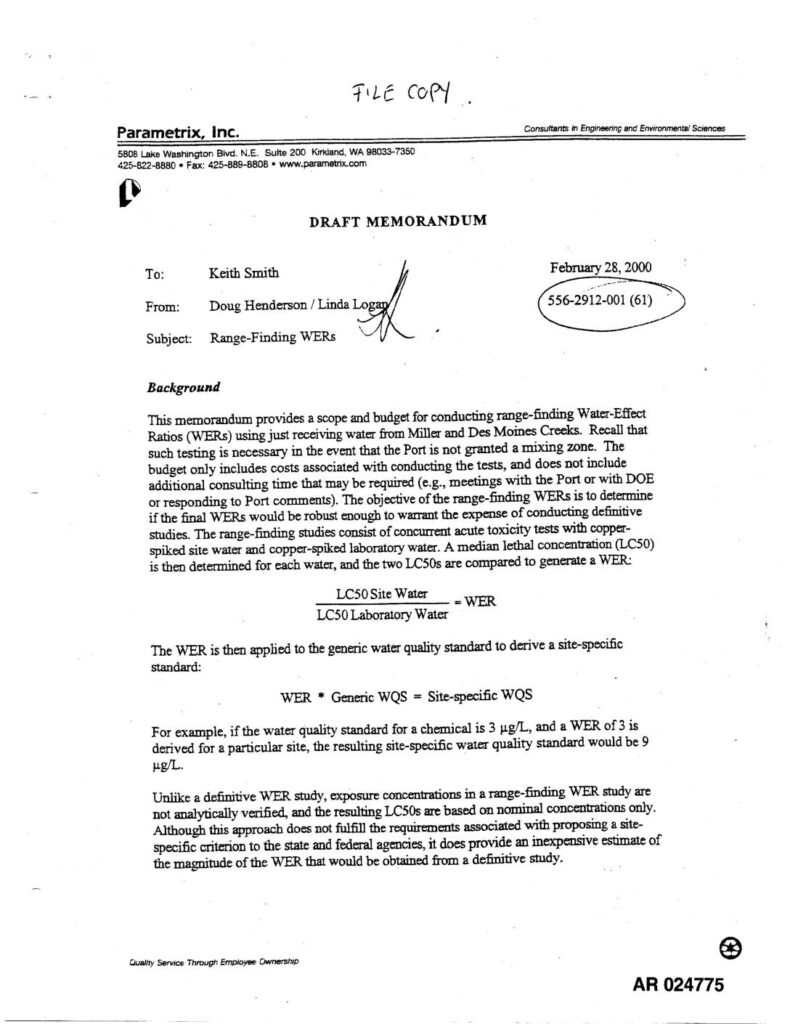
Draft memorandum dated February 28, 2000, from Doug Henderson and Linda Logan of Parametrix, Inc. to Keith Smith (project 556-2912-001), regarding scope and budget for range-finding Water-Effect Ratios (WERs) using receiving water from Miller Creek and Des Moines Creek. Discusses copper WERs, LC50 determinations using acute Ceriodaphnia dubia toxicity tests, copper-spiked site water versus copper-spiked laboratory water, site-specific water quality standards (WQS), and mixing zone considerations. References February 23, 1999 range-finding studies with copper WERs of approximately 16 (Miller), 7 (Walker), and 15 (Des Moines) based on nominal total copper concentrations. Estimated costs for definitive acute tests range from $1,570 (one test set) to $2,650 (two sites, three acute tests). Filed in PCHB Third Runway EIS administrative record as AR024775–AR024777.