TagRCAA(175)
-
 2022-09-12 15:33
2004 NPDES Bg
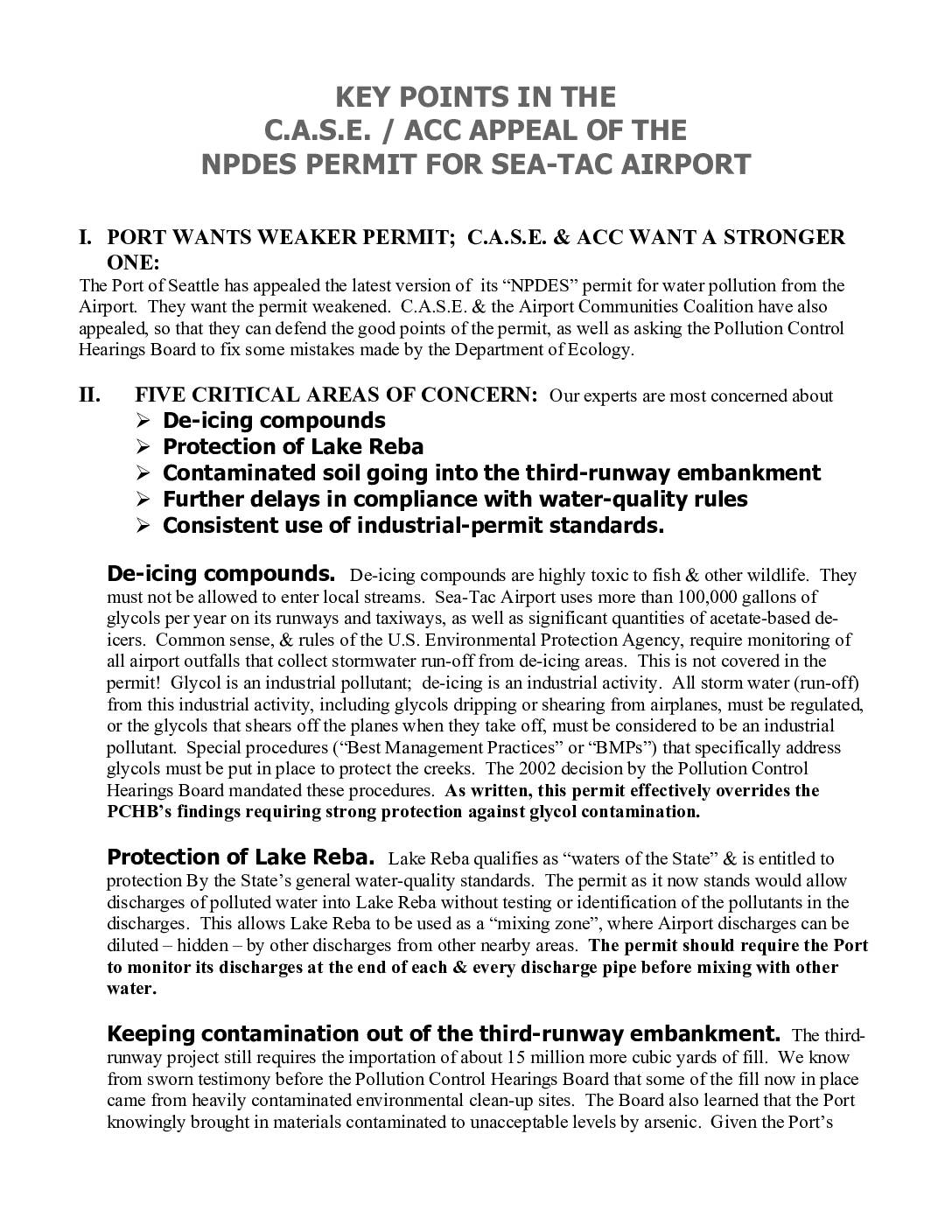
The Port of Seattle has appealed the latest version of its “NPDES” permit for water pollution from the Airport. They want the permit weakened. C.A.S.E. & the Airport Communities Coalition have also appealed, so that they can defend the good points of the permit, as well as asking the Pollution Control Hearings Board to fix some mistakes made by the Department of Ecology. II. FIVE CRITICAL AREAS OF CONCERN: Our experts are most concerned about De-icing compounds Protection of Lake Reba Contaminated soil going into the third-runway embankment Further delays in compliance with water-quality rules Consistent use of industrial-permit standards. De-icing compounds. De-icing compounds are highly toxic to fish & other wildlife. They must not be allowed to enter local streams. Sea-Tac Airport uses more than 100,000 gallons of glycols per year on its runways and taxiways, as well as significant quantities of acetate-based de- icers. Common sense, & rules of the U.S. Environmental Protection Agency, require monitoring of all airport outfalls that collect stormwater run-off from de-icing areas. This is not covered in the permit! Glycol is an industrial pollutant; de-icing is an industrial activity. All storm water (run-off) from this industrial activity, including glycols dripping or shearing from airplanes, must be regulated, or the glycols that shears off the planes when they take off, must be considered to be an industrial pollutant. Special procedures (“Best Management Practices” or “BMPs”) that specifically address glycols must be put in place to protect the creeks. The 2002 decision by the Pollution… -
 2022-09-12 15:33
2005 State Plan Sum
In 2005, the Governor signed into law Engrossed Substitute Senate (ESSB) Bill 5121, which authorizes the state to conduct a statewide long-term air transportation study on general aviation and commercial airports. More specifically the project is as follows: Proposed Project. Statewide airport inventory assessment, demand, and market forecast analysis on commercial and general aviation air transportation. The project also includes formation of an aviation planning council to provide recommendations on how best to meet future aviation airport needs based on the study assessment, demand, market forecast, and evaluation of high-speed passenger transportation facilities and services. High-speed passenger transportation facilities and services would include rail or magnetic levitation transportation systems that connect airports to more efficiently utilize airport capacity, and connect major population and activity centers. Consultant Services Proposed. The statewide long-term air transportation planning study wourl require professional and technical specialists knowledgable about aviation capacity, airspace, demand, and market forcast assessment factors related to commercial and general aviation services. Knowledge in Federal Aviation Administration procedures and requirements is also needed. Draft Services and Deliverables. A. Develop a detailed scope of work, work delivery plan and work program schedule to conduct statewide airport capacity and facility assessment, demand needs and market forecast analysis, provide and facilitate the aviation planning council, evaluate high- speed rail, and communication strategies and public outreach program for the Statewide Long-term Air Transportation Assessment and Analysis project. More specifically the detailed scope of work, work deliver plan and work program schedule shall address the following: B. Statewide… -
 2022-09-12 15:33
Nrdc Foc
Clean Air & Energy: Transportation: In Depth: Report Flying Off Course Environmental Impacts of America's Airports This online report examines the noise, ground-level air quality, water pollution, global warming, and energy efficiency issues associated with America's airports. The information is excerpted from NRDC's print publication, Flying Off Course, published in October 1996. The specific data in the Airport Survey Results tables was collected in a 1995 National Airport Survey. OVERVIEW & QUICK REFERENCE FAQ TABLE OF CONTENTS Executive Summary 1995 National Airport Survey Results Report Credits and Acknowledgements Appendices Glossary of Terms and Acronymns Sample Survey Questionnaire List of Survey Recipients and Respondents For printed copies of this report, see our Publications List. http://www.nrdc.org/default.asp http://www.nrdc.org/joinGive/default.asp http://www.nrdc.org/about/default.asp http://www.nrdc.org/action/default.asp http://www.nrdc.org/search/default.asp http://www.nrdc.org/air/default.asp http://www.nrdc.org/air/pollution/default.asp http://www.nrdc.org/air/energy/default.asp http://www.nrdc.org/air/transportation/default.asp http://www.nrdc.org/air/transportation/brief.asp http://www.nrdc.org/air/transportation/depth.asp http://www.nrdc.org/reference/topics/air.asp http://www.nrdc.org/air/default.asp http://www.nrdc.org/globalWarming/default.asp http://www.nrdc.org/water/default.asp http://www.nrdc.org/wildlife/default.asp http://www.nrdc.org/land/default.asp http://www.nrdc.org/health/default.asp http://www.nrdc.org/nuclear/default.asp http://www.nrdc.org/cities/default.asp http://www.nrdc.org/legislation/default.asp http://www.nrdc.org/onearth/default.asp http://www.nrdc.org/reference/default.asp http://www.nrdc.org/publications/default.asp http://www.nrdc.org/features/default.asp http://www.nrdcaction.org/join/subscribe.asp http://www.nrdc.org/media/default.asp http://www.nrdc.org/espanol/default.asp http://www.nrdc.org/siteMap/default.asp http://www.nrdc.org/contactUs/default.asp http://www.nrdc.org/air/transportation/qairport.asp http://www.nrdc.org/publications/default.asp#air Clean Air & Energy: Transportation: In Depth: Report Flying Off Course Environmental Impacts of America's Airports Top of Report | Glossary Executive Summary In January 1995, the Natural Resources Defense Council (NRDC) undertook a study to determine: (1) the most important environmental issues connected with airports, and (2) the best management techniques airports were using to mitigate them. The bulk of our data came from a nationwide survey that we conducted in the spring and summer of 1995. We mailed a seven-page questionnaire to 125 of the nation's busiest airports, as defined by the Federal Aviation Administration (FAA) in terms of numbers of passengers, or… -
 2022-09-12 15:33
Miller-Walker – Jurisdictional Filing, September 2003
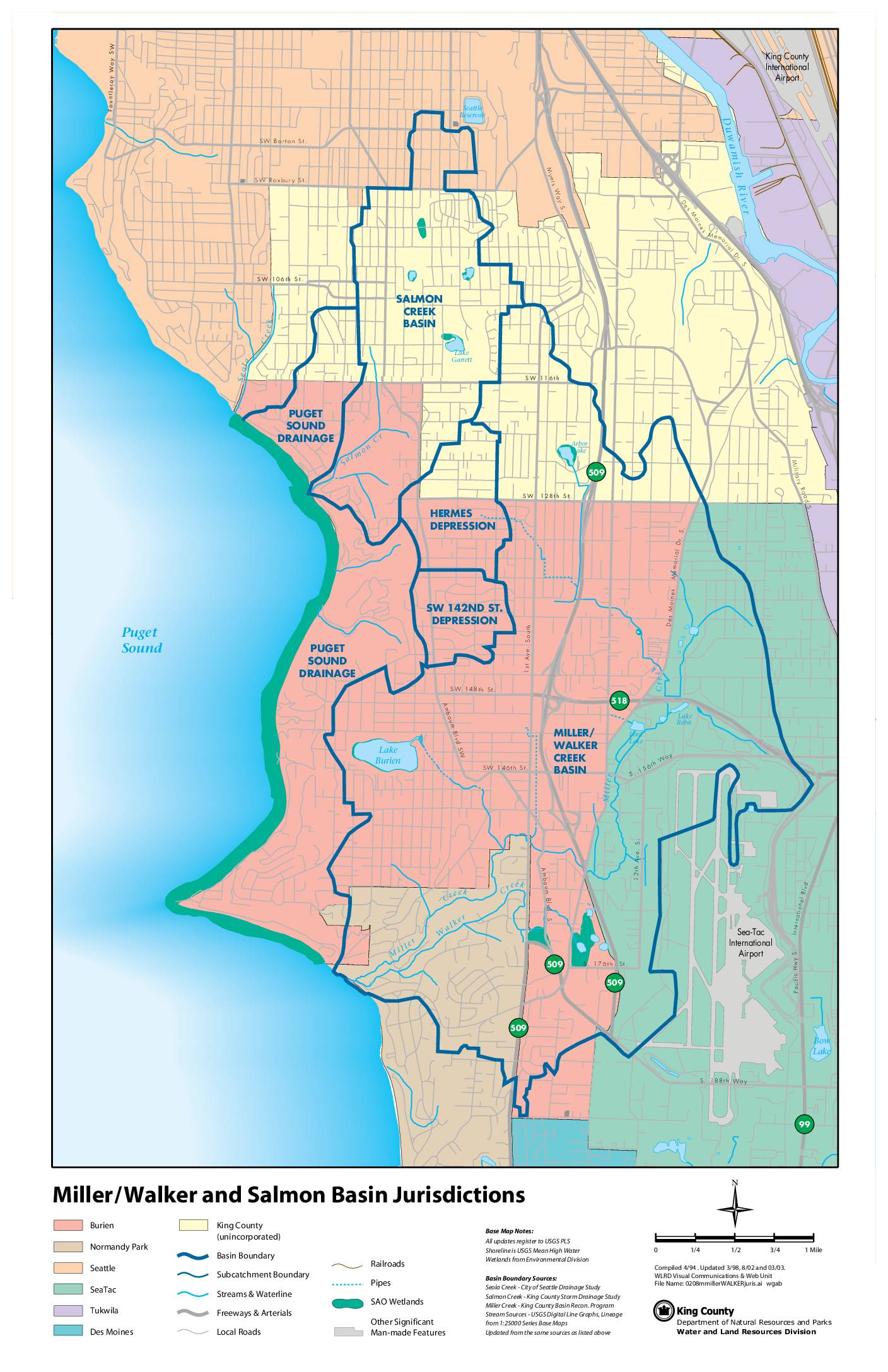
S . 1 8 8 t h W a y Pa ci fi c H w y S . n t e r n a t i n a l B l v d . M y e r s W a y S . D e s M o i n e s M e mor i a l D r. S . D e s M n e s M e m r i a l D r . S . S W 1 4 8 t h S t . M l i t a r y R o a d S . S W R o x b u r y S t . S W B a r t o n S t . A m b a u m B l v d . S S . 1 t h Wa y S . 1 7 6 t h S t . th A v e . S . S W 1 4 6 t h S t . S W 1 1 6 t h S W 1 2 8 t h S t . S W 1 0 6 t h S t . F a u n t l e r o y W a y S W PUGET SOUND DRAINAGE SALMON CREEK BASIN SW 142ND ST. DEPRESSION HERMES DEPRESSION MILLER/ WALKER CREEK BASIN PUGET SOUND DRAINAGE Miller/Walker and Salmon Basin Jurisdictions King County (unincorporated) Basin Boundary Subcatchment Boundary Streams &… -
 2022-09-12 15:32
ST 404b 1
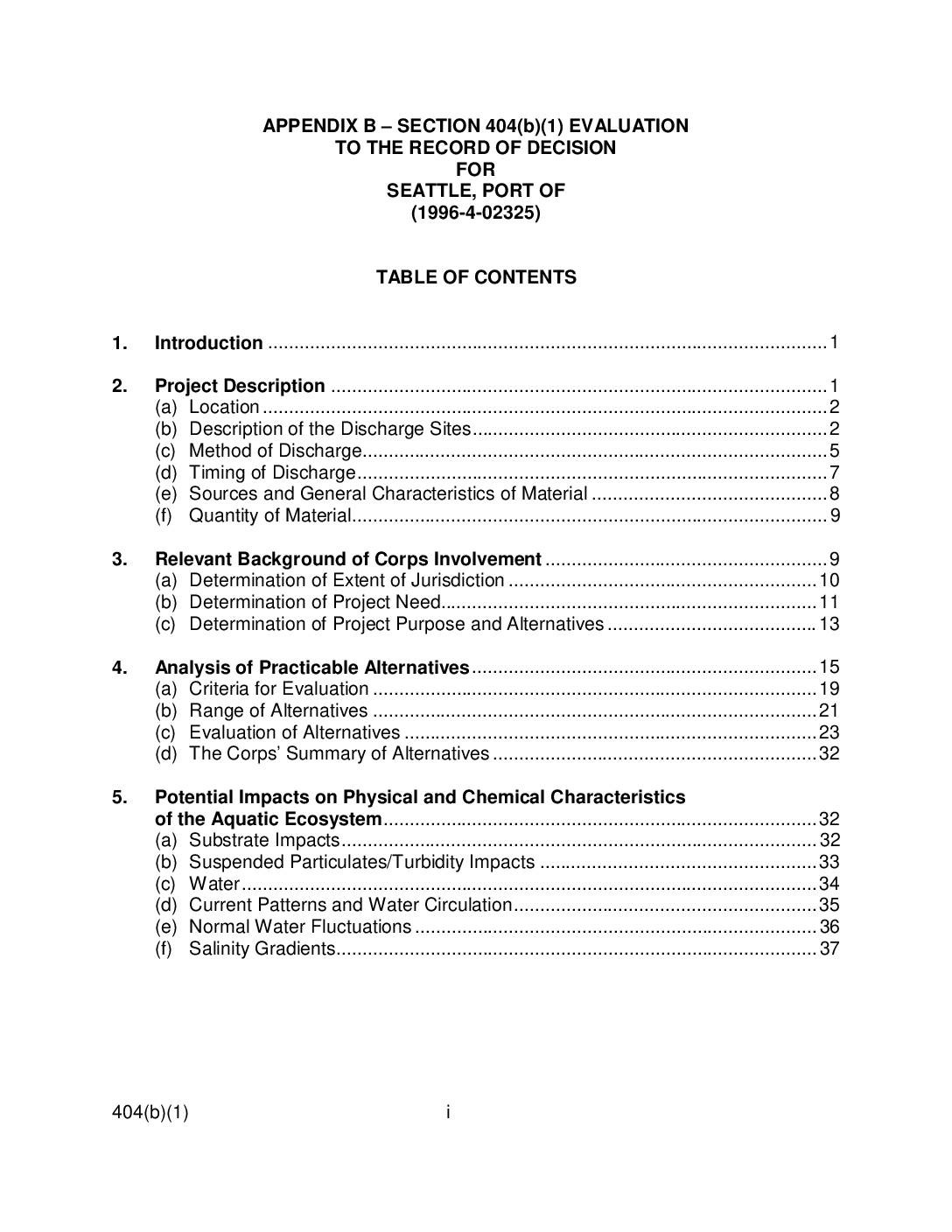
5. Potential Impacts on Physical and Chemical Characteristics of the Aquatic Ecosystem...................................................................................32 (a) Substrate Impacts...........................................................................................32 (b) Suspended Particulates/Turbidity Impacts .....................................................33 (c) Water..............................................................................................................34 (d) Current Patterns and Water Circulation..........................................................35 (e) Normal Water Fluctuations .............................................................................36 (f) Salinity Gradients............................................................................................37 404(b)(1) ii 6. Potential Impacts on Biological Characteristics of the Aquatic Ecosystem .......................................................................................37 (a) Threatened/Endangered Species or Their Habitat .........................................37 (b) Fish and other Aquatic Organisms in the Food Web......................................38 (c) Wildlife............................................................................................................40 7. Potential Impacts on Special Aquatic Sites ......................................................41 (a) Sanctuaries and Refuges ...............................................................................41 (b) Wetlands ........................................................................................................41 (c) Mudflats ..........................................................................................................43 (d) Vegetated Shallows........................................................................................43 (e) Coral Reefs.....................................................................................................43 (f) Riffle and Pool Complexes .............................................................................44 8. Potential Effects on Human Use Characteristics .............................................44 (a) Municipal and Private Water Supplies............................................................44 (b) Recreational and Commercial Fisheries.........................................................47 (c) Water-Related Recreation ..............................................................................49 (d) Aesthetics .......................................................................................................49 (e) Parks, National and Historical Monuments, National Seashores Wilderness Areas, Research Sites, and Similar Preserves ............................50 9. Evaluation and Testing .......................................................................................50 (a) General Evaluation of Fill Materials ................................................................50 (b) Chemical, Biological, and Physical Evaluation and Testing............................51 10. Actions to Minimize Adverse Effects .................................................................51 (a) Actions to avoid or minimize impacts..............................................................51 (b) Actions to compensate for unavoidable impacts to the aquatic environment .................................................................................51 (c) Rationale for off-site mitigation .......................................................................52 (d) Determination of Adequacy of Compensatory Mitigation................................52 11. Compliance with Restrictions on Discharge ....................................................52 (a) Compliance with Pertinent Legislation............................................................52 (b) Potential for Degradation of Waters of the United States...............................53 (c) Measure to Minimize Potential Adverse Impacts on the Aquatic Ecosystems .................................................................................54 12. Factual Determinations.......................................................................................54 (a) Physical Substrate Determinations.................................................................54 (b) Water Circulation, Fluctuation, and Salinity Determinations...........................54 (c) Suspended… -
 2022-09-12 15:32
Tia V 6 4 Spring 2001
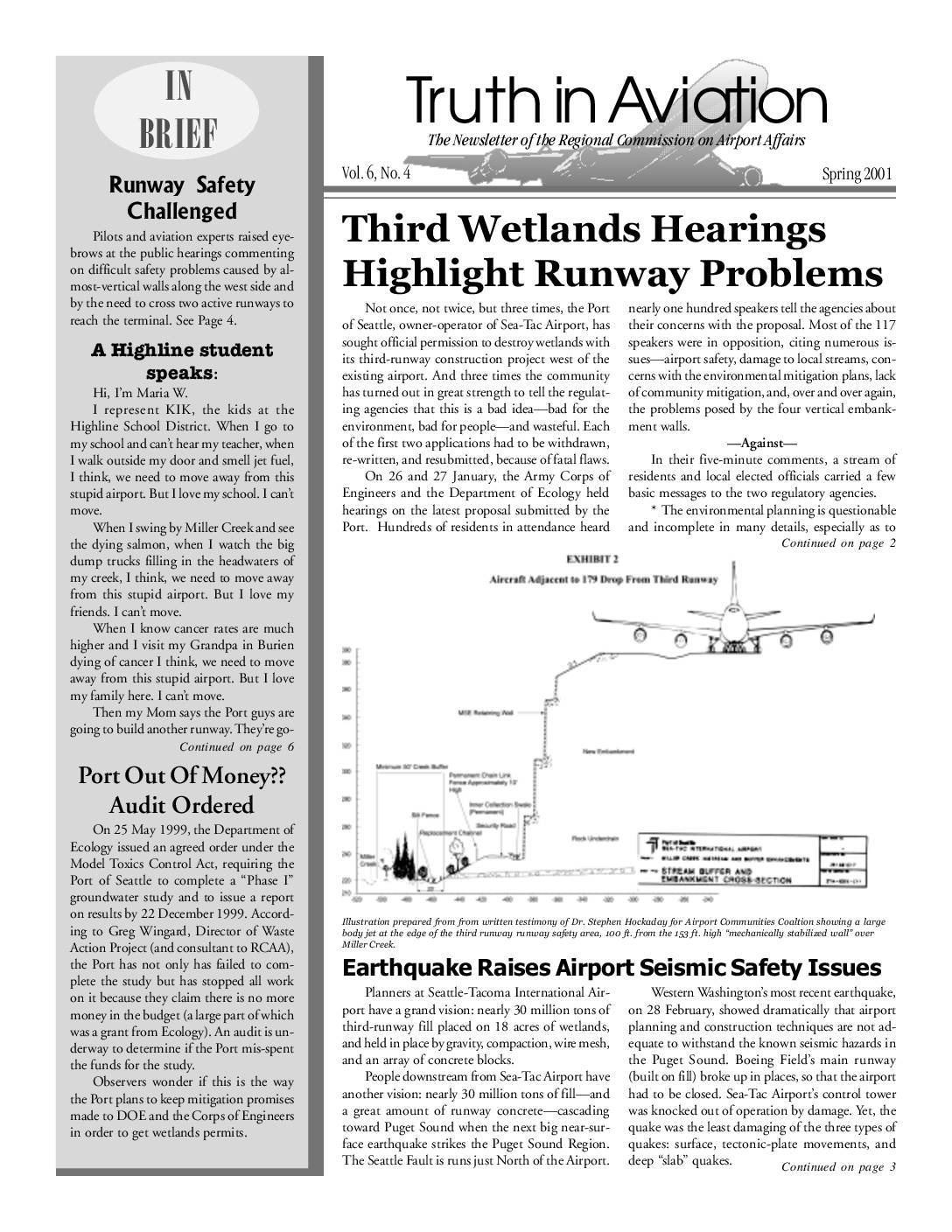
The Newsletter of the Regional Commission on Airport Affairs Vol. 6, No. 4 Spring 2001 IN BRIEF �������� ��� �������� ���� ��� ������������ �� Not once, not twice, but three times, the Port of Seattle, owner-operator of Sea-Tac Airport, has sought official permission to destroy wetlands with its third-runway construction project west of the existing airport. And three times the community has turned out in great strength to tell the regulat- ing agencies that this is a bad idea—bad for the environment, bad for people—and wasteful. Each of the first two applications had to be withdrawn, re-written, and resubmitted, because of fatal flaws. On 26 and 27 January, the Army Corps of Engineers and the Department of Ecology held hearings on the latest proposal submitted by the Port. Hundreds of residents in attendance heard nearly one hundred speakers tell the agencies about their concerns with the proposal. Most of the 117 speakers were in opposition, citing numerous is- sues—airport safety, damage to local streams, con- cerns with the environmental mitigation plans, lack of community mitigation, and, over and over again, the problems posed by the four vertical embank- ment walls. —Against— In their five-minute comments, a stream of residents and local elected officials carried a few basic messages to the two regulatory agencies. * The environmental planning is questionable and incomplete in many details, especially as to ���������� ��� ��� ���� ���� ������� �� ���� �� �������� �� �� �������� ������ ���� ��� ��� ��� ���� ��� �� �������� �… -
 2022-09-12 15:32
Lby 00
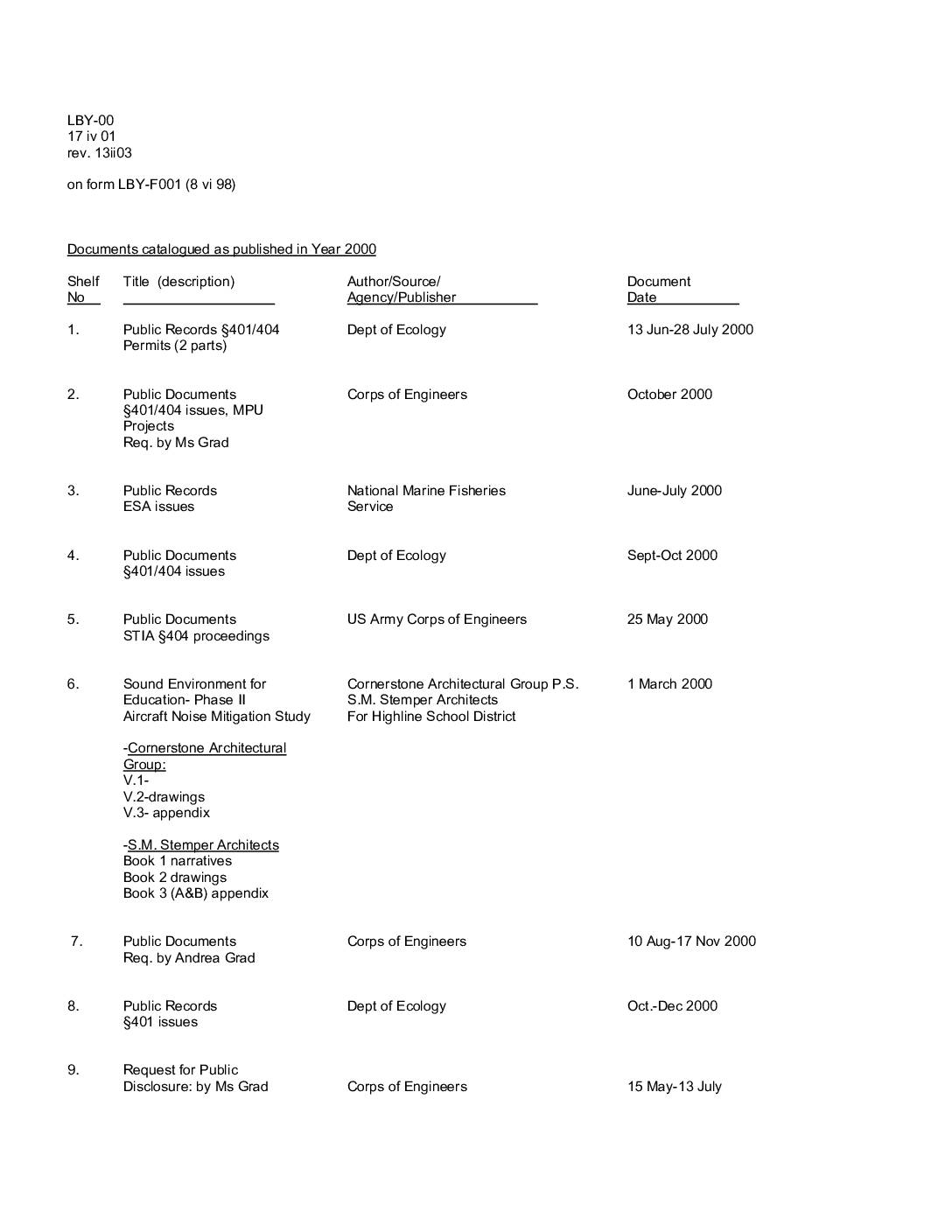
Documents catalogued as published in Year 2000 Shelf Title (description) Author/Source/ Document No Agency/Publisher Date 1. Public Records §401/404 Dept of Ecology 13 Jun-28 July 2000 Permits (2 parts) 2. Public Documents Corps of Engineers October 2000 §401/404 issues, MPU Projects Req. by Ms Grad 3. Public Records National Marine Fisheries June-July 2000 ESA issues Service 4. Public Documents Dept of Ecology Sept-Oct 2000 §401/404 issues 5. Public Documents US Army Corps of Engineers 25 May 2000 STIA §404 proceedings 6. Sound Environment for Cornerstone Architectural Group P.S. 1 March 2000 Education- Phase II S.M. Stemper Architects Aircraft Noise Mitigation Study For Highline School District -Cornerstone Architectural Group: V.1- V.2-drawings V.3- appendix -S.M. Stemper Architects Book 1 narratives Book 2 drawings Book 3 (A&B) appendix 7. Public Documents Corps of Engineers 10 Aug-17 Nov 2000 Req. by Andrea Grad 8. Public Records Dept of Ecology Oct.-Dec 2000 §401 issues 9. Request for Public Disclosure: by Ms Grad Corps of Engineers 15 May-13 July Documents catalogued as published in Year 2000 page 2 of 7 Shelf Title (description) Author/Source/ Document No Agency/Publisher Date 10. STIA Wildlife Hazard Dept of Ecology July 2000 Management Plan 11. Public Documents-Water Dept of Ecology 4 April 00 Issues POS & Dept of Transportation Port of Seattle 22 Feb 00 509 Interchange Stormwater Management Plan POS & Parametrix August 00 Appendix A Stormwater Management Plan POS & Parametrix 14 Sept 00 Appendices C through W Dept of Ecology: Dept of Transportation 24 0ct 2000 Miller &… -
 2022-09-12 15:32
Bogan
Implementation of an LDA/DME Approach to Runway 16R in Lieu of a Third Runway at Sea-Tac I. INTRODUCTION The April 1995 Seattle-Tacoma International Airport Master Plan Update Draft Environmental Impact Statement, (DEIS, Chapter 11 ), identifies seven alternatives to "Improve the Poor Weather Airfield Capability In A Manner That Accommodates Aircraft Activity With An Acceptable Level of Aircraft Delay." The alternatives are: a. Use of other modes of Transportation b. Use of other Airports or Construction of a New Airport c. Activity Demand Management d. Runway Development at Sea-Tac e. Use of Technology f. Blended Alternative (Combination of other modes, use of existing airports, and activity demand management). g. Do-Nothing/No-Build The DEIS concludes that the preferable alternative to improve "poor weather" airfield capability is to construct an 8500 foot runway 2500 feet West of Runway 16L/34R. The DEIS infers that an LDA Approach to Sea-Tac is not viable due to the frequency of "poor weather". The Port attributes this conclusion based on the poor weather conditions they claim exist 44% of the year. LDA has and will be referred to many times in this report therefore; following is a definition of the term LDA. The Localizer Directional Aid (LDA) is an electronic beam used to guide aircraft to a specific point in space. It works similar to the localizer beam of an Instrument Landing System (ILS). Unlike an ILS the LDA is not aligned with a runway. The beam is used as guidance through the clouds. After descending clear of… -
 2022-09-12 15:32
HOK Sum
Prepared Under a Grant from the State of Washington for the: City of Burien, Washington City of Des Moines, Washington City of Federal Way, Washington City of Normandy Park, Washington Highline School District Highline Community Hospital Prepared by: Helmuth, Obata + Kassabaum, Inc. - Dallas, Texas Raytheon Infrastructure Services, Inc. - Denver and Philadelphia In Association With: Thomas/Lane & Associates, Inc. - Seattle, Washington Michael J. McCormick, AICP - Olympia, Washington Executive Summary There is no doubt that the expansion of Sea-Tac International Airport will have a positive economic benefit for the region and the State. However, the costs associated with these improvements are disproportionately borne by those communities immediately surrounding the Airport. Communities such as Burien and Des Moines are projected to be impacted by noise, traffic congestion, and socioeconomic hardship merely because of their location near the Airport. Of the estimated $2.95 billion in potential mitigation costs, $2.3 billion (almost 80%) is projected to be required for Burien ' and Des Moines alone. Other environmental, transportation, and socio-economic costs have not yet been calculated. This study does not assign mitigation costs to any particular agency. While the Port of Seattle and the Federal Aviation Administration will be financially responsible for a portion of the mitigation costs, funding from other sources is also expected. For example, increased transportation funding is available through the Washington State Department of Transportation and the Federal Highway Administration. Some environmental mitigation costs may be eligible for State and Federal EPA funding. Costs associated with… -
 2022-09-12 15:32
RCAA – Scoping Comments on Sea-Tac Master Plan Update EIS
This document constitutes the comments of the Regional Commission on Airport Affairs (RCAA) in response to your request for written comments for your scoping process on the "Sea Tac Master Plan Update, including a third runway." The RCAA is a coalition of various citizen groups, municipal governments and individuals who have a long-standing interest in airport issues and has submitted extensive comments, professional reports and testimony on behalf of our members and member groups in various forums on this subject. This document will also constitute the individual comments of the various participants in the RCAA coalition, though individual members may submit separate comments. In addition to the comments provided herein, we incorporate by reference previous our comments on the related Puget Sound Air Transportation Committee Flight Plan Environmental Impact Statement (hereinafter referred to as the Flightplan E.I.S.) and testimony and presentations to the Puget Sound Regional Council (PSRC) during their consideration of the Flightplan E.I.S. We also reviewed the comment submitted by the PSRC asking that all issues identified in the Flightplan Final E.I.S. as "items be covered in the site specific E.I.S" be covered. We concur and incorporate their comment by reference. Rather than repeat all these instances, we ask that each and every instance in the Flightplan E.I.S.--whether in that instance was in the body of the document or response to public comment--was deferred to the "site specific" or a later E.I.S. must be included in this Environmental Impact Statement. In our comments we will repeatedly use certain…