TagPort Of Seattle(412)
-
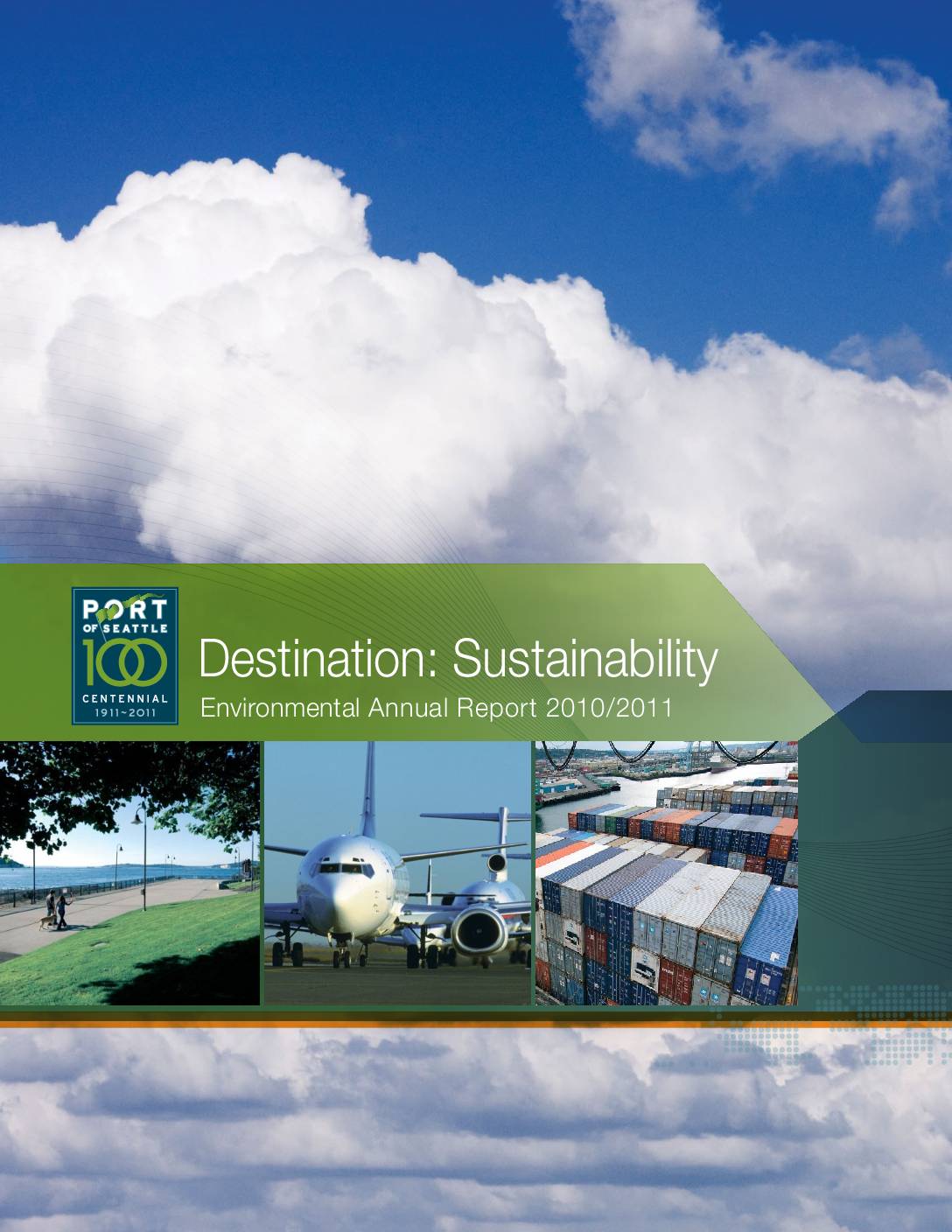
Destination Sustainability – Port of Seattle
The Port of Seattle centennial is an important milestone that gives us a chance to look back at a century of accomplishment and reflect on how we—and the world—have changed in that time. While we celebrate the past, we’re also taking the opportunity to learn from it, tapping our history to help us set a course for the century to come. Some things certainly look different at the port than they did in 1911. But as our passengers take off from the runways of Sea-Tac, ships set sail from our seaport, and innovative thinking drives responsible progress at every one of our properties and projects, our heading at the Port of Seattle remains constant: toward a more sustainable, vital, and productive future for our region and our world. Preparing for the next century. And beyond. 1944 // LAND & SEA 1911 // A IR CENTENNIAL EDITION PORT OF SEATTLE ER_2010-11 // P03 LAND & SEA_1911 Pier 66 / Bell Street Pier was one of the first six properties the Port developed, and it became the first headquarters for the Port of Seattle in 1915. 2010 Port of Seattle headquarters at Pier is managed for energy efficiency. AIR_1944 Sea-Tac Airport’s original “crosswind” runways were designed for landings and takeoffs in al- most any wind direction. 2009 Sea-Tac’s three parallel runways are designed to reduce flight delays for jet aircraft and improve operating efficiency in nearly all types of weather. LAND, SEA & AIR AT A GLANCE_from left to r ight Preparing… -
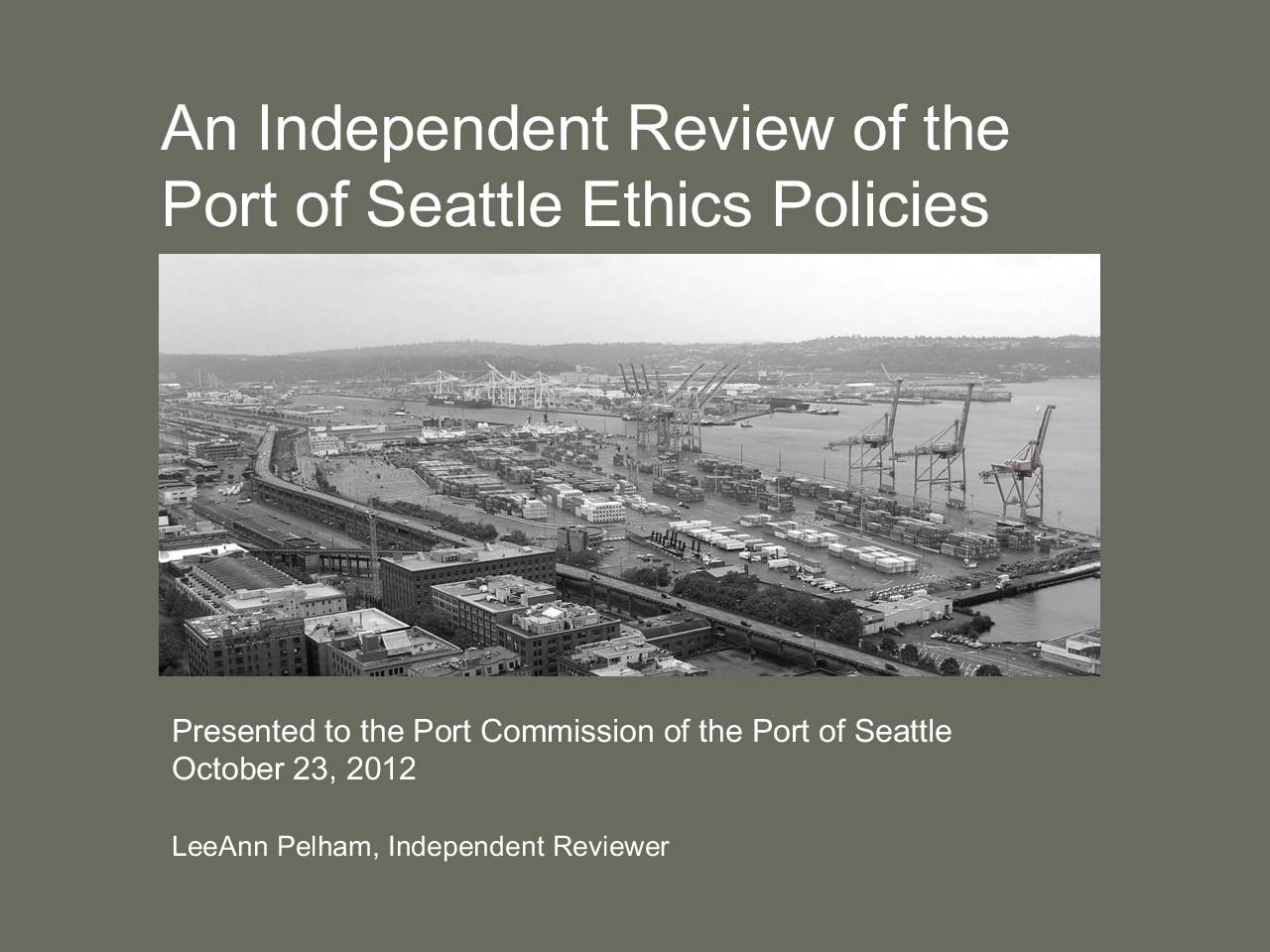
An Independent Review of the Port of Seattle Ethics Policies
Presented to the Port Commission of the Port of Seattle October 23, 2012 LeeAnn Pelham, Independent Reviewer Recommendations in Brief Clarify set of ethics policies Recs. I.A, I.B and I.C Strengthen processes to support ethics policies in practice Recs. II.A, II.B and II.C Reinforce organizational structure to institutionalize Port-wide ethics perspective Recs. III.A, III.B and III.C _________________________________________________________________________________________________________ LeeAnn Pelham, Consulting ethics | leadership | performance Independent Review of the Port of Seattle Ethics Policies | October 23, 2012 | Page 2 _________________________________________________________________________________________________________ LeeAnn Pelham, Consulting ethics | leadership | performance Independent Review of the Port of Seattle Ethics Policies | October 23, 2012 | Page 3 -
Port of Seattle Environmental Report to the Community
The Port of Seattle has begun an important journey that will be continuous. The goals of that journey are to be a national leader in environmental and sustainability programs, and to make our green initiative a substan- tial thread that runs through everything we do. Our employees have embraced these goals fully, including everything from turning off lights at their work stations to writing federal grant proposals for multi-million dollar energy-saving projects. Our employees bring passion and energy to our environmental work just as they did for the 10-year capital investment program that brought you the new Central Terminal, third runway and Concourse A at Seattle-Tacoma International Airport, renewed facilities at Fishermen’s Terminal and Shilshole Bay Marina, and upgraded container cargo terminals that compete successfully in the global marketplace. Admittedly, passion and energy alone cannot solve all of our challenges. We face some highly complex issues that touch many stakeholders and many lives. We don’t have all the answers. We know we need partners with like goals, and we need the appropriate funding for major projects that pay off in the long run but can be quite costly to initiate. The Port of Seattle’s primary function is to create and support the 194,000 jobs in this region that depend upon Port related businesses. But we can’t sustain those businesses without sustaining the environment in which we work. A LETTER FROM TAY YOSHITANI, CEO Scope of Report: This report covers data and activities for the year 2009. It does not identify… -
Commission Briefing Presentation July 9, 2013 – Port of Seattle
• Review airport activity and existing conditions for arriving international passengers • Update on International Arrivals Facility (IAF) planning progress • Ongoing work to make the most of the existing facility with modest improvements and mitigation • Review two IAF facility expansion alternatives • Review efforts with airlines • Recommendation and next steps -
A VISION FOR 2014 AND BEYOND – Port of Seattle
“It wasn’t a matter of telling our story better, it is a matter of creating a better story.” H. LEE SCOTT JR. CEO, WALMART on the company’s approach to sustainability Page | 2 -
2012â Groundwater – Port of Seattle
EFMP 2011-2012 Annual Groundwater Monitoring Report iii AUGUST 2012 TABLE OF CONTENTS 1.0 INTRODUCTION ........................................................................................................................... 1 1.1 MONITORING OBJECTIVES ............................................................................................................. 1 1.2 REPORT ORGANIZATION ................................................................................................................ 2 1.3 NOMENCLATURE............................................................................................................................ 2 2.0 MONITORING WELL NETWORK ............................................................................................ 3 2.1 SITE CONDITIONS .......................................................................................................................... 3 2.2 EFMP MONITORING WELLS .......................................................................................................... 4 3.0 GROUNDWATER MONITORING PROCEDURES ................................................................. 5 3.1 WATER LEVEL MEASURMENT ....................................................................................................... 5 3.2 SAMPLING METHODS ..................................................................................................................... 5 3.3 EFMP GROUNDWATER MONITORING WELLS SAMPLED ................................................................ 6 3.4 VERIFICATION RESAMPLING .......................................................................................................... 6 4.0 LABORATORY ANALYSIS AND REPORTING ....................................................................... 7 4.1 ANALYTICAL METHODS ................................................................................................................ 7 4.2 DATA PACKAGES ........................................................................................................................... 8 4.3 DATA VALIDATION ........................................................................................................................ 8 4.4 WATER QUALITY ACTION LEVELS ................................................................................................ 9 5.0 RESULTS AND DATA EVALUATIONS ................................................................................... 10 5.1 GROUNDWATER LEVELS .............................................................................................................. 10 5.2 DATA SUMMARY ......................................................................................................................... 11 5.2.1 Trace Metals ........................................................................................................................... 11 5.2.2 Petroleum Hydrocarbons........................................................................................................ 11 5.2.3 Conventional Analytes ............................................................................................................ 12 5.2.4 Field Parameters .................................................................................................................... 12 5.3 PY4/PY5 DESCRIPTIVE STATISTICS FOR CONSTITUENTS OF INTEREST ........................................ 12 5.3.1 Trace Metals ........................................................................................................................... 12 5.4 TIME SERIES AND TREND ANALYSIS ............................................................................................ 13 5.5 SPECIAL CONSIDERATION FOR ARSENIC ...................................................................................... 14 5.6 UPDATED BASELINE DATA SETS ................................................................................................. 15 5.6.1 Site-Wide Baseline Data Statistical Analysis .......................................................................... 15 5.7 COMPARATIVE ANALYSIS OF TOTAL AND DISSOLVED METALS .................................................. 16 5.7.1 Paired Comparison ................................................................................................................. 16 5.7.2 Correlation Analysis ............................................................................................................... 17 5.8 MERCURY AT MW-8A ................................................................................................................. 17 6.0 CORRECTIVE ACTIONS PERFORMED DURING PY4/PY5 .............................................. 18 7.0 SUMMARY AND CONCLUSIONS ............................................................................................ 19 8.0 REFERENCES .............................................................................................................................. 21 EFMP 2011-2012 Annual Groundwater Monitoring Report iv AUGUST 2012 TABLES Table 2-1: Well Construction Summary Table 3-1: PY4/PY5 Well Quarterly… -
Extraordinary History. Bright Future. – Port of Seattle
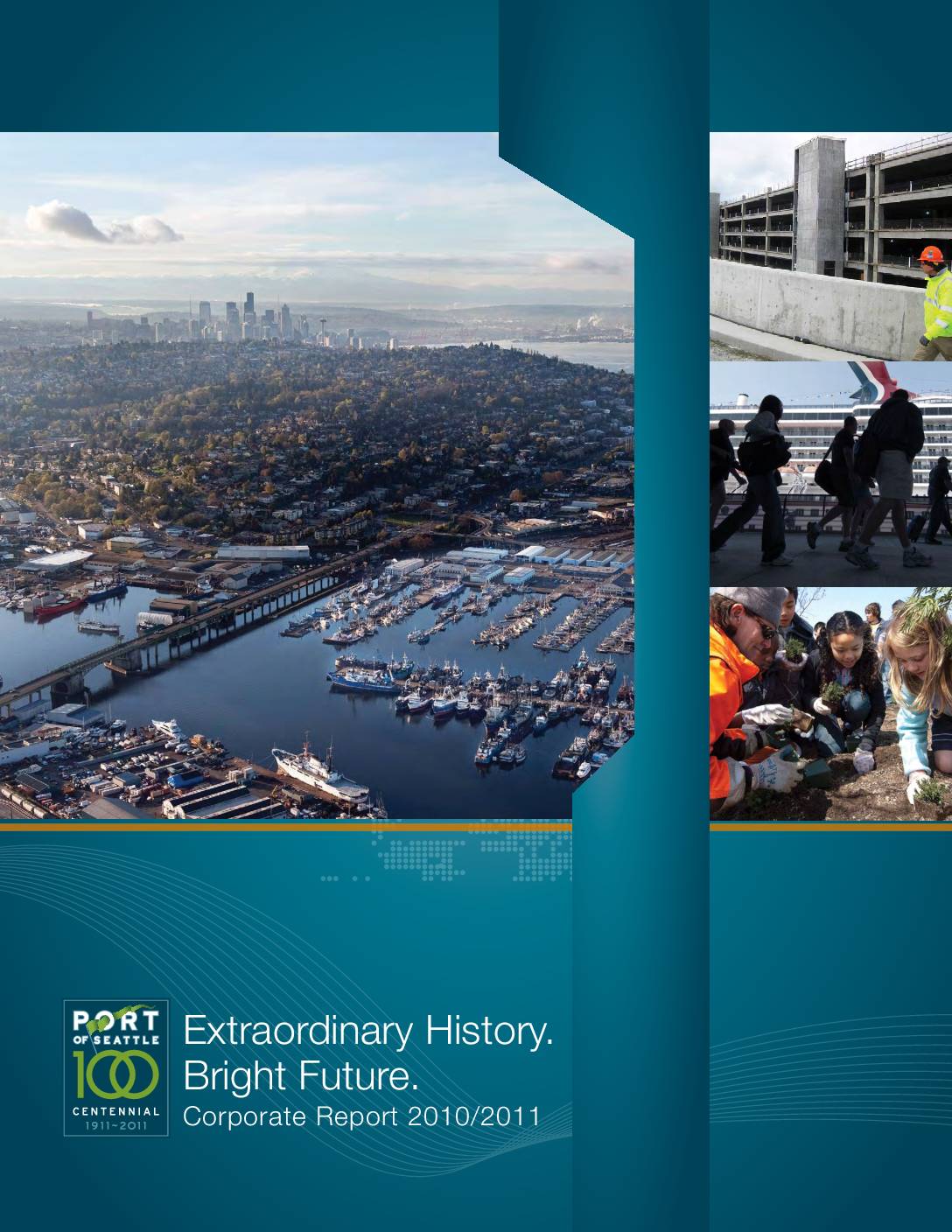
In last days of the summer of 1911, the voters of King County did something remarkable. They created the first public port in the state of Washington, set- ting in motion 100 years of progress, stewardship, and innovation. If they could be with us today, they might not recognize much of what they created, as jumbo jet aircraft fly overhead and alternative fuels power the freighters at our docks. But they would see something that hasn’t changed across the decades—the Port of Seattle’s commitment to the vitality of our region. As we enter our next century, the port continues to invest in the infrastructure that will build our local economy and provide strong employment opportuni- ties for our citizens. At the same time, we’re putting our efforts at the service of the environment, helping ensure the health of ecosystems and natural resources here in the Puget Sound and around the globe. Our world and its challenges have changed enormously since the port was founded—and our century of experience puts us in a unique position to respond, succeed, and help shape a more sustainable future. One Hundred Years is Just the Beginning. CENTENNIAL EDITION PORT OF SEATTLE AR_2010-11 // P03 From Top Left_1911 The Port of Seattle is established and soon constructs the Hanford Street Grain Terminal, one of the nation’s largest grain facilities. 1919 Longshoremen load raw silk, Seattle’s most valuable import accounting for 40 percent of U.S. silk trade. 1923 Seattle is the nation’s leading fish port with shipments… -
Century Agenda Presentation – Port of Seattle
• As we turned from the past, and looked to the next Century, the Commission created a Century Agenda Committee to develop a comprehensive vision for the next 100 years. • Century Agenda builds on the accomplishments of the first century, with a visionary look forward to emerging challenges and opportunities of the next 100 years. Bold, and Achievable Century Agenda introduces a new: Mission Vision Commitment Century Agenda Introduces: Regional Initiatives to leverage the collective power of a regional agenda Century Agenda identifies new: Strategies Objectives to pursue with business partners and stakeholders Mission Vision & Commitment Strategies Objectives Actions Mission: The Port of Seattle is a public agency that creates jobs by advancing trade and commerce, promoting industrial growth, and stimulating economic development. Port of Seattle Strategic Framework Vision: Over the next 25 years, we will add 100,000 jobs through economic growth led by the Port of Seattle, for a total of 300,000 Port-related jobs in the region, while reducing our environmental footprint. Commitment: The Port of Seattle creates economic opportunity for all, stewards our environment responsibly, partners with surrounding communities, promotes social responsibility, conducts ourselves transparently, and holds ourselves accountable. We will leave succeeding generations a stronger port. Strategies and Objectives: • Premier international logistics hub • Leading tourism destination and business gateway • Promote small business growth and workforce development • Greenest and most energy efficient port in North America Actions: Presented in business plans and budgets.… -

reduce diesel particulate matter (DPM) – Port of Seattle
DRAFT Northwest Ports Clean Air Strategy Update June 2013 ii ACKNOWLEDGMENTS The Port of Seattle, Port of Tacoma, and Port Metro Vancouver jointly developed the Northwest Ports Clean Air Strategy—2013 Update with contributions from partner agencies. The ports would like to thank the following agencies for their contributions: Environment Canada Metro Vancouver Puget Sound Clean Air Agency United State Environmental Protection Agency Washington State Department of Ecology Stephanie Jones Stebbins 206.787.3818 jonesstebbins.s@portseattle.org www.portseattle.org Jason Jordan 253.830.5321 jjordan@portoftacoma.com www.portoftacoma.com Ronan Chester 604.665.9311 ronan.chester@portmetrovancouver.com www.portmetrovancouver.com Richard Holt 604.666.6552 richard.holt@ec.gc.ca www.ec.gc.ca Dan Brown 503.326.6832 brown.dan@epa.gov www.epa.gov Frank Van Haren 3360.407.6870 fvan461@ecy.wa.gov www.ecy.wa.gov Andrew Green 206.689.4053 andrewg@pscleanair.org www.pscleanair.org Metro Vancouver Shelina Sidi 604.436.6750 shelina.sidi@metrovancouver.org www.metrovancouver.org DR AF T DRAFT Northwest Ports Clean Air Strategy Update June 2013 iii CONTENTS Acknowledgments ........................................................................................................................ ii Executive Summary......................................................................................................................1 Strategy Overview ........................................................................................................................5 Airshed Emission-Reduction Goals ..............................................................................................8 Performance Targets By Sector ..................................................................................................10 1. Ocean-Going Vessels .......................................................................................................12 2. Harbor Vessels .................................................................................................................15 3. Cargo-Handling Equipment ..............................................................................................17 4. Trucks ...............................................................................................................................19 5. Locomotives and Rail Transport .......................................................................................21 6. Port Administration ...........................................................................................................23 Pilot Studies and Demonstration Projects ..................................................................................25 Performance Reporting ..............................................................................................................27 Conclusions and Next Steps ......................................................................................................28 Glossary .....................................................................................................................................29 Appendix A. Port Emissions Inventories .....................................................................................32 Appendix B. Air Emission Regulations in U.S. and Canada .......................................................37 Tables Table 1. Summary of Actions and Performance Targets by Sector for 2015 and 2020 .................2 Table 2. Emission-Reduction Goals for DPM and GHGs by 2015 and 2020 ................................9 Table 3. Actions and Performance Targets for Ocean-Going Vessels .........................................14 Table 4. Actions and Performance Targets for Harbor Vessels ...................................................16 Table 5.… -
Annual Stormwater Monitoring Report Seattle … – Port of Seattle
For the Period July 1, 2010 through June 30, 2011