SAMP/SEPA teaser offers no spoilers. Just confusion over a process completed six months ago
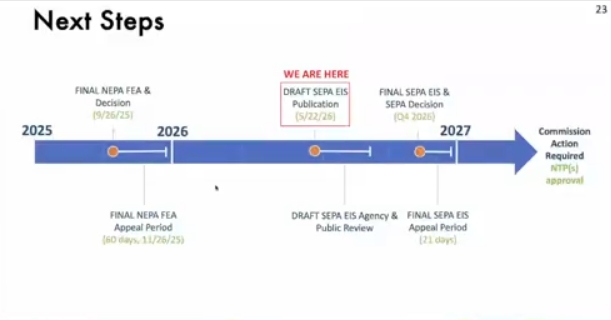
The latest meeting of the Stakeholder Advisory Roundtable provided a recap of the Sustainable Airport Master Plan federal approval process (NEPA SAMP FONSI/ROD) and a teaser of the upcoming state process (SEPA) which will begin on May 22, 2026.
StART Meeting Agenda April 29, 2026
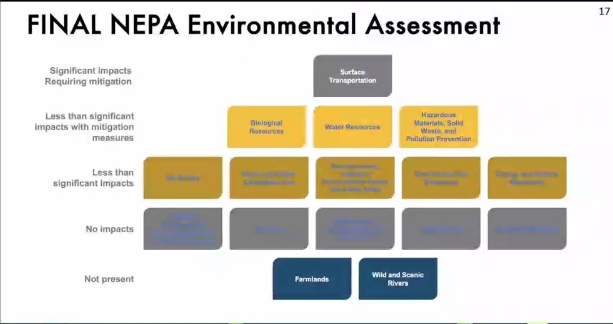
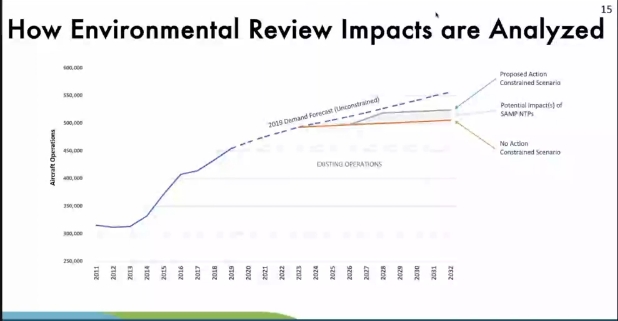
Although described as a ‘SEPA Next Steps’ presentation, Port of Seattle environmental manager Steve Rybolt’s slide deck was really a recap of the November 2025 federal (NEPA) approval of the 31 projects. There were no real ‘spoilers’ concerning the upcoming state version.
SAMP NTP Draft SEPA EIS and Next Steps (StART)
Confusion over a process just completed
Mr. Rybolt and other Port staff fielded a series of questions, some good and some we did not expect from people who had gone through that federal process as recently as November.
Members seemed confused and apprehensive over the differences between that ‘NEPA’ (federal) and the upcoming ‘SEPA’ (state) processes.
Many questions had previously been answered in the Environmental Assessment–which is disappointing considering it dropped only six months ago. There are constant complaints that the material is ‘too technical’. But the EA was not the ‘specialist’ version. The EA was the ‘friendly’ version–the absolute minimum for presenting the information in a defensible manner. Participants should be expected to be able to discuss documents like this if progress is to be made.
NEPA delivered nothing, as predicted
As we predicted two years ago, the federal process not only yielded no mitigation or even acknowledgment of meaningful increases in noise and pollution since the Third Runway. It was further hamstrung by Trump Executive orders barring consideration of broader, cumulative and socioeconomic impacts. The Port indicated over a year ago that it would restore consideration of those categories in the upcoming SEPA process.
However, since in that process, the Port is essentially reviewing and approving their own projects, we remain skeptical.
From staff perspective, the federal and state processes are presented as being different because they are required to re-examine the same materials through a completely different set of legalese. We feel their pain. But at bottom the source materials are the same. Same airfield analyses. Same air capacity study. Same noise study. Same pollution studies. Same. Same. Same.
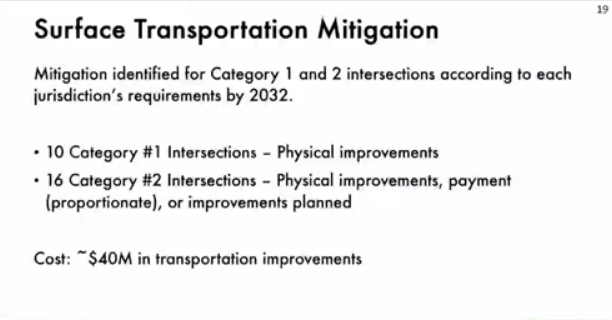
Each has a different set of categories to be studied. But neither has requirements to mitigate their findings in any real way beyond adjusting a few traffic intersections! Unless the group develops their own set of community demands, the outcomes will likely also be the same. Nothing.
The badgering on comment periods
Attendees repeatedly tried to push Port reps to commit to a longer-than-minimum (30 day) comment period. Port staff pointed out they did not have authority to commit in the moment, while making clear that the Port Commission has telegraphed its desire for an extension, as was the case with NEPA.
On a more productive note, there was a strong consensus to provide a better format for the community open houses besides the tired ‘stations’ approach. That would be an important upgrade.
However, the likely public engagement will be (as with NEPA) four community open houses at the same locations: Burien, Des Moines, Federal Way, SeaTac– plus two webinars and a modestly extended comment period.
Public engagement is not a goal
Even if the public comment period were extended to 90 days (as one attendee suggested), how would that help? The SAMP was first announced in 2012. All members have had over a decade to consider what types of mitigation they need and none have offered their own proposals or done much more than pay lip service to airport advocacy. With each community event, fewer residents show up, and like StART, those who do have now become so low-information, we do not see how any amount of last minute ‘public engagement’ would matter.
One member said that ‘healthy community engagement’ was their primary goal. We would remind everyone in the room: healthy community engagement is not what the public truly cares about. They do care about noise, pollution, and the overall community harms of airport expansion. But they have no idea how. StART was supposed to help them get there.
Unfortunately, it is much easier to yell for ‘more community meetings!’ than to read 20 pages. Expecting Port staff to be your guide is like asking the expert witness on the other side of the table for advice on how to make your case. It puts them in an awkward position. More importantly, it betrays our lack of seriousness in dealing with the SAMP.
Almost since its inception in 2017, StART has existed in various states of dysfunction. Members stubbornly refuse to work on the useful things it always could accomplish–and blame it for the things it never will.