Bill to reduce health disparities at Sea-Tac gets community support and firm Port opposition
Senator Tina Orwall’s introduced her bill to help reduce environmental and health disparities and improve the health of airport community residents, SB 5652 was heard in the Senate Environment, Energy & Technology Committee. Text of SB5652
SB 5652 aims to reduce environmental and health disparities in large port districts by requiring these districts to incorporate environmental justice principles into their strategic planning and decision-making processes. Key provisions include:
- Environmental Justice Implementation Plan – Qualifying port districts must develop a plan outlining goals, actions, and metrics to reduce environmental and health disparities while ensuring community engagement.
- Community Engagement Plan – By January 1, 2026, port districts must create a plan for engaging overburdened communities and vulnerable populations, ensuring their involvement in decision-making processes.
- Environmental Impact Assessments – Before approving significant actions (e.g., major capital projects or airport expansions), port districts must obtain an environmental health impact assessment from the University of Washington and local health departments.
- Mitigation and Accountability – Port districts must implement mitigation strategies for environmental harms, consult affected communities, and publicly share action plans addressing these impacts. The University of Washington will periodically evaluate the effectiveness of these measures.
- Funding for Environmental Mitigation – Port districts can allocate funds to mitigate environmental harms and address past and present disparities affecting overburdened communities.
She described the prevalence of asthma in her district and her previous work linking aircraft emissions and ultrafine particles. She also mentioned having identified a possible funding source for the environmental testing requirements of the bill.
Several people spoke in favor of the bill, all mentioning the health impacts of noise and air pollution.
Current and past Port lobbyists tag-teamed with aviation industry professionals, speaking in no uncertain terms against the bill. Their concerns fell into four broad categories
- Over-reach: The bill would scrutinize all large projects, not just at the airport
- Unfair: since the Port is complying with Federal and State environmental law, they see no need
- Demand: the airport does not induce demand. It simply responds to it.
- Delay: the added requirements would delay airport expansion which is crucial to
The Port did not tell the truth. Creating more demand is one of the core tenets of its Century Agenda and we wish they would stop saying so. Concerns over ‘delay’ could be significantly mitigated simply by do as you say, not as you do. Stop ginning up more flights via tourism, promotion, and co-marketing programs with their cruise business.
Our commenter mention a couple of those points. First, the airport is a financial powerhouse. Even with the largest capital project in its history, it is expected to be over 200 million dollars in the black by 2029. Although the SAMP is complying with NEPA and SEPA, it is the loopholes that are the problem. They are literally not required to provide any further mitigation. Since the committee had just approved a bill concerning PFAS in cookware, he also reminded the committee that the environmental impacts of the airport also include water and soil. After all, the Port has used thousands of gallons of PFAS in its firefighting operations – much of which has entered the ground water system.
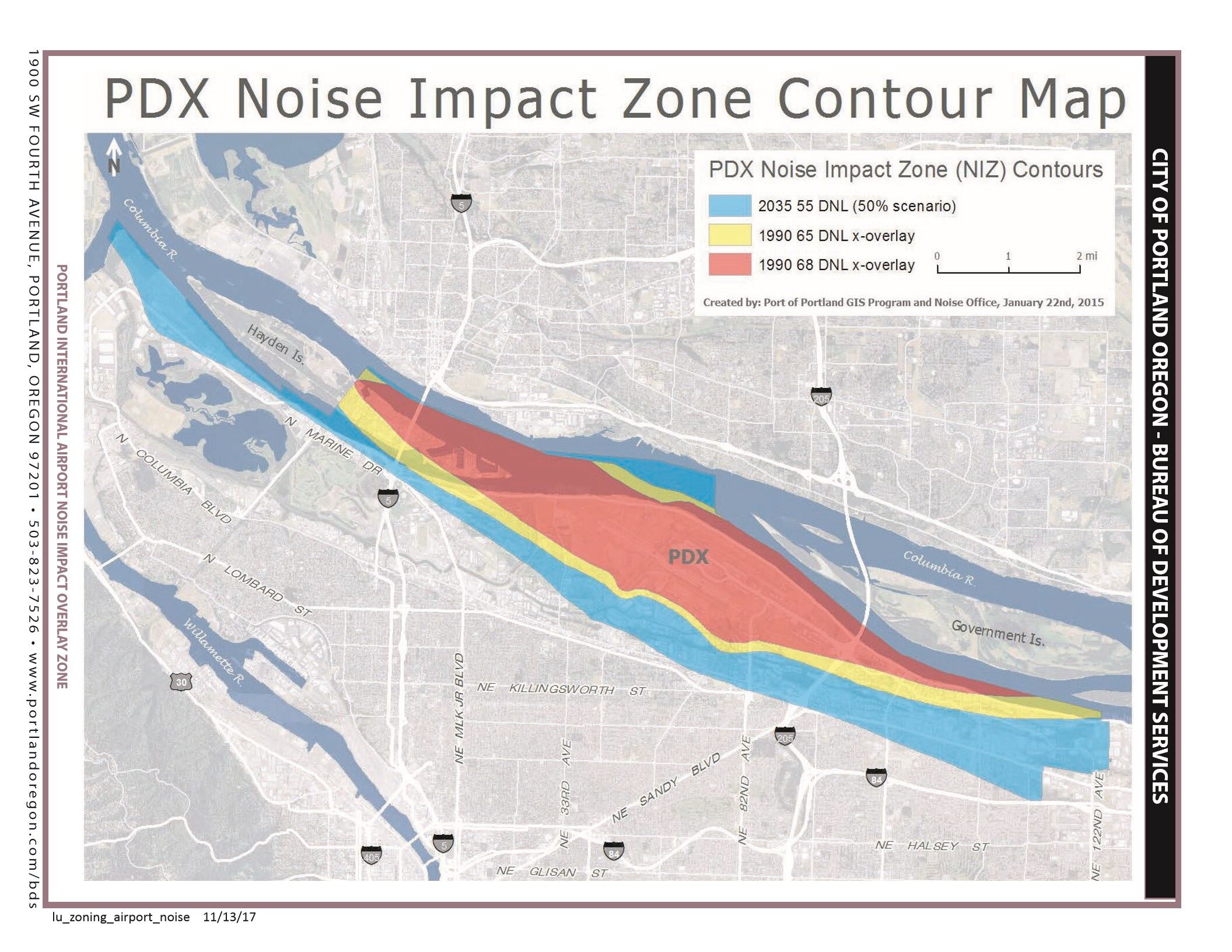 Senator Paul Harris asked us if Sea-Tac was unique in its environmental regulation, asking about Portland Airport (PDX). The question gives a sense of why it’s so tough to obtain relief.
There is an old saw in the airline business “Seen one airport. Seen one airport.” Like all major US airports PDX is subject to the same FAA regulations as Sea-Tac Airport. However, the comparison breaks down almost immediately. For example, like Sea-Tac, PDX has a noise abatement program. But while 9,400 homes qualified for sound insulation at Sea-Tac, only six (6) have ever qualified near Portland. Sea-Tac is unique among American airports in its proximity to highly dense communities – and especially its proximity to so many schools.
The next step is to what for a Committee decision to move the bill forward to Appropriations. Stay tuned.