Aviation doing great. SAMP responses not as positive we can?
Aviation Budget
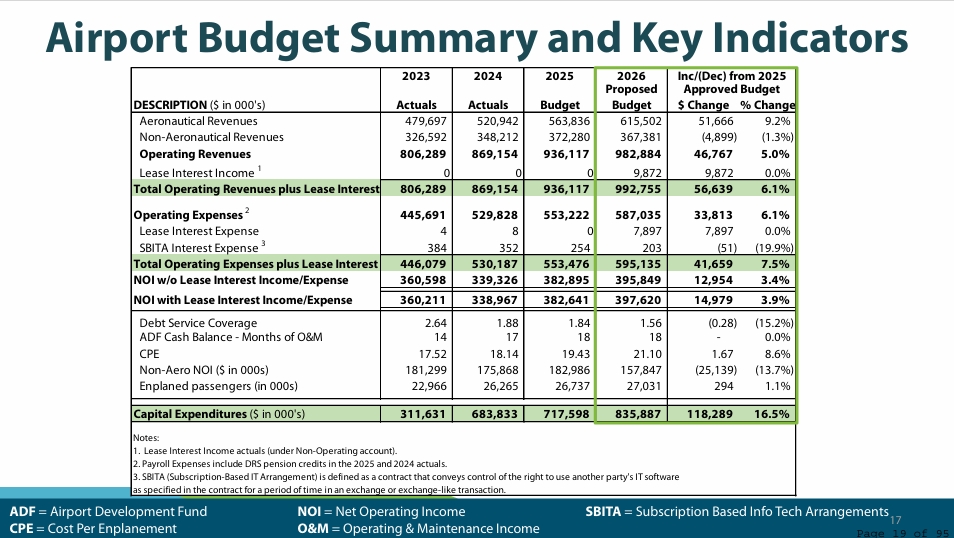 The Commission had a full day, with two meetings. Given that it represents 80% of the total budget, the morning session was all about the airport, with the afternoon discussing the SAMP and then shifting two the other two main divisions: Marine and Economic Development.
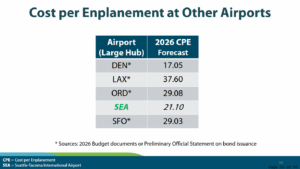
And the airport continues to do well. The one number we always recommend people look at is cost per enplanement (CPE). This breaks down the total amount of operations and expected capital improvements into a per passenger pee. The airport always works to keep that number in the mid-range among major airports. The fact that they continue to be able to do so means that the Port is not expecting funding challenges as in previous expansions.
Goal #4 of the Port’s Century Agenda is “to be the greenest, most energy-efficient port in North America.” This can only happen if surrounding communities insist they live up to that.
Regular Meeting SAMP
Item 11a. Sustainable Airport Master Plan Near-Term Projects Final National Environmental Policy Act Environmental Assessment, Federal Aviation Administration Finding of No Significant Impact, Record of Decision, and State Environmental Policy Act Next Steps Briefing
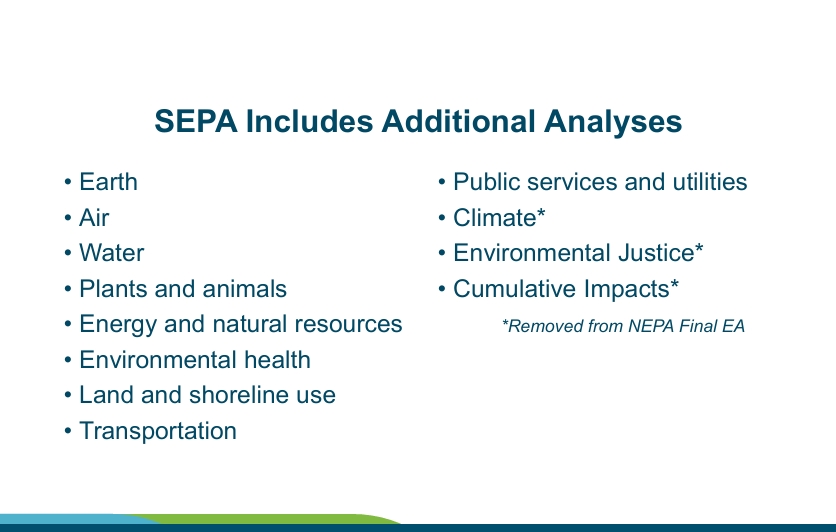 Over 125 comments were received in support of the SAMP. These fell into two broad categories: business and union (construction jobs). Two comments against. In going from draft to final versions, the EA removed important categories (eg. cumulative impacts and environmental justice) due to President Trump’s recent Executive Orders.
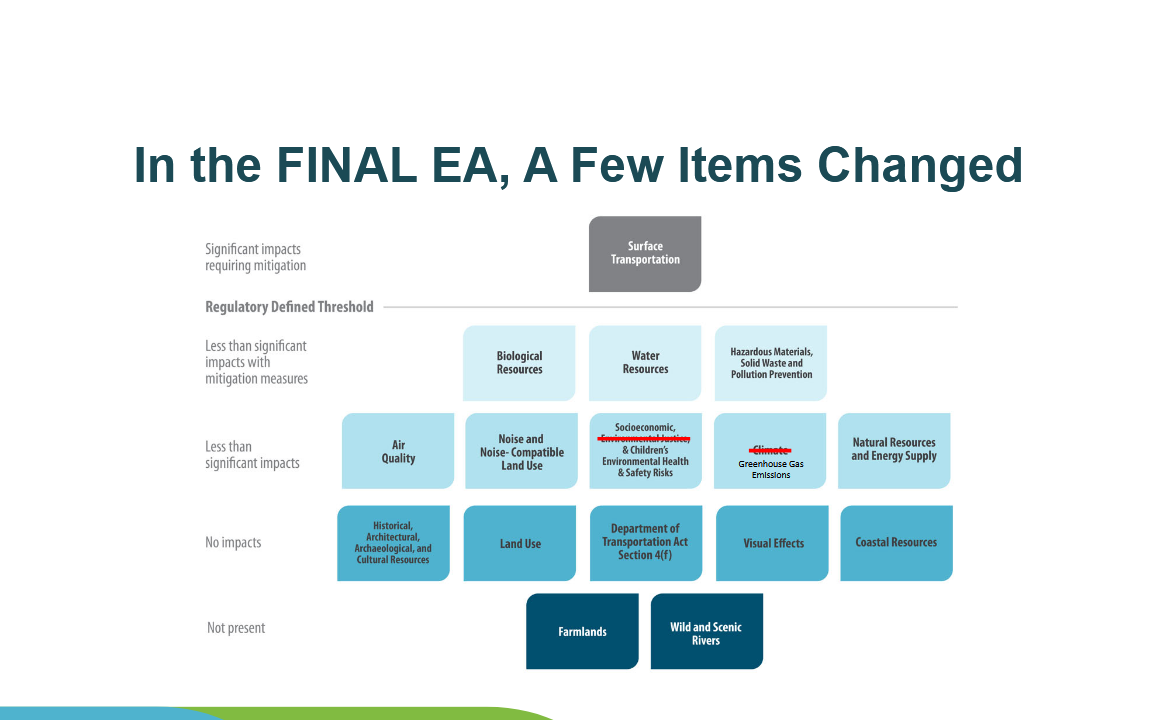 Even so, the draft EA found no problems in those categories. With or without those categories, the FAA was not going to provide for any mitigation. Adding them back in for the upcoming SEPA process offers no assurances as to better results.
Staff offered few details on the upcoming SEPA (state) environmental review beyond saying that it should be expected to conclude by the end of Q1 2026. Since the Port is the lead agency in charge of the process, they ought to know.
Commission comments were brief. Commissioner Felleman advocated for a longer SEPA comment period, which other supported — but mainly to make the public feel more ‘heard’.
Commission President Hasegawa mentioned reducing air pollution. But the vast majority of air pollution comes from aircraft. And given federal and state standards it is almost impossible to exceed those (NAAQS) because current standards do not take into account aviation (eg. ultrafine particles are unregulated.)
Similarly, airport noise cannot trigger more funding because the DNL65, established in the 1970’s does not take into account frequency.
Commissioner Cho made a point of noting how little control the Port has over the NEPA process. We agree. As we keep saying: NEPA and SEPA are now largely irrelevant. Airport law has become so heavily gamed against communities, the Port would almost have to try to be out of compliance.
The current situation at airports is as though automotive fuel and pollution standards had been frozen in amber in 1979.
Our take
However, Cho went further, seeming to complain that communities blame the Port for somehow preventing a proper evaluation of current vs. future impacts. Not true. Whether or not all 31 SAMP projects are built, airport operations will increase to some extent. As former Director Lance Lyttle often said, “you can run 600,000 operations at Sea-Tac. It just depends on how long you want to make people wait.” In 2001, the airport ran over 400,000 annual operations; on two runways.
But the fact is, the Port actively gins up demand for its services. It chooses to contribute to maximize those increases.
Beyond that, the larger question has always been: what is the Port Commission willing to do about our communities?
Neither NEPA or SEPA place any limits on the Port doing right by airport communities. Those processes set the floor, not the ceiling. And as a practical matter, NEPA is about grant reimbursement; what the FAA will pay for, not what airports can do on their own.
The Port can always choose to spend an unlimited amount of its own money to do more to address noise, air pollution, socioeconomic decline — everything airport communities care about.
Goal #4 of the Port’s Century Agenda is “to be the greenest, most energy-efficient port in North America.” This can only happen if surrounding communities insist they live up to that.