By
Tantri Wija
Special to The Seattle Times
WHEN WE MOVE to a new house, we can take our families, our pets and our furniture, but generally we have to leave the garden behind. They are planted in the ground, so usually that’s where they stay. However, if you want to badly enough, sometimes even a garden can be moved.
Highline SeaTac Botanical Garden, a neighborhood treasure located next to the SeaTac Community Center in the southeast corner of North SeaTac Park, is anchored by gardens that needed homes. It features gardens cultivated by several local clubs, organizations and private citizens, and more than one privately owned garden that had to be moved to be saved from bulldozers.
Image 1 of 1
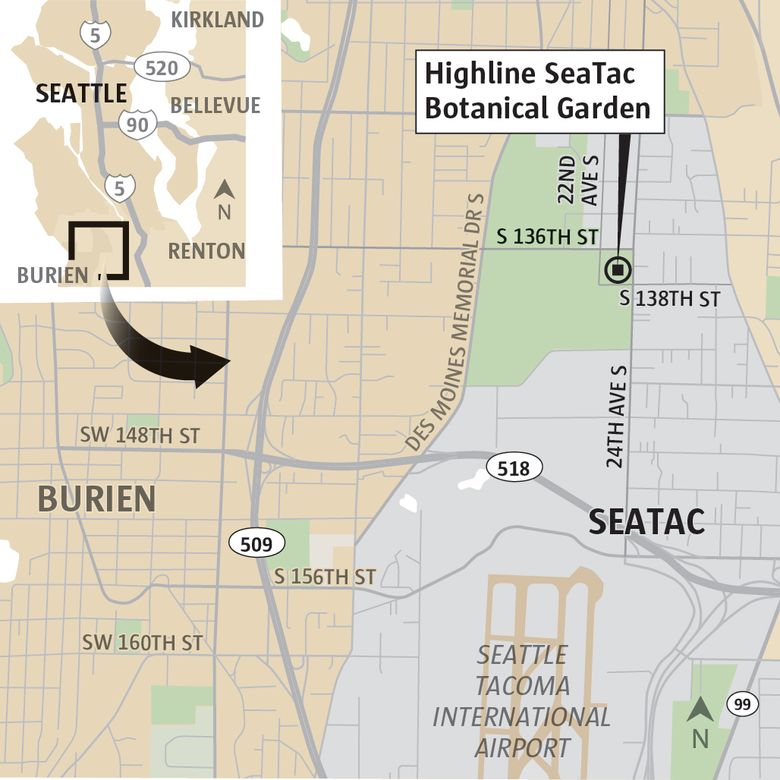
Source: Esri (Mark Nowlin / The Seattle Times)
IF YOU GO
Address: 13735 24th Ave. S., SeaTac
Hours: Dawn to dusk daily. Closed on federal holidays.
More info: highlinegarden.org/see-explore/
The botanical garden began with lifelong plant enthusiast Elda Behm’s private garden in Des Moines. Born at the turn of the 20th century, Behm spent her life with a spade and trowel in hand, and turned her home into a neighborhood landmark. So in the late 1990s when Seattle-Tacoma International Airport announced it would build a third runway and began to buy property in the area, thus endangering Behm’s horticultural haven, a determined troop of 200 volunteers moved her large collection of plants from her home to land designated by the airport and the city of SeaTac in 2000. What is now the Elda Behm Paradise Garden was re-created there in 2001, landscaped with flowing water features and a burly, otherworldly pergola that looks like it came from Middle Earth.
Raindrops cling to roses at Highline SeaTac Botanical Garden which includes plants and structures from two home gardens that were moved to make way for a runway expansion at Sea-Tac Airport. (Nick Wagner / The Seattle Times)
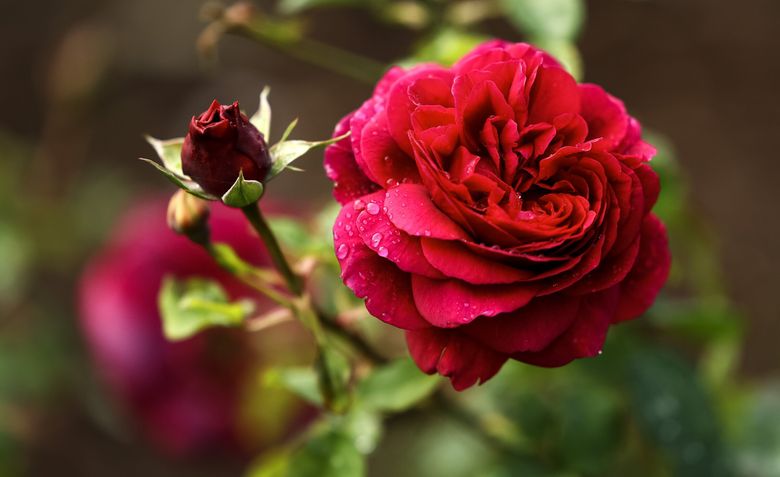
Raindrops cling to roses at Highline SeaTac Botanical Garden which includes plants and structures from two home gardens that were moved to make way for a runway expansion at Sea-Tac Airport. (Nick Wagner / The Seattle Times)
An Airbus A340 operated by Lufthansa flies over the botanical garden. (Nick Wagner / The Seattle Times)
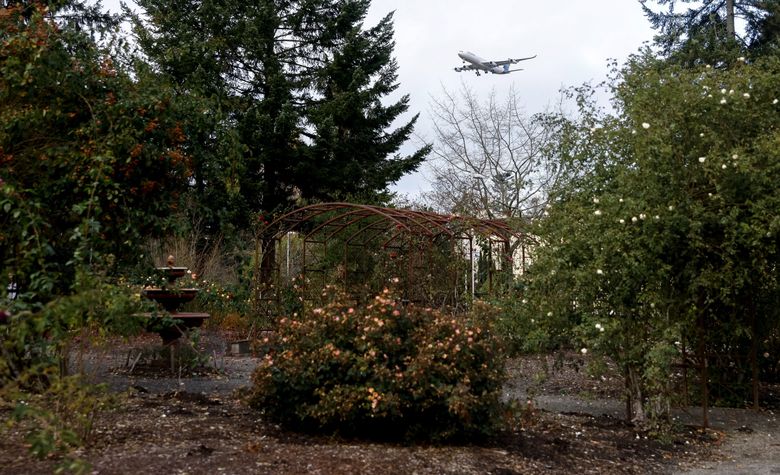
An Airbus A340 operated by Lufthansa flies over the botanical garden. (Nick Wagner / The Seattle Times)
The other anchor at the botanical garden is the Seike Japanese Garden, another formerly private Eden that had to be moved to make way for the runway expansion. The original location was purchased in 1929 by Shinichi Seike, who emigrated from Japan in 1919. In 1961, ground was broken on a Japanese garden in the Des Moines Way Nursery, one of the family businesses, partly as a memorial to a family member who had been killed while serving in the 442nd Infantry Regimental Combat Team in France during World War II, and partially in conjunction with the 1962 World’s Fair. (Most of the family was incarcerated in 1942 under Executive Order 9066.)
Fall colors of ginkgos, maples and other plants shine against evergreens in the gardens. (Nick Wagner / The Seattle Times)
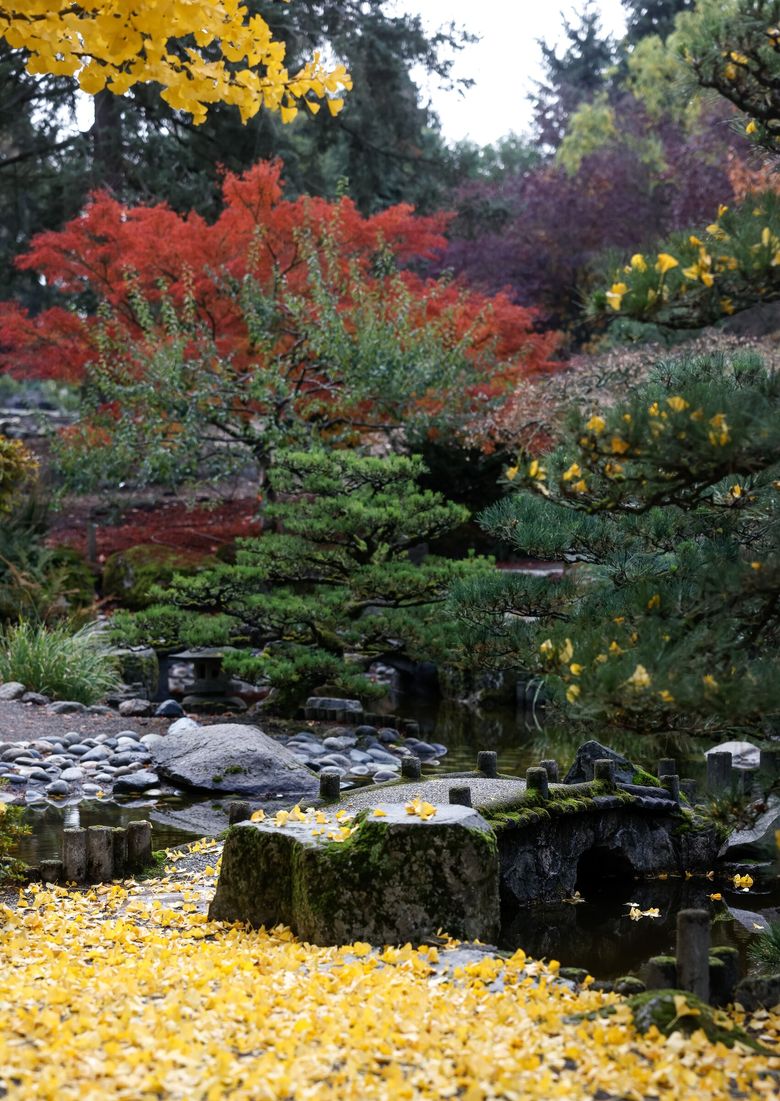
Fall colors of ginkgos, maples and other plants shine against evergreens in the gardens. (Nick Wagner / The Seattle Times)
The land that included the nursery and the original garden was purchased for the airport in 2002, and through community efforts every plant and stone was meticulously moved with near-archaeological precision to the botanical garden. Besides the Japanese maples (one of which is now more than 100 years old), graceful gingkoes and 1,500-square foot pond, the contemplative space features three examples of Japanese-style bridges to intrigue the architecturally minded.
A visitor walks on the yatsuhashi or zigzag bridge inside the Seike Japanese Garden at the botanical garden. (Nick Wagner / The Seattle Times)
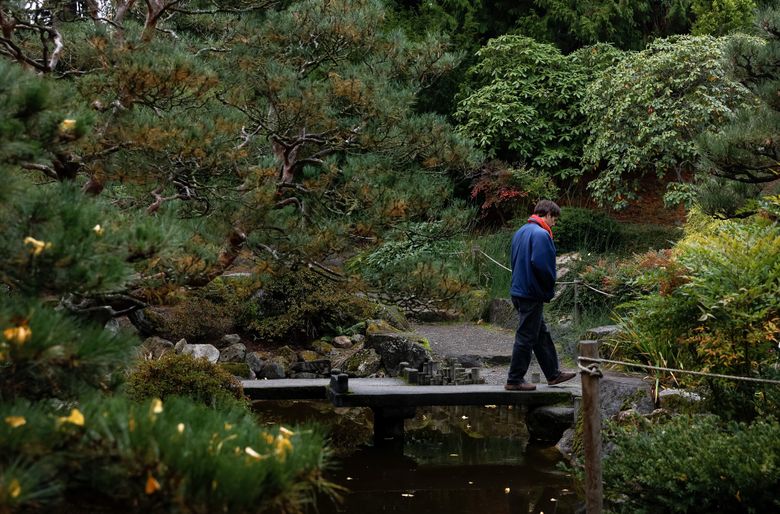
A visitor walks on the yatsuhashi or zigzag bridge inside the Seike Japanese Garden at the botanical garden. (Nick Wagner / The Seattle Times)
Today, the botanical garden is home to unique flower beds and gardens installed and maintained by various clubs such as the King County Iris Society and the Seattle Rose Society. Beds explode with peonies, azaleas and fuchsias in season, and even a stately bamboo grove.
BY THE NUMBERS
2000: Year the garden was founded
1,050: Number of plant species
11 acres: Size of the garden
And while any garden is at its best during the spring and summer, the botanical garden has a special charm in autumn, when many of its trees turn blazing shades of red and yellow and maroon. The sculptural Seike garden is particularly romantic with its stone paths speckled with fallen golden ginkgo and fiery Japanese maple leaves.
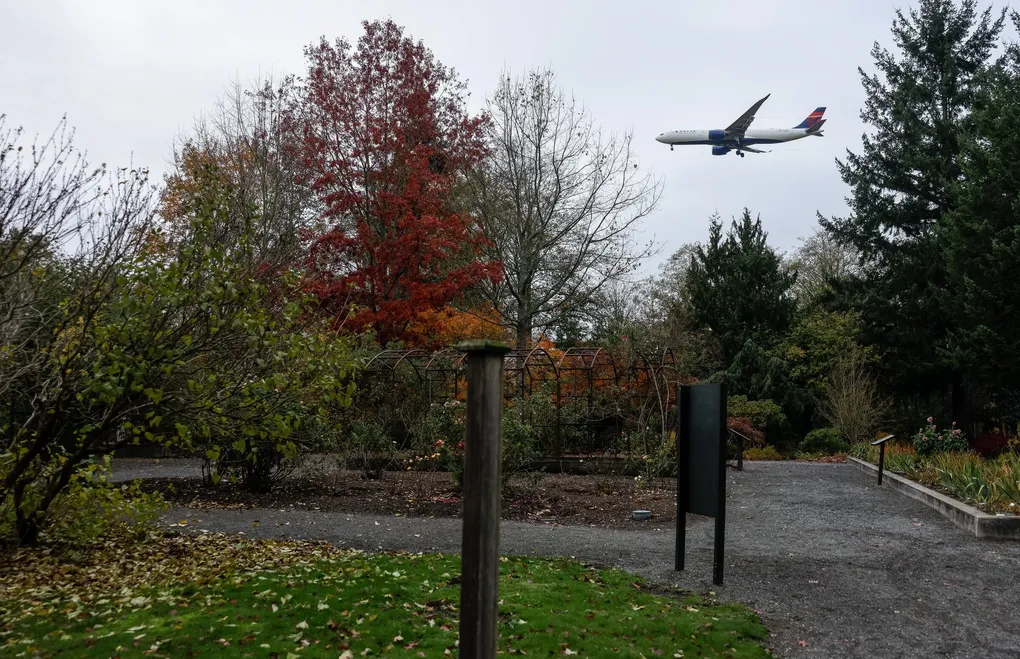
Not much punctuates the profound peace of the botanical garden except the roar of planes heading to and from the airport, which, because they are tied to the garden’s origin story, is part of its charm.
A squirrel feasts in a Japanese maple tree at the garden. (Nick Wagner / The Seattle Times)
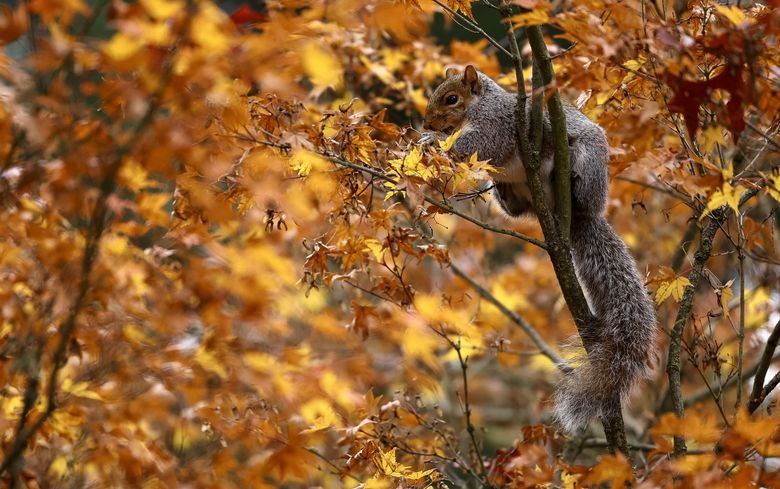
A squirrel feasts in a Japanese maple tree at the garden. (Nick Wagner / The Seattle Times)
More A Sense of Place stories in Pacific NW magazine
- Seattle’s Hunter Farms is an exception to the tree lot rule
- WA garden that saved precious legacies thrives near Sea-Tac Airport
- You’d be surprised by all the resources Bellevue Library has to offer
Share your A Sense of Place idea with us
Know of a unique person, place or event tied to particular spot in the Seattle area? We want to hear about it! And we might feature it in a future A Sense of Place story.
In this weekly column, Tantri Wija and other writers dive into a place, thing or event set in a particular neighborhood or area. Each story is accompanied by photos, a map and a few fun facts.
Share your A Sense of Place idea in the form below, or email it to us at asop@seattletimes.com. We’ll reach out to you if we have follow-up questions, and you might just see your suggestion highlighted in an upcoming story!
Tantri Wija is a Seattle-based freelance writer. Reach her at tantriwija.com. Her first novel, “See: Succubus,” is available on her website and via Amazon.com. Nick Wagner is a Seattle Times staff photographer: nwagner@seattletimes.com.