Take a tour of the first fixed-site UFP system near Sea-Tac Airport
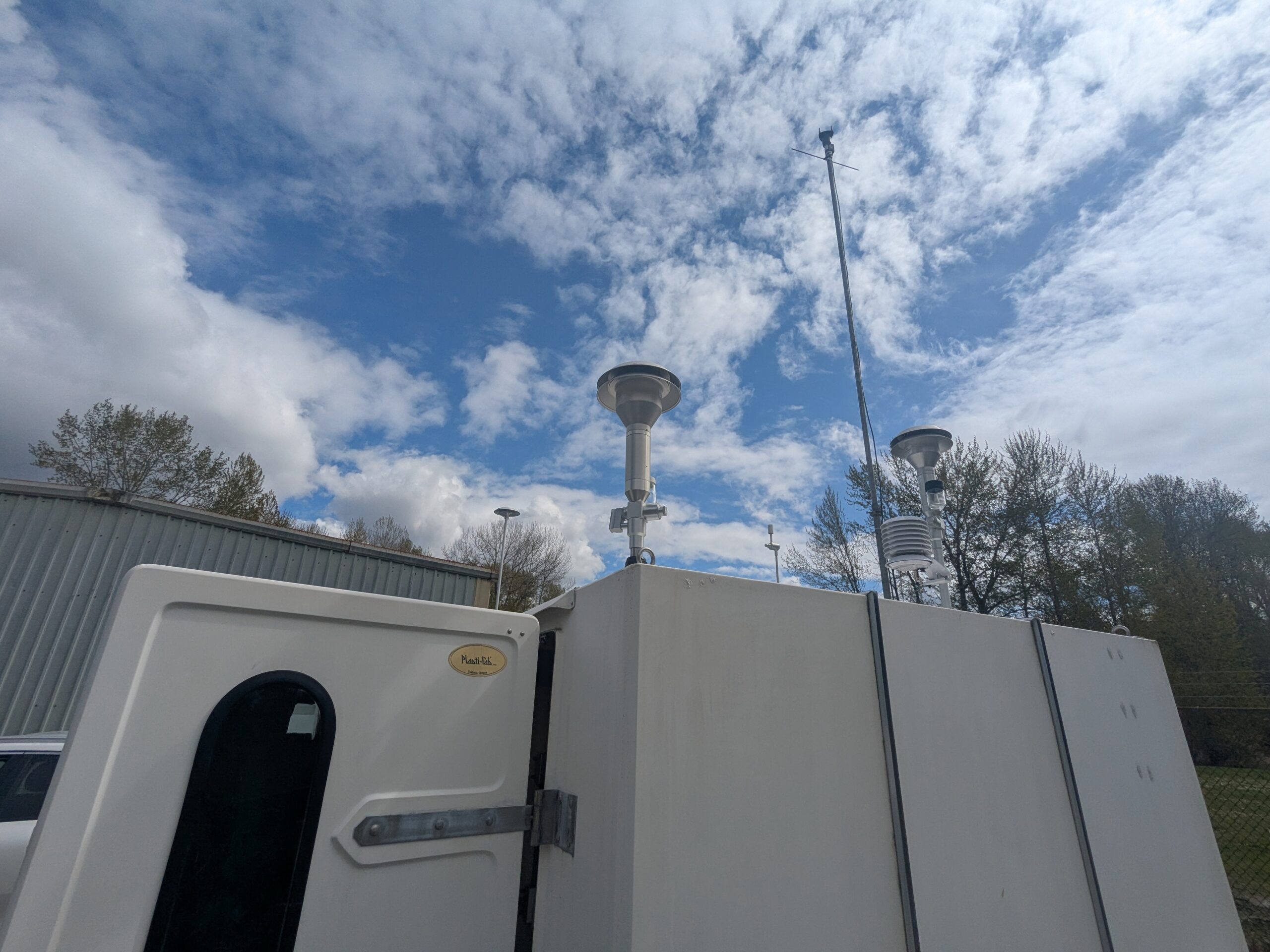
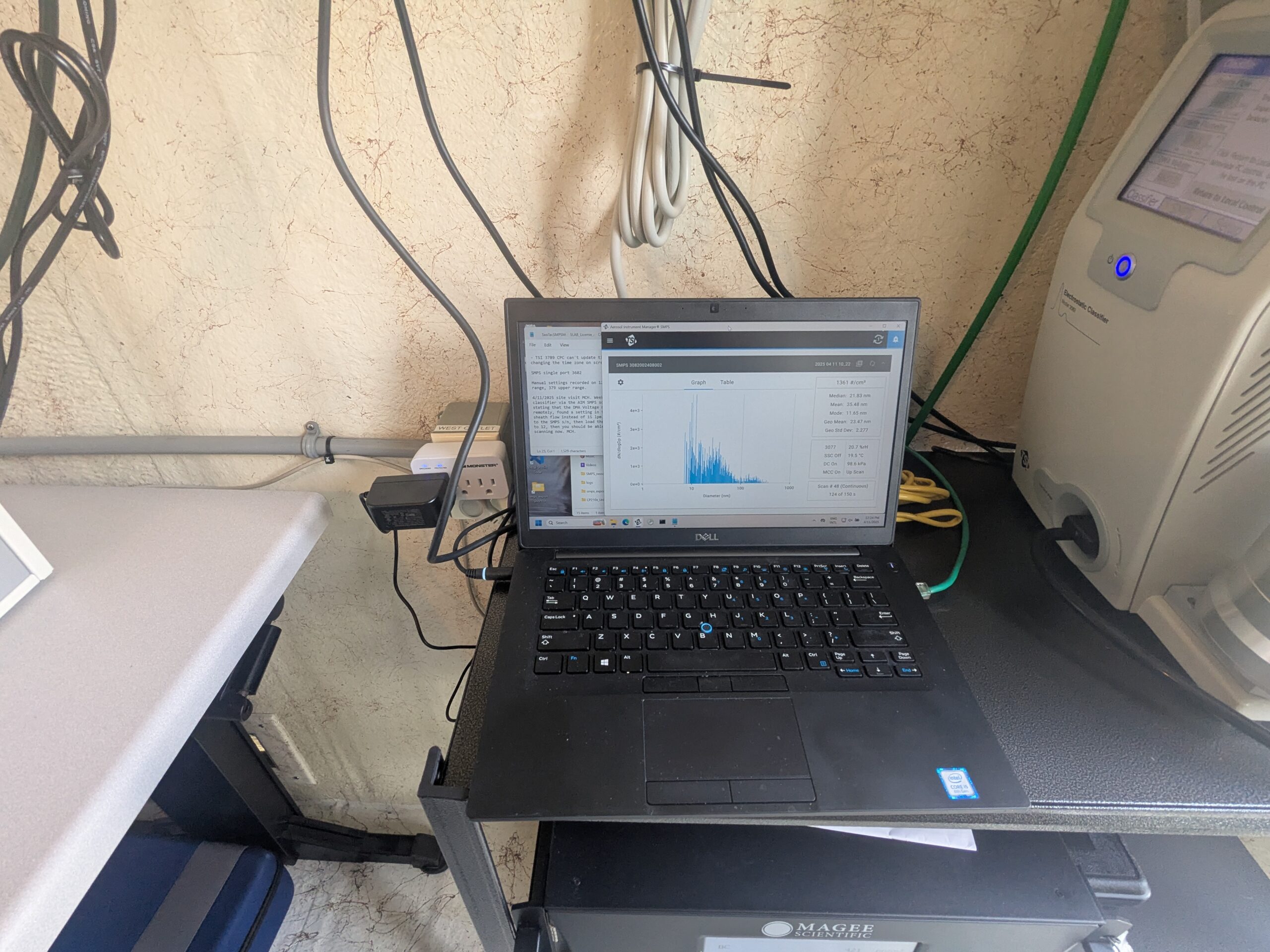
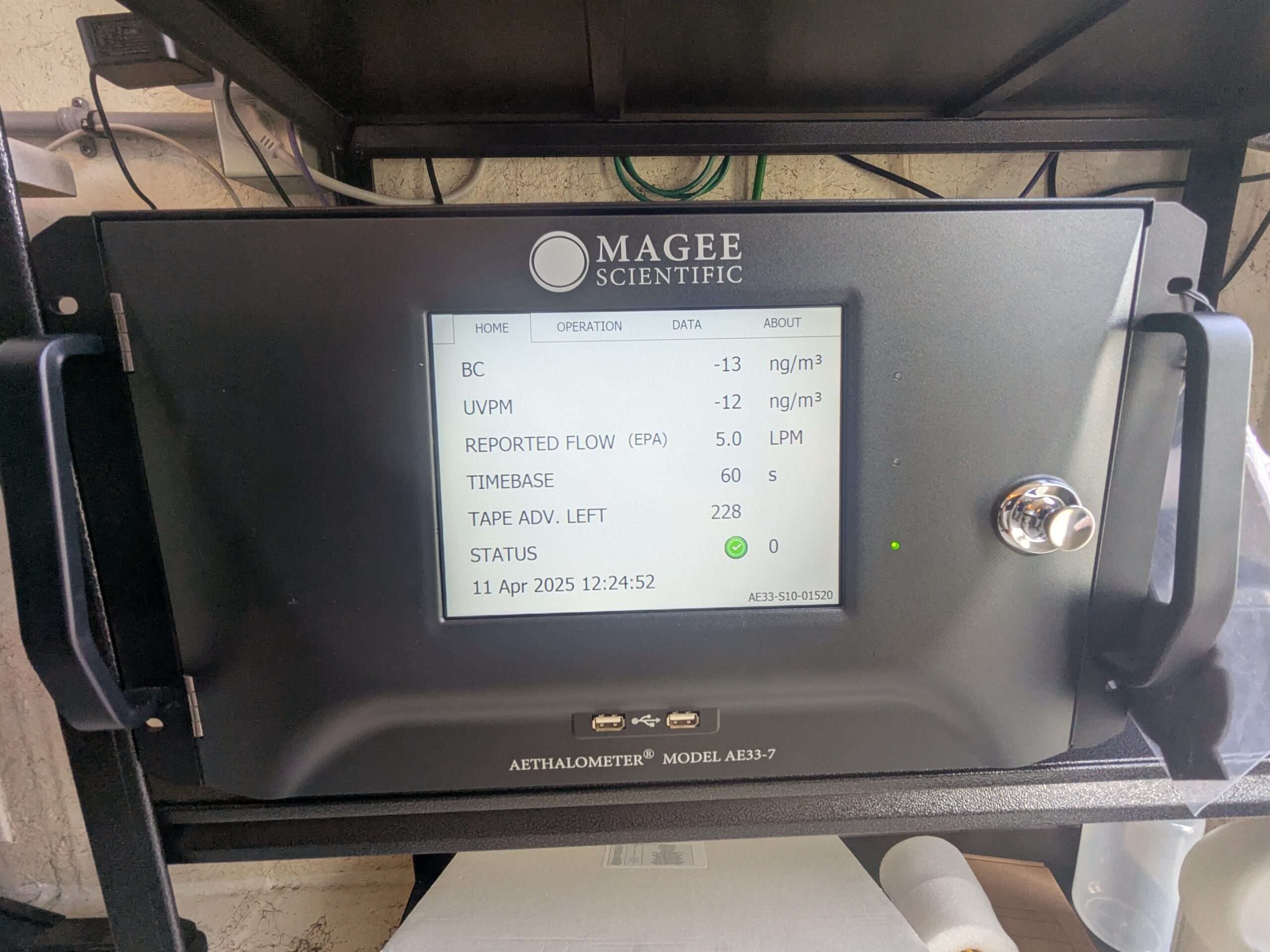
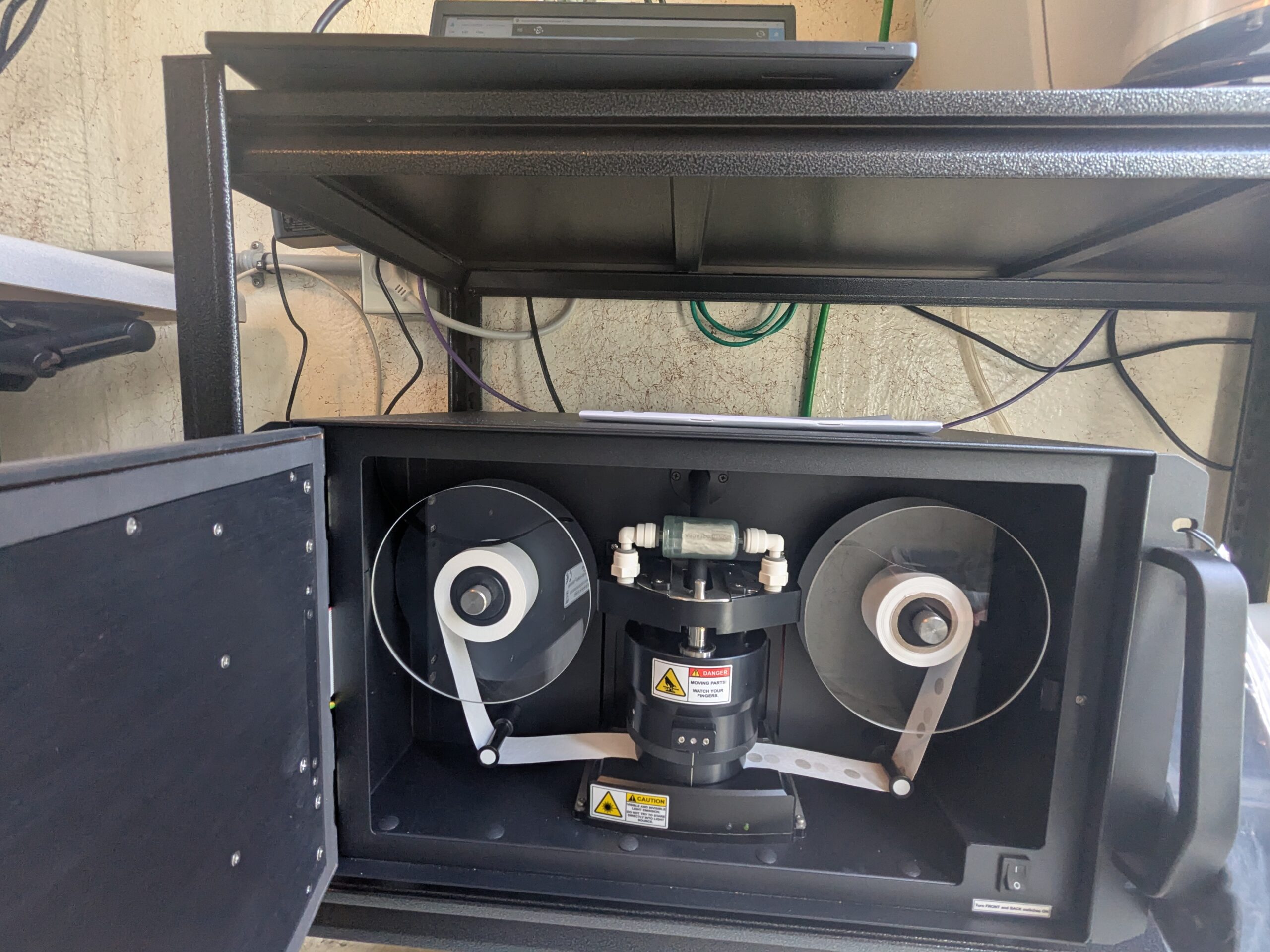
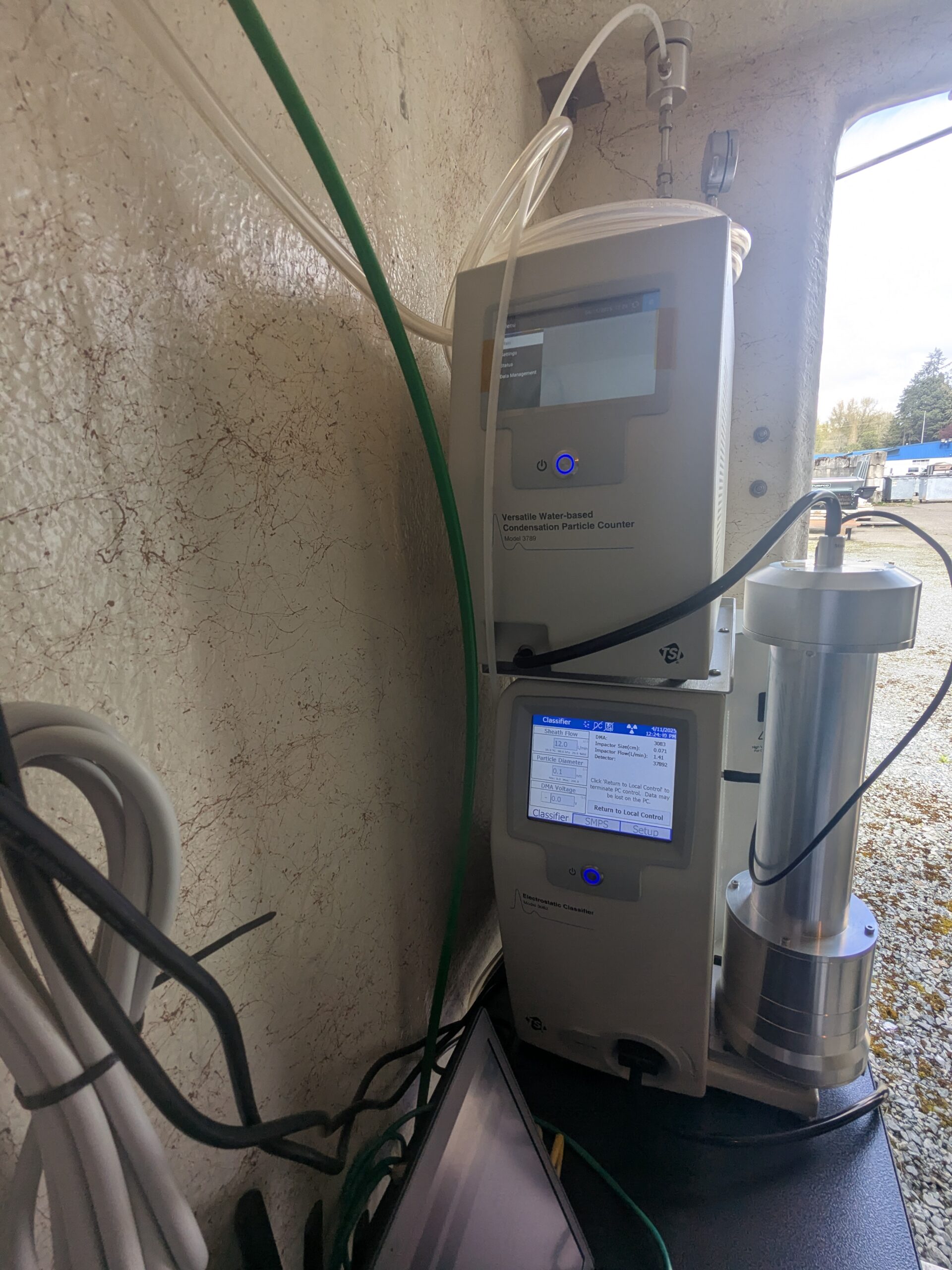
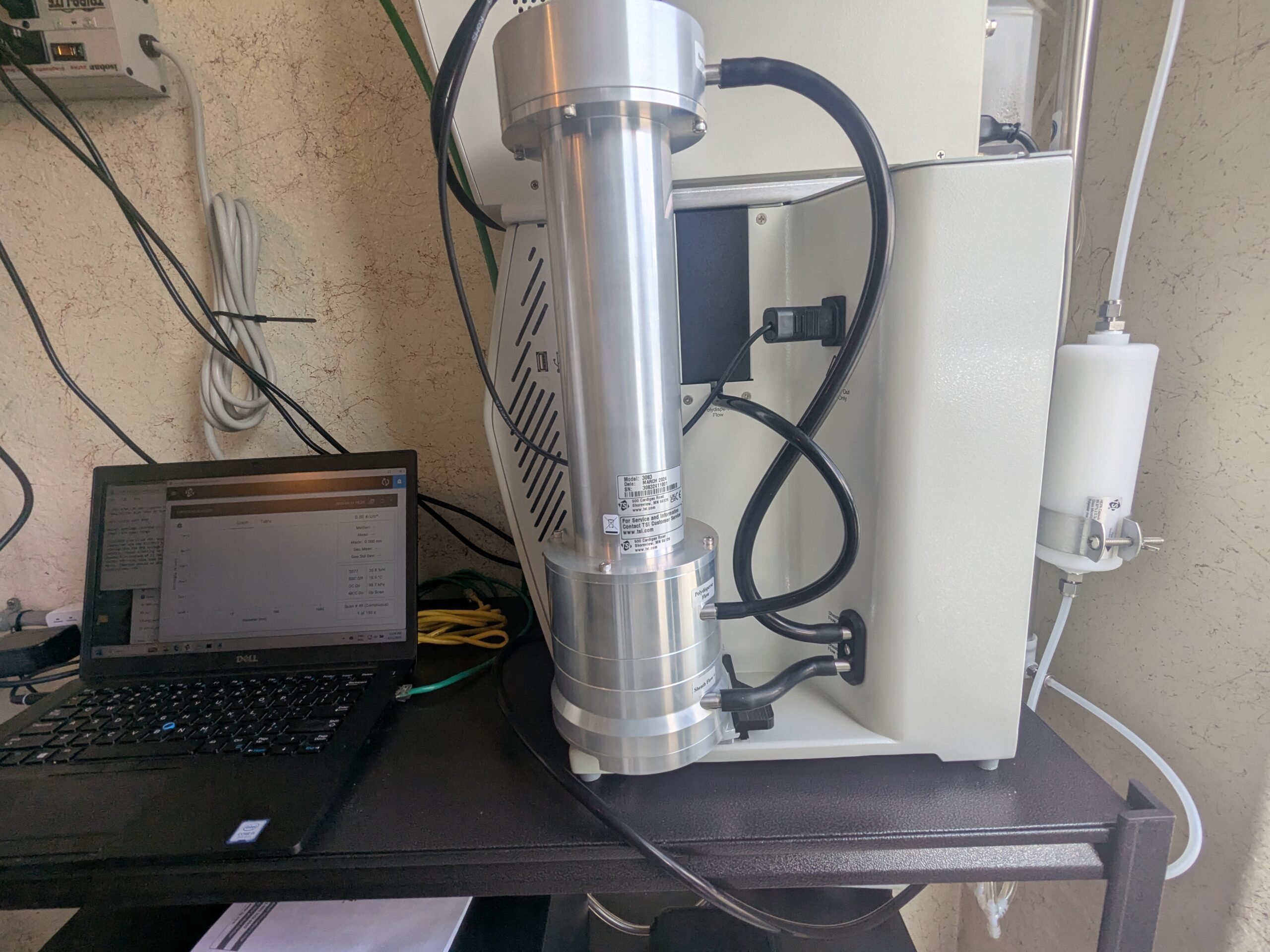

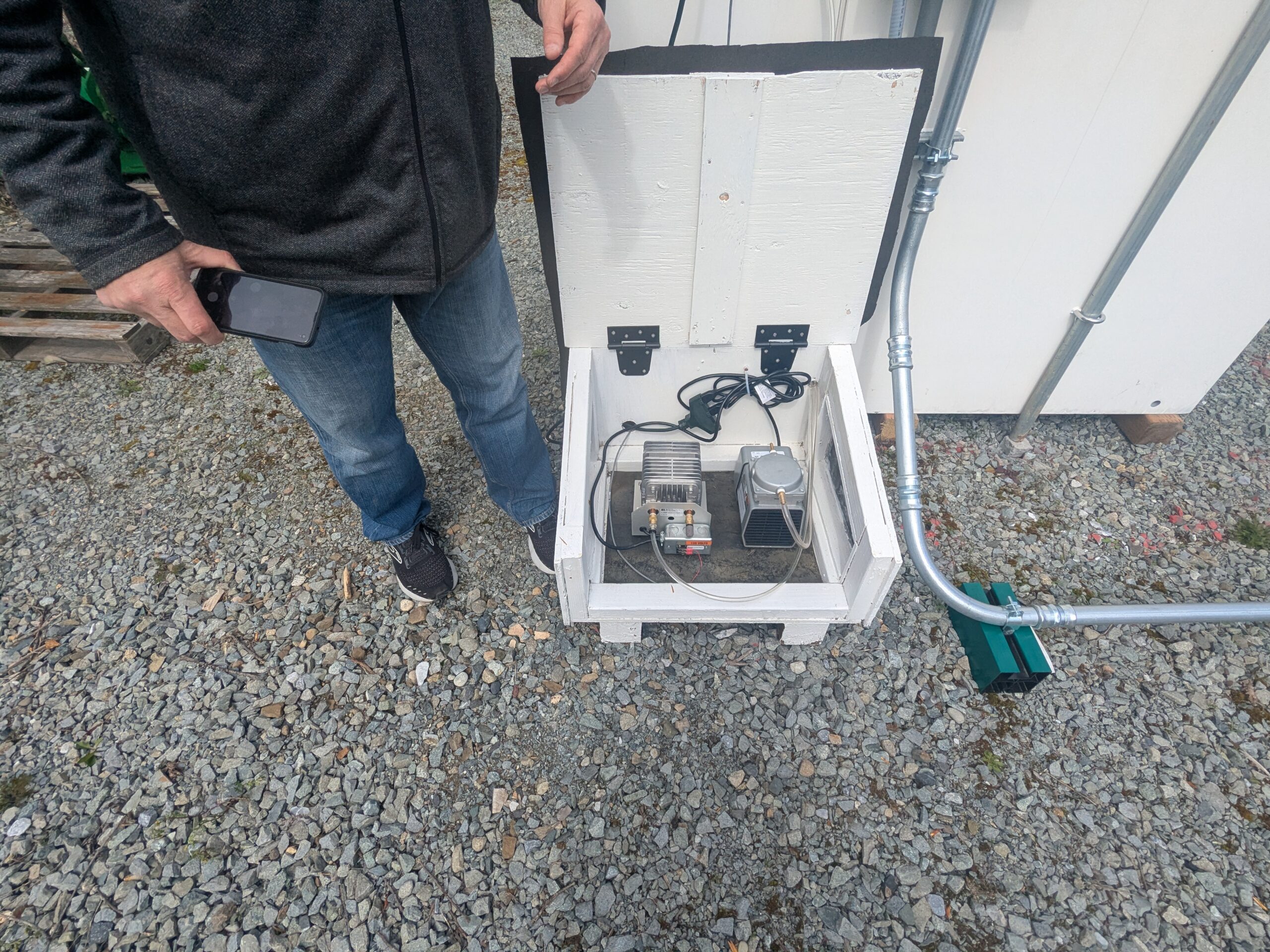
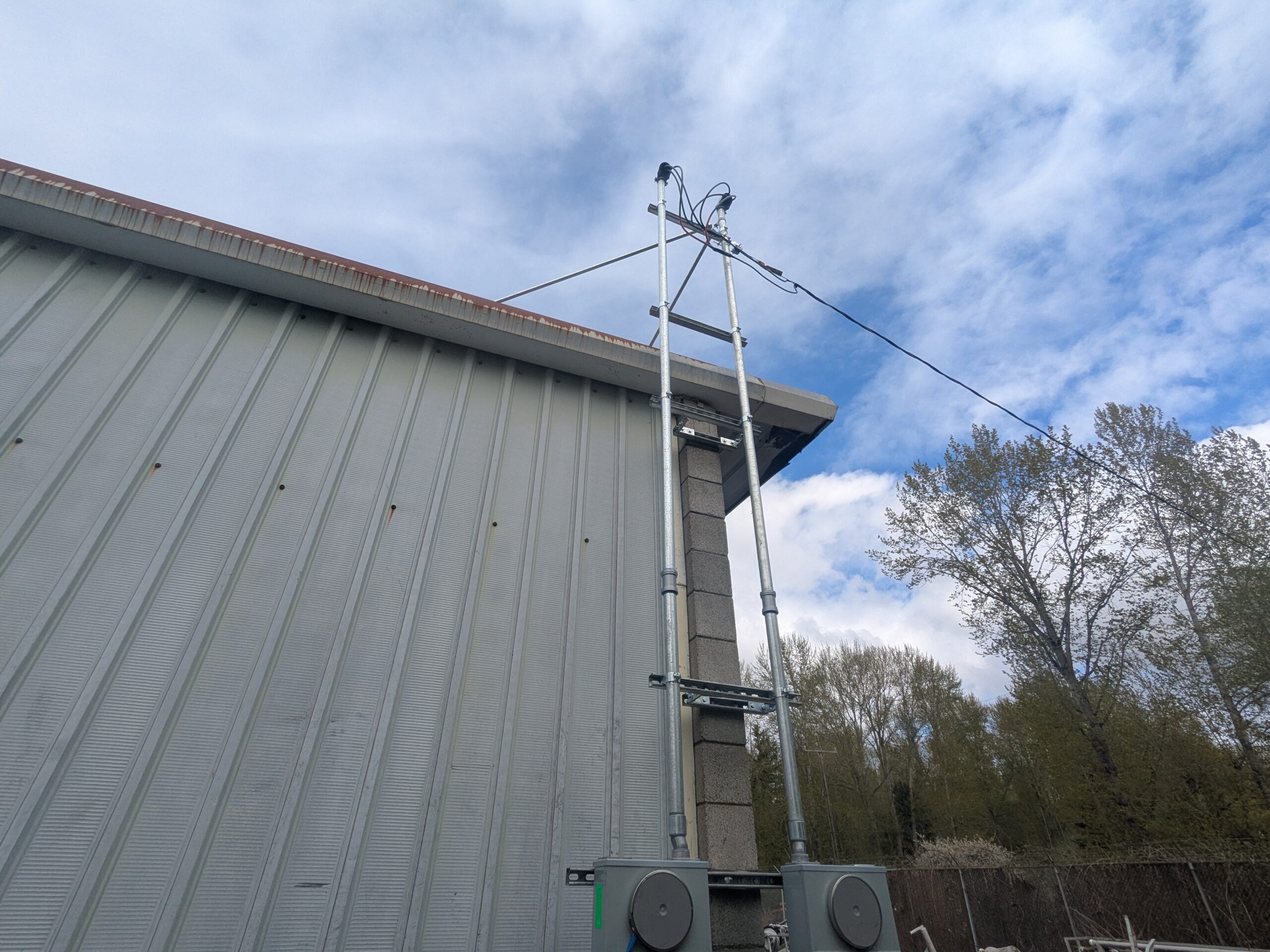
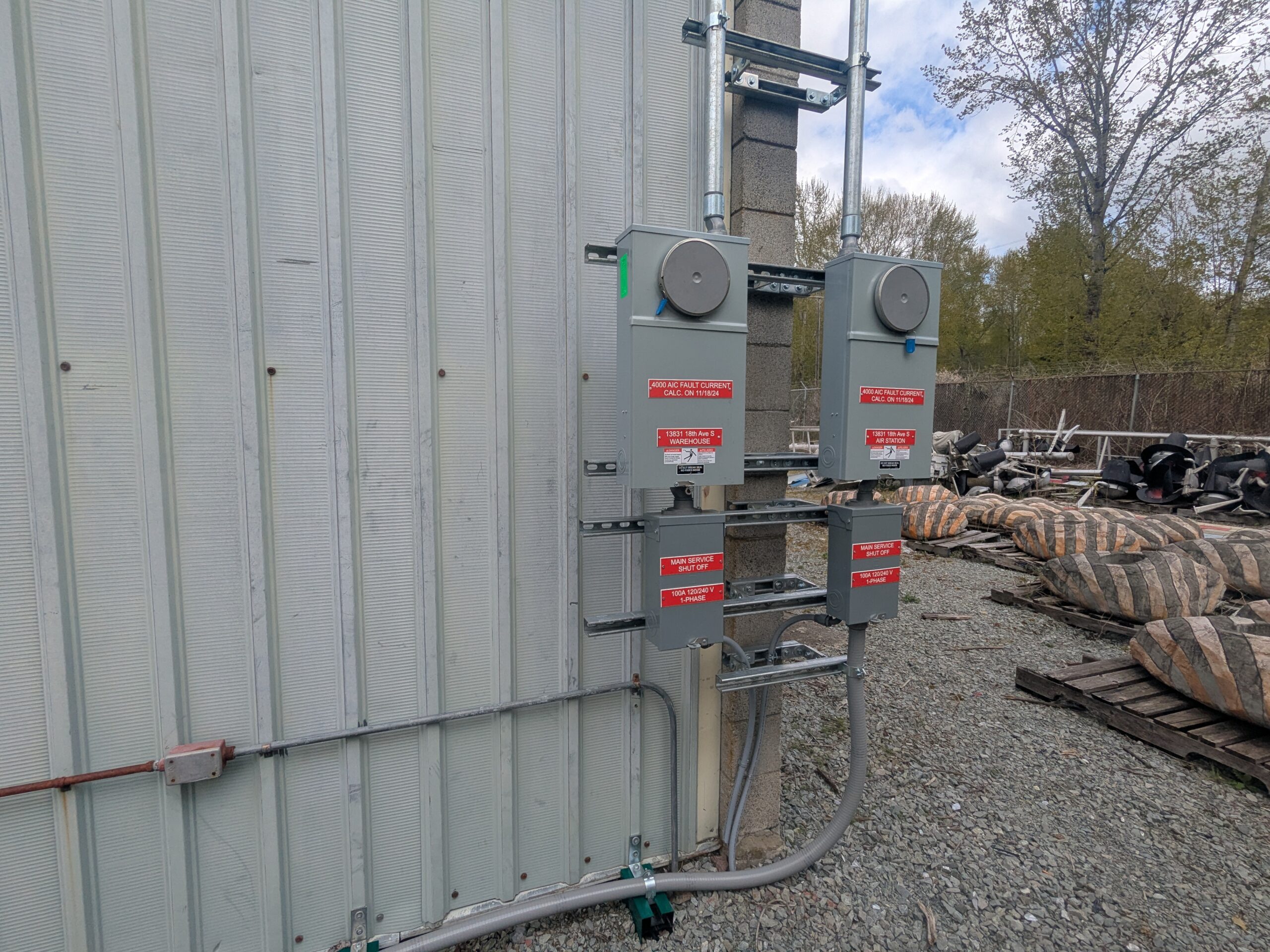
 Puget Sound Clean Air Agency (PSCAA) recently activated the first fixed site air quality monitoring station near Sea-Tac Airport designed to monitor aviation emissions. As of this week it is now on-line and providing data! The station is the twin of a site active in 1Chinatown since 2023.
Read their presentation describing the kinds of emissions they are monitoring at both sites and the history of this program here.
Gear geeking
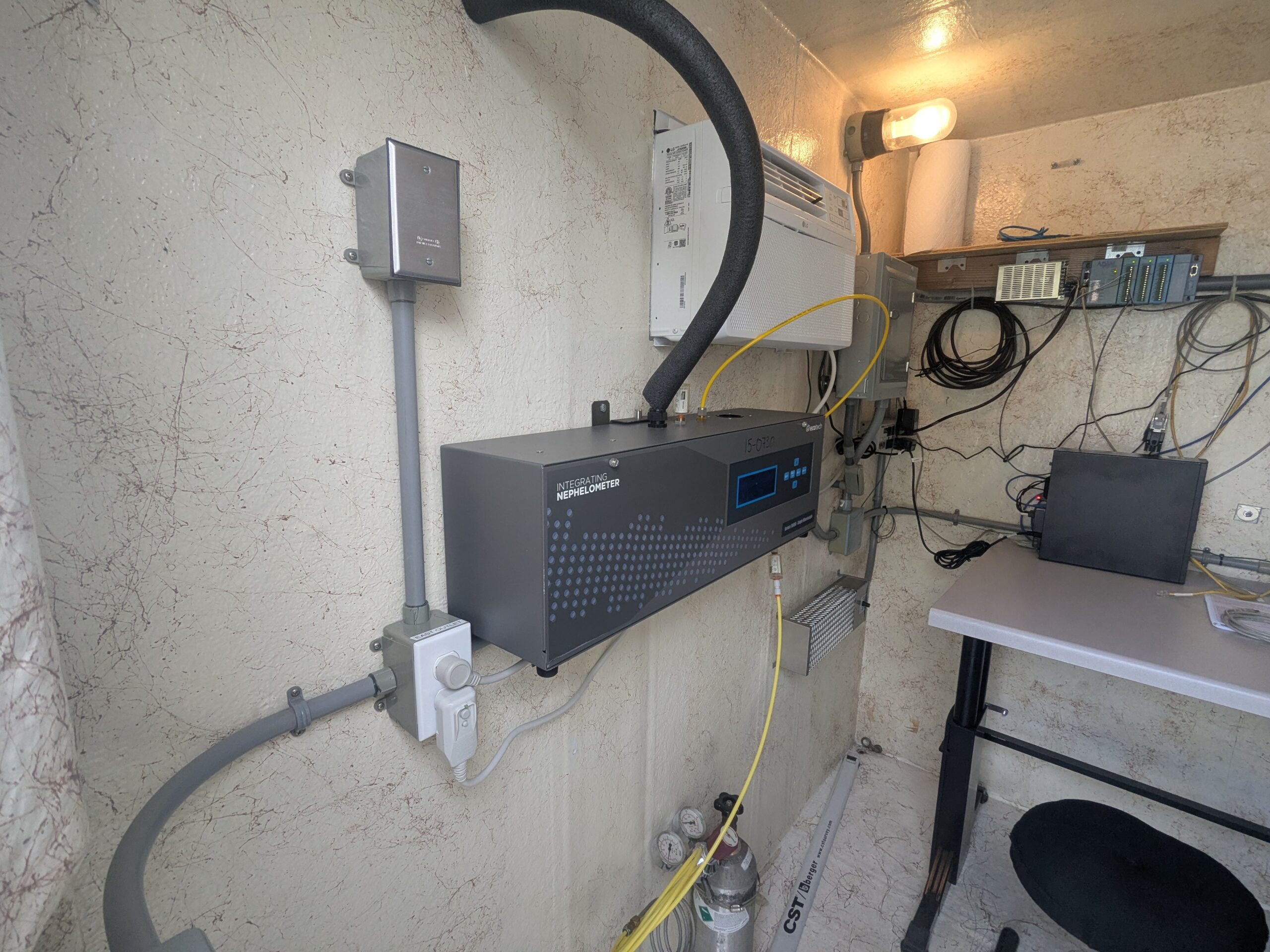
- There are four main sensors. On the outside, each sensor has a separate air intake. Some require the active pump shown at the bottom.
- Nephelometer (PM10 particles) This is the oldest piece of equipment. PM10s are visible soot – common with wildfires, but almost never seen in aviation emission
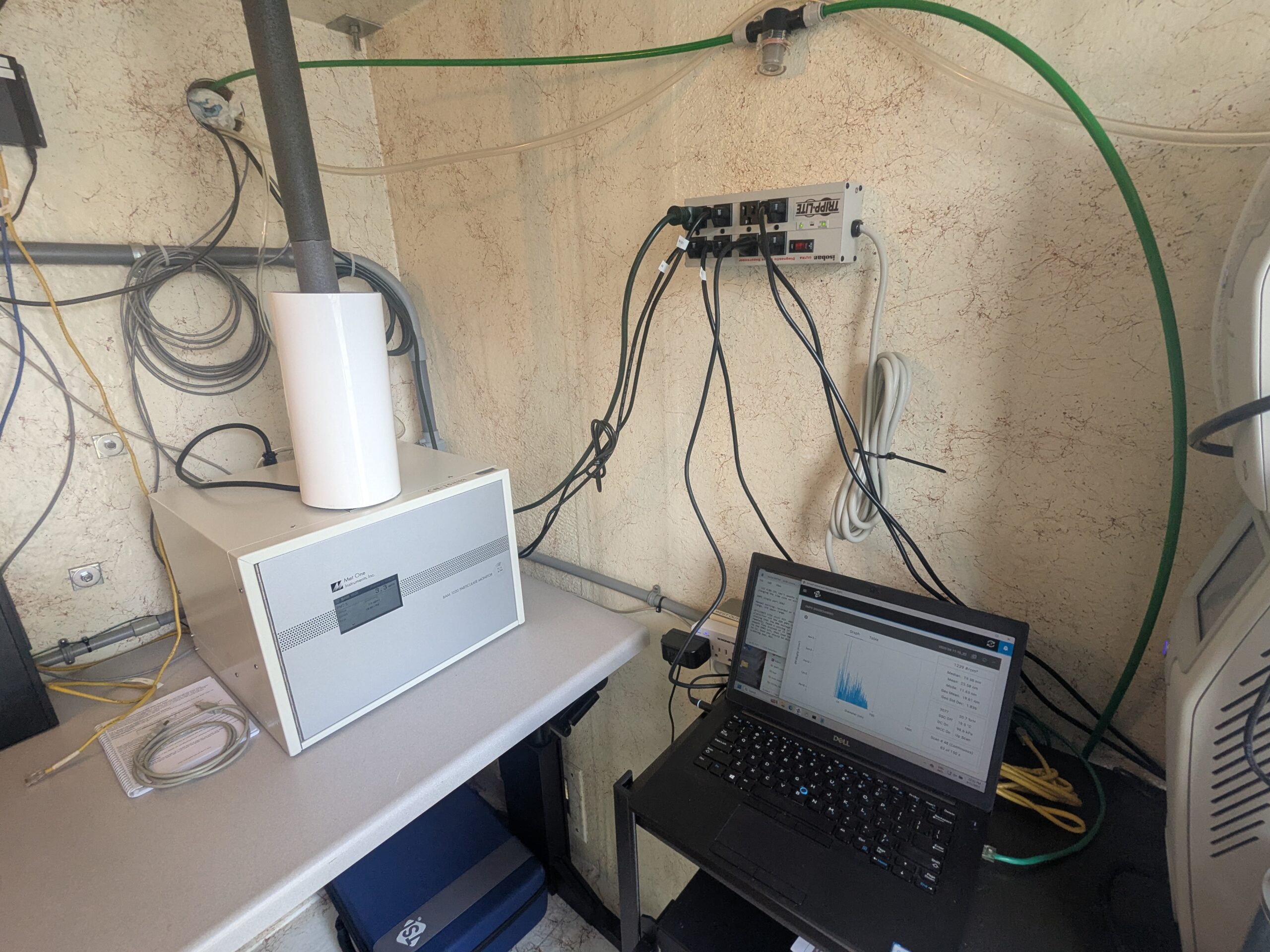
- Met One BAM 1020 (PM2.5 particles)
- Aethalometer (Black Carbon detector) Looking inside, you can see the old school ‘tape’ where each sample is collected.
- TSI Particle Sizer/Counter (Ultrafine particles)
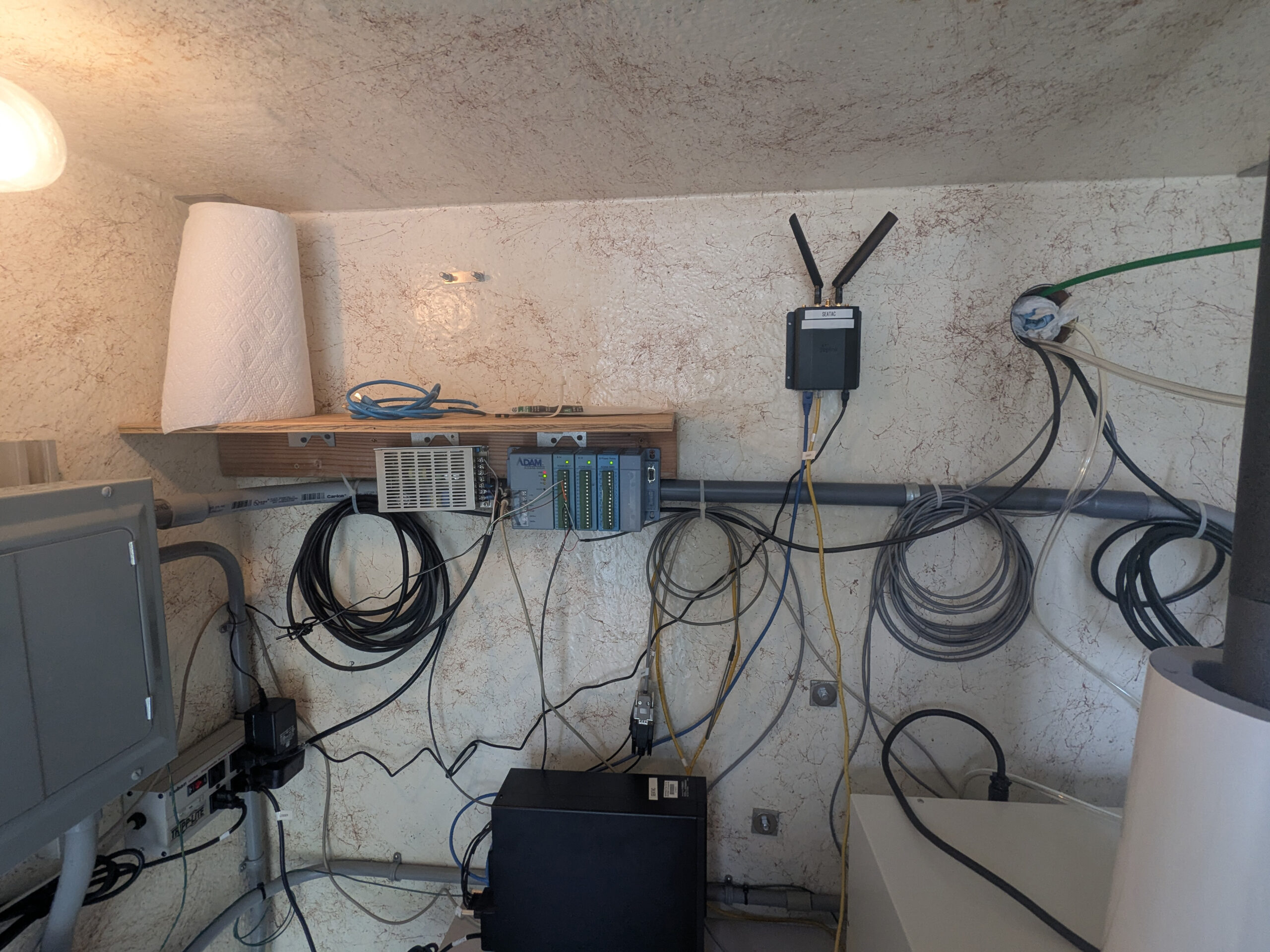
- A laptop computer sends all the data in real time to a cloud server for permanent storage – this is a key feature because all these sensors generate a ton of data. Without this, research might be limited by how much information could be stored on a USB stick.
- Custom software. Each sensor generates its own data stream. PSCAA needed to develop a program to combine all that separate data into formats researchers can use.
- Powered enclosure with high speed internet. This may seem ‘low tech’, but in some ways, this is the most important part of the system. As new instrumentation is developed and new experiments designed, they can be swapped in and out as needed.
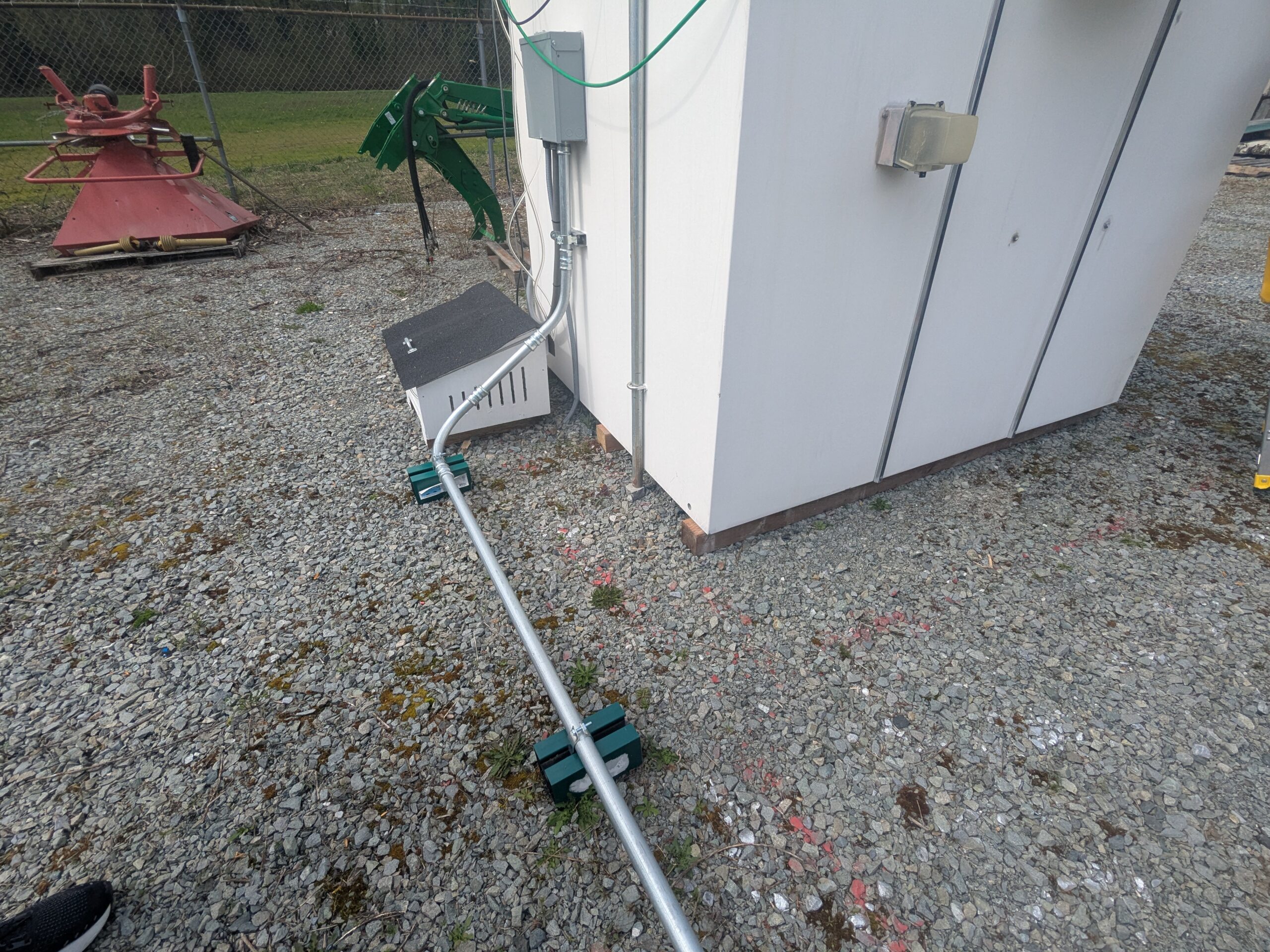 Ironically, the most challenging part of getting the system operational was electricity! Local building code normally requires utilities to be undergrounded. However, for decades, the area known as Sunset Park, had been used to dump toxic chemicals. So digging into the long-contaminated soil was no longer allowed.
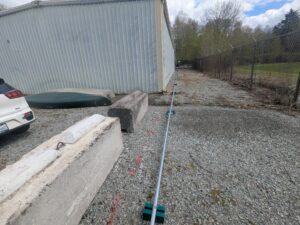 Finally, King County and City of SeaTac officials came up with this above ground conduit – more than 125 ft! It may not be elegant, but it works, and will also allow King County to provide power to a previously un-served building.
History
A network of fixed site air quality monitoring near the airport was first proposed in 1976 as part of the Sea-Tac Communities Plan. Such a system was considered analogous to the 24 site noise monitoring network eventually installed after the Third Runway. However, costs were considered prohibitive and given limited budgets, monitoring other forms of air pollution (auto, diesel, wood smoke) were considered far more important.
 It’s important to remember that, unlike most other emissions, ultrafine particles are completely invisible. Their presence, not to mention, any possible health impacts were unknown until about the time the Third Runway was approved in 1996!
Their discovery was a result of research into automotive emissions; not aviation. The first studies determining their presence in commercial aviation, and connections to human health were not published until 2008!
Until then, aviation combustion was considered to be far cleaner than other types of engine emissions (cars, trucks, ships). But once UFPs were able to be measured scientists quickly realized they make up ninety percent of commercial aviation emissions! Evidence quickly emerged that they are just as dangerous to human health as the emissions you can see – but in a very different way. Larger particles, the ones you can see, from smoke and engines, are, at least to some extent filtered or fended off by your body. But UFPs are so small and light they pass right through your lungs and even the blood/brain barrier. This creates entirely different challenges to the body – and in understanding their effects to public health.
Before PM2.5 and PM10 could be regulated, they needed to be monitored in a rigorous manner. UFPs need the same types of measuring sites in order to get to state and federal regulation – and improved public health! That is why this site, the first of its kind near Sea-Tac Airport, is so important.
In 2016 Tim Larson of the University of Washington Department of Environmental and Occupational Health Sciences (UWDEOHS) described his work on ultrafine particles at LAX and presented an idea for a network of monitoring stations. But funding was still very tough to find.
In 2017, with the help of 33rd Rep. Tina Orwall, UWDEOHS obtained a state grant to conduct a mobile monitoring program which was published as the MOV-UP study. Since then, UWDEOHS has continued doing mobile monitoring. But, mobile monitoring only goes so far because it only measures one point in time. Another critical piece of the puzzle is the ability to gather data over long periods of time. Eg. how do emissions vary with changes in weather, flights?
In the 2023-2025 Operating Budget Puget Sound Clean Air Agency was among the first recipients of Climate Commitment Act funds to set up the two PSCAA-managed sites. They chose the site north of the airport because they only had funding for one near-airport site and a majority of air traffic passes over that spot due to flow.
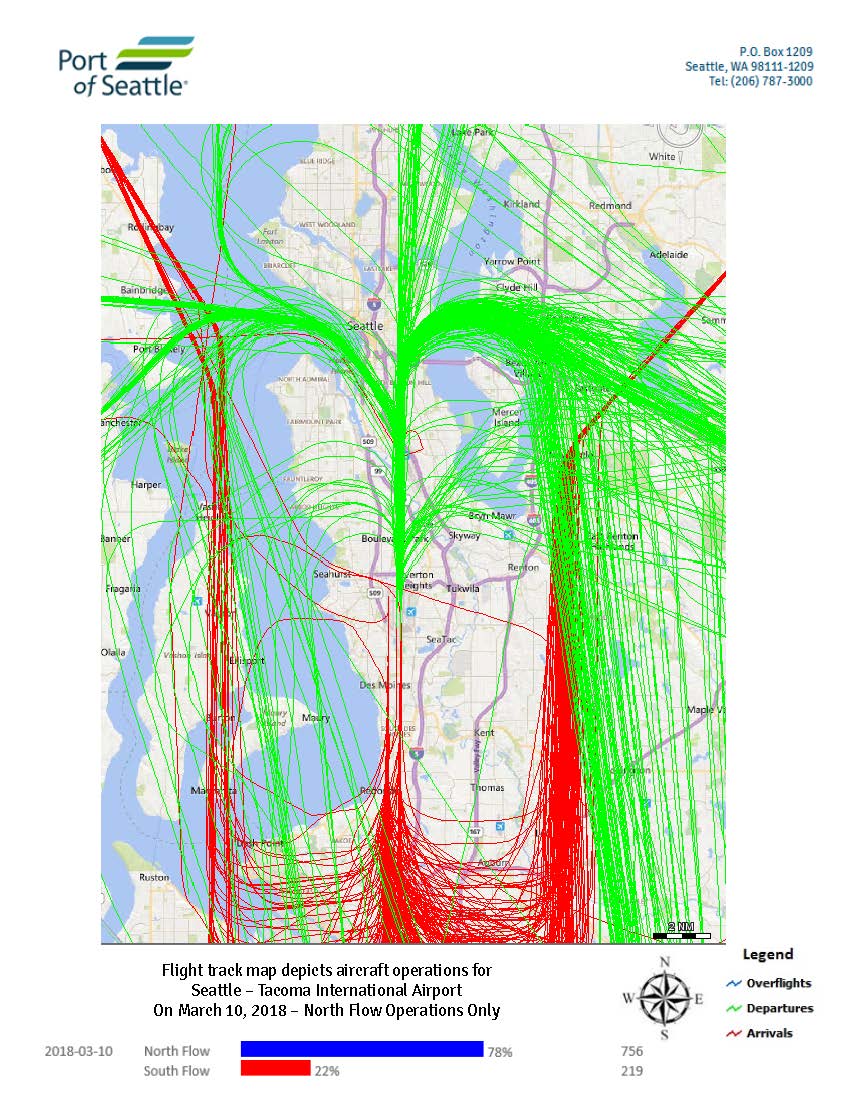 As residents know, sometimes aircraft take off to the north and other times they take off towards the south. These two paths are known as north flow and south flow. An important area of research is understanding the difference in emissions for takeoffs and landing in both directions: north and south flow. It is hoped that having matching systems at both ends of the airport will accelerate research greatly.
Next Steps
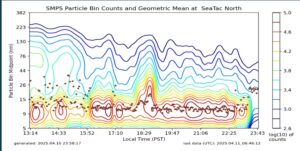 This is long term data monitoring so results will take time. But you can view a snapshot of data being collected right now by going here: http://pscaa-ultrafinepmcurtains-public.s3-website-us-west-2.amazonaws.com/
Even so, researchers are already asking questions such as what impacts do wind and rain have on emission patterns?
One low dollar experiment the team is already considering is installing a noise monitor. That would allow researchers to track the noise profile along with particle detection. It may be that the sound of the aircraft is predictive of the pattern of emissions – or not. Again, UFPs are unlike other types of emissions and there is a lot to be discovered.
Next Stop Des Moines
The University of Washington has applied for a grant to establish a similar station south of the airport. A final decision on that will appear soon in the state budget. If approved, this next system could be operational as early as July, 2025. This would give researchers data on both north and south flow operations – an even bigger step towards understanding the public health impacts of UFPs.
At over $150,000, each particle sizer/counters arenot only expensive, they’re sensitive. After setup they require annual calibration that costs several thousand dollars more every year. When this North Sea-Tac system first went live, technicians spent the first few days making sure its results track precisely with that of its twin in Chinatown.
Unfortunately, this expense has created a Catch-22 for aviation impacted communities. As we’ve seen, UFPs are the most important component of aviation emissions, the least understood, and thus the one type of emission currently unregulated.
In the relatively short period since their discovery, research into UFPs has made a lot of progress. It is the cost of the machinery that is now the limiting factor. To put this into some perspective, there are dozens of emission monitors along roadways. The more sites that can be deployed, the quicker aviation impacted communities will obtain relief.
1We use the historic place name ‘Chinatown’ to distinguish the specific neighborhood (10th Ave. and Weller) from the broader Chinatown-International District.