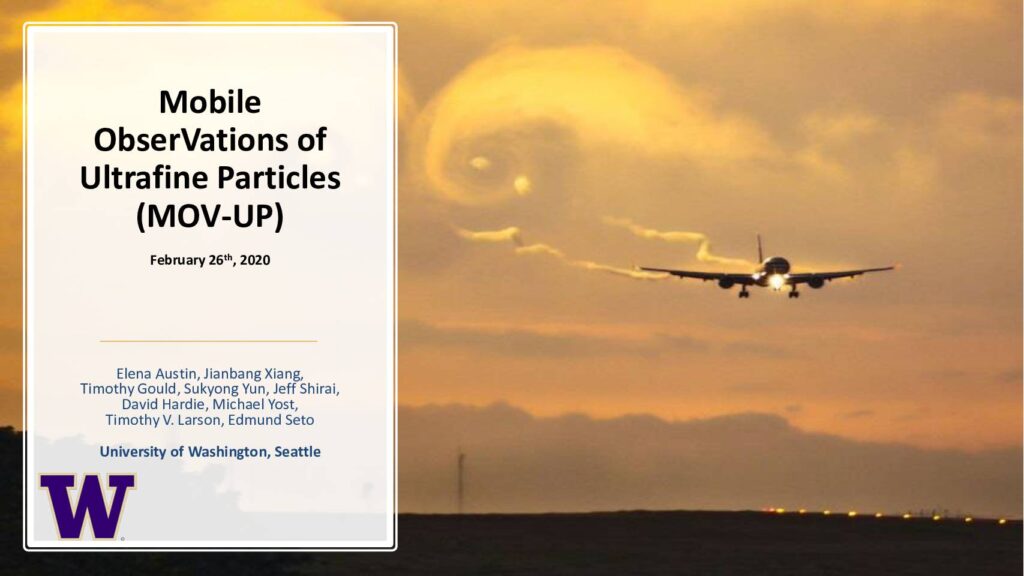
The MOV-UP (Mobile ObserVations of Ultrafine Particles) study, conducted by the University of Washington, investigates air quality impacts from air traffic at Seattle-Tacoma International Airport by measuring concentrations of ultrafine particulate matter (UFP) in surrounding communities. The research aims to distinguish between aircraft-related and other sources of UFP pollution, while actively engaging with local governments and community groups through advisory meetings and public outreach. Funded by a Washington State budget proviso, the study has included presentations to bodies such as the Federal Way City Council and the Seattle/King County Board of Health.Open full document
Notes
A University of Washington presentation on the MOV-UP study, which investigates ultrafine particulate matter (UFP) concentrations in areas surrounding Sea-Tac Airport and impacted by air traffic. The study aims to distinguish between aircraft-related and other UFP sources, and includes community engagement with local governments and advisory groups.