TagPSCAA(43)
-
 2025-04-11 19:09
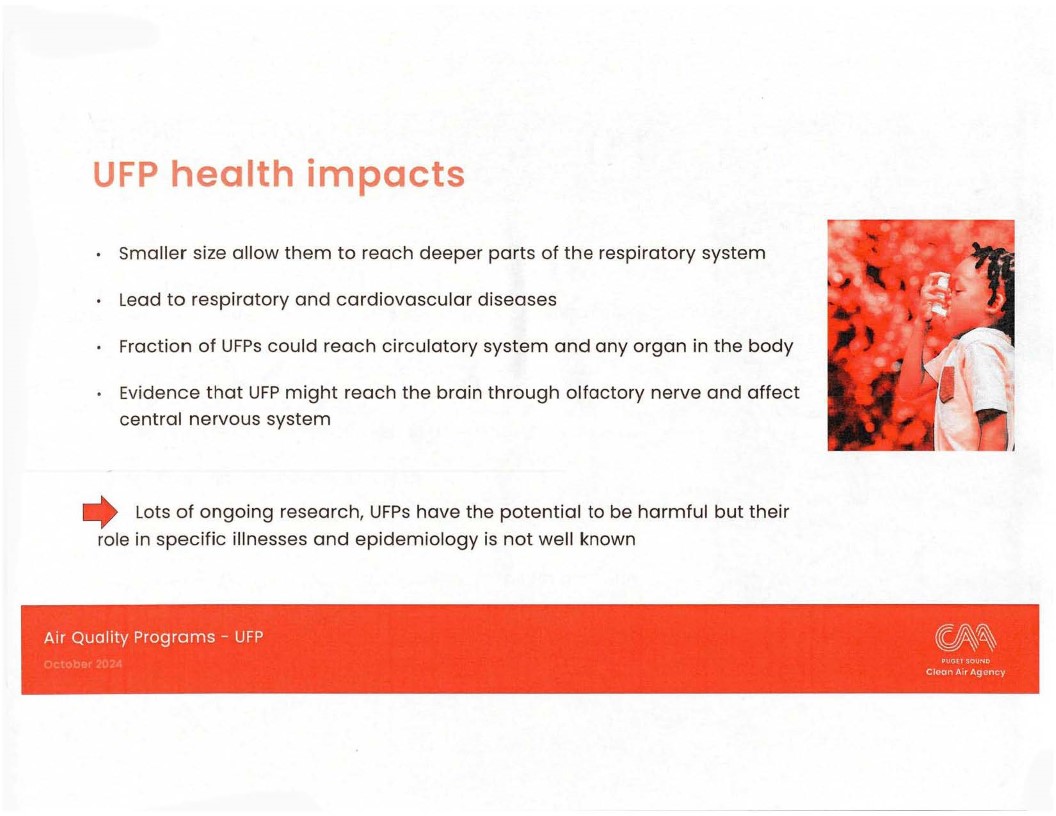
PSCAA UFP Monitoring Update – Health Impacts
UFPs linked to respiratory effects, cardiovascular disease, and potential central nervous system impacts due to their ability to penetrate deep into lungs and enter the bloodstream. -
 2025-04-11 19:09
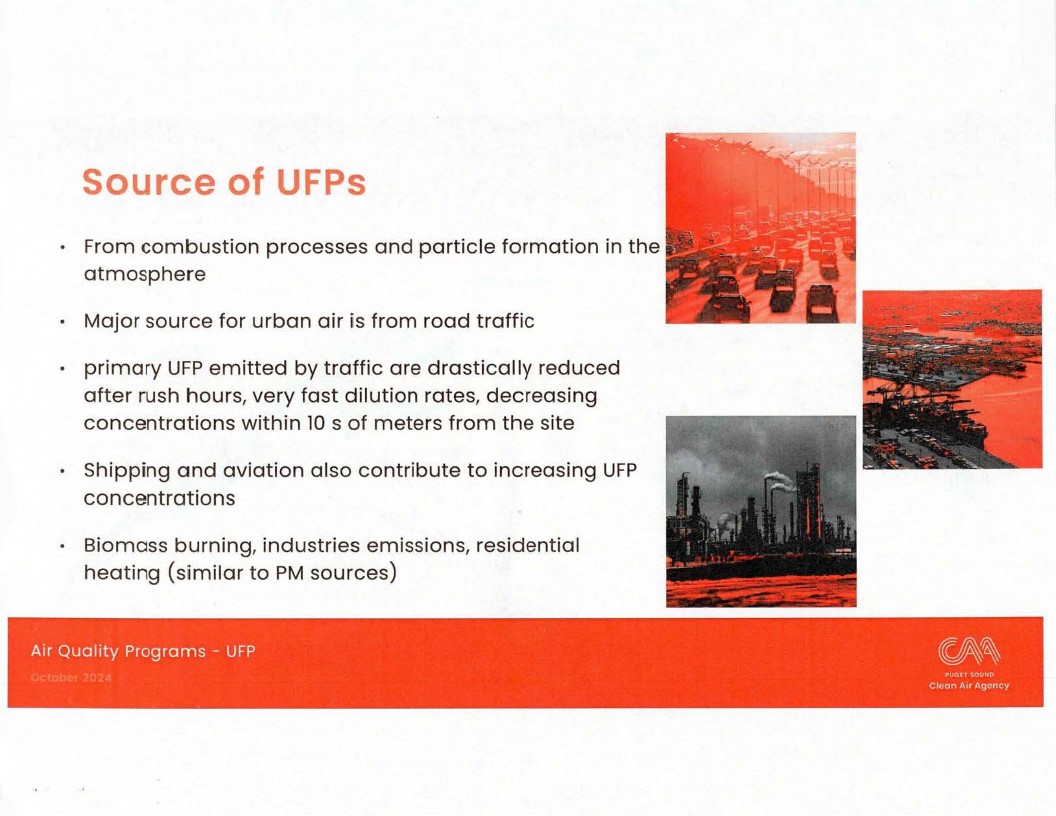
PSCAA UFP Monitoring Update – Sources of UFPs
Major UFP sources near monitoring sites: road traffic, shipping and aviation, and biomass burning. Aviation is specifically identified as a contributing source of ultrafine particles. -
 2025-04-11 19:09
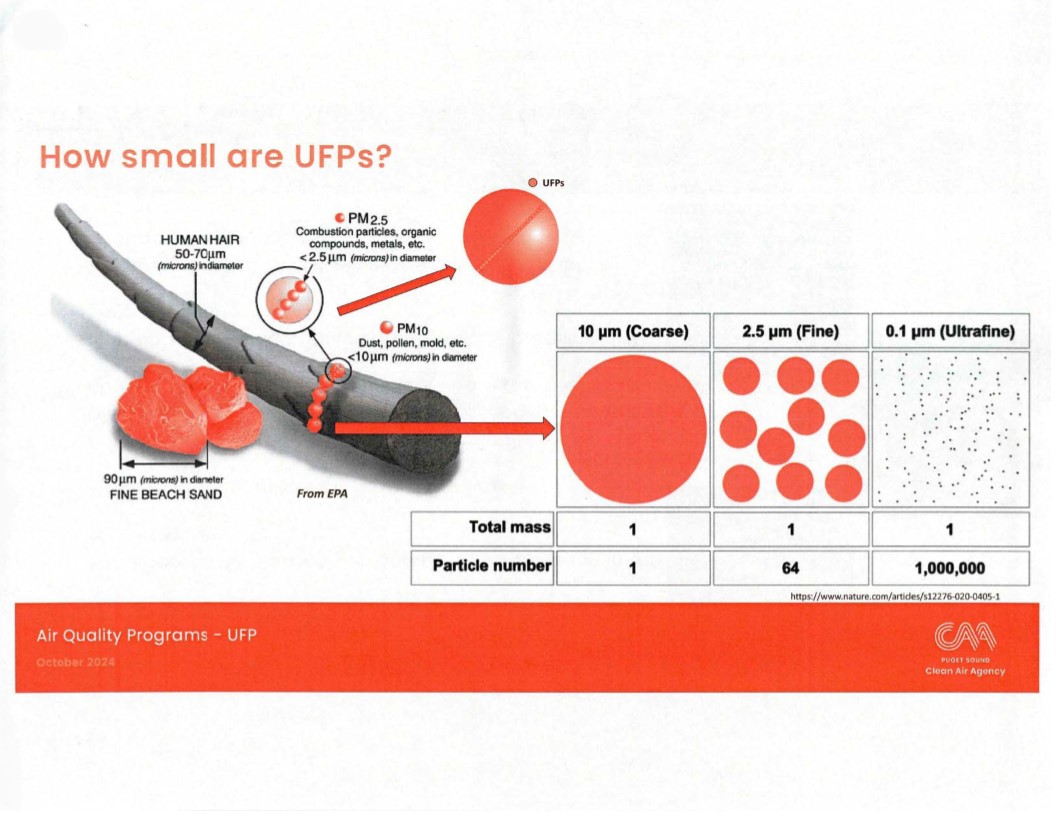
PSCAA UFP Monitoring Update – Particle Size Comparison
EPA size chart: one coarse particle equals 1,000,000 UFPs by mass. UFPs at <100nm are far smaller than PM2.5 (2,500nm) or PM10 (10,000nm); able to penetrate deep into lung tissue. -
 2025-04-11 19:09
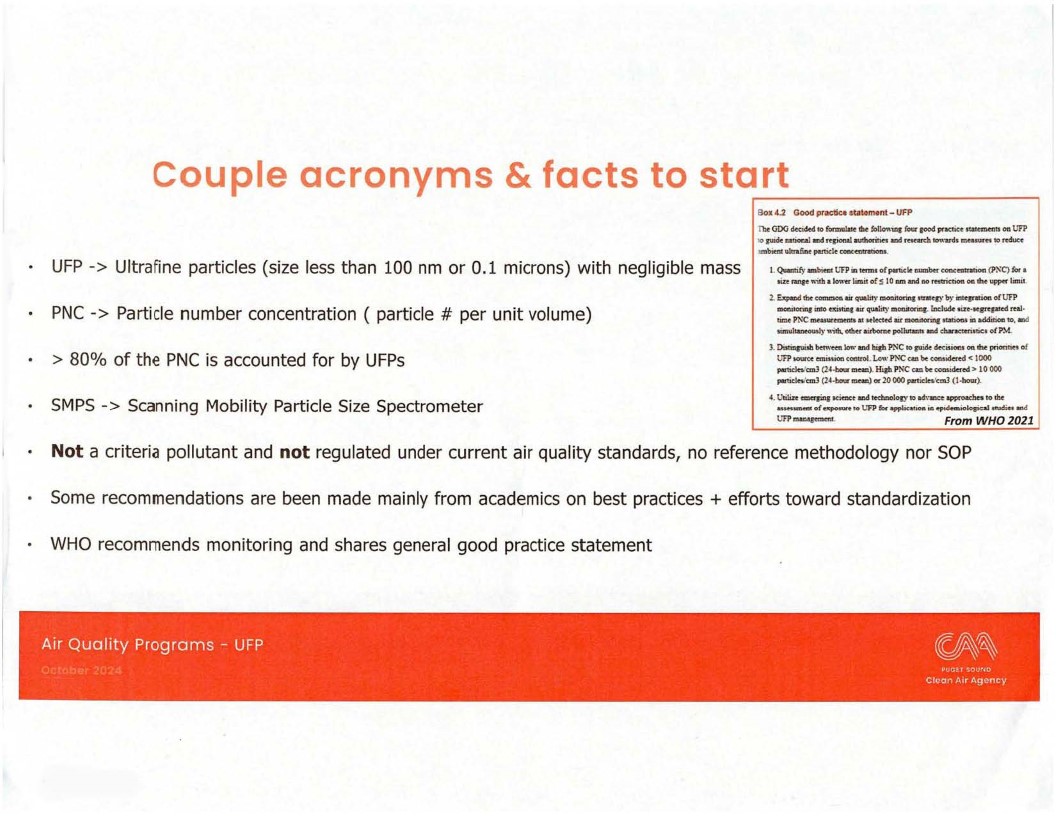
PSCAA UFP Monitoring Update – Key Terms
UFPs (ultrafine particles, <100nm) measured as PNC (particle number concentration) using SMPS instruments. Unlike PM2.5, UFPs are not currently regulated by EPA or WA state. -
 2025-04-11 19:09
PSCAA UFP Monitoring Update – Title Slide
PSCAA Monitoring Team: Update on ongoing UFP monitoring at 10th & Weller (Seattle) and North Sea-Tac Park (Sunset Park). WA state-funded program launched 2024. -
 2025-04-11 19:09
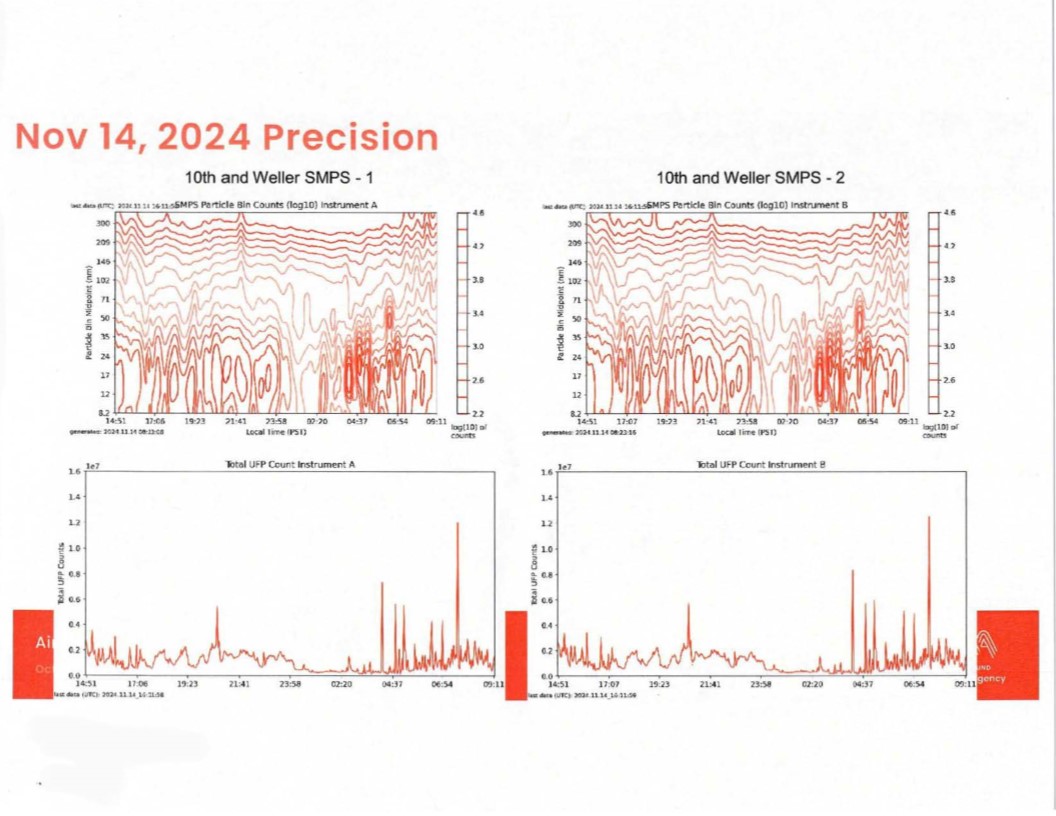
PSCAA UFP Monitoring Update – Instrument Precision (Nov 2024)
Nov 14, 2024: two SMPS instruments at 10th & Weller show close agreement in measured particle size distributions, validating instrument precision before field separation. -
 2025-04-11 19:09
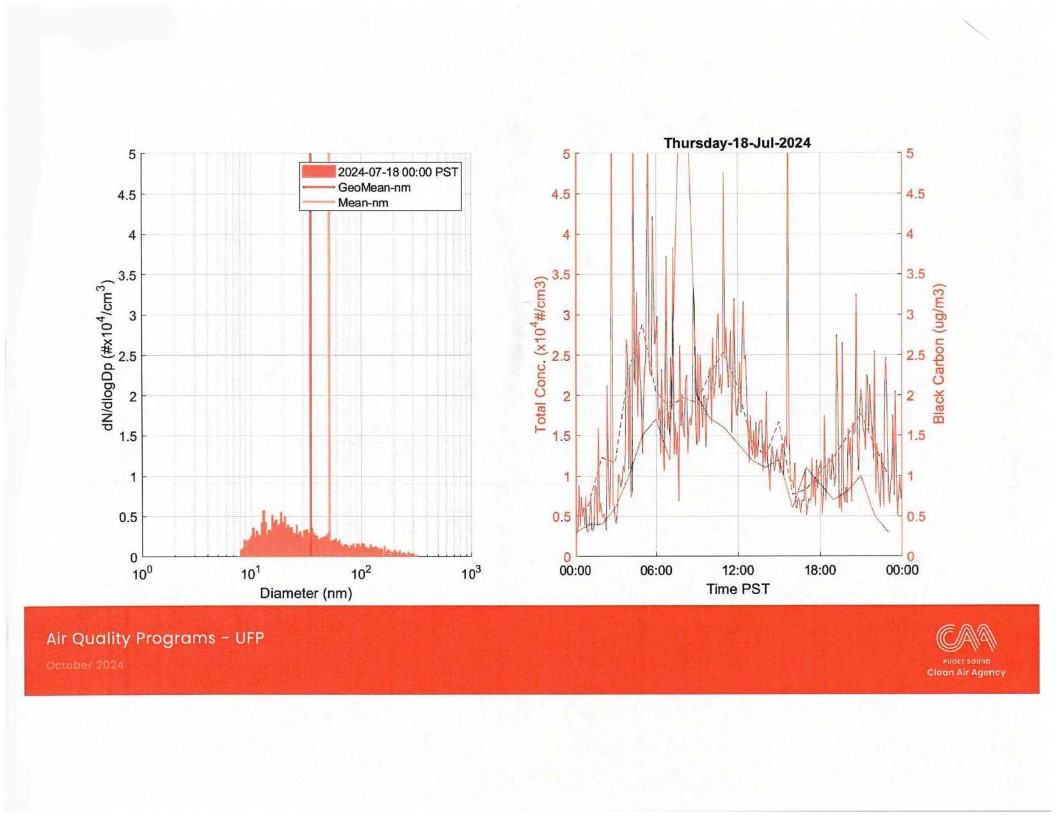
PSCAA UFP Monitoring Update – July 18 Data Example
July 18, 2024 monitoring at 10th & Weller: particle size distribution and black carbon time series showing co-varying peaks throughout the day. -
 2025-04-11 19:09
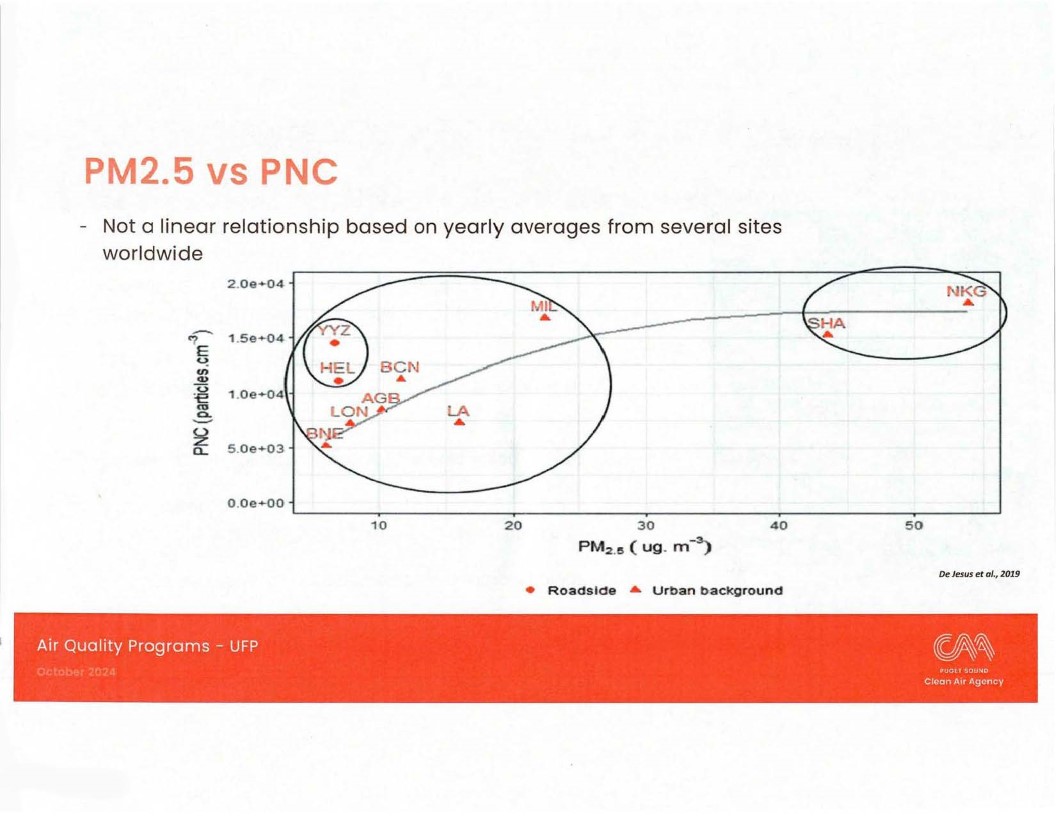
PSCAA UFP Monitoring Update – PM2.5 vs Particle Count
Worldwide scatter plot: PM2.5 mass concentration and particle number concentration are not linearly related. Monitoring PM2.5 alone does not capture UFP exposure levels. -
 2025-04-11 19:09
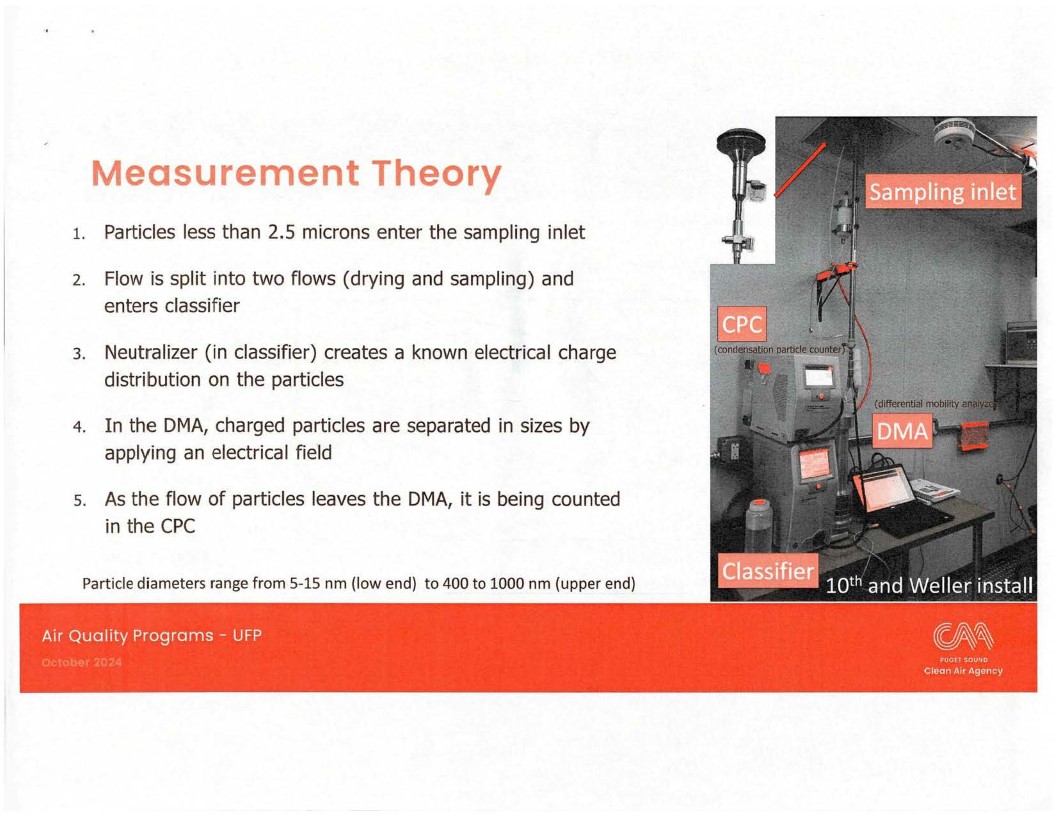
PSCAA UFP Monitoring Update – Measurement Theory
SMPS combines DMA (Differential Mobility Analyzer) and CPC (Condensation Particle Counter) to measure particle size distributions from 5 to 1,000 nm. -
 2025-04-11 19:09
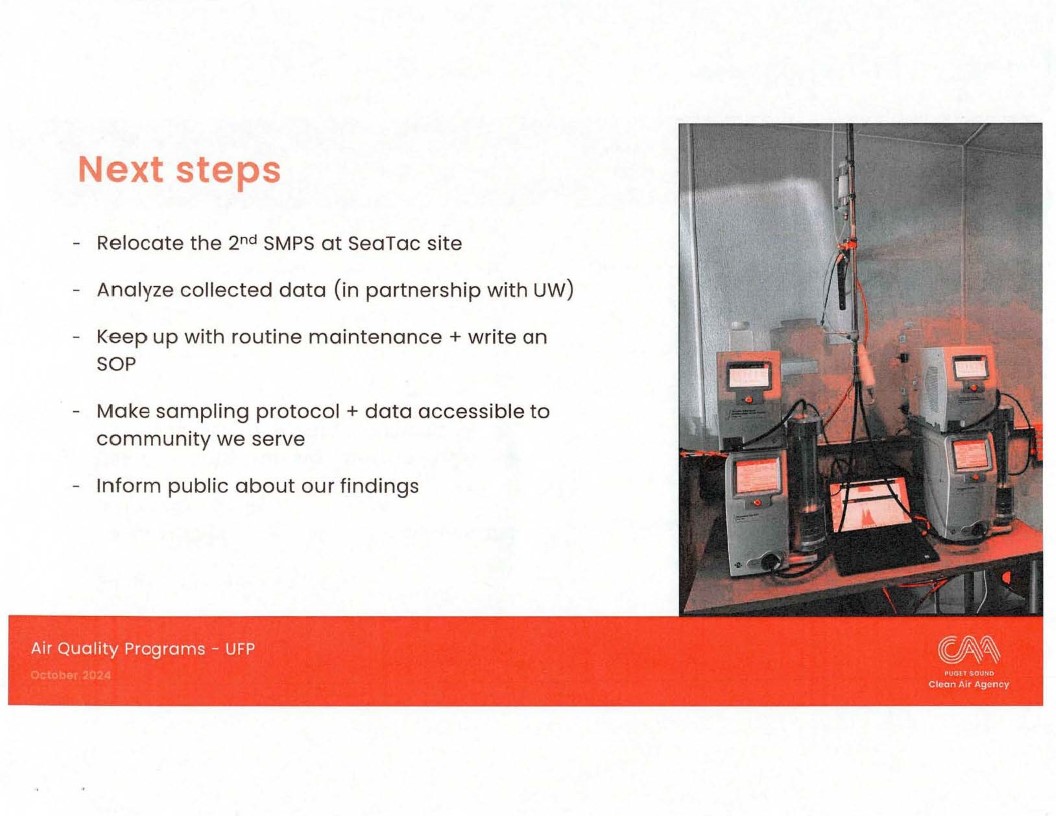
PSCAA UFP Monitoring Update – Next Steps
Planned next steps: relocate second SMPS instrument to North Sea-Tac Park (Sunset Park); establish data analysis partnership with University of Washington.