Support for SAMP. Concrete greenwash. Tax Levy politics
The Port of Seattle Commission’s latest meeting delivered one of the most content-rich and contentious discussions in recent memory, covering runway resurfacing costs, the Sustainable Airport Master Plan (SAMP), aviation budget details, and debates over the increasingly popular tax levy fund.
Item 10b: Runway Resurfacing
Greenwashing Master Class
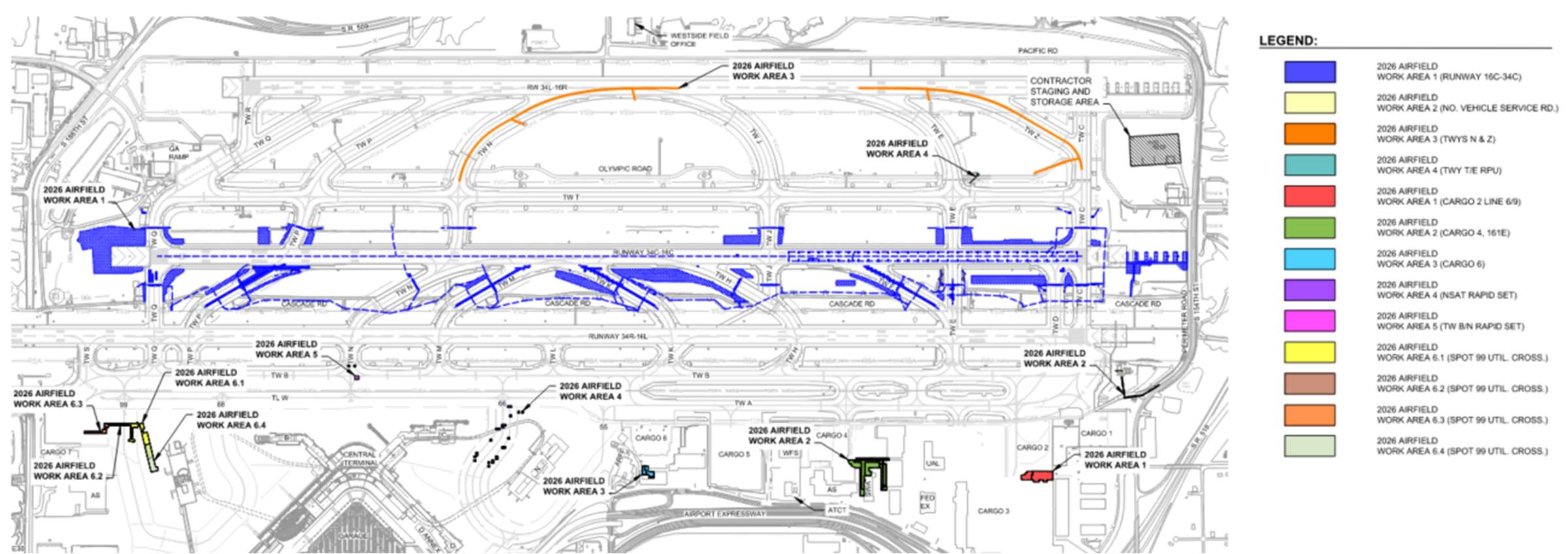
The meeting’s most spirited discussion centered on runway resurfacing, producing what a 15-minute master class in greenwashing. Staff acknowledge that 96% of airport air pollution comes from aircraft – something current technology cannot overcome – then dove deep into technical details about concrete.
Sea-Tac’s concrete runways require periodic resurfacing, and concrete ranks among the biggest contributors to climate change. Its production emits 8% of GHGs and when laid, it gases out even more. Lower emission (‘green’) concrete products exist, but aviation-grade can be much more expensive. With $73 million worth of needed work, that kind of added expense was not what airport planners wanted to hear.
The discussion grew even more technical, covering radiative effects of impermeable surfaces that contribute to global warming. Staff noted that climate-friendly concrete alternatives are available–another extra cost. They argued that these might also not be embraced by pilots due to glare and visibility problems, particularly around the confusing Taxiway Tango, where pilots have repeatedly attempted to land instead of using actual runways.
For us, such a detailed focus on a one-time improvement is telling. It does absolutely nothing to address the elephant in the room: aviation emissions or community impacts. It sounds generous, but the cost of “green-concrete” alone could finance Port Package updates for a large number of homes in the DNL 65.
Item 11a: SAMP
Support from afar, Questions about growth
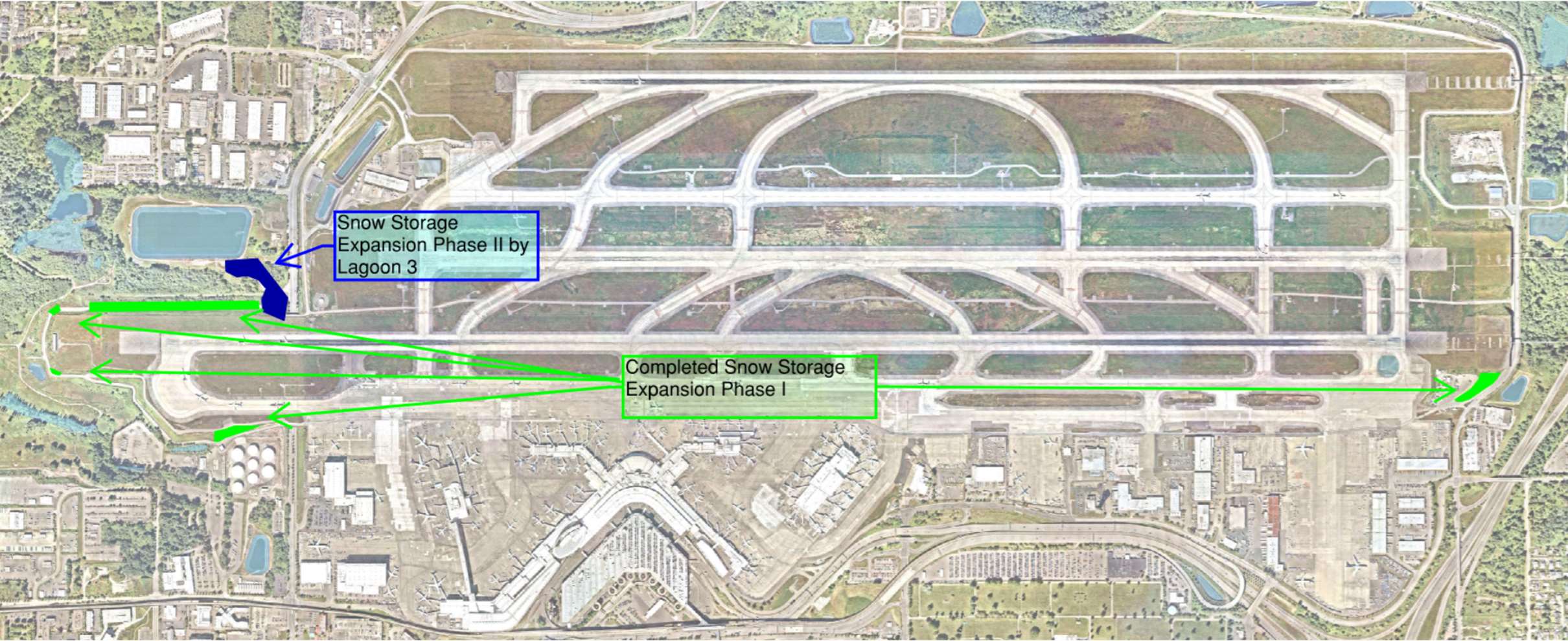 Public comment on the SAMP revealed a familiar pattern: strong support from mayors as far away as Bellevue and North Bend that benefit from airport expansion who bear none of its negative impacts. Alaska Air representative Randy Fiertz spoke on behalf of all 54 tenant airlines in offering their enthusiastic support.
Commissioners pressed staff with pointed questions about growth projections that don’t get enough attention. Forecasts show that flights will increase even if no expansion occurs. But the delta between building and not building tells the real story. If the Port builds all thirty one SAMP projects, they project 87,000 additional flights. Build nothing, and there will still be 50,000 more.
The airport operates as a factory. The limit is not in the air, it’s on the ground – processing people and cargo. Even without expansion, more traffic will happen, bounded only by how much delay passengers and cargo carriers will tolerate. The theoretical airspace capacity of 600,000 operations leaves plenty of room for growth regardless of ground infrastructure decisions.
Staff mentioned the upcoming SEPA process, which they say will offer considerations not included in NEPA (environmental justice? cumulative impacts?) but offered no new details beyond pushing back that publish date to the end of 2026.
Item 11b: Aviation Budget
Cost Per Enplanement
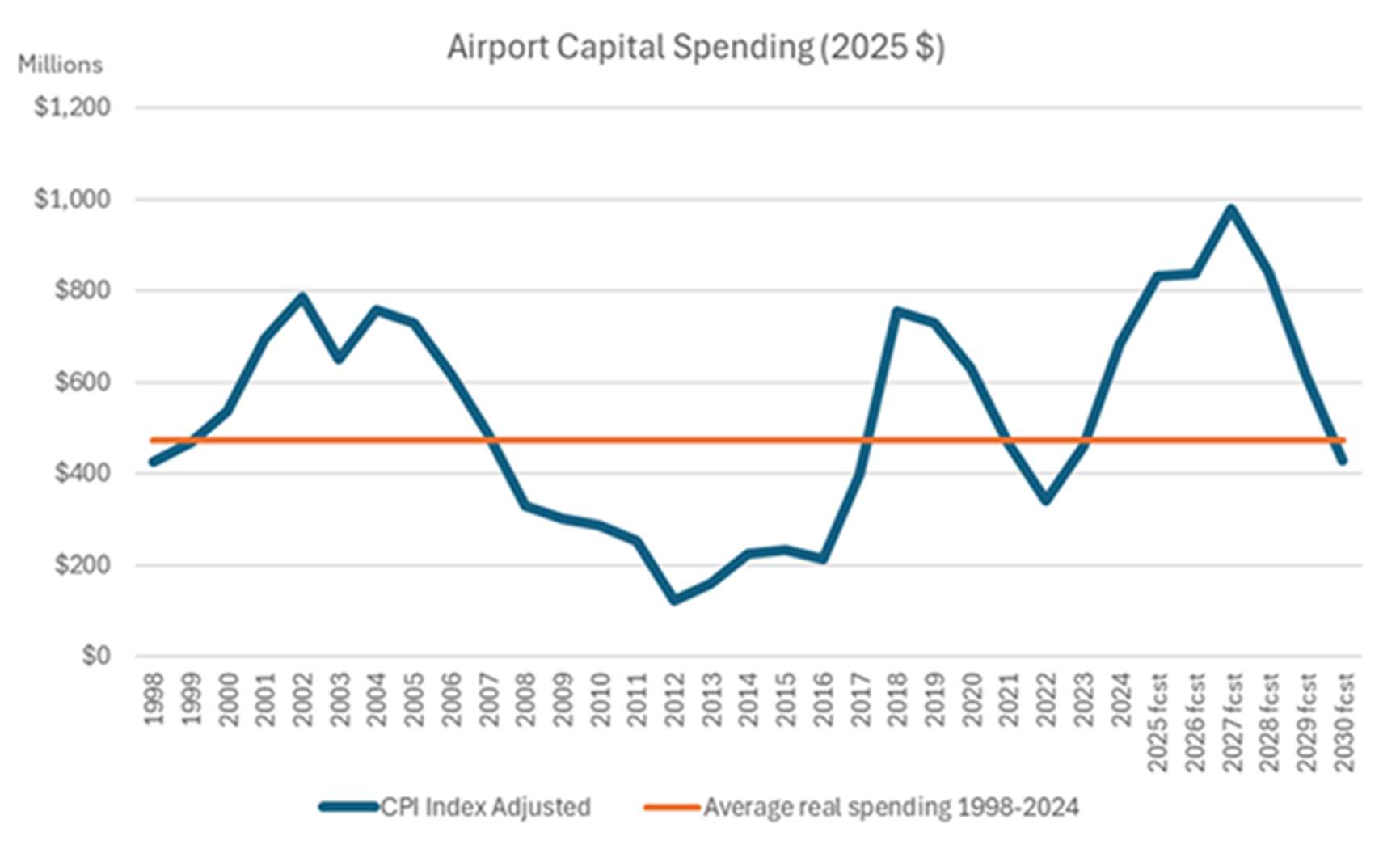 The Port’s detailed discussion of the aviation budget, which represents over 80% of Port revenue, focused heavily on the cost per enplanement (CPE) – essentially the overall cost of every flight. Commissioner Cho attempted to break out the debt portion of these costs.
As noted in previous discussions, the question remains somewhat moot because airport operations are self-financing. (If there were problems, the airlines would not be supporting the SAMP.) Airlines adjust and pay rates annually themselves. The CPE serves as a customer service indicator – if it drops too low, it might signal reduced service levels for airlines, shippers, and customers. However, that scenario won’t occur. The Port’s ability to finance the system remains solid, though next year will mark their peak in capital spending.
Item 11c: Tax Levy
The ATM of King County. But maybe some movement on grant Limits
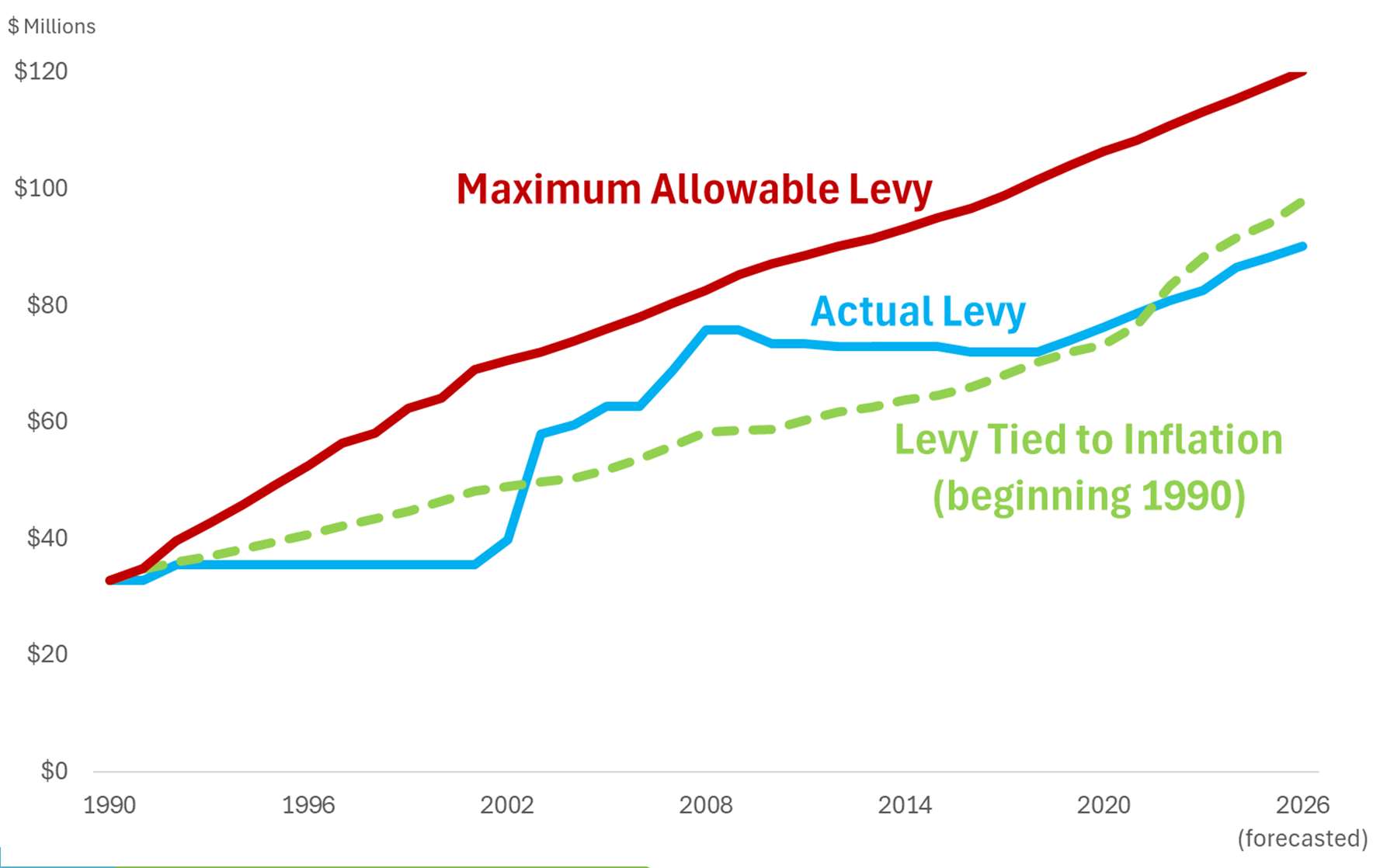 The tax levy discussion proved most revealing. Originally, the tax levy was used almost exclusively for debt-financing. As more and more people recognized how useful it can be for other purposes, it has evolved into what multiple Port Commissioners call “the ATM of King County.” Everyone wants a piece of the completely unconstrained and predictable revenue stream.
Commissioner Felleman’s frequent reminder that every tax levy dollar can leverage $10 in financing explains its power as a tool for funding bond purchases which are the major funding for capital projects like the SAMP. But the Port has used significant chunks for environmental cleanup, like the Duwamish River. Commissioner Mohamed noted that polluters themselves should pay for that remediation–although nearby residents might disagree. The City of SeaTac receives $1.4 million annually from the levy, which also funds every community grant program, including the SKCF.
Currently the tax levy is capped at 75% of potential – typically $88 to $90 million yearly. That ‘cushion’ has always been considered both good politics and a good signal to investors. Commission Cho seemed to favor lifting that lid to match inflation. Finance staff always recommend a cushion to keep the credit rating high. What they did not mention (which the graph shows) is that, historically, the only time they bust through that cushion is when finances are in crisis–as was the case during Third Runway construction.
Commissioner Cho also proposed a novel alternative: increase the cap but invest excess funds. The Port has more flexibility in investments than full-service governments. However, finance staff pushed back, arguing investors would remain skeptical since future Commissions cannot be bound to such investment strategies.
The most significant change came during Commissioner Hasegawa’s questions about community programs and sound insulation funding. She asked about the gift of public funds, which the Port has traditionally used to justify tough match requirements and very small grants. For the first time since we’ve been watching the Port’s legal counsel responded, “that is a policy decision” – a major departure from previous years when staff would flatly state “you cannot do this.”
Our take
That statement, and some Commissioners willingness to even ask, represents progress. But the general tone of staff remains cool. The Port spent decades in such financial distress, younger generations (including all the PortComms) likely have no concept. After so many years of famine, staff remain conservative. And to a large extent they are correct. The Port is constantly bombarded with far too many asks than it could ever fulfill.
However, while the Port has set aside $5 million for sound insulation, no homes have been fixed after almost two years, and staff showed little enthusiasm for expansion. Over 80% of the Port’s budget and regional benefits come from the airport, as demonstrated by SAMP supporters. Everyone else receives over 80% of those benefits in terms of jobs and economic growth. This demands a bigger slice for directly impacted airport communities – people directly under flight paths. When the benefits flow elsewhere and the impacts stay local, those bearing the burden deserve priority consideration for any mitigation funds.