Tourism. Rental Cars. PFAS.
Port of Seattle Regular Commission Meeting
A vote on the main item of interest for airport communities was set aside–the Flight Corridor Safety Program.
Of interest was the Port’s Tourism program, another 2:1 match grant funded from the Tax Levy, that has been of limited use for airport communities. The challenge in ‘equity’ is that the communities nearest the airport tend to be weakest in advocacy. The Port’s grant system is awkward because there are so many worthy, and established groups throughout King County–overwhelmingly far away from the runways.
Tucked into the Port’s Federal legislative agenda are two worrisome notes.
- Although funding for sound insulation updates are provided for in the last Defense Reauthorization Bill, there is concern that the FAA may need convincing to implement that regulation in a timely fashion.
This matters: the FAA has become notorious for not following these rules. And until/unless there is proper oversight from a functional Congress, even ‘law’ is no guarantee.
- The Port, along with other airports, are lobbying heavily to obtain a CERCLA (‘superfund’) exemption on PFAS. For decades, many airports used these highly carcinogenic chemicals in fire fighting.
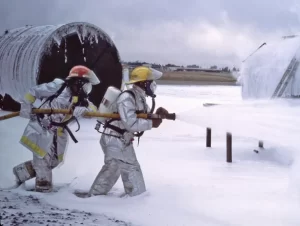 This matters: To protect its firefighters, the Port of Seattle Fire Department has been at the forefront of working to eliminate PFAS at Sea-Tac. Well done. But having deposited tens of thousands of gallons along the runway, if they obtain these exemptions, it will prevent any compensation or mitigation for water quality to surrounding communities.
Our commenter asked the Commission to reconsider its position on SIRRP (Port Packages) and the current state legislation SB5652/SB6240.
My name is JC Harris. I represent SeaTacNoise.info today. I am speaking on behalf of 1,300 homeowners with Port packages. First of all, congratulations President.
Second of all, I had my first discussion with Director Metruck in 2017 regarding these issues. And I am struck today by the sheer weight of all this stuff you guys have to keep track of. I was in Olympia yesterday talking about an aviation tax bill to help fund port package retrofits. And of course there isn’t one bill—there are three for electeds to look at amongst 500. And my point is just being here today, it’s totally overwhelming.
I am struck by the fact that having been at this for a while, there have been solutions that are low friction for everybody and yet every stakeholder picks the most nutty approach, and that’s why it goes on forever. I don’t think that there is any bad intent or whatever other people chronically think. It’s simply that you’re dealing with 327,000 things and they’re all hyper-technical.
I would like to suggest that we have a meeting—don’t want to have a quorum violation—with the director, whoever sets policy on this. And there is legislation available that will not disappoint the port and will help the homeowners. Because I can assure you that both sides in the current legislation, if the bill passes, nobody is going to enjoy it. Like nobody. Not the homeowners and definitely not the port. So please, if we can try to schedule something. Thank you.
Commission President Calkins: The Port Commission welcomes public comment as an important part of the public process. Comments are received and considered by the Commission in its deliberations. Before we take public comment, Clerk Hart, can you please display the QR code to our public comment rules of procedure?
Clerk Hart: For members of the public providing public testimony, it is essential that these rules are followed. Thank you. And Mr. Commission President, I would just like to note that we also have written copies of our rules of procedure at the top of the room for anybody who may be interested in those. And moving forward, we will have this QR code available for all of our meetings.
Commission President Calkins: Thank you so much, Clerk Hart. All right. And with that, will you please call our first speaker?
Clerk Hart: Thank you. We have two speakers signed up virtually, so I’ll just alternate and then we can go into the room, beginning with Christina Arakiyasami. Christina, can you hear me?
Christina Arakiyasami: Yes, I can.
Clerk Hart: Wonderful. Please go ahead and repeat your name for the record and your agenda item or topic related to the conduct of port business that you’ll be speaking about today. And then I’ll start the timer.
Christina Arakiyasami: Thank you. My name is Christina Arakiyasami and my topic is supporting immigrant owned businesses through tourism.
Clerk Hart: Thank you. Please go ahead.
Christina Arakiyasami: Good afternoon, commissioners. My name is Christina Arakiyasami and I’m a founder and executive director of Culture Generation, a 501(c)(3) nonprofit based in Kent. Culture Generation is the recipient of the Port of Seattle Tourism Marketing Grant, and I’m here today to share how this grant has supported us and created public value.
Immigrant owned restaurants and markets in King County hold deep cultural heritage. Yet they have been historically left out of mainstream tourism marketing. This grant allowed us to address that gap by creating visibility, bringing people—the public—into these spaces and helping them understand the cultures behind the foods, encouraging respectful engagement.
With this grant, what we were able to do is create marketing tools for inclusion and belonging. We were creating brochures and online geo maps to help people get to these restaurants and social media marketing, so that the world can discover immigrant owned restaurants in King County and support them. And it’s very important as we have FIFA coming up as well.
Our work here with this grant is both cultural and economic for the state. It brings visibility, it creates healthy communities and it supports culture through tourism for all. So thank you very much for this opportunity for me to share here today.
Clerk Hart: Thank you, Christina. Next speaker is Bruce Daniel.
Bruce Daniel: Good afternoon. My name is Bruce Daniel. I’m a cabin agent here at SEA-TAC and a proud member of SEIU Local 6. Back on December 31, 2025, I was admitted to hospital after passing out after work without incident. That could be the last time I have to be admitted to a hospital. This incident has left me with a $2,000-something bill I cannot afford to pay. But that debt is compounded as I avoid seeking medical attention.
Now I live in stress from the debt and what any future illness or accident will mean for me and my family. I don’t go to the doctor. I seek alternative treatment and home remedies. I ask my family back home in Congo to send me traditional herbal plants that I take to treat my illness and the pain so I can continue to work. While airlines and employers are flying high on profit, we are going without. Airport workers need health care benefits. We need them now. Thank you.
Clerk Hart: Thank you, Mr. Daniel. Next speaker. Calling for Andrea Doring. Andrea, if you’re calling on the phone, it’s Star six to unmute. Andrea, are you able to hear me now?
Andrea Doring: Yes.
Clerk Hart: We can. Please go ahead and repeat your name for the record and your topic and then I’ll go ahead and start the timer.
Andrea Doring: Okay. Andrea Doring and I’m speaking on behalf of agenda item 10B.
Clerk Hart: Thank you. Please go ahead.
Andrea Doring: Hi, my name is Andrea Doring and I am the Senior Marketing Manager for the Ballard Alliance, a nonprofit business improvement organization with a strong destination marketing focus. On behalf of the Alliance, I’d like to voice support of agenda item 10B, authorization for the Port’s Tourism Marketing Support Program.
This is an incredible program that has a broad and diverse reach. It provides meaningful support for smaller and mid-sized destination marketing organizations and it effectively leverages additional local investment with its matching fund component.
The Ballard Alliance has been the recipient of TMSP grants over the last several years and each one has had an immense impact on our organization. In 2017, the alliance received funding support to develop the Visit Ballard website, our consumer facing brand that drives visitors to shop, dine and play in Ballard. In 2021, our project focused on a familiarization visit with Martinique Lewis, an award-winning diversity and travel consultant and also the president of the Black Travel Alliance.
Most recently, the alliance received a grant to implement a digital advertising campaign using the Sojern platform that targeted Port of Seattle cruise ship visitors. This project resulted in an estimated economic impact of $629,000 based on more than 6,000 trips from Port of Seattle cruise terminals. The campaign achieved a return on advertising spend of nearly $63 for every dollar spent.
The alliance is so grateful for the support this program has provided our organization and is proud to be a close partner with the Port of Seattle. We look forward to continuing our relationship in the years ahead. Thank you for your time and consideration.
Clerk Hart: Thank you, Andrea. Next speaker is Kalkidan Mulattu.
Kalkidan Mulattu: Good afternoon, commissioners. My name is Kalkidan Mulattu. I have worked at SEATAC airport for 12 years and am a member of the SEIU Local 6 executive board. You have heard from SEIU Local 6 members and other unions and non-represented workers about the need for health care benefits for years now.
Kidney disease, diabetes, severe tooth decay, parasites and chronic health issues plague SEIU workers struggling throughout employers. Health care benefit issues make us miss or be late for work. Health issues that make us exhausted and stressed before work, during work and after work.
Access to reliable and affordable health care is more crucial today than ever. On top of rising inflation, workers’ ACA subsidies have been cut, forcing many to drop the coverage. We see Medicaid disenrollments and benefits cuts to food stamps and health care. We are told our jobs are important to the success of the airport, but our jobs do not currently provide the essentials to keep us working. I urge you to mediate—employers provide the wage or health care benefits we desperately need and do it as fast as possible. Thank you so much for listening.
Clerk Hart: Thank you, Ms. Mulattu. Next speaker is Matt Haney.
Matt Haney: Good afternoon. Matt Haney, SEIU Local 6 Property Services Northwest President. President Calkins, Commissioners, the Port’s Health Care Benefit Analysis that was completed this last summer found that 55% of contracted workers at the airport do not have health insurance benefits and only 41% of this workforce are even offered benefits by their employer. It’s worth noting that of the 45% of contracted workers with health insurance, a quarter of them are on Medicaid.
This is reflective of studies conducted at major international airports and echoes the stories of health care inequities we hear from SEA workers here on the ground. This is not new information to this body. We have been talking about it for years now. The difference between SEATAC and other airports who have conducted studies is that they have acted to address the inequities by requiring wages to cover health plans or insurance benefits, while SEATAC remains the only major international airport on the west coast not to require health care benefits for the lowest paid workers.
We know the benefits: healthier, happier, more productive workforce, greater retention and recruitment and a more secure airport. The port and this commission have the authority and the support to act to make a targeted port-administered health care requirement. But I urge you, you need to act swiftly and in a way that includes all affected employers at the same time so as not to create an unfair playing field. Thank you.
Clerk Hart: Thank you, Mr. Haney. Next speaker is Michelle Giamarca.
Michelle Giamarca: Hi, my name is Michelle Giamarca and I’m here again with an update on the closure and evictions at Salmon Bay Marina where I live on my legally established houseboat. The marina continues to shutter. Rosy reports of 80% of Salmon Bay customers finding new moorage ignore the fact that the 20% still there are either already abandoned or unlikely to find slips in time.
Five houseboats remain. We’ve received notice that our utilities will be shut off and we will be locked out in 51 days. But we’ve also been told that you’re not a ruthless landlord. I have a retired shipwright neighbor of 12 years who’s like an uncle to me. He’s 80-something, on an extremely fixed income and in his third round of cancer treatments. If evicting him without prospects and shutting off his utilities in the middle of winter isn’t being a ruthless landlord, I wonder what is.
There’s no contingency plan if we don’t find slips by March 18. The Port Moorage Coordinator has been tasked to help place us, yet we’ve had little contact, no information about their findings. And we all know the truth—there are no slips. What crumbs we’ve found have been our own. Our stakes are existentially high and we’ve been asked to bet everything on the port’s invisible process. The last four months of your search, including two dedicated to the houseboats, have been fruitless. Yet in the next 51 days you expect to find four or five slips. Does this seem rational to anyone?
You’ve threatened moorage outside Seattle if needed. This would permanently erode our population of registered floating on water residents. Further, my neighbor has no running car and has treatments in Seattle three times a week. I bike to an in-person job with swing shifts. You can move our boats out of town, but the people can’t go with them.
Today we have to be realistic, prepare to rent apartments and abandon our homes. The March 18 deadline is just three commission meetings away. Why March 18? Why no contingency plan? The simplest, most logical option of granting temporary liveaboard status at Fisherman’s Terminal remains off the table. The only plan we’ve really seen in action is closing the marina. It’s the most work that’s been done there since 2020. 51 days. Thanks for listening.
Clerk Hart: Thank you, Ms. Giamarca. Next speaker is Maury Schuller.
Maury Schuller: My name is Maury Schuller. I’m the president of the Lake Union Liveaboard Association, representing the little houseboats, and I’m here to talk about Salmon Bay Marina. Thank you, commissioners. I don’t have any prepared remarks. I did want to congratulate you, Commissioner Calkins, for being elected president. Congratulations.
What I do know is that all five of you, even the two who are not here, are very moral, ethical people. I’m convinced of that. But what I haven’t seen with regard to Salmon Bay Marina are those ethics and morals actually applied. And I’d like to see it kick in right now. Because those houseboats that Michelle talked about are in my little organization. It’s a tiny constituent of people in Seattle—266 to be exact. That’s all we’ve got.
They are historically and culturally significant as named in the state law which protected us some decade ago, almost now at this point, legally established. You knew they were there when you bought the marina. We negotiated a special deal so we could keep them there because there were no slips available at the time.
So I have more questions about what’s happening at Salmon Bay than I have answers. And I wonder if you do too. Do you know why this is happening? Do you know why the deadlines were imposed? Do you know why utilities are being cut off? Do you know why these people are being evicted? Do you know how our public money is being spent, has been spent on Salmon Bay? Do you know how much overhead has been charged to the port instead of actually putting it into Salmon Bay? Do you know any of this? Do you have any questions at all? And if you do know, please be transparent about it.
Please tell the public what’s happening with our public funds regarding Salmon Bay. It wasn’t a cheap purchase. You spent a lot of money buying it. I know the three of you weren’t here at the time, but you’re here now. And I would like you to provide some answers to the public on why this is happening and how much it’s costing your taxpayers. Thank you for listening.
Clerk Hart: Thanks, Ms. Schuller. Next speaker is Carol Warman.
Carol Warman: Hello, I’m Carol Warman. I’ve been at the port for 15 years pushing wheelchairs and I enjoy it here. But health care again is our problem. I’m on Medicare and Medicaid, and if I were to have any drastic health care, that would take all of my savings. So the program that they have here for health care is just what they call preventative, which is just basically paying for doctor’s offices and just the minor stuff. There’s no major stuff. That’s why I’m doing Medicare and Medicaid.
So we definitely need a major health care program here because I think there are a lot of people at the point that I’m at—we’re not sure whether or not we’d be able to survive a life-changing health emergency. So we need help from the commission to help us get through this and actually give us a good health care program. And that’s basically all I have to say. Thank you.
Clerk Hart: Thank you, Miss Warman. Next speaker is John Chaney.
John Chaney: My name is John Chaney. I am a liveaboard resident at Salmon Bay Marina and I’m here to talk about our eviction. I’ve never missed a payment to the port as a tenant at the marina. My houseboat has been in that marina for 20 years. I think I’ve kept my part of the bargain. I don’t think the port has kept its part of the bargain. And it makes me sad since I place great hope in our government institutions even in these times.
You knew the marina needed work when you bought it, even though you weren’t on the commission. Life reports, however, have shown you since you have been on the commission that you could keep the marina safe. Yet you delayed maintenance until declaring it a safety emergency on September 11th. We weren’t hit by an airplane, but we were hit by the port.
The port knew of the unsafe condition and still increased our rent. The port knew of the unsafe condition and more shockingly, you never told us about that safety issue. You knew and yet you didn’t tell us. We’re still working on public records requests. I’m still wondering what you’re hiding.
We have been offered inadequate relocation assistance and are required to hold the port harmless totally on your deception. We could receive some relocation, but it feels like we’re acting under duress. We’ve got our reminder that you’re going to turn off the water, the electricity and the access even if we do not have a new home slip. Lastly, you will not even offer floating on water residences safe harbor in your other port facilities. That’s shameful. Thank you.
Clerk Hart: Thank you, Mr. Chaney. Please call our final speaker. Yes, our final sign-up here today is JC Harris.
JC Harris: My name is JC Harris. I represent SeaTacNoise.info today. I am speaking on behalf of 1,300 homeowners with Port packages. First of all, congratulations President.
Second of all, I had my first discussion with Director Metruck in 2017 regarding these issues. And I am struck today by the sheer weight of all this stuff you guys have to keep track of. I was in Olympia yesterday talking about an aviation tax bill to help fund port package retrofits. And of course there isn’t one bill—there are three for electeds to look at amongst 500. And my point is just being here today, it’s totally overwhelming.
I am struck by the fact that having been at this for a while, there have been solutions that are low friction for everybody and yet every stakeholder picks the most nutty approach, and that’s why it goes on forever. I don’t think that there is any bad intent or whatever other people chronically think. It’s simply that you’re dealing with 327,000 things and they’re all hyper-technical.
I would like to suggest that we have a meeting—don’t want to have a quorum violation—with the director, whoever sets policy on this. And there is legislation available that will not disappoint the port and will help the homeowners. Because I can assure you that both sides in the current legislation, if the bill passes, nobody is going to enjoy it. Like nobody. Not the homeowners and definitely not the port. So please, if we can try to schedule something. Thank you.
Commission President Calkins: Thank you, Mr. Harris. I just want to ask Clerk Hart if there are any additional signups since we—
Clerk Hart: We do have one more sign up.
Commission President Calkins: Please do.
Clerk Hart: That’s Teresa Vianne Crossman. Teresa, please go ahead and repeat your name for the record and your topic. Thank you.
Teresa Vianne Crossman: My name is Teresa Vianne Crossman. I am the founder and visionary of Flux Pods. It’s nice to see you again, Commissioner President. Congratulations.
At Flux Pods, we believe true innovation doesn’t come from steel and glass alone. It comes from caring for people’s hearts and spirits. My mission is to create pods that are more than just a place to sleep. They are your escape between departures. They are a moment of peace and sanctuary of care and a space where every traveler is invited to relax, rest and refresh.
Thank you for considering my vision and thank you for the opportunity of this unique experience at SeaTac Airport. Together we can show the world that comfort is not just about luxury—it’s a birthright for every soul on the move. And right here I want to present to him the pods.
[Ms. Crossman presents materials]
Flux Pods refines modern travel through a modular wheelchair-accessible rest pod system designed for airports and transient hubs. Each pod offers travelers a private soundproof haven featuring secure keypad entries, wireless charging, ambient lighting, acoustic insulation and optional pet-friendly configurations.
Commission President Calkins: Can you wrap up as quickly as possible?
Teresa Vianne Crossman: Yes. It’s for mental wellness as well. Flux Pods provide a sanctuary and calm security for all travelers regardless of mobility and mental health needs.
Commission President Calkins: We’ll make sure those documents are included in the record of the meeting as well. Thank you so much for your contribution.
Teresa Vianne Crossman: One more thing. After the pods are set up, I would like to even have this as a treat for our guests, for our travelers.
Commission President Calkins: Appreciate it. Thank you so much for your public comment today.
Clerk Hart: That concludes our signups. Is there anyone else either in the room or present on the Teams call who didn’t sign up but who wishes to address the commission? Okay, with that, at this time I’m going to ask the clerk to please give a synopsis of any written comments that we received.
Clerk Hart: Thank you, Mr. Commission President, members of the commission, Executive Director Metruck. We’ve received one written comment for our meeting today. This comes from Julie Salathi, director of grants and sponsorships at the Wing Luke Museum of the Asian Pacific American Experience, who writes in support of agenda item 10B, the tourism marketing support grant program.
Julie thanks the port for the program, noting that the grant has provided critical tourism-related marketing support which is not typically available through other programs for them. Support included website development, digital marketing and marketing campaign development for out-of-state tourist visitation in line with the port’s objectives for increasing out-of-state visitors related to cultural tourism.
Julie notes that as a culturally specific smaller nonprofit, they find it difficult to find the marketing resources to compete with larger museums and nonprofit tourist destinations and urges support to continue funding this important program.
Commission President Calkins: Point of information, can you repeat the last name, please?
Clerk Hart: Salathi, I believe, is how it’s pronounced. S-A-L-A-T-H-E.
Commission President Calkins: Okay. And that concludes the written comments we’ve received today and this will become a part of the public record. Thank you.
Commission President Calkins: All right. Thank you so much, Clerk Hart. Hearing no further testimony, we’re going to move on in the agenda. Our next order of business is the consent agenda. Items on the consent agenda are considered routine and will be adopted by one motion. Items removed from the consent agenda will be considered separately immediately after adoption of the remaining consent agenda items. Is there a motion to approve the consent agenda covering items 8A through 8B?
Commissioner: So moved.
Commissioner: Second.
Commission President Calkins: The motion was made and seconded. Commissioners, please say aye or nay when your name is called for approval of the consent agenda beginning with Commissioner Cho.
Commissioner Cho: Aye.
Clerk Hart: Thank you, Commissioner Hasegawa.
Commissioner Hasegawa: Aye.
Clerk Hart: Thank you, Commissioner Calkins.
Commissioner Calkins: Aye.
Clerk Hart: Thank you. Three ayes, zero nays for this item.
Commission President Calkins: All right. And with that, the motion passes. Clerk Hart, can you please read the next item into the record and then we’ll have Executive Director Metruck introduce it.
Clerk Hart: Yes. Thank you. We are moving to new business agenda item 10B. This is authorization for the Executive Director to execute all related contract agreements for the 2026-27 Selected Tourism Marketing Support Program recipients in an amount not to exceed $600,000.
Executive Director Metruck: Commissioners, before you today is an authorization related to the Tourism Marketing Support Program, which partners with destination organizations to attract out-of-state visitors while promoting use of port facilities including Seattle-Tacoma International Airport, our cruise terminals and recreational marinas.
The program is structured as a 2-to-1 matching fund that will make a total of $600,000 available over the 2026 to 2027 period for projects that meet defined criteria and advance shared marketing objectives. Core funding is intentionally focused on supporting the development of responsible tourism initiatives and on elevating diversity, equity and inclusion within destination marketing efforts, with the Responsible Travel Handbook serving as a guiding framework for applicants.
This program has demonstrated a meaningful impact, particularly for smaller destinations, while expanding their reach to diverse audiences while reinforcing stewardship values and responsible travel practices. Approval today enables the port to continue leveraging tourism marketing as a strategic tool to grow visitation, support local communities and align destination promotion with the Port’s values and long-term goals.
Presenting this afternoon is Nick Leonti, Tourism Development from Office of Economic Development Division. So, Nick…
Nick Leonti: All right, thank you. Good afternoon, Commission President Calkins, Commissioner Cho, Commissioner Hasegawa. Always a pleasure to be here to talk about the good work that we’re doing in tourism development and tourism marketing. You know, it truly is destination stewardship in action. When we develop community-focused strategies and market responsibly, we influence where visitors go, how they travel and help drive revenue to small businesses while also creating jobs and strengthening city and county tax bases.
Our efforts are not about simply increasing volume, but about focusing, managing and shaping visitor behavior to benefit residents and sustain the Seattle experience that we all value.
And the Tourism Marketing Support Program, or TMSP, is a key part of our scope that enables tourism partners across the state to help advance the port’s larger tourism mission. Not only do these grants help small and mid-sized tourism partners reach new audiences, but the program fills critical gaps in regional marketing capacity and promotes lesser-known destinations to help spread visitor dollars when and where they are needed most.
In 2024, the Commission authorized the previous cycle for up to $600,000 for the two-year grant cycle in which we were able to support nearly 40 projects throughout the region. We are asking the Commission today to reauthorize the program for another $600,000 for 2026 and 2027—funds that have already been budgeted.
Annually, tourism brings billions of dollars into Washington’s economy and supports tens of thousands of jobs statewide. These numbers demonstrate that tourism is a powerhouse for economic infrastructure. This data underscores what we see every day—that tourism generates real, measurable benefits for residents, and the port plays a vital role in delivering those benefits to our local communities.
Our global connectivity also enhances the lives of residents by enabling them to visit their families, conduct business, and experience cultural connections around the world. Speaking for myself, as someone who didn’t even leave the Pacific time zone until I was 30, I have a great appreciation for the positive social and cultural impact that travel provides.
Visitor spending—which is bringing dollars from outside our community into our community—is vital to the livelihoods of our locals and key to keeping the places we love around. As we like to say, tourism marketing is for the locals, not the tourists. Tourism is facing headwinds both locally and globally. Anti-US sentiment is swelling in our largest overseas markets. Outdated or inaccurate perceptions of Seattle persist and misinformation and rising global competition are real threats.
Tourism marketing is how we counter those narratives. Through trade relationships, media coverage, in-country engagement, we tell Seattle’s true story—a story of innovation, natural beauty, cultural vibrancy and responsible travel leadership. Our work and the work we support through the TMSP help deliver on tourism potential for our local residents.
When we look at the big picture of our work and its impact, it’s obvious that a strong partnership with State of Washington Tourism and Visit Seattle and other tourism industry partners across the region multiplies our global reach. When we move in alignment, global buyers and media receive consistent messaging and that consistency results in stronger visitor spending and more effective stewardship outcomes. The TMSP helps smaller destinations, organizations and other tourism-related businesses follow the lead of the port and bolster our collective efforts.
In line with Executive Director priorities, tourism drives shared success and increases economic resiliency for our residents. Visitor spending supports restaurants, small businesses, parks, transportation systems, museums, community-based cultural organizations and more. It helps fund city services and creates jobs at every level.
Importantly, when tourism is done responsibly, the benefits extend to underserved communities that historically have not received equal access to economic opportunity. In all our work, whether it’s working with travel media, helping travel producers develop product, hosting familiarization tours or press trips, producing educational tours, or developing content to keep Seattle top of mind—in all that work, everything we do, we work to advance commissioners’ priorities around equity, inclusion, creating opportunity, resiliency and boosting responsible tourism.
I’m not here today to provide a year in review of our work, but I did want to provide a few highlights that show how impactful our work is and how TMSP fits into that work. Tourism is a relationship-driven industry and our in-person meetings with travel producers, travel media and other industry thought leaders build trust in ways that an email or a Zoom call simply cannot.
The relationships our team has built with travel producers and thought leaders across the globe help us develop impactful strategies, secure new partnerships, negotiate new itineraries and deliver positive outcomes for our community. They also keep Seattle relevant in competitive global markets and my awesome team of Tourism Development Manager Chantal Lucebrink and our new Tourism Development Specialist Bethany Santos work every day in this industry to deliver results for locals.
For example, Chantal ensured that a fam tour of top-selling travel agents from Germany who sell packages through Holland America Lines experienced the Chinatown-International District and toured the Central District including an amazing dinner at Communion R&B. That doesn’t happen without our influence.
Or look at last year’s sales mission to Tokyo and Seoul that resulted in hosting a familiarization group of Korean product developers who have now launched outdoor recreation tours with Korean-speaking guides in our region. And when Edelweiss Airlines announced their new route, we were able to host media on an itinerary that featured lesser-visited locations and included a tour with elders of the Jamestown S’Klallam tribe that showcased the rich stories behind totem pole carving. The resulting stories created by that group delivered over $2 million worth in estimated media value.
These successes don’t happen without our tourism development efforts and those efforts help us deliver value to our partners.
And speaking of delivering value, we are always looking for new ways to provide leadership and opportunity to our local partners. In fact, we are in the process of securing a new visitor information chatbot at SEA that will modernize how we communicate with travelers. The chatbot will be able to deliver port priorities around Responsible Travel directly to visitors, nudging them to local businesses, culturally significant places and sustainable travel options while also focusing on lesser-visited communities in real time.
Our Responsible Travel principles will also be reflected in the Port’s new Responsible Tourism ad campaign at SEA that transforms the previous Spotlight ad program into a stewardship engine. Instead of random partner ads, we will now deliver cohesive messaging rooted in sustainability, cultural respect and shared community benefit, reaching millions of travelers annually.
Using high-visibility ad placements across SEA, we will guide visitors from the moment they arrive, encouraging them to explore thoughtfully, support local businesses, discover lesser-visited neighborhoods, and adopt those responsible travel behaviors. And the TMSP grants complement and enhance all of this work and are one of our highest impact tools.
The program supports local organizations, many of them small, emerging or community-based, that would not otherwise be able to participate in tourism promotion. Port funds help these partners create bookable visitor experiences, elevate underrepresented communities, and grow local jobs. The program directly advances equitable tourism by ensuring that economic opportunity reaches beyond the city core and advancing Commissioner Hasegawa’s goal of rewriting the map for equitable tourism.
I’ve mentioned our Responsible Travel principles a few times and while these principles have guided our work for years, over the past year we worked to clarify that messaging by creating an official list which you see on the slide here. These principles are grounded in responsible equitable tourism and help us promote travel behaviors that support environmental protection, cultural respect, and community well-being.
That includes guiding visitors to lesser-visited neighborhoods, amplifying diverse cultural assets, and reducing pressure on high-traffic sites while advancing the port’s stewardship approach that ensures tourism growth never comes at the expense of residents.
But the principles outlined here go beyond those new ads or the chatbot. These principles guide all our work and they are built into the TMSP program. All applications for TMSP funding are evaluated for their impact as they relate to these principles. For example, promotion for a festival in the middle of summer high season would not be evaluated as highly as one that is scheduled during the shoulder slow seasons.
Our evaluation criteria are intentionally aligned with the port’s values and prioritize inclusive and culturally representative travel experiences in addition to environmentally responsible tourism. This ensures port dollars uplift communities, protect the environment, and guide visitors to experiences that reflect our region’s diversity and authenticity.
Past TMSP recipients include trail associations, art organizations, cultural districts, rural tourism collaboratives, and emerging community tourism leaders. These grants create real-world impact: new visitor itineraries, stronger small businesses, expanded marketing capabilities, and increased visitor spending in places that don’t typically see direct tourism dollars. TMSP is one of our most powerful tools for distributing tourism benefits equitably.
These port funds support projects ranging from digital advertising focused on diverse markets to hosting travel writers and influencers to creating content. These grants highlight the best of our communities and help amplify voices that have historically not been heard. You have the full list of projects supported in the last cycle in your memo packet.
We hope you see the immense value this program brings to our community, and we ask for your support in reauthorizing the program for the next cycle. Thank you.
Commission President Calkins: Thank you, Nick. Any questions from commissioners?
Commissioner Hasegawa: Well, Nick, I just want to say how much I appreciate your collaboration over the last year to be able to expand access to opportunities for folks of all kinds of different geographies, including within the city of Seattle, who are inside historically redlined areas that have never made it onto the tourism map.
For folks who don’t know, that tourism map is a Port of Seattle document that is actually handed out to people who are arriving to ride our cruises that can direct them towards nearby attractions. And we want to make sure that it represents some of the amazing attractions that we have south of Pioneer Square and south of the redlining border.
Commission President Calkins: So does that map include the Museum of Flight?
Nick Leonti: Yes, it does.
Commission President Calkins: I think that it’ll be helpful to be able to share that more broadly because it kind of demonstrates how we’re trying to expand thinking about that. The thought process here is that we want to get folks as ready as possible to absorb this unprecedented tourism volume ahead of FIFA World Cup, and letting that be almost like a launching pad for them to absorb subsequent tourism activity from folks who came the first time via FIFA, who want to come back, or from the ongoing tourism via the cruise passengers.
So this is a really, really exciting and special unique opportunity. I’ve been asking everyone, I implore everyone to ask themselves, what’s my FIFA hustle? Because there is $929 million of economic opportunity, and we want to make sure that it goes as broadly geographically, as deep into communities and as far across time as possible, leading up to FIFA and after FIFA.
And so for this readiness and how far it’s come over the last year, I’m very pleased. I just… I know I’ve been sort of a thorn in your side, and I thank you. I’d like to just speak into existence and thank Africatown, Joaquin Garrett, former state Representative Don Mason, Leonard Housie, and all the others who have brought us in from the Port of Seattle, our economic development team, our equity diversity inclusion team, that has met with them five times to make sure that we are understanding what the opportunity is to get folks away from the Space Needle and not just north or the Pioneer Square, but through the Chinatown-International District, through Little Saigon, and up into the Central District.
And I’d also like to thank the Ethiopian community of Seattle for welcoming us in South Seattle to see how we get folks down the light rail and into some of those amazing black and brown owned businesses, the restaurants, letting us go ahead and see for ourselves what that incredible attraction is.
I want to also call out that FIFA is going to overlap two important holidays for us. One of them is Pride Month and the other one is Juneteenth. And there is going to be an interest in where are the black businesses in Seattle? Where can we go this week, this month as it does overlap with some FIFA matches?
And I love the work that you are doing to create a navigator right here at the airport so that people can see that directory of black-owned businesses throughout the area. I just think it’s such an important and meaningful handoff for us to be able to do that.
I love that this program has improved its evaluative framework. I love that you have a panel so that you have sharp minds who are thinking about how we can really meaningfully target these funds for the best intended impact. There’s always going to be more work that we can do, but you’ve been a great thought partner, so I’d like to thank you.
There’s one thing that I also wanted to lift up in the context of approval of this request is that I’ve been hearing from folks—there is some siloed work going on and I’ve asked that our economic development director do connect with a group that has already done a preparedness assessment for different neighborhoods around King County. They are independent. They work in collaboration with Visit Seattle as well. And then they have offered a framework to support the business readiness to be able to actually accommodate the demand and the tourists who will be coming to the area.
So that’s just going to be a meeting—I just want folks to know that this approval isn’t just one and done. We’re going to continue to work to make sure that we are doing the most we can to equip everybody, our communities, our cities, our region, to be able to give and have an excellent tourism experience for the global community coming in just a few months. So thank you. Thank you very much.
Commission President Calkins: I also want to just channel Commissioner Felleman who I know has done incredible work on this topic. I’ll keep it short, but primarily to say, thinking about how an industry like this that is very important for our region, what can the port do to ensure that, as you highlighted in the presentation, it’s reaching into the areas that have not historically benefited from tourism or in some cases may have even been negatively impacted. So really appreciate all the work on this.
At this point, hearing no further questions for this item, is there a motion and a second to approve item 10B?
Commissioner: So moved.
Commissioner: I’ll second.
Commission President Calkins: All right, the motion was made and seconded. Is there any discussion or debate on this item? All right, Clerk Hart, can you please call the roll on the vote?
Clerk Hart: Thank you. Beginning with Commissioner Cho.
Commissioner Cho: Aye.
Clerk Hart: Thank you, Commissioner Hasegawa.
Commissioner Hasegawa: Aye.
Clerk Hart: Thank you, Commissioner Calkins.
Commissioner Calkins: Aye.
Clerk Hart: Three ayes, zero nays.
Commission President Calkins: And with that, the motion passes. All right, we are now at presentations and staff reports. We are going to take a five-minute recess to ensure that we can maintain quorum through the rest of the meeting. So commissioners, please return—it is 1:20. Please be back by 1:25.
[Recess]
Commission President Calkins: All right. Clerk Hart, can I call the meeting back to order?
Clerk Hart: Yes.
Commission President Calkins: And with that, we’re going to move on to our first presentation and staff report for the day. Clerk Hart, can you please read the next item into the record? And then we’ll have Executive Director Metruck introduce the item.
Clerk Hart: Thank you. This is agenda item 11A, Rental Car Program at Seattle-Tacoma International Airport.
Executive Director Metruck: Commissioners, today’s briefing provides a high-level update on the consolidated rental car facility, a core airport asset that has been in operation since 2012 and remains a major driver of non-aeronautical revenue at Seattle-Tacoma International Airport. The rental car program continues to be the airport’s second largest non-aeronautical revenue source, generating more than $90 million annually and serving millions of passengers through a facility that supports 11 car rental brands.
As we approach the midpoint of the original 30-year lease in 2027, staff will outline how the facility is performing, highlight upcoming capital needs and discuss long-term considerations for sustaining this critical asset. This briefing also previews several commission actions expected over the next year, including capital investments and a space rebidding process that will shape the facility’s configuration for the next 15 years.
Presenting this afternoon are Jeffrey Wolf, Director, Aviation Commercial Management, Jeffrey Foster, Assistant Director, Aviation Business Development and Nassim Tirghi, Aviation Real Estate and Portfolio Manager. So I think I’ll begin by turning it over to Jeff Wolf.
Jeff Wolf: Good afternoon, Commission President Calkins, Commissioners, Executive Director Metruck. As mentioned, I’m Jeff Wolf, Director of Aviation Commercial Management at SEA and I appreciate the opportunity to be here today to discuss SEA’s rental car operation. As the executive director mentioned, it’s a key business line within commercial management and typically the second highest source of non-aeronautical revenue at the airport.
Today my colleagues Jeff Foster and Nassim Tirghi will walk you through a briefing regarding the rental car business with a focus on three main areas:
Number one, an overview of the background and performance of the rental car business looking back to 2012 with the opening of the current rental car facility.
Number two, a review of the current rebidding process of the agreement governing space allocation for the various rental car tenants. 2027 will be the 15-year mark or halfway point of the underlying 30-year lease agreement for the facility, requiring a space rebid as part of the lease agreement.
And number three, a review of the investment and capital projects that have occurred at the facility as well as upcoming commission action items you can expect to see in the near future.
Our goal in presenting this briefing to you today is to bring you up to speed with the rental car business and prepare you for the current rebid process and future action items. I want to thank my colleagues Jeff and Nassim for all their ongoing hard work managing SEA’s relationships with the multiple rental car partners at the airport.
I also want to recognize and thank our landside operations team led by Peter Lindsey who oversee the day-to-day operation of the rental car busing system and the 59 Port of Seattle employee bus drivers who take care of rental car passengers 24 hours a day, 365 days a year.
Thank you again, commissioners for this opportunity and for all your support of the rental car business at SEA. I will now hand it over to Nassim Tirghi who will guide you through today’s presentation. Thank you.
Nassim Tirghi: Hello and thank you again for your time today, Commissioners and Executive Director Metruck. My name is Nassim Tirghi and I’m a Real Estate and Portfolio Manager here at the Port of Seattle, with the rental car facility falling within that portfolio. I’m going to briefly cover the history and background of the facility and its operators since its opening in 2012.
As a reminder, the SEA rental car facility is located off the intersection of 160th Street and International Boulevard just northeast of the main terminal. The facility houses over 2.1 million square feet of customer and operational space within a 23-acre site. The site was awarded the LEED Silver certification after earning 34 LEED points during its construction.
The project for the facility began in 2008 through a $400 million bond issuance which covered the construction of the facility itself as well as a transportation mechanism for passengers to reach it—being the rental car facility bus system. This debt service is paid for via an industry standard Customer Facility Charge or CFC which is assessed to the rental car customers by each operator and will be covered more later in the presentation.
Currently, our busing program consists of 35 CNG or compressed natural gas buses which are operated by port employees via our landside operations team.
As of today, there are currently 11 brands operating at the rental car facility, one of which being considered a small operator which is defined as a brand that operates with less than 2% of the total market share.
There are four major areas of the site to note: the first being the customer service building on the fifth floor which houses operator kiosks, and the bus loop in which customers are brought to and from the main terminal. Floors 1 through 4 are specifically operational floors for storage of vehicles, pick-up and drop-off zones for customers in their rented vehicles and quick turnaround areas or QTAs for vehicle preparation.
The facility has four quick turnaround areas split between the northern and southern ends of the site and includes both car washes and fuel dispensers.
The project began in 2008, however rental car operations began in May of 2012 under a 30-year lease agreement. Prior to this, a few brands ran rental car operations within the first floor of the main terminal garage at SEA. Though this was a limited space, other brands operated via an off-airport model and transported customers via courtesy shuttle after checking customers in at booth locations in the baggage claim area of the terminal.
Since we had a split operation at SEA which required customers to find their rental car operators in different locations, we have found that the consolidated rental car facility model provides a seamless and overall better customer experience for our passengers.
Although the consolidated rental car facility holds a majority of our rental car operators, there are three specific classes that the port recognizes. On-airport operators are the most common, being housed in the facility. Again, we hold 11 brands under this class via eight lease agreements.
Additionally, the port recognizes off-airport operators who are required to shuttle their customers from the rental car facility to their respective locations surrounding the airport. We have had a few operators in this class in previous years, but currently have no active agreements and are in the process of completing one.
Lastly, the Fixed Base Operator rental car class specifically allows for rental car transactions at the FBO or Fixed Base Operator for non-terminal customers. This is located on the southwest corner of the airfield and is a new class that was introduced in 2025.
Since 2012, over 60 million passengers have been transported to and from the rental car facility via our RCF busing program. This includes a yearly increase since 2020 to exceed pre-pandemic numbers of travelers, ending 2025 with 5.2 million passengers being the highest single year recorded.
As you can see here, rental cars have generated significant revenues for the port and seen a steady increase to CFC funds as well, ending 2025 with $48.4 million. 2025 will see similar revenues year over year compared to 2024, though note that the figures here do not include the $4.5 million generated by the eight lease agreements at the rental car facility.
As you can see, revenue and concession fees have exceeded pre-COVID levels, including a 25% increase in gross sales over 2019 numbers. The far right figure does not include December of 2025, though we expect the 2025 numbers to be at or near 2024 numbers as well.
And with that, I’ll turn it over to Jeff Foster to continue the discussion on CFCs and future actions.
Jeff Foster: Thanks, Nassim. Commissioners, during the annual budget process, we review the performance and forecast for the customer facility charges or CFCs to determine if a rate increase is needed to ensure adequate funding for not just the short term, but also over the medium and long terms.
Currently, our CFCs are at $8 per transaction day and this chart shows the progression of CFC rates from when they were instituted 20 years ago in 2006. The CFCs provide a dedicated funding source that covers not just the debt service on the RCF, but also our busing operation and any capital costs that are required.
As the facility ages, more capital projects will be needed to replace systems and to keep the facility operating. It’s important to note that capital projects at the facility are generally funded solely from CFCs.
Since COVID we have also been working to build up a minimum reserve ensuring adequate debt service protection and funding for continued busing operations should another shock event like the pandemic take place. These demands on the CFCs have contributed to the need for a slow and methodical increase in the CFC rate and are done in coordination with our rental car partners.
The 30-year lease agreements with our rental car operators are now nearing the midpoint of their term. Originally, the lease agreement called for a major space rebidding process every 10 years, creating three separate concession periods. Each rebidding process, which is governed by the lease agreement, requires the port to re-demise the space within the customer service building and may also require our operators to move operational areas in the floors below at potentially high cost to the port and to the rental car operators.
Due to the COVID pandemic, the cost impact to the CFCs, cost to the tenants and the overall disruption this would cause to the facility and our customers, the process was amended by Commission to create two 15-year concession periods resulting in a single rebid process versus the two originally planned.
While our airport dining and retail program that you are familiar with uses a combined concession and lease agreement—or concession and lease in one agreement—the rental car facility is governed by a lease agreement with a 30-year term and a separate subordinate concession agreement covering the more limited concession periods.
The purpose of this rebidding process, which focuses on space posture in the facility, allows for significant corrections to space based on changes to those in the SEA market as well as the overall rental car industry. The next 15-year concession period under the continuing lease will require a new concession agreement covering the minimum annual guarantees and security deposit amounts.
This graphic shows the current layout for the customer service building. As mentioned on the last slide, the rebidding process is a major space posture endeavor. Though the lease agreement does provide for some adjustments within the facility at specific intervals, these space reallocations are more limited than the comprehensive rebidding process that we are currently undertaking.
On this graphic you can see our Small Operator Area or SOA for short, on the far right of the screen. The SOA provides port-installed counters, offices, customer support booths on the floors below and reduces the overall burden of entry into the facility. While we have one current small operator, we have had three in the facility since it opened. Sixt Rent-A-Car was a small operator that has since graduated to a regular operator through an unexpected vacancy earlier in the facility’s operation.
In November we issued a Request for Qualifications or RFQ which will be used to determine SEA market share as well as any potential new entrants. The next step, which we expect to take place later in February, will be to invite the qualified parties from that RFQ process to bid on space commensurate with their determined market share, ensuring the overall efficiency of the facility.
The bidding will also establish a new minimum annual guarantee for each operator which will then be reflected in the concession agreement. As long as we have space in the small operator area, we will also continue our efforts beyond this process to add new entrants to the facility through our small operator area.
While the Port maintains ownership of the facility and the overall systems, most of the maintenance is handled by the rental car operators and not by the Port. Some aspects, such as a full system replacement or a major maintenance item, do fall to the Port and are handled through our capital project process.
As mentioned previously, our projects at the facility are generally paid by the CFC fund cash balance. Some projects have also included passenger experience enhancements, including the addition of our next bus system, allowing customers to know when their next bus will be arriving to take them to or from the rental car facility.
Additionally, the rental car operators continue to enhance the facility through their own tenant improvement projects within their exclusive use areas.
Since the facility opened in 2012, the port has continued to invest in the rental car facility through capital projects ranging from concrete repairs to overall security enhancements from several different projects. We have also undertaken some replacement of systems that have either exceeded their useful life or have had regulatory changes, such as our fire suppression system replacement in the quick turnaround areas.
In the next few months, we will be coming back to commission for the re-demising project authorization which will modify the customer service building based on the results of our rebidding process. Additionally, later this spring or early summer, we anticipate bringing the concession agreement form to commissioners for approval. Either later this year or early next year, we may also be coming back for approval of additional capital projects, including an LED retrofit of the facility, which continues our efforts to be the most sustainable airport.
That concludes our briefing and with that we are happy to answer any questions you may have.
Commission President Calkins: Thank you so much for the presentation. This was a really fun one to read through and we got the briefing materials, so I imagine you’ll get some questions from us. But Commissioners, any questions?
Commissioner Cho: Yeah, thanks for the presentation. Very, very insightful. One question I had was who or what process is there for setting CFC rates?
Jeff Foster: So the CFC rates are done through our budget process where we propose based on the expected expenditures in the short term as well as looking at how that will project out for our long term with anticipated increase of capital projects. That is part of our overall budget process that we bring to commission. It is part of the study session as well as the underlying budget.
Commissioner Cho: Okay. So if my understanding of how this works is correct, CFCs is kind of like a PFC where you get the $8 per head. Is that correct?
Jeff Foster: Per transaction day.
Commissioner Cho: Oh, per transaction. Okay. And then I noticed that in your table that broke down the revenue, it was revenues and CFCs. So can you help me understand where the non-CFC revenue comes from?
Jeff Foster: So non-CFC revenue is going to be based on our concession, which is 10% of gross sales, in addition to a land rent that is based on the unimproved value of the site.
Commissioner Cho: Okay. So the two columns you showed are additive. Correct. And not showing in those columns were the $4.5 million in land rent. Got it.
And then lastly, if this reallocation or rebidding ultimately ends up shuffling our tenants based on their size requirements or constraints, who pays for the costs of relocation?
Jeff Foster: So under our agreement, the port is responsible for any re-demising of the customer service building—that is installing the actual demising wall. The tenant improvements that are related because of the move or the re-demising would fall to our rental car operators.
Commissioner Cho: Okay. And one more question is, it was interesting when you mentioned that Sixt had started out in kind of a flex space, if I understand correctly, and then moved to a space that was ultimately vacated by a previous tenant. But if we have another, let’s say, rental car brand that wants to establish a presence in the airport, does the 15-year lease agreement preclude a new brand from coming into the airport? I mean, notwithstanding the flex space, but if they wanted to add some permanent space, is there flexibility in the lease for that?
Jeff Foster: So for any space outside of our small operator area, there would not be an opportunity. The lease requires that they have to have an established SEA market share, which is where our off-airport rental car program comes into play, which we currently do not have any off-airport rental cars. But they would be able to enter the facility as a small operator. And then like Sixt, if there’s an unintended vacancy at some point, there would be an opportunity then. But there is not another opportunity that this lease specifically calls for to become an in-line or a regular operator.
Commissioner Cho: And that actually reminded me—you had shown like three business models that we have. Could you just explain the last one on that slide? I think it’s my first time seeing that.
Nassim Tirghi: Sure. The last one, which is a brand new class for us, is our FBO rental car. So in our general aviation, which is run by Signature Flight, there are private jets that come in or general aviation aircraft that land. And there are some needs for a rental car because they are not engaging in our terminal or on our roadways. We have a separate class of operation for them. But we wanted to ensure that we’re still capturing some of that revenue, which is where the FBO class was created.
Commissioner Cho: And they operate within the footprint of the airport or like, where physically are they?
Nassim Tirghi: They have space that Signature will sublease to them. And Signature is near the south concourse hangars.
Commissioner Cho: Is that near the old firehouse?
Nassim Tirghi: Correct. The second fire station and by the PACCAR hangar, the portable building they have essentially.
Commissioner Cho: Okay, got it. All right, thank you.
Commission President Calkins: My question is kind of more about the market itself for rental cars. From the period in which we built this 14 years ago now to now, I’m sure there’s been a lot of changes in the rental car market. Could you give us a sense of as we look at this, you know, we’re at this point where we can make changes to the way we contract this—what changes in the market are driving the way that we are adapting this facility to the new market realities?
Jeff Foster: So we’re adapting the facility from our standpoint regarding the size and the space based on a significant change in market shares. So when the facility opened, we had a much broader split within the rental car companies that has somewhat changed. And so this rebidding process will enable us to ensure that everyone is in space that is commensurate to their market share, which ensures a smoother and efficient operation.
We’re also constantly working with our rental car partners for ways that they can be more flexible to adjust with various disruptors to the industry. TNCs were a major disruptor when they came onto the market, taking away some of the one and two-day rental share that would have typically gone to a rental car company. So we’re constantly working with them to ensure that our agreement, our facility remains viable, remains profitable, and generates a significant source of revenue for us.
Jeff Wolf: Commissioner, yeah, I’ll just add to that. You know, another major initiative that you may have heard about in the industry is the electrification of vehicles. So the team has been working really closely with our partners, the rental car partners, in understanding their intended shift to electrification vehicles and what limitations we may have just with capacity, electrical capacity there. And that’s a major item that we work on to see what we can do to accommodate. There have been some shifts back and forth with even individual companies, you know, moving pretty heavily into electrification and then back, noticing that they’re not getting the return on investment that they had intended. So it’s a constantly dynamic part of that business. But it’s an area that we think is going to continue to be focused on by the operators.
Commission President Calkins: Appreciate it. Any further comments on this before we move on to the next briefing?
Executive Director Metruck: I did. Well, commissioners, if I can just ask one question of the team—have you talked to other airports about trends? We saw that dip in 2025 and about overall trends, which we’re seeing across all concessions really. Do you want to comment on that or where we see that progression?
Jeff Foster: Yeah, that’s a good question. So we are constantly in contact with our airport colleagues across the country. Rental cars have seen a major disruptor recently with the introduction of peer-to-peer. Different states have different regulations surrounding that, but we are in constant contact with them to understand what they are taking and what they are pursuing to ensure that we adopt the best practices of those airports.
Commission President Calkins: You’re talking about Turo.
Jeff Foster: Correct.
Commission President Calkins: But Turo’s been around.
Jeff Foster: So Turo has been around. However, more airports have had agreements with them. We’re in the process of executing a new agreement that shifts some of how the rental cars have performed.
Commission President Calkins: So let’s dive into that because that’s interesting to me. So we are entering into an agreement with Turo to allow individuals to rent out their cars on port property?
Jeff Foster: At the rental car facility? No. Because the state has determined that peer-to-peer is not a rental car company. Therefore they are ineligible to operate out of our rental car facility based on our lease agreement.
Commission President Calkins: So what would our agreement with Turo be?
Jeff Foster: So one area that we are looking at is allowing them without designating space—if they use, if they happen to park in our parking garage, they would still be subject to the parking fees, but we’re not dedicating space to that operation. In addition, we would also then receive some sort of concession fee as well.
Commission President Calkins: From Turo.
Jeff Foster: Yes.
Commission President Calkins: So they’re going to pay us to not have designated parking spots.
Jeff Foster: Correct.
Commission President Calkins: Interesting. So this is standard operation. I don’t understand—someone’s going to pay us to not reserve spots at the park in the parking garage?
Jeff Foster: So a Turo operator has a vehicle that they’re putting up for use for someone else. That operator would enter into the garage as a normal parking transaction and would pay that parking fee. In addition to that, through the agreement that we’re proposing to implement, we would require that Turo tracks all that activity and then based on that activity pays us a concession fee on the rental amount of the person that owns that vehicle to whoever is using it.
So there’s two fees there. There’s the parking transaction fee that we would collect for that vehicle entering and exiting the garage and then the concession fee based on the transaction which we would get data on from a company like Turo as a peer-to-peer operator.
Commission President Calkins: Is there anything that precludes them from parking in the garage now?
Jeff Foster: Just enforcement of having a commercial operator on property without an agreement.
Commission President Calkins: Okay. So they’re technically not allowed to do business on the property without permission. Correct. That’s your leverage. Yes. Got it. Understood. Thank you.
Commission President Calkins: Really fascinating space. Thank you so much for the presentation. We look forward to updates in the future.
All right, Clerk Hart, please read the next item into the record and Executive Director Metruck, you can then introduce it.
Clerk Hart: Thank you. This is Agenda Item 11B, the 2026 Draft International Policy Agenda Briefing.
Executive Director Metruck: Commissioners, today’s briefing outlines proposed international policy priorities for 2026 that will guide how the port engages globally to advance goals beyond our direct authority as a major aviation and maritime gateway. Achieving the Century Agenda increasingly depends on international coordination and shared standards, along with strong relationships with global partners.
Shifts in federal foreign policy have elevated the importance of direct sub-national engagement, making the port’s international presence even more consequential and important to our work. Looking ahead to 2026, Seattle’s role as a host city for the FIFA Men’s World Cup represents an opportunity to elevate our global profile and reinforce our values as a welcoming modern gateway.
We look forward to your feedback today. We will return at our next meeting with final priorities for your approval at that time. Our presenters this afternoon are Melissa Parks, Maritime Sustainability Government Relations Program Manager and Karen Zogbalek, Manager, International Relations and Protocol in External Relations. With that I’m going to turn it over to Melissa.
Melissa Parks: Thank you, Executive Director Metruck. Hey, commissioners. As he said, I’m Melissa Parks, Government Relations Manager, Maritime Sustainability and with me today is Karen Zogbalek, our Manager of International Relations and Protocol. And we’re pleased to bring you these draft international priorities for 2026.
Today we’ll review 2025, give a little context for the year ahead and what we’re seeing internationally. Go over what’s in the policy agenda already, plus some staff recommended updates for this year and then go over some upcoming in-person engagement opportunities and next steps.
So just for some context, why we share our international priorities—I think we’ve already heard it, but I’ll repeat: the port hosts global businesses and visitors and we have ambitious goals that are related to those operations. Being involved at the global level, both with relationships and policy, is an important element of the port’s overall strategy for success.
So 2025 was a tumultuous year. We reinforced the port’s values through our policy priorities and engagement internationally and in many ways stood apart from the federal government’s actions when it comes to some key areas such as immigration, international visitors and sustainability priorities.
At the port, you all adopted an updated welcoming port policy. We increased our engagement with the International Association of Ports and Harbors. They represent us—we’re a member of them and they sit on the International Maritime Organization. Sarah Ojer is now the Vice Chair of the Climate Energy Committee. They help set policy positions for the association at the IMO.
We also signed a multi-port MOU with Korean port partners on sharing best practices supporting alternative maritime fuels standards and infrastructure.
As far as US policy goes, this time last year we were wondering what Trump’s second term was going to bring and I think some of us—me definitely—underestimated the lengths they would go to. Between using tariffs as leverage against trading partners and anti-immigration activities, just to name a couple, we’ve seen some impacts to our international port partnerships and we’ve been trying to navigate those with some sensitivity.
At the International Maritime Organization it was a big year. The cruise industry did see a win with their carbon emission accounting ask that they had in front of the member states. And member states also negotiated a very significant global policy framework to regulate and reduce greenhouse gas emissions from international shipping. And the port does support that. It’s called the Net Zero Framework.
However, for its adoption the US did intervene using some unprecedented tactics and it has led to this significant action being delayed until later this year with the outcome still unknown. So that was sort of the policy frame. And now Karen will share some more detail about our in-person engagements from last year.
Karen Zogbalek: Commissioners, Executive Director Metruck, it’s my pleasure to be here today with Melissa to talk about our robust year of international engagement for 2025 and our commitment to continue that in 2026. I’m Karen Zogbalek, Manager of International Relations and Protocol here at the port and I’ve been in this role for nine years now. So it’s gratifying to see systems and relationship building that I started when I first arrived really bearing fruit in this climate when sub-national diplomacy and international engagement are so critical.
As this slide shows, we had a lot of active engagement in 2025, both abroad in global forums, but also with international partners here at events and in Seattle. And we really focus our engagement in ways that advance commission and port priorities.
A few examples to highlight from the slide: we have One Ocean Week in October in Seattle and you can see Commissioner Calkins and Commissioner Eng with our sister port of Kobe, Japan and Port of Bergen, Norway. We had the opportunity to exchange best practices on working waterfront and effective utilization of industrial lands.
You can also see Commissioner Cho at the UN Climate Conference in Brazil. He represented us and with the lack of a US Federal delegation found himself quite in demand as a speaker on multiple panels, which really was an opportunity for us.
Near the middle of the slide you can see Commissioners Calkins, Cho and Felleman with Jens Meier, the CEO of the Port of Hamburg at the Seattle Metro Chamber and Greater Seattle Partners International Leadership Mission to Germany in June. We had fruitful discussions and tours with the entire regional delegation in Hamburg. We really learned how to leverage a waterfront industrial area to look at how to create a port of the future and fulfill a Teal New Deal vision for maritime, which we of course are doing here.
The next three photos represent our engagement in Asia. The bottom one is our dinner with sister ports of Rotterdam, Netherlands and Kobe, Japan during the IAPH World Ports Conference with Commissioners Hasegawa and Cho. And I’ll note we’re celebrating 59 years of our relationship with Rotterdam and Kobe this year. So that means you know what next year is—it’s a big anniversary year.
So while in Kobe, we also managed to visit our port and City of Seattle gift of a Native American carved story pole near Kobe City Hall representing our long-time collaboration there.
And then the top photo may be the biggest moment of our year. You see leaders of the Port of Tacoma, Port of Seattle and Northwest Seaport Alliance with our sister port of Busan and the Port of Ulsan, South Korea at the historic signing of our 5-Port MOU to continue our green corridor work to decarbonize our shipping routes between our gateways.
My next two slides cover the statistics related to our inbound delegations, outbound delegations and International VIP Gate Escorts at the airport just for 2025. Our small and mighty team of two have managed quite a lot. Shout out to Stephen Wesley.
Inbound we coordinated 54 international delegation groups with over 570 visitors. And you know, just as the Port of Seattle is the international gateway for our region and our state, whether you’re talking about airline passengers, air cargo or maritime cargo, our small international team serves as the connection point with all of our other international internal port teams.
Meeting with these international delegations who are seeking us out to learn about the groundbreaking things that we are doing turns into a critical two-way exchange that also enhances our port’s understanding, our port staff’s understanding, and creates new connections for potential collaborations and sometimes trade and economic development opportunities.
I will note that we work to leverage the inbound opportunities to also align with our commission and port priorities. For example, just in the last couple months we’ve had three delegations, two from Korea and one from Japan that all were here to focus on shipbuilding. And so we’re making some connections there because that’s obviously something that we are looking into as well.
For outbound, we supported over 52 engagements of port leadership or staff to international destinations and also key domestic trips that involved international partners or themes. Direct international engagement and diplomacy is even more critical in this climate of protectionist rhetoric coming from our US Federal government. And it’s important that our port leaders and staff continue to participate in global forums in order to promote our best practices and innovative ideas, to also help shape the global conversation and then bring back solutions to help some of our local challenges.
I’ll note that the photo here is with our sister Port of Singapore at the IAPH conference.
On the left side of the screen you can see other key international meetings and conferences that we participated in around the world. And thank you Commissioners for all your active diplomacy in both traveling and also greeting our international guests here at home. Like I said, I think that’s more important now than ever and I also am a firm believer that people do business with people that they know and so that relationship building and collaboration really will bear more fruit over time.
On the right hand side you can see that for airport VIP gate escorts this year we had a total of 72 total escort details with 637 travelers, coordinating with 89 different diplomatic greeters. I’ll note that some of the highest profile travelers were the Queen of the Netherlands, Prince of Sweden, Australian Prime Minister, Luxembourg Prime Minister, and two former United Kingdom Prime Ministers.
Commission President Calkins: And K-pop star.
Karen Zogbalek: Oh yes, and K-pop. Yes, of course, yes. Also K-pop and some other fun events with our airline partners as well.
And really, I think creating a seamless and welcoming experience at the airport sets the tone for the rest of the visit of these dignitaries. Often these VIPs are here to meet with Microsoft and Boeing and Amazon and other partners in the region. And in some cases it’s local diplomats who are starting a new post here and will be our partners. So starting with that positive experience at the airport is a critical part of being a welcoming region and results in strong positive relationships with the port, which helps us enhance our work.
I will note that the local diplomatic greeters refers primarily to the locally stationed diplomats. Here in Washington State, we have 10 established Consulate General offices and another 40 countries represented by honorary consuls. And we also work with the Consulate General offices in San Francisco and Los Angeles, both on airport logistics, but also in making connections and presenting to incoming trade delegations, where we make connections for economic development and trade.
Last year, we also attended over 30 different consular events in the region, such as National Day receptions for countries like India, Japan, South Korea, Taiwan, and really appreciate commissioners your presence at so many of them.
All of these working relationships that myself and colleague Stephen Wesley have developed will stand us in really good stead this year as we are working with all of them and the embassies to handle the increase in soccer fans and visiting government dignitaries for the FIFA World Cup games in June and July.
I’ll note that the photo here is our port delegation in Hamburg. And with that I’ll go to the next slide and pass back to Melissa.
Melissa Parks: Thank you. All right, so looking ahead to this year, as much as we can anticipate the year ahead, we’re already seeing the administration’s foreign policies of power through strength, ramping up and increasing isolationism from global collaboration. We’re also seeing a change more recently in how other countries are responding to the administration’s tactics and rhetoric. And all of this will continue to inform our engagement.
The International Maritime Organization, as I mentioned, has a significant global policy framework in front of it. US engagement at the IMO, and whether there’s a scenario where the US compromises on regulating international ship emissions instead of rejecting it, that’s a looming question.
Port staff are continuing to track and engage with ongoing work of committees at the IMO to inform work that continues under further developing that framework and continuing to support its adoption.
This will be a big year. I think we’ve said FIFA more than any other word today. So, you know, it is the world’s largest sporting event, the FIFA Men’s World Cup. And it’s a chance to shine with our international community. And like Nick said earlier, telling Seattle’s true story.
And additionally, the US is hosting the G20 for the first time in 20 years. It’s not in Seattle, it’ll be in Florida. But it is a venue for global collaboration outside of the United Nations that the administration’s increasingly turning away from. So this is another opportunity.
Commission President Calkins: Is it at Mar-a-Lago?
Melissa Parks: Not specifically at Mar-a-Lago, but it is a Trump property in Florida.
Commission President Calkins: Wow.
Melissa Parks: Yes. But the agenda includes themes around energy and innovation, which are close to us. So we’re going to continue to talk to partners and look at whether there’s something we can leverage out of those conversations.
So as far as our agenda and international priorities go, these are priorities that have continued since we developed these a few years ago. We’ve received a very warm welcome from international partners with our sub-national leadership and we recommend basically staying the course with the work that staff has been doing and is continuing to do.
We also think, as Karen was mentioning, it’s important that we try to be a stable, consistent partner for our international partners and community.
But staff do have some recommended updates for 2026 and I’ll also say some emphasis, especially given the federal government’s posture. And I want to note I corrected the slide. Okay. Earlier I thought it said World Club Cup, which was last year. So good on me.
So with the large number of visitors expected to come enjoy the World Cup in Seattle, we want to step up and emphasize our anti-human trafficking work and outreach with some of the delegations and countries that we expect to have large amounts of visitors here.
Staff also recommend increasing our engagement and voice around supporting immigrants and refugees, especially in response to the actions of the federal government, by sharing our work on being an inclusive port of entry, advancing language access and promoting international travel, like in our updated welcoming port policy.
And then finally, staff recommend adding a focus on workforce development to our international engagement, seeing what we can learn from some of the partners that we visit and are aligned with our strategic interests to see how the work that they’re doing in areas that we could learn from could help inform our work and approaches here at home.
And then not on this slide or in the draft memo I want to acknowledge, Commissioner Calkins, you reached out about emphasizing our work around protecting, maintaining biodiversity. I think a lot of the work that we’re already doing reflects that. And so I will plan to work with staff on some draft language and bring that to you all before we put the priority up for adoption.
Commission President Calkins: Just one quick comment on that. As you and I have talked about it, it sort of stemmed from these engagements that we participated in around UN Global Compact and a few other entities where the focus on biodiversity—essentially the Sustainable Development Goals—are really guiding international policy. It isn’t a big topic of conversation within the United States. And so in some ways this is what can we learn from the international community that we’re not leading on and should be. And so while our stakeholders may not be elevating this as a priority, we certainly hear from our Pacific partners that this is a major problem. And so maybe it’s something we can do to kind of take important messaging from the international space and localize it in a certain way.
Melissa Parks: Great. Well, that’s it for the updates to the actual policy agenda, but I’m going to turn it back to Karen and she’s going to close with some potential in-person engagement opportunities this year.
Karen Zogbalek: Great. Thanks, Melissa. We anticipate another active year. On this slide I’ve highlighted some of the major conferences and events where we anticipate having port representatives attend. I’ll note that Commissioner Cho is heading off to India to be part of the international leadership mission. So we’ve got that even happening this week.
And as you can see from the list, we’re planning to engage with our international port partners at key events such as Maritime Week in Singapore in April, the International Port Conference in Busan, South Korea in September, and of course the International Association of Ports and Harbors’ World Ports Conference in London in November.
These are just highlights. And I will note that we strategically track opportunities and assess which engagements are really going to offer the most value in terms of learnings to bring back to projects in our work plans and port priorities, networking with key partners, etc. And as I like to say, everything’s in pencil. We stay fluid and nimble in terms of making sure we’re looking at the best opportunities where to engage.
As a final note on our international engagement priorities for the year, note that we will, as Melissa said, continue our direct engagement in the global port community and with our international partners, showing up at international meetings. We will continue to look for engagement opportunities that help advance our port goals and work plan items, especially around clean energy technology and innovation, industrial lands utilization.
And of course, continue to engage with key sister ports—Busan, South Korea, Kobe, Japan, Rotterdam, Netherlands and Singapore. And also develop relationships with other ports that we’ve been engaging with over this last year: Barcelona, Spain; Bergen, Norway; Hamburg, Germany.
And certainly learning best practices from other ports facing similar challenges has benefited the Port of Seattle since the 1960s and is critical today as we continue to navigate some of these pressing global topics of the day, such as decarbonization.
Just to reiterate, which I think we have throughout our presentation, you know, sub-national diplomacy is critical today more than ever, especially in the current geopolitical climate. And our direct engagement actually offers us a unique opportunity to fill a leadership gap with the lack of US Federal delegation participation at events. It also allows us to message quite directly that despite the rhetoric from Washington D.C. about tariffs and immigration policies, that our port and region do want to do international business and increase trade. And we do welcome international visitors and we are committed to our decarbonization goals.
So thank you so much, commissioners, for all of your active leadership and engagement on our international priorities. We look forward to another great, productive year. And I’ll just note that the MOU signing with our South Korean partners is the picture on the slide. So with that, back to Melissa.
Melissa Parks: That closes our presentation. Just thank you for your time. We look forward to your feedback. We’ll incorporate that into the draft priorities and submit the final for adoption at the next meeting.
Commission President Calkins: Terrific. All right, commissioners, what questions or comments do you have?
Commissioner Hasegawa: I just wanted to thank you all for the work and the presentation. I wanted to also flag that we are interested in convening a task force on immigration ahead of FIFA World Cup and welcoming international travelers from across the globe through our gateway. More to come.
Commission President Calkins: Yeah. My takeaway from this presentation is that I’m in way too many of these photos.
Karen Zogbalek: You’re one of our best ambassadors, Commissioner.
Commission President Calkins: I appreciate that. There is no person more prepared to be an ambassador than…
All right. Maybe we’ll speak that into existence someday.
Commissioner Cho: First and foremost, Melissa and Karen, thank you so much for all the great work you did. I was blown away by the number of dignitaries and folks that Karen, you and Steven have helped get through the airport. I feel like that number has gone up exponentially over the last few years since the pandemic. I don’t know if we need to figure out a way to filter this, but I do sincerely appreciate all the work that you do and Stephen does to accommodate that. Given that it really is the first impression that we provide to these dignitaries when they come to our region. And I know that you got your work cut out for you during the FIFA World Cup as well. So good luck.
Melissa, I really appreciate the perseverance that we’ve exhibited as an organization to be consistent with our policies on an international level. I also just want to point out that when I first joined the port, we didn’t have an international policy agenda. And in the last year, I think—
Karen Zogbalek: Three.
Commissioner Cho: Okay. For the last couple of years, really since you’ve been with us, we’ve been able to develop that out and really make it a priority. And it’s helped me and my colleagues go out there and really go out there with a mission and a clear-eyed goal when we go out to these conferences. So I want to thank you for putting that together.
And let me just say, I think both you, Karen and Melissa pointed out—in the absence of federal leadership, this is where we step up. I’m reading this book, it’s called New Localism and it actually talks about this, that when national governments recede, it’s up to local governments to step up and fill the void. And as you mentioned, I certainly felt it when I was at COP30 in Brazil. And I continue to feel it as inbound inquiries come in around speaking engagements, panel discussions abroad.
And so I think we are at a juncture in a moment in time where we can really get ourselves out there and really tell the world what we’re doing here as an institution. But also it’s an opportunity for us to find new partners that can help us get to our goals. Right? Because we all know we don’t have all the answers, we don’t have all the solutions. We’re going to need partners who may have been doing it already or are further ahead than us in the timeline so that we can be, if not second movers or third movers in this space.
And I certainly look forward to being in India starting tomorrow—tomorrow, next week, starting tomorrow. Very, very excited to see what new markets, opportunities and partnerships we can find in India, which is probably one of the fastest growing economies in the world and tremendous potential for us. And so thank you, Karen, for all the work you’ve done to prepare me for that trip, and I certainly hope to be coming back with some promising prospects. Thank you.
Commission President Calkins: Thanks again for the presentation. My question is, there was a slide that showed relationship with sister ports and other key ports. You answered most of my question. But I am curious whether there are ports that you’ve identified for consideration of an additional sister port.
Karen Zogbalek: Well, certainly, I think one of my mantras is always like, we can start collaborating and engaging with ports and find areas where, oh, we’ve got some things that we can learn from each other or we want to exchange on, and we can develop those partnerships without sort of rushing into creating a sister port, which comes with, before we marry—expectations. So definitely, like when I called out Barcelona, Bergen, Norway, and Hamburg, Germany, those are ports that sort of organically, over the last two years, we’ve deepened our engagement. We’ve been attending meetings and conferences in each other’s cities and starting to go, oh, wow, we have a lot in common, or we’re grappling with a similar issue.
So some of those ports are ones that I think we want to keep developing those relationships. And certainly, you know, I think if you look at the list of our most active sister ports that again were established back starting in the 1960s, I think a lot of them were connected to sort of where the container shipping routes were going at the time. So we really sort of punch above our weight in terms of being sister ports with Rotterdam, Netherlands; Shanghai, China; Singapore, Singapore; Busan; Kobe.
And so definitely those are all really active relationships. And certainly we can also strategically look at, oh, is there another region of the world or some other area that we want to be developing closer ties with? And certainly we can start having those conversations and make sure that there’s some mutual things for us to work on.
Commission President Calkins: In recent engagements, I’ve really been struck—you know, we like to say in the maritime world that if you’ve seen one port, you’ve seen one port. However, there are times when you come across another port and you’re like, wow, there’s so much we share in common with this port and we therefore have a ton to learn from them. And I know in Commissioner travels and Executive Director Metruck in all his travels, some of these relationships have kind of organically developed because we’re often in the same room addressing the same challenges.
I mean, you mentioned Barcelona. It’s another cruise port where they’re experiencing some of the same opportunities to address challenges around emissions, around tourism. There’s a lot to learn and share, honestly. And so I think whether it’s a formal sister port relationship or not, I think putting effort into not reinventing the wheel, but learning from others who have gone before and figured out a good solution is real value in this international engagement.
The other thing that I think Commissioner Cho really highlighted a few years ago is the notion that there are regions in which ports are now emerging as economies grow, as populations grow, as a middle class grows and the exchange of goods and services increases. And maybe from this idea of enlightened self-interest, it might make sense for us to begin reaching out to ports in some of these emerging markets where we can serve a little bit—not to be patronizing—but a bit of a mentor, mentee kind of port relationship, recognizing that ultimately, as you said, Karen, people to people is how business is done. And we want to make sure we’re developing relationships now, planting the seed now so that we can enjoy the shade of the tree in 20 years.
And I think Southeast Asia, Africa, the Indian subcontinent, these are places where I think it’s right to assume that there will be markets and exchange and trade opportunities in the not too distant future. And to sort of plant Seattle’s flag in those places would be important too. So. And I know you’re all doing that kind of stuff. Commissioner Cho, I don’t know if you want to chime in on that. It was your idea.
Commissioner Cho: No, I really appreciate the comments about ports that might be up and coming. And that’s what actually excites me about our trip to India, because our agenda actually has a port visit. But the port that we are visiting is actually exclusively a container port. And as you pointed out, Karen, I think in the past when the Alliance didn’t exist, we did target ports that were more container-oriented for that relationship. But I do think, strategically speaking, it’s more appropriate for us to talk to or start relationships with ports that have cruise terminals, because we do have some mentoring and opportunities to share.
And so in addition to the Jawaharlal Nehru Port, which is what it’s called, I will actually be breaking off from the delegation and visiting the Port of Mumbai, which is the port next to the port that we’re visiting that does cruise and break-bulk and everything outside of containers. And so I look forward to meeting with them, to learning about where they are. And like you said, Karen, if this is a good example of the Port of Seattle offering some of our expertise on shore power and land mitigation and cleanup and stuff like that, maybe there’s something there.
But I think you’re right in that it goes both ways. There are ports out there like Busan where we learn something from them and ports out there where we can pay it forward and teach them what we know. So appreciate that.
Karen Zogbalek: Absolutely. Yeah.
Commission President Calkins: Okay. Executive Director Metruck, any remaining comments on this topic?
Executive Director Metruck: Yeah, thanks, commissioners. Thanks for that great discussion. I think this is important for us to have this strategy and engagement, especially to help shape our engagements on all those different opportunities that are rising and then prioritize those as well. And I think I do want to—you’ve already recognized the staff here, but I think that both Melissa and Karen and then the staffs that feed the information to them really need a shout out.
And one of the things we don’t see—we talked about the consular corps here, but even as recently as last night, they came up to me and thanked me for all the work that Karen and Steven do that we don’t even see that’s happening and how much that enables them to get their job done. So I’m glad we can recognize them. And then for Melissa, pulling together all those different threads that are out there and doing that work, because I think that’s really important for us. You’ve already stated so eloquently in this time and age, this sub-national effort is really critical for us.
And I think we have talked—those initial conversations about other ports that, especially for those that we could form, like a mentoring relationship. Matter of fact, Commissioner Cho and I had a conversation many years ago at IMO about this with the Secretariat there. So it’s something that still is out there and is discussed also at the IAPH as well. So that’s something that may get ripe in the years to come as we move forward to do that.
So I think, but it’s always—this is important work for us and I think it helps shape what we’re trying to accomplish because we’re talking a lot about maritime, but there’s the aviation side as well. We’re talking about global industries, that these problems that we’re trying to address here, especially on decarbonization and emissions, will take a global approach. And we need to be involved in those conversations. And I think due to your efforts and the efforts of our team, we are relevant in those conversations that can help shape that way forward to accomplish our goals, which are major in those things to decarbonize the whole transportation industry. So thank you, commissioners.
Commission President Calkins: Thank you all so much. That was a great briefing.
That concludes our business meeting agenda for the day. Are there any closing comments at this time or any motions relating to committee referrals from commissioners?
Commissioner Hasegawa: I just wanted to express my heartache for the pain that’s reverberating throughout our port community and our broader community and our nation, for the unceremonious executions that we’ve witnessed by the hands of rogue ICE agents over the last two weeks.
And we are deeply involved in imperfect and evolving conversations about what it means, first and foremost, to keep people safe, and second, to promote public confidence in the operations that we can do right here at home in the Port of Seattle.
I just want folks who are feeling alone and afraid and unseen and uncertain of what they can do—you’re already doing it in your acts every single day. And you have a bench of elected officials who care deeply. And we’re committed to doing everything within our power and our influence to help resonate justice within this institution and throughout our communities. Thank you.
Commission President Calkins: All right. I just want to mention our colleague, Commissioner Mohamed, who is on FMLA right now. We are thinking about you, Commissioner Mohamed, as you await the arrival of a baby. And we look forward to your return after your maternity leave.
And with that, Executive Director Metruck, any closing comments for you today?
Executive Director Metruck: None right now.
Commission President Calkins: Hearing no further comments and having no further business, if there is no objection, we are adjourned at 2:30pm. Thank you so much.
This is a machine-generated transcript generated on the fly by Google/Youtube/AI. Accuracy totally not guaranteed. Provided only as a convenience and to help people with disabilities. Caveat lector!
One issue which seems to be continually neglected is, aside from those who have already received port packages, is the increased affected noise area caused by the addition of the third runway. The usage of the third runway is far greater than what was originally claimed, as is the additional noise created by the shorter length of the runway; which requires more thrust during takeoff and more thrust-reverser usage during landings.
Additionally, the stated “five hour window” for reduced third runway usage is insufficient considering that eight hours is considered a healthy amount of sleep; which also raises the issue of aligning that time window with the varying sleep patterns of the affected homeowners.