Delays from FAA policy changes. Port still confident in moving ahead to SEPA
The Port of Seattle has confirmed that the Final Decision on the Sustainable Airport Master Plan (SAMP) Draft Environmental Assessment (EA) will be released on October 31, 2025. Washington. The decision will arrive almost one year to the day after the original publication of the Draft EA in October 2024.
Rule changes
Speaking on background both Port and FAA officials said that the delay was primarily due to two factors:
- Changes in federal policy have recently impacted how agencies like the FAA must approach environmental assessments, particularly with regard to climate change, cumulative impacts, and community engagement. These changes necessitated revisions and additional internal reviews.
- Unconfirmed reports from the Port say that more comments than expected had been received before the extended comment period ended in December.
Processing comments, many covering dozens of pages of highly technical material, requires significant time to catalog, analyze, and incorporate into the final document.
What the SAMP Draft EA Covers
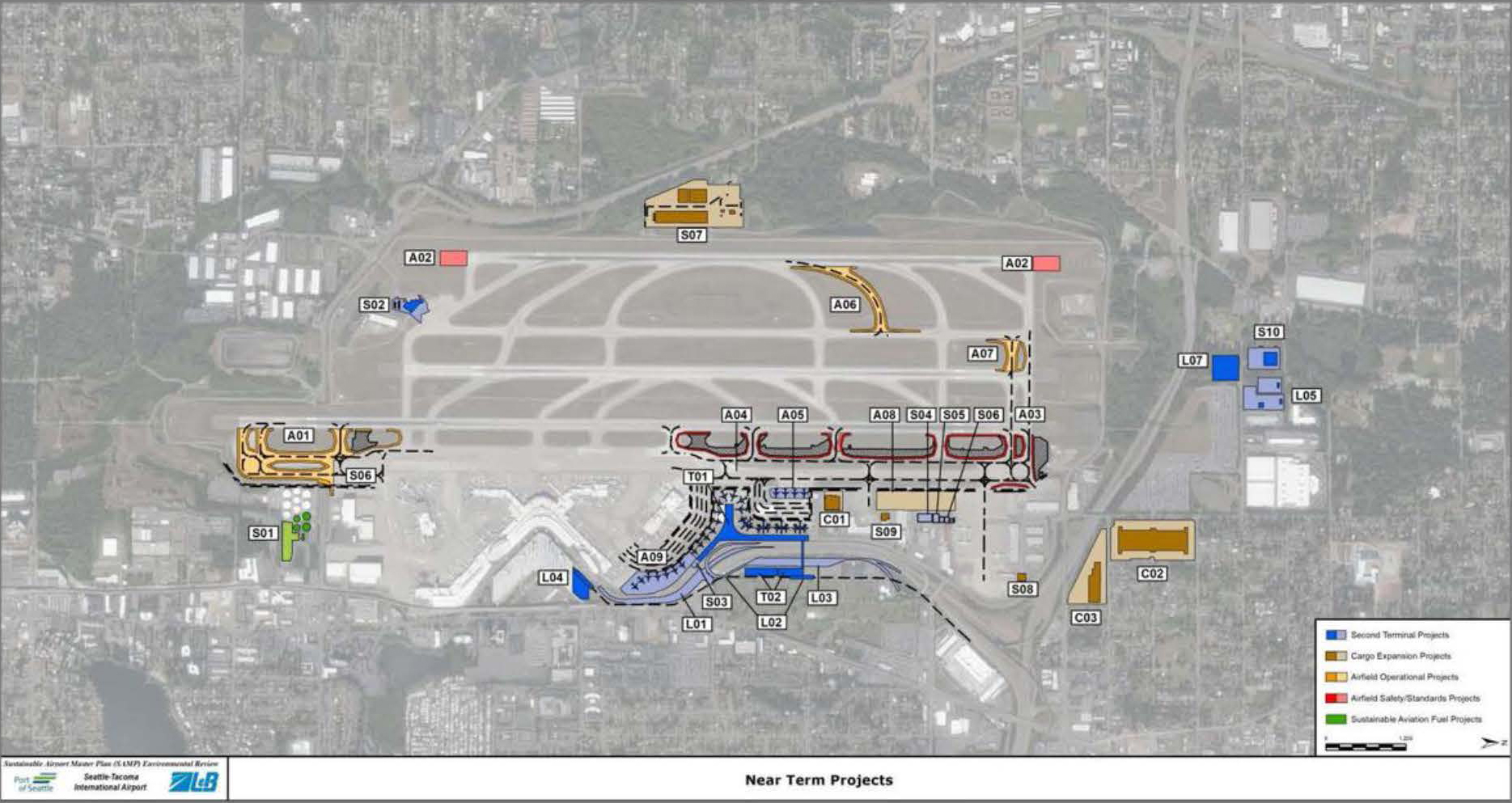
The SAMP Near-Term Projects Draft EA released in October 2024, is a required step under the National Environmental Policy Act (NEPA). It evaluates potential environmental impacts of the 31 proposed projects, including terminal development, airfield improvements, and increased capacity. But it considers them as a single unit and with far less rigor than environmental reviews from previous expansions.
Next Steps
Once the Final EA is released, a sixty day public review period will follow. This is the ‘window’ for any legal challenge of those findings. If there is no appeal, the FAA will then either issue a Finding of No Significant Impact (FONSI) or require a more comprehensive Environmental Impact Statement (EIS).
But the Port remains confident that it will be able to proceed to publish a draft State (SEPA) EIS during the first quarter of 2026. They promise to provide a 30-day notice before doing so.
Meanwhile
The START Steering Committee also met recently to discuss the full Committee’s priorities for 2025-2026. The Steering Committee consists only of city administrators, meets entirely in private, and sets 100% of the agenda for StART. Based on the Port’s 2025-2026 Shared Policy Agenda there is reason to be extremely concerned. At the federal level, every piece of legislation they are supporting would make our lives worse. Because many of these recommendations sound good, we’re not even sure they recognize this.
The three main areas the full group had directed them to focus on are: Reducing Noise, Environmental Justice, Airport Growth and Capacity. Worthy goals, but too vague to be actionable.
We’ve received multiple reports that city administrators are also discussing the Four City ILA, including a new team of consultants and lawyers. Again, this is largely the same people, who also meet in private. We have no idea who they are considering, but hiring any law firm on an ad hoc basis is likely bad for us.
There is also the Part 150 Technical Review Committee, which is nearing a draft of the new noise boundary map.
Concerns
Our ongoing concern is the lack of continuity, transparency and frankly, sincerity. Since Part 150 studies are voluntary, every airport’s program is different. Some offer strong community advocacy to help insure that the noise boundaries and land use maps provide the most benefit to surrounding communities. Sadly, many others are simply ‘checking a box’ on community engagement to allow the airport operator to move ahead with expansion plans. With the current Sea-Tac Part 150 study, there is no way to know.
- The longest tenured city manager in the group has only two years on the job. The land use planners in several cities, essential to the Part 150 process, are also new. None have any experience with airports or the FAA. There is literally no point of reference going back even to the beginning of StART in 2018!
- The StART Steering Committee, Part 150 Technical Review Committee, and Four City ILA all meet in private. The rules of engagement for each are unknown, but StART’s operating procedures explicitly call for unanimity.
- The various cities have extremely varied interests and extremely different impact profiles. For example, Normandy Park has already said many times that they are perfectly happy with the status quo.
If the ceiling of the possible is set by the least concerned city, all three processes could end up being what they have been for the past 15 years — simply checking the boxes rather than developing strategies that properly defend community interests. At the end of the day, the problem of noise has often been the lack of will from surrounding cities, as much as, if not more than the Port of Seattle.
Call to action
Contact your Electeds. Tell them that closed processes, run exclusively by city administrators with no airport experience is the same playbook we’ve run for decades. Tell them you want an open process, as has been the case at many major airports. Tell them you want the community to play an active role in the establishment of new noise boundaries now; before any maps are established.