Greg Nance
Guest column
Updated March 9, 2026, 4:52 p.m. PT
A curious thing happened in Olympia last week.
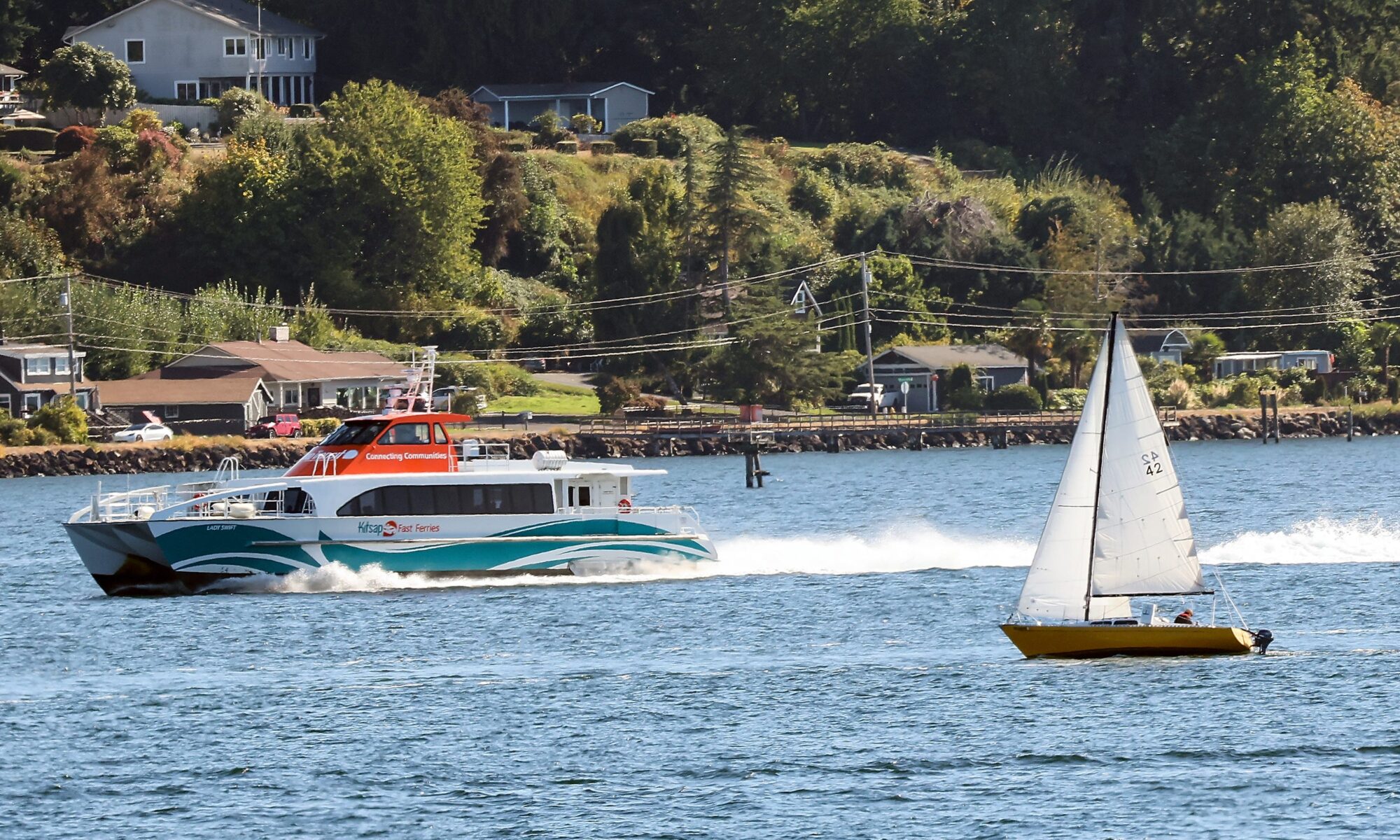
The Mosquito Fleet Act, a bill I sponsored that would enable more passenger ferry service in Puget Sound, passed the House of Representatives 84 to 11. Then 41 people had registered to testify in support for the Senate, including local elected officials, labor leaders, shipbuilders, small business owners, mobility advocates, and commuters — against only one person opposed. The public can sign in “pro” or “con” on any bill: the count was 463 in favor against only six opposed, for a 98.7% favorable sign-in rate.
In other words, the bill was very popular with the public.
But then a “striking amendment” was added to the bill by Sen. Marko Liias of Edmonds, chair of the Senate Transportation Committee, where the striker, which is a mechanism that rewrites a bill’s text, bore no resemblance to the original proposed law. The striking amendment was nonsensical — it would ban funding sources while mandating tens of millions of costs, adding years of delays, and otherwise making ferry service impossible.
But that wasn’t the curious thing.
The curious thing was a number of elected officials, in both the Legislature and counties and cities, who told me they were strongly against the Liias striker but were afraid to speak up for fear of retaliation.
I also heard from leaders at government agencies who said they were afraid of weighing in. That’s because they count on legislative funding and believe that Liias would “freeze them out” if unhappy with public remarks, by redirecting or cutting investments, or other retaliation.
I heard things like, “I’d like to do a floor amendment, but I can’t. Especially in a tough budget year, I can’t be seen as criticizing Senator Liias.”
Both Democrats and Republicans, in the House and Senate, expressed this sentiment to me.

Neighbors and friends, I ask you — how can we have a well-functioning government if elected officials are afraid to speak their mind on policy for fear of retaliation? The First Amendment of the U.S. Constitution is most famous for guaranteeing free speech and our free press, but it also explicitly guarantees the right “to petition the Government for a redress of grievances” without fear of punishment!
Every single district in this state has transportation needs. The idea that any legislator would worry that their district’s roads, bridges, or repairs might come in under-funded if you offend a powerful person shocks my conscience. And I heard the sentiment widely.
To be clear for those who don’t know Olympia, this isn’t normal. I know and have worked with a number of different chairpersons who control the agenda or the budget, and most of them are exceedingly thoughtful and reasonable, invite constructive criticism, and would never look to harm the residents of another legislator’s district merely for disagreeing with them.
What, then, are Sen. Liias’s motives? Why operate like this?
Like many members of the public, I was confused by Sen. Liias’s striking amendment. I asked dozens of people who know him: Why would Marko Liias be so hell-bent on sabotaging a wildly popular bipartisan law that helps fix an urgent problem that the general public wants and needs solved?
This is what I was told.
I was told by numerous people that Marko Liias is “highly transactional.”
I was told that “If you don’t scratch Liias’s back, he won’t let you get anything past Transportation.”
While compromise and coalitions are a normal part of politics, legislators almost never hold up popular bipartisan legislation, when it’s uncontroversial and solving an urgent problem, until they get something personally.
Additionally, I was told Liias both dislikes and gets “competitive” with other legislators when they try to make advances in an area he considers his domain or fiefdom.
Finally, I was told he was surprised at the amount of backlash he received for choosing an out-of-state Florida shipyard to kick off the $4 billion in new ferry construction supposedly because it would be cheaper — but now that project is projected to be delayed multiple years and with billions in cost overruns. If a more nimble passenger ferry service started operating cheaper and quicker, due to legislation introduced by a junior legislator, it puts more public scrutiny on his past decisions in this area.
Frankly, if this is true — and I believe this is all true — I think these are all very despicable reasons to intentionally sabotage good bipartisan legislation.
People keep asking me why the ferry system is broken. My answer has consistently been that it’s a genuinely hard problem with lots of moving pieces. But I now have an additional answer: It certainly does not help that our elected officials are fearful of retaliation by the chairman of Transportation if they speak up on what better policy would look like.
Rep. Greg Nance represents the 23rd District, which includes Bainbridge Island, North Kitsap, parts of Central Kitsap and Bremerton, in the Washington State House of Representatives.