A walk through Jefferson Park in the Beacon Hill neighborhood has knockout views of the downtown Seattle skyline. (Ken Lambert / The Seattle Times)
Special to The Seattle Times
Home is where … This story is part of a limited weekly series about homebuying in key places within the Seattle metro area. Read previous stories about Issaquah, Ballard, Lynnwood, Shoreline, West Seattle and North Bend. Coming next: Tacoma.
When Grant Bronsdon and his wife were house-hunting nearly four years ago, they wanted to be close to Seattle’s downtown, but not in it.
And so, they chose Beacon Hill, an older Seattle neighborhood perched on a bluff above Interstate 5, with a mix of old homes and urban living.
“The neighborhood itself has been a great place to live,” he said.
Beacon Hill’s quiet residential streets and proximity to downtown Seattle have made it a popular choice in recent years, leading to higher home prices in a neighborhood that was once affordable for working-class homeowners and immigrants. Even in an overall slow market, the demand for its older homes remains steady.
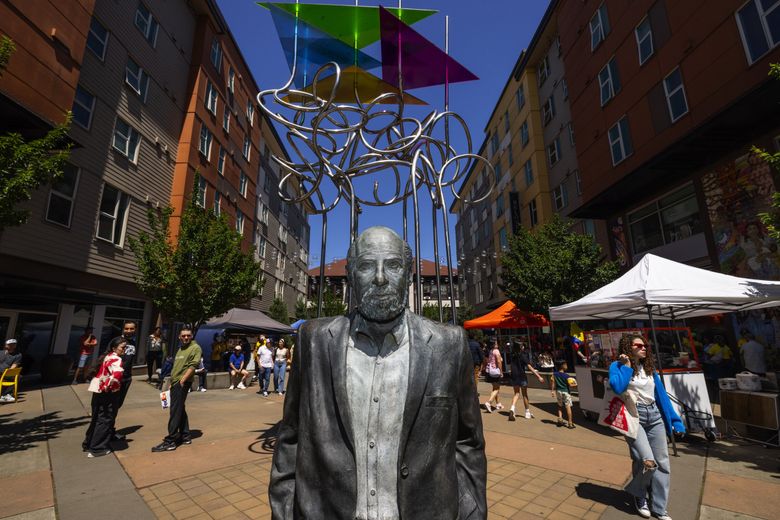
A statue of civil rights advocate Roberto Maestas at Plaza Roberto Maestas at El Centro de la Raza is seen late last month in Seattle’s Beacon Hill neighborhood. (Ken Lambert / The Seattle Times)
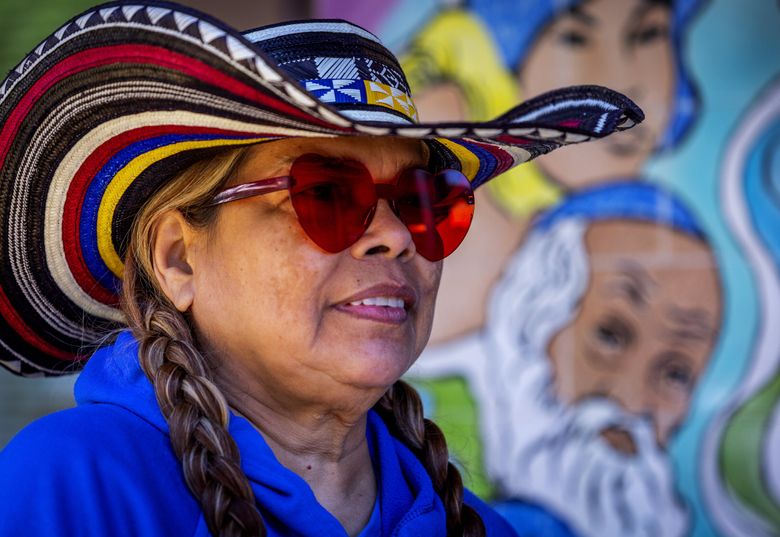
Angelina Castro wears her colorful sombrero vueltiao, a traditional hat from Castro’s native Colombia, while she waits in line to vote in the Colombian election at Plaza Maestas at El Centro de la… (Ken Lambert / The Seattle Times)More

Trevor Milligan works on his golf swing at the Bill Wright Golf Complex at Jefferson Park, in Seattle’s Beacon Hill neighborhood. (Ken Lambert / The Seattle Times)
But unlike other pockets of Seattle, where desirable properties are still getting bid up, multiple offers are rare on Beacon Hill.
“You’re not seeing a bunch of buyers jumping in and driving up the cost,” said Paul Lau, a broker for John L. Scott Real Estate who specializes in Beacon Hill and other South Seattle neighborhoods.
Related
Since 2025, the median sales price for single-family homes has ranged from $695,000 to $866,000, according to data from the Northwest Multiple Listing Service. In May, it was $800,000.
Beacon Hill homebuying market
The neighborhood is more affordable and less competitive than some others in the Seattle area.
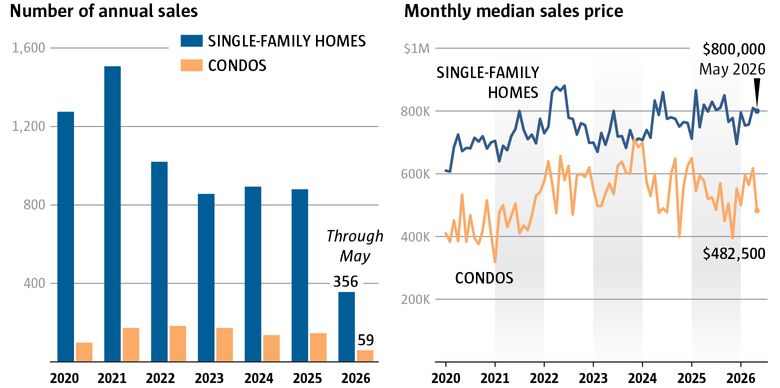
Source: Northwest Multiple Listing Service (Reporting by Victor Whitman, graphic by Chris Kaeser / The Seattle Times)
Bronsdon, a Yale graduate, is part of a wave of professionals who have paid high prices to move into Beacon Hill. Homes in his complex cost more than $800,000.
He is a sensitive to the fact that the neighborhood is changing, and worries that with high prices, people will be locked out.
As with many neighborhoods in Seattle, due to housing costs and jobs, he said “there’s some gentrification happening in these neighborhoods.”
How to buy a home
Thinking about buying a house? Wondering if you’ll ever have enough saved up for a down payment? Here’s your guide to buying a house in the Seattle area’s red-hot 2021 real estate market.
Many would-be buyers and sellers are also staying put, scared off by the shaky economy and high interest rates. Entry-level properties, including single-family homes in Beacon Hill’s more affordable areas south of South Graham Street, are lingering on the market, according to agents.
Sign up for Evening Brief
Delivered weeknights, this email newsletter gives you the day’s top stories and need-to-know news, as well as intriguing topics to spark conversation as you wind down from your day.
“The market is not really that great,” said Mariela Fletcher, a Seattle-based RE/MAX broker. “People are just staying where they are right now.”
Like much of the Puget Sound, sales on Beacon Hill surged in 2020 through early 2022 and then fell off sharply. Since 2023, home sales have been stable. Through May this year, there were 356 single-family sales, about average activity for these months since 2023, according to NWMLS.
Bronsdon, who recruits leadership teams for tech companies, is a relative newcomer to Beacon Hill. He and his wife were first-time homebuyers, and bought a town home near Pacific Medical Centers at Beacon Hill’s northern tip in spring 2022. They moved from a rental in Ballard, primarily to be closer to the freeways.
His wife, an elementary school teacher on the Eastside, found the commute from Ballard too grueling, but now she has a quick drive to Interstate 90. Aside from its central location, the couple like Beacon Hill’s ethnic diversity, and having good restaurants close by.
Bronsdon, who is in his early 30s, grew up in north Capitol Hill and graduated from Garfield High School.
“Beacon Hill very much reminds me of my time growing up,” he said
‘Perfectly safe’
Beacon Hill borders the Chinatown International District to the north and then runs south along a narrow strip for around 6 miles. The northern section above South Spokane Street is denser, with apartments, condos and the main commercial area that includes several restaurants and service businesses. There are also smaller single-family houses on tighter lots.
The central area between Spokane and South Graham streets has traditional homes on bigger lots, and is dominated by Jefferson Park, Seattle’s sixth-largest park, and its golf course. Homes closer to downtown tend to be pricier.
The neighborhood hasn’t been immune to big-city problems. Parts of Beacon Hill have a visible homeless population, with recent reports of encampments and drug use in the parks on the northern tip around Jose P. Rizal Bridge.
A few blocks north in the Little Saigon neighborhood, the area around 12th Avenue South and South Jackson Street has also seen widespread drug use and crime.
But the residential areas of Beacon Hill tend to be quiet, according to long-term residents.
Tracey Doss, who has owned a home near Jefferson Park on 13th Avenue since 2015, frequently takes a long walk at night.
“I feel perfectly safe,” she said.
Doss, an administrator for the Puget Sound Emergency Radio Network, and her husband, Greg, both in their 50s, live on a tree-lined street with older homes and flowering springtime gardens. Cars are parked on the street and older homes are built on a ledge above the street and sidewalk.
“It is very neighborhood-y,” she said. “You know, people have yards, and it’s just kind of a nice, medium-range neighborhood.”
Rachel Block and her husband, both attorneys, bought a single-family home on 22nd Avenue South in 2016 in north Beacon Hill, part of a strip of homes built in the early 2000s. She said she feels safe enough to walk alone to most areas at night.
But she has one complaint: Her block doesn’t have sidewalks. Most streets in north Beacon Hill have sidewalks, though they can be narrow, cracked and uneven.
Block said she often ventures out with her two children, ages 4 and 8, in tow, and cars whiz by when they’re on the street.
“It’s tough to have little kids on a block with no sidewalks, let’s put it that way,” she said.
Travis Doty, who works in international relations downtown, bought a house in 2010 on 13th Avenue in north Beacon Hill with a view of the Space Needle from his back porch. He and his wife have raised two boys, now ages 18 and 12.
He said his commute into downtown is straightforward, with the bus or light rail as options. He can drive to work within about 15 minutes regardless of traffic.
“The train takes me door to door,” he said. “If the train comes right away, I could probably be at my office in 20 minutes.”
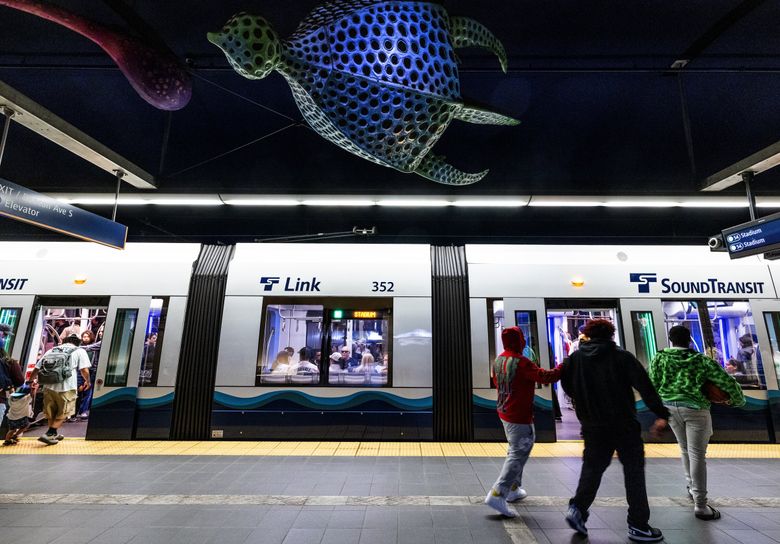
Dan Corson’s hanging sculptures called “Space Forms” float above, in Beacon Hill’s underground light rail station. (Ken Lambert / The Seattle Times)
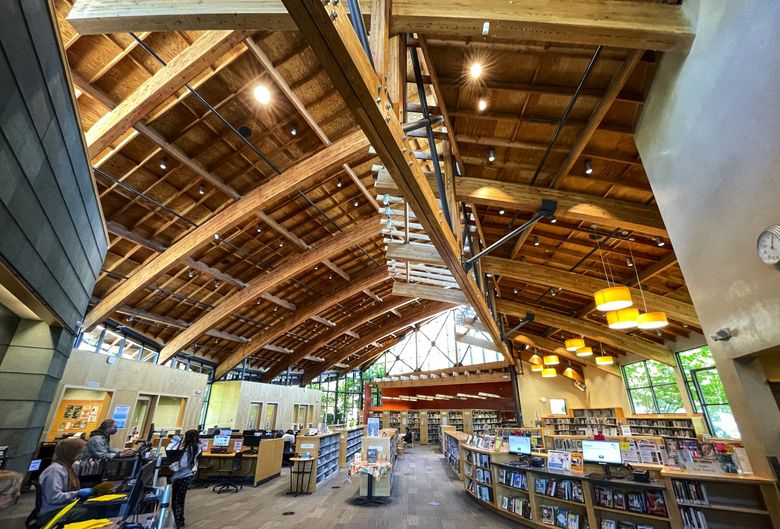
1 of 4 | Located on the main drag, Seattle Library’s Beacon Hill branch, with its beautiful woodwork, acts almost as an unofficial community center for the neighborhood. (Ken Lambert / The Seattle Times)
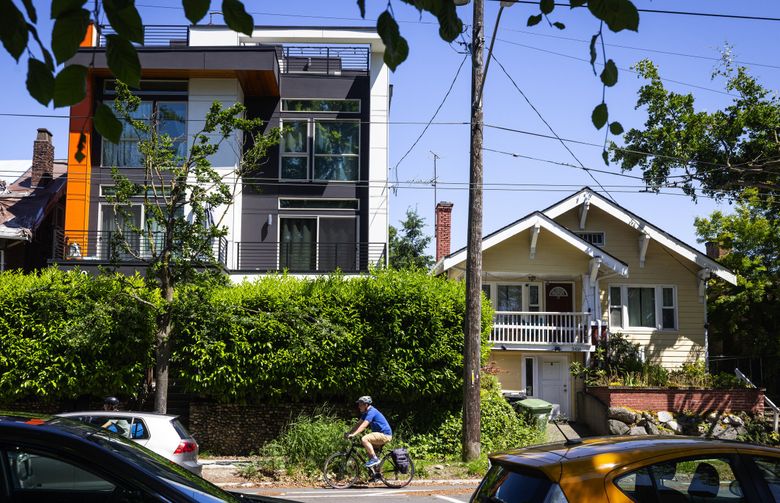
A newer and older home, side-by-side, are seen in May in Seattle’s Beacon Hill neighborhood. New protected bike lanes are on either side of the neighborhood’s main drag. (Ken Lambert / The Seattle Times)
Their three-bedroom, 1,500-square-foot home was built in 1941 on a 5,400-square-foot lot, which is a typical home in this area.
“A lot of the houses were the Boeing boxes that were built during the war to house the factory workers,” he said.
Doty’s wife, who is Japanese American, grew up on Beacon Hill, and they like that their kids go to school with kids from diverse backgrounds.
A lot of families on his block have been there for years.
“That is one of the great things about where we live,” he said. “We know the people, they have been here a long time, and our kids have grown up together.”
But like many of his neighbors, their home is not likely to hit the market anytime soon as they have no thought of moving.
“It feels like home for us,” he said.
Victor Whitman: is a Seattle-area freelance business reporter and editor and a regular contributor to The Seattle Times.