By
Fred Felleman and Steve Metruck
Special to The Seattle Times
Change can be good in uncertain times — if we stay true to our core values. At Seattle’s core is our working waterfront. And the mayor and City Council have key roles to play in its future. Even while we continue to challenge the council’s attempt to rezone industrial lands near our marine terminals, we must find opportunities to collaborate on the waterfront’s ongoing evolution together.
Seattle Times reporter Dan Beekman had it right when he wrote, “to understand Seattle’s past and present — what makes this city special and why — you have to understand the story of the downtown waterfront.”
The place we now call Seattle has been connected to the sea since time immemorial. Indigenous tribes were the first to traverse the region’s deep, protected inlets and natural harbors formed by glaciers thousands of years ago. Today, the world’s largest freighters sail through these sculpted marine passages, conducting trade throughout the Pacific Rim.
Since its founding in 1911, the Port of Seattle has been central to the waterfront’s continuing story. Decades before the Viaduct was demolished, we set the stage for today’s waterfront redevelopment. In 1996, we moved our offices from Pier 66 to Pier 69 and built the Bell Harbor International Conference Center, a cruise terminal, public marina and restaurants on the site of our former headquarters and surrounding properties.
More recently, the Port contributed $280 million to build the tunnel, $5 million to support the Seattle Aquarium’s new Ocean Pavilion building and $5 million to Friends of the Waterfront to help fund projects like the new 20-acre park and aquatic-themed playground at Pier 58. We also helped develop new bike paths and 24 shoreline parks, providing more than 60 acres of waterfront access. As a result, “Seattle’s front porch” is better and more inviting than ever for residents and visitors alike.
We have also recast our relationship with tribal governments to ensure their treaty-protected fishing rights are respected. The agreements we have signed with the Muckleshoot and Suquamish Indian Tribes create new avenues for tribal members to find good-paying jobs, and our joint collaborations help to enhance the environment.
The Port continues to invest significantly in the cleanup and restoration of the Duwamish River, and we are cutting greenhouse gas emissions from trucks, as well as cargo and cruise ships with alternative fuels and clean, electric shore power.
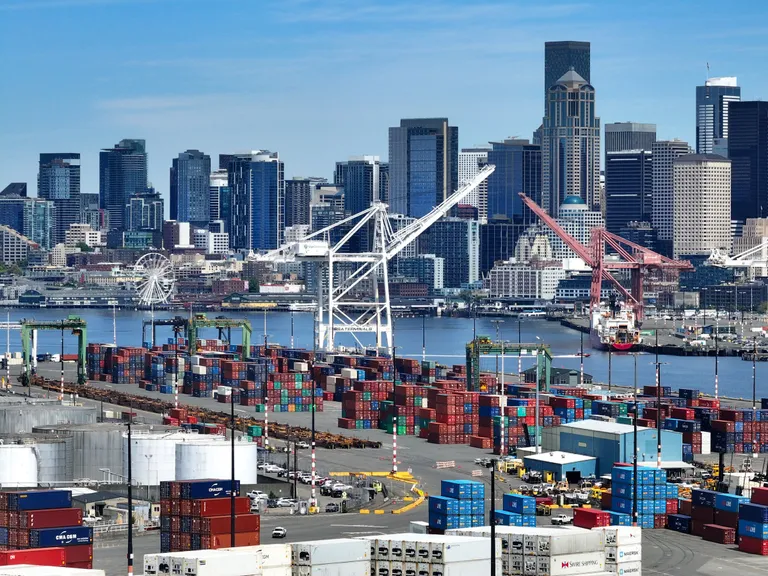
However, the waterfront has always been more than just a string of parks. The cranes and ships seen from shore are a reminder that Seattle is a port city with a working waterfront. The Port’s primary mission is to create jobs and promote economic opportunities by ensuring the swift, reliable movement of people and goods. We do this while minimizing impacts on neighboring communities and the environment.
Since the Klondike Gold Rush, we have supplied essential provisions to Alaska. Now, we’re a global gateway. A new economic impact report shows the Port of Seattle and Northwest Seaport Alliance’s combined maritime cargo operations generate over $14 billion in economic activity and support more than 52,000 jobs. The preservation of industrial lands is foundational to our ability to remain an economic engine for the region.
Cooperation with the city is more important than ever given the uncertainties created by the federal government’s shifting tariff policies — threatening the future of trade and travel through our gateway. The policies raise costs for construction and consumer goods. As a result, Canadian ports are handling more cargo while Canadian visitation is down, impacting jobs in trade and tourism.
Keeping our waterfront working will take public support as well as cooperation across all levels of government. We see an immediate opportunity for the mayor and City Council to partner with the Port and others to ensure the preservation of maritime industrial lands as they begin to update the Comprehensive Plan this year.
We also ask city leaders to join us in helping to transform the Duwamish Manufacturing Industrial Center in Sodo into a hub for clean energy, innovation and advanced manufacturing. The ability to issue permits and utilities will be essential to fostering the jobs of the future.
Together we can strike a balance that enables commerce and community to coexist on our waterfront to ensure Seattle remains a vibrant port city for future generations.
Fred Felleman: is a Seattle Port Commissioner.
Steve Metruck: is executive director of the Port of Seattle.