Using ‘bird deterrents’ to think about airport community compensation
On November 21, 2024 the Des Moines City Council voted to spend $124,191 of Des Moines taxpayer money for Bird-X (brand) ‘bird balls’.
This was not a discretionary purchase. According to FAA Advisory Circular 150-5200-33C a property owner of a retention pond near an airport is responsible for keeping birds away — at their own expense. Although the risk of bird strike for civil aviation is low, the FAA takes no chances with public safety. And keeping birds away ain’t cheap, cheap, cheap. Video: Bird Balls Block Birds from Water-Based Areas
the City of Des Moines could gain $124,191 simply by being reimbursed for a bill it should never have had to pay in the first place.
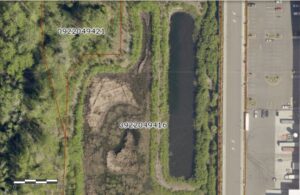 The irony is that the retention pond is an isolated bit of land inside the Des Moines Creek Business Park, which is owned by the Port of Seattle, which is tax-exempt, and which they lease to various businesses for annual revenues nearing $1,850,000.
This is one of the smaller ways various agreements between airport communities have been structured so that the Port of Seattle gets the gold mine, and cities like Des Moines get the shaft.
Money Ball
We understand this may seem slightly comical. Or too small, or unrelated to the aviation impacts you care about. But even if there was the political will, cities like Des Moines are in no position to take issues of ‘airport justice’ to the Supreme Court, or any court for that matter. It will take a series of small, consistent wins to get where we want to go; not a grand slam. Or at the very least, we need to start recognizing all the places we are constantly losing and stop accepting them as “just the way it is.”
Each city needs to methodically consider all the ways it interacts with the airport and determine the true costs and benefits. Almost none of that work requires expensive studies. It simply requires several hours of effort by each department, as would be the case in any financial analysis a city might perform. Staff just need to consider city services through a different lens – one they aren’t accustomed to using. That is how cities re-frame the entire discussion of how we relate to the airport.
In this case, the City of Des Moines could gain $124,191 simply by being reimbursed for a bill it should never have had to pay in the first place. Because in addition to owning the Business Park, the Port also owns the airport the City is being forced to pay to protect from birds.
For some context, $124,191 is the salary of a police officer. It’s park equipment. It’s a program for children. To a city like Des Moines, it’s real money. But it is less than two one hundredths of one percent of the Port of Seattle’s 2025 Aviation Budget.
The problem is this: when presented with bills like this, or any questions of fairness, cities like Des Moines don’t even think twice. As with so many negotiations we should be having, over Fly Quiet, Port Packages, and dozens of other issues, it’s time to start.