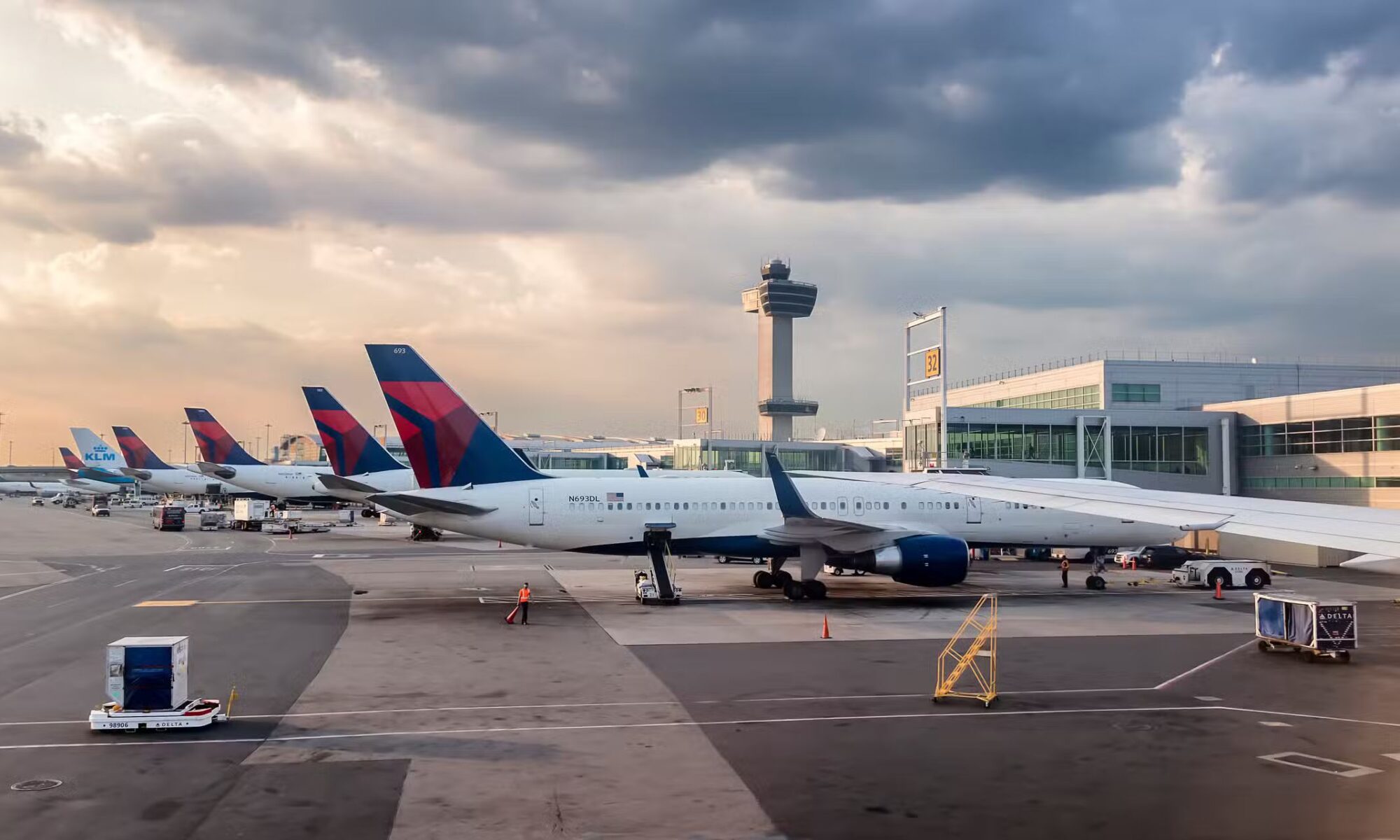

On April 30, 2025, multiple major US-based airlines asked the Federal Aviation Administration (FAA) to extend cuts to minimum flight requirements at highly congested airports in the New York City area. The organization of airline industry representatives has requested that these cuts be made through October 2027, with the group citing severe air traffic controller staffing issues, according to reports from Reuters. In recent years, the demand for flights has far outpaced the growth of air traffic controller numbers, meaning that there has emerged a shortage of control tower staffers.
.jpg)
LaGuardia Airport
IATA/ICAO Code LGA/KLGA
Country United States
CEO Stewart Steeves
Terminals Terminal A | Terminal B | Terminal C | Terminal D
The Federal Aviation Administration previously issued a series of waivers to address reported staffing issues at John F. Kennedy International Airport (JFK), LaGuardia Airport (LGA) and Newark Airport (EWR), in addition to Reagan National Airport (DCA) in Washington, D.C., where a tragic midair collision occurred earlier this year. This plea from airlines demonstrates yet another example of just how serious the shortage of air traffic controllers in the United States has become.
An Issue Which Many Competing Airlines Agree On
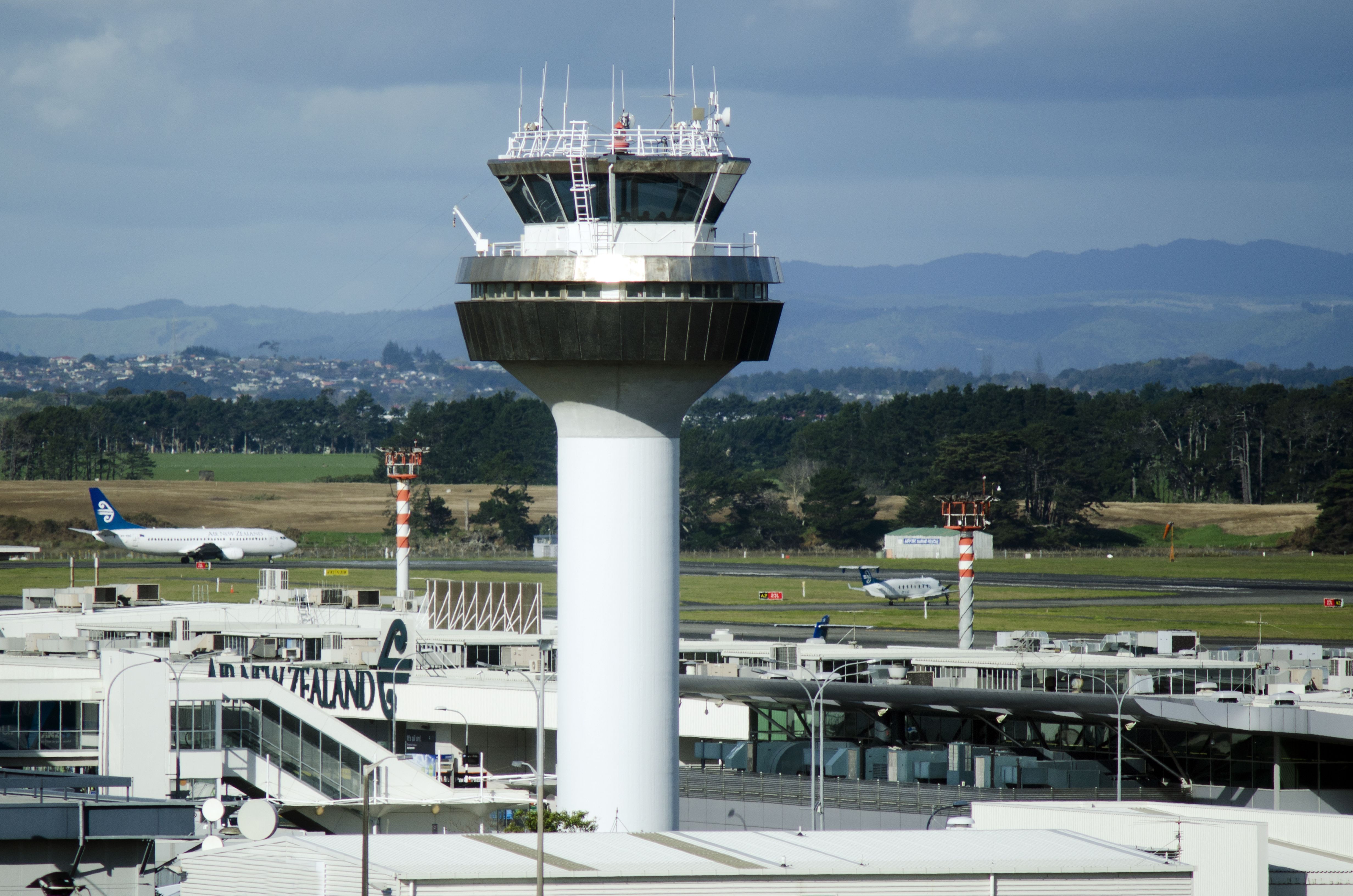 Photo: ChameleonsEye | Shutterstock
Carriers involved in this request include American Airlines, United Airlines, Delta Air Lines, and Southwest Airlines, all of which have major operational footprints in the greater New York Area.
The Federal Aviation Administration did not immediately comment on the matter on Wednesday, and the waiver in question was last extended in 2024 through this upcoming October. With these minimum flight requirements in place, carriers will lose their takeoff and landing slots at highly congested airports if they do not use them at least 80% of the time. This latest FAA waiver allows carriers to fly fewer services while still retaining their landing slots.
The FAA last year was forced to relocate control of air traffic in the New York Area to controllers in Philadelphia, as a result of widespread staffing issues. The airspace above New York City is among the country’s most congested.
In a statement to the media, the airline trade group had the following words to share regarding the matter:
“We believe inadequate staffing will remain an immediate critical impediment to the efficient management of the NYC airspace.”
Why Is The Extension Of These Rules Necessary?
On Monday, Newark Airport reported multiple flight disruptions as a result of equipment issues and staffing shortages. These are exactly the kinds of operational disruptions that airlines are looking to avoid with the extension of these rules.
The airlines group noted that around 75% of all delays in the National Airspace System occur due to either direct or residual delays in the New York region. According to the group, delays and cancellations in the New York Area have a tendency to ripple across the entire country.
The New York City airport system is so extensively integrated into the US aviation industry. This means that any small disruption in New York will ultimately result in large-scale delays all across the country.
Related
Here’s What Made Air Traffic Control Applications Skyrocket
Money isn’t the only reason why more people applied to become air traffic controllers. 5
What Impact Could This Have On Airlines And Passengers?
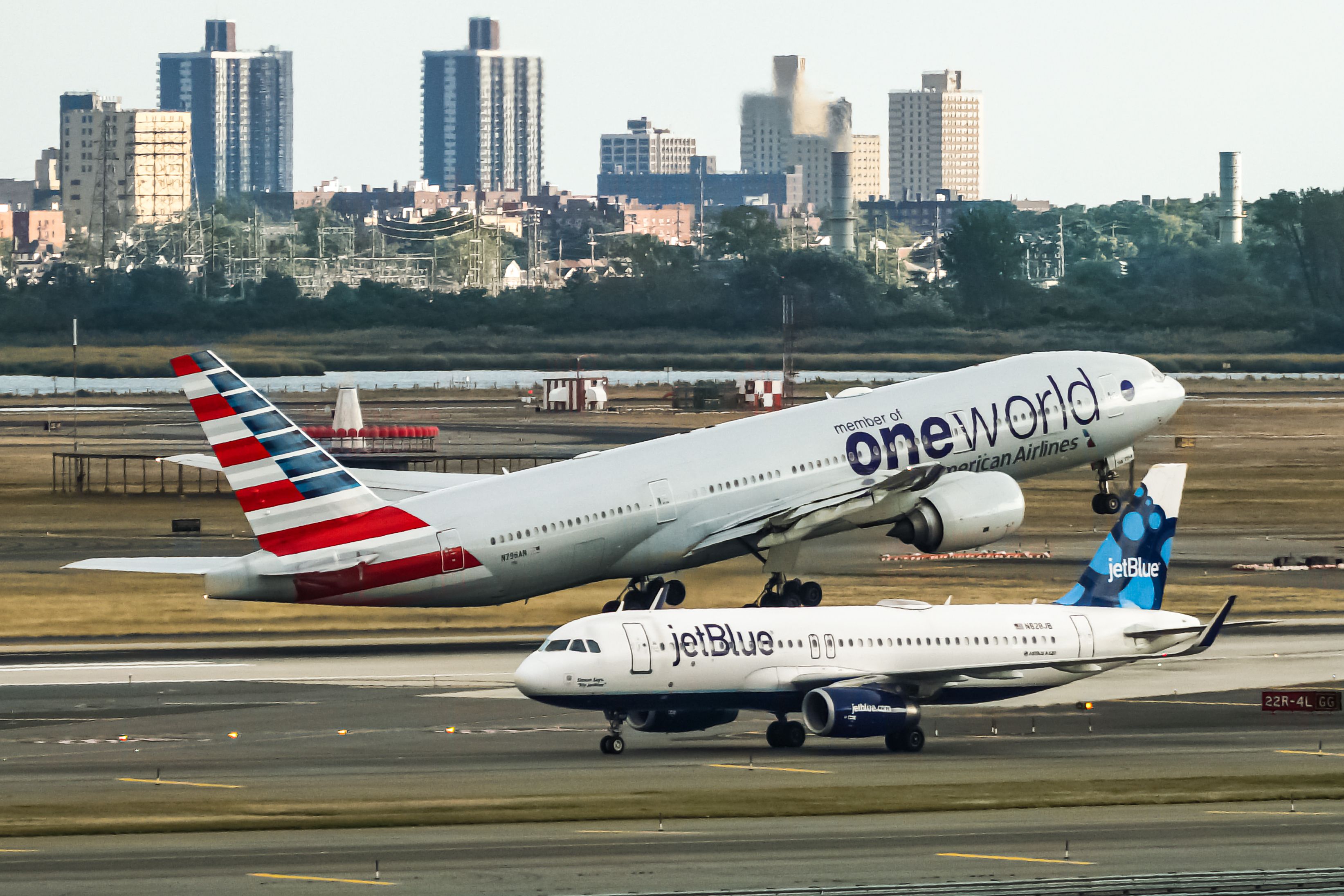 Photo: NYC Russ | Shutterstock
According to the Federal Aviation Administration, more than 3,500 air traffic controllers are currently needed across the United States in order for control towers to reach appropriate staffing levels. As a result, airlines are looking to eliminate slots at highly congested airports that are becoming unused, meaning that more space would be available for the limited flights already operated to and from New York facilities.
This persistent shortage of air traffic controllers has caused a number of issues. For starters, flights are routinely delayed, and air traffic controllers have been forced to take on mandatory overtime shifts and work grueling six-day weeks.
Congress has an extensive plan to improve America’s air traffic control infrastructure, with more than $12 billion in federal spending currently under consideration. In the wake of the tragedy of American Airlines Flight 5342, more questions than ever have been raised about concerningly low air traffic control staffing levels.
Discussion
Many airports throughout the world are subject to flight capacity limits. However, only three major US airports (two in New York City and Reagan) are legally allowed to have such limits which are known as Slot Control. Every other US airport cannot provide curfews or otherwise limit arrivals and departures. We monitor these airports carefully as they received Slot Control due to the same airspace and community constraints as Sea-Tac.If trade groups are now arguing for even lower capacities due to ATC shortages in order to maintain safety, what does that mean for any expansion at Sea-Tac?