The Airport Communities Podcast
In our last episode (The Airport Director’s Dad Joke), we talked about the truth that all airports are really ongoing construction projects. They are built, from the ground up, by the express will of congress, to grow.
This time, we focus on a stat most people miss: 1.6%. Although passengers have more than doubled, over the past 25 years, flights have only increased 1.6%. The airport obsesses over passengers because passengers are money. The talk far less about operations because that is the noise and pollution.
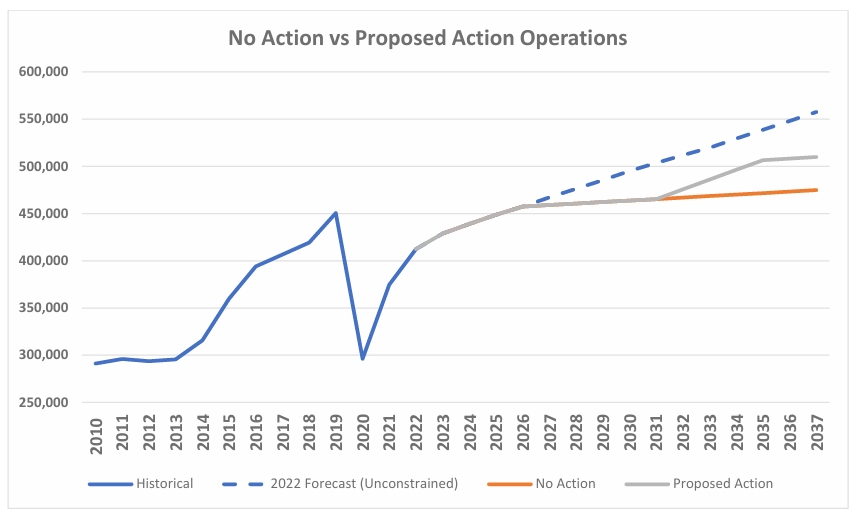
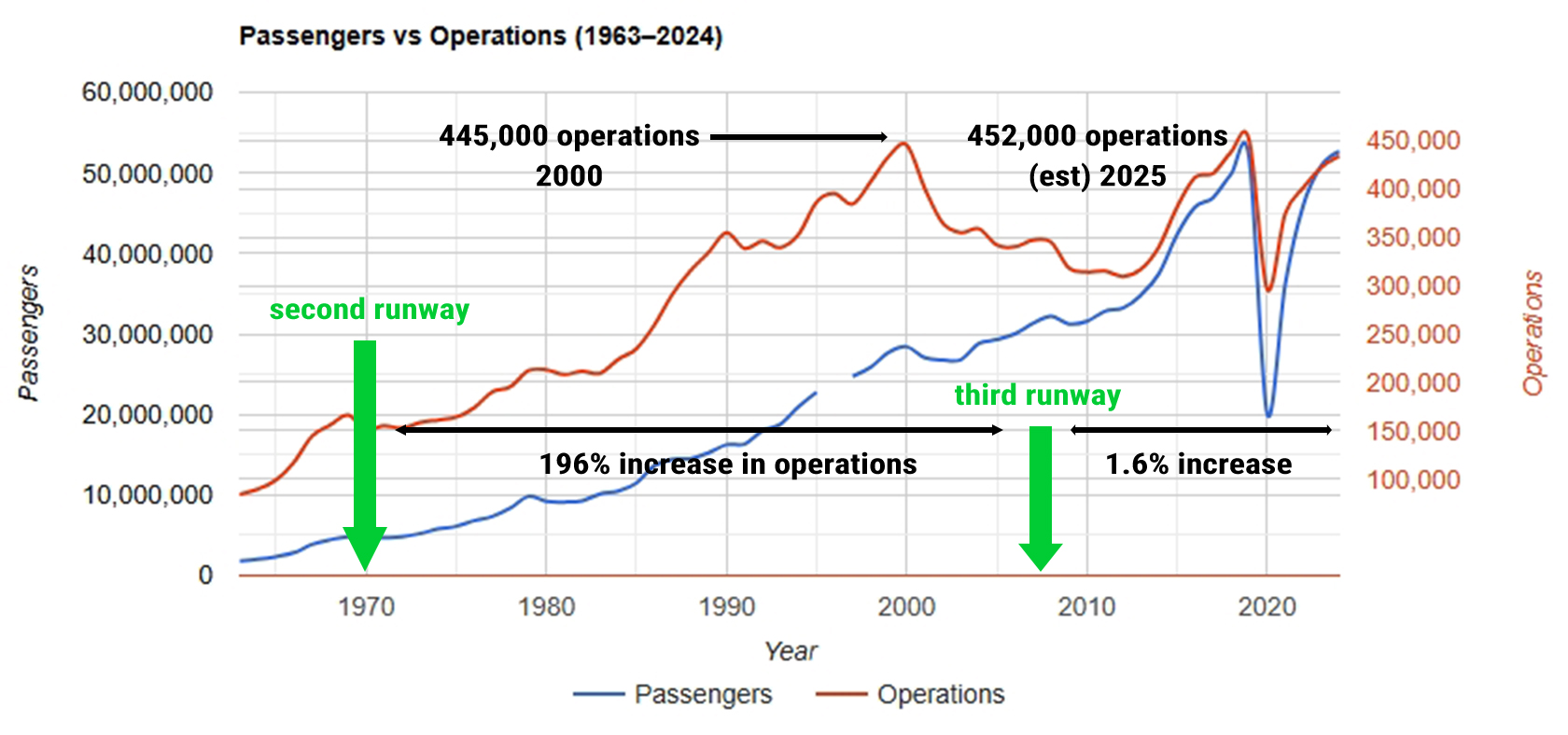 The SAMP, on the other hand, will increase the number of operations by 21%; ten times the increase of adding the Third Runway.
Perhaps the reason no one notices is that the Port’s charts tend to only go back to when the SAMP began–in 2012. Four years after the Third Runway opened
We argue that today there is ten times less public concern today than during the Third Runway era. And despite having a dozen years to prepare for the SAMP, local governments are just as indifferent. We are all boiled frogs.
That does not mean the issues do not merit concern or action. But it’s important to understand why this is in order to do something about it.
The Third Runway was a simple story: stop. Stopping construction of The Great Wall of Sea-Tac was a clear goal. OK, now what? What is the positive case to be made? What is the proposal to make life better?
Human beings are terrible at aligning data with our perceptions. Numbers are important; not because it matters whether the increase in operations is one thing or another. They are important because airports are required to have them. We aren’t. That immediately puts us at a disadvantage. They have a clear story to tell. We argue over 33% or 21% rather than noticing that they are all many times worse than now.
Part of it is that most people or electeds never cared and will never care. They believe the airport is an intrinsic good. Once and for all we should accept that reality. Instead, like the lovesick person who is desperate to change their partner, we continue to lead with our perceptions and our passions, which people who do not live here will never respond to as we would hope. And when they don’t, rather than adjust tactics, we blame them–and continue to lose.
Another factor is that few of us care about the future. We care about now. We trust the future to take care of itself.
What do people want if there is no immediate relief? No ‘making the airplanes go somewhere else’? We’ve had decades to think about it and almost no one has.
STNI has.
Our legislative agenda has always had two components: short term and long term. The short term is mainly geared to encourage people to keep at it. Think about tree planting: we may not live to see the fruit of the full-grown specimen, but it is deeply satisfying to feel like we’re doing something that will eventually get there.
But what we really need to focus on this time is that future. That means acknowledging that we are currently not as well-prepared as the airport. We think their numbers are rubbish. But they have numbers. And a plan. We should not try to hide from that fact by falling back on all the things everyone else has tried over the years we’re playing the Casino’s game.
We can get where we need to get to, but only by doing what they do: having plans and proposals that think 1-2-5-10-20 years down the road rather than ‘now’.
It’s the only rational approach if we truly care about anything beyond our own property. Because one way or another, this will never end.
1981 Professional Air Traffic Controllers Organization strike – Wikipedia
FAA SEA Airport Capacity Profile 2018
Annual Operations and Passengers
SAMP Draft EA Appendix A Forecast and Operational Assumptions
To learn how you can make a difference, read our STNI: 2026 Legislative Agenda and
- STNI.info/subscribe
- Video feed
- Find us on all the best podcasts, including Apple and Spotify, or subscribe via SSAppleSpotifyYoutube
Someplace in each newsletter you need to explain your acronyms. WTH is SAMP?