Project funding shows one way to fairer outcomes
Background
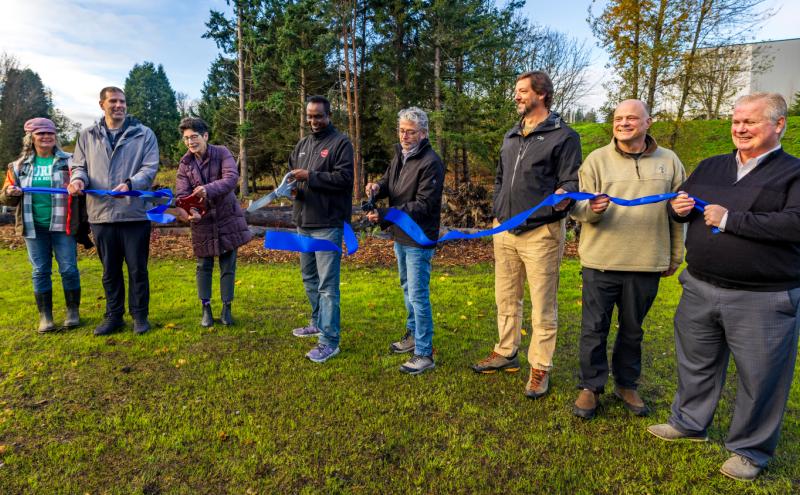
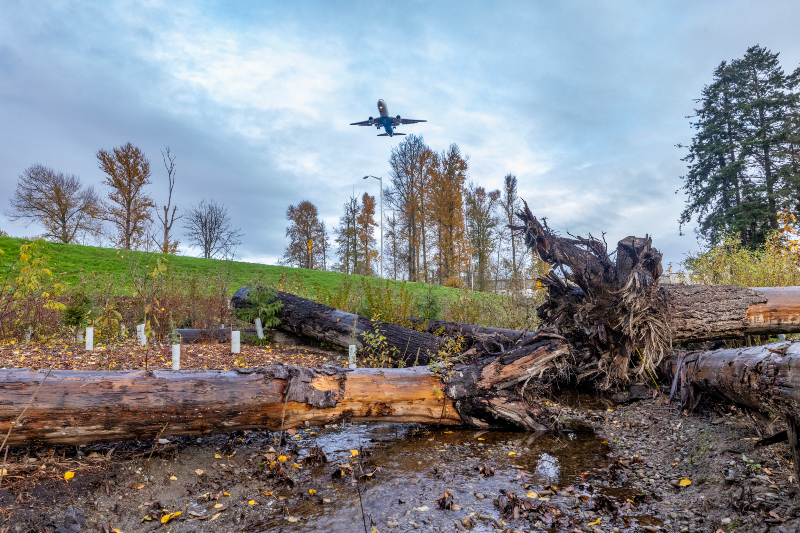
The Port of Seattle recently announced completion of the Miller Creek Restoration Project at the north end of Sea-Tac Airport. The Port frames the project as a multi-jurisdictional success. We agree. This is a legitimate environmental improvement: new fish-passable culverts, re-meandering of the channel, and restored floodplain. It also sits on land the Port acquired decades ago using FAA grants for the Third Runway — land that is now part of North End Redevelopment Area (NERA), a plan the FAA and the City of Burien have invested in heavily for many years.
But the way the project was funded was by no means equitable. (We have some quibbles with the math on this press release. Documents from the two cities read at least $4.1 million.)
| Contributor | Amount | Source Funding |
|---|---|---|
| City of Burien | 1050000 | Burien stormwater utility fees (SWM charges) |
| City of SeaTac | 985000 | SeaTac stormwater utility fees (Fund 403) |
| Port of Seattle | 800000 | Airport Development Fund (CIP C801156 / Aeronautical Reserve transfer) |
| WA Dept. of Ecology | 700000 | State stormwater / fish-passage grant |
| Total Project Cost | 4122500 |
Regardless, Burien and SeaTac ratepayers contributed the largest pieces.
Why the Port’s share matters
Apart from other considerations, the Port’s finances dwarf those of either city. Both Burien and SeaTac relied on rate payer fees (stormwater utility) to fund their respective shares. Burien in particular is currently facing significant financial stress. Any reduction in cost share frees up funds for other much needed city projects.
Community members rightfully complain that the airport generates enormous ongoing revenue streams, almost none of which is used to address the negative impacts of those operations. The Port (correctly) states that, under federal law, airport revenue cannot be used for non-airport uses except in very specific cases–such as Port Packages.
However, for this project, the Port’s contribution did come from airport revenue, specifically the Airport Development Fund (ADF).
Miller Creek will not look like airport operations to most people. However, the funding qualifies because the restoration sits on land purchased with FAA grants. Even though it was never used for airport operations, the original purchase was based on an early (abandoned) design for the Third Runway.
As such the Port could have justified paying any percentage of the project.
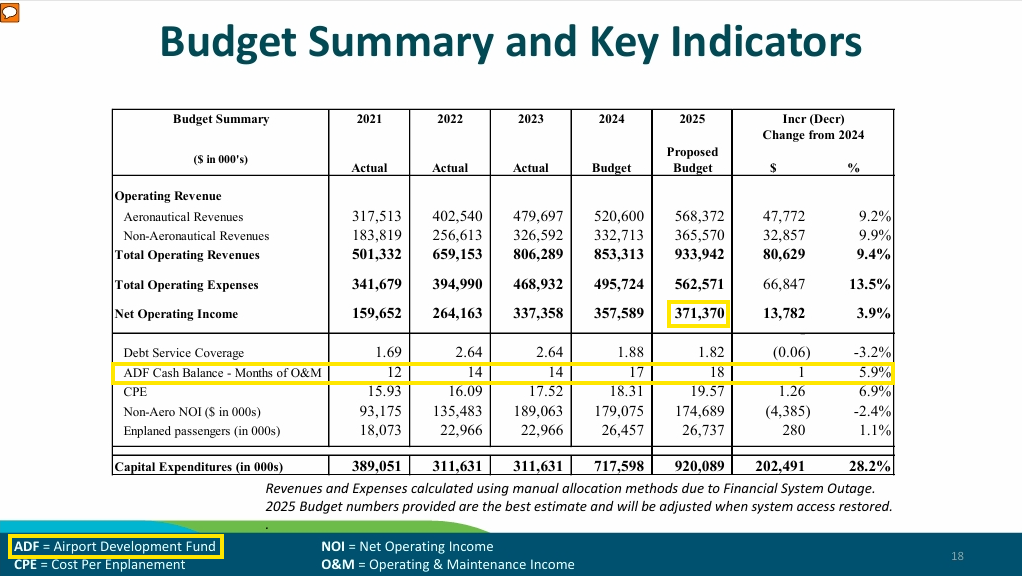 The ADF is a combination of airport-generated revenues, including federal grants such as the airport improvement projects and passenger facilities charges programs. It serves as a funding source for capital projects and also as an eighteen month cushion for operations. The balance varies but it is always measured in hundreds of millions of dollars. 2025 Aviation Budget Briefing.
It’s a negotiation
To be clear: we are not suggesting that the Port automatically pay 100% of this, or any project. However, we see no legal constraint. All airport revenue is audited by the FAA. There is a routine back and forth on every project funded with federal money. Often the FAA says ‘yes’. Sometimes ‘no’. Quite frequently they require adjustments. It’s an ongoing negotiation.
One other item from that press release. The Port mentions reuse of twenty trees cut down for the Flight Corridor Safety Program as evidence of good stewardship. Apart from the wisdom of removing any of those trees, note that the FCSP is also funded with the ADF–including any tree replacement and mitigation programs.
The blind spot
The Port excels at presenting small cooperative wins while steering cities away from the real negotiations that could materially improve quality of life. This is not hard when we all tend to focus all our attention on only one lever — “change the flight paths”. Doing so misses the far larger opportunities in funding, land use, mitigation, and capital participation.
Local electeds and staff on both sides understandably are excited by projects that look cooperative and environmentally friendly. The optics are excellent: a creek restored, and a photo of everyone in hard hats holding shovels. It is extremely awkward to say to any city, “you should have gotten more.”
The Port knows this.
But this is exactly the blind spot that keeps South King County cities from securing better outcomes from the Port of Seattle.
The current state of airport law is often more like the tax code than any hard and fast set of rules. If you are sophisticated enough, you can take advantage of this system and pay less. If you aren’t, you pay more. That is the reality.
As we said, the Port expects to negotiate with the FAA on every use of airport revenue. We should too.
Local governments have a duty to obtain every possible dollar for community mitigation. To do so requires much more fluency than we have demonstrated to date. Whether the Port ‘should’ do more on its own is like asking players at the Casino to help each other win. It doesn’t work that way.
Miller Creek is a good project. But it is also an example of how our region consistently under-asks, and how the Port benefits when cities don’t see the broader landscape of what is possible.