Comment by Thursday, September 11 on Flight Corridor Program
The Port of Seattle has quietly released new environmental documents for its Flight Corridor Management Program, the initiative used to identify and remove trees and other obstacles near Sea-Tac Airport’s runways. The documents include both a SEPA Program Checklist and SEPA Threshold Determination. Together, they confirm the Port’s intent to carry out another cycle of widespread tree removals across Des Moines, Burien, SeaTac, and surrounding areas.
What the Port is Proposing
- Regular Cycles of Tree Removal
Every five years, the Port surveys for “obstructions” (almost always trees) that extend into the flight paths of Sea-Tac’s three runways. Those trees are then scheduled for removal. Incidental trees—those in the way of removal crews—are often cut as well. - Wide Program Area
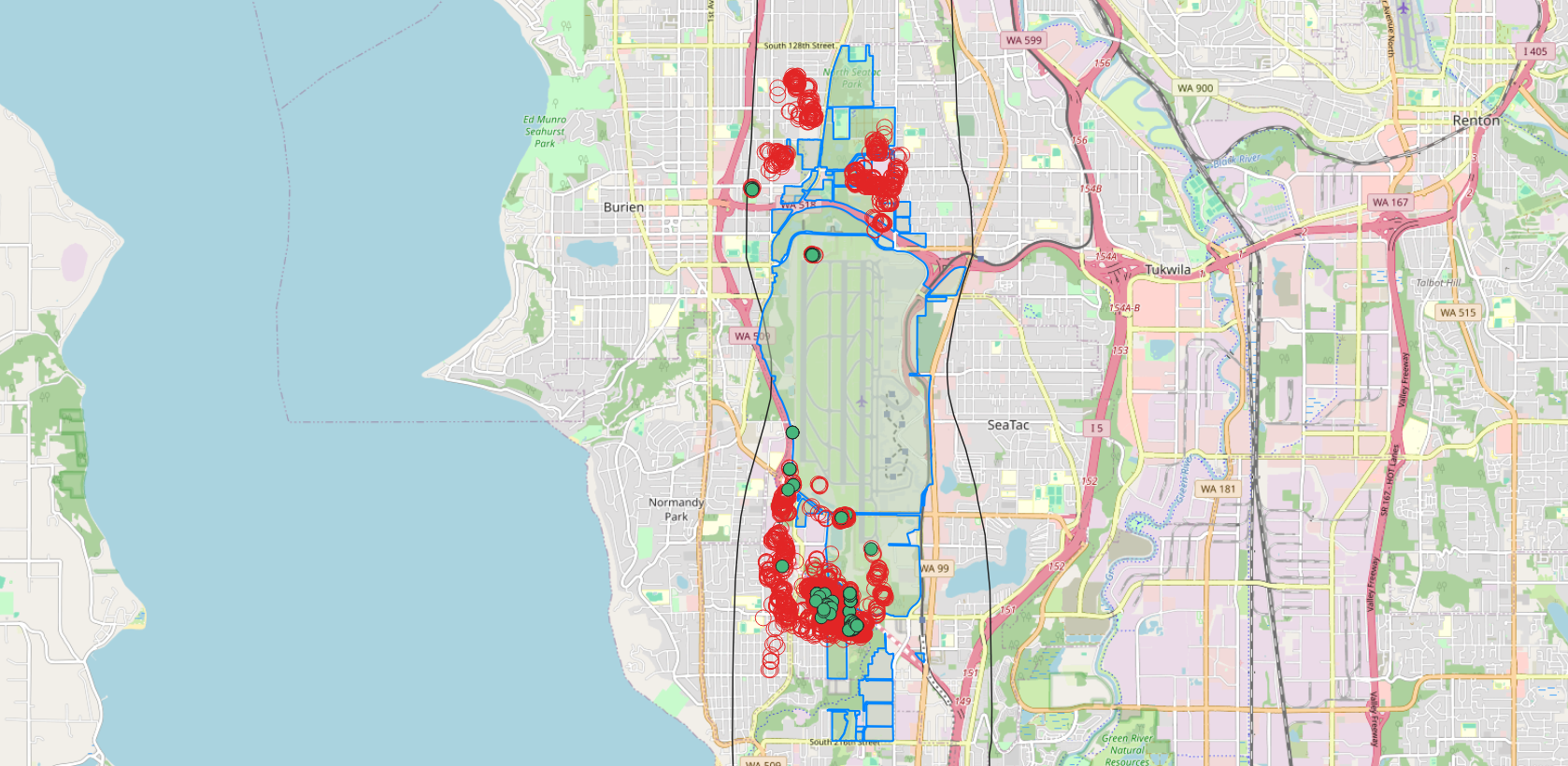
The Port defines the removal zone as extending 1,500 feet east and west and 3,500 feet north and south of the runway protection zones. This sweep covers residential yards, city parks, school properties, cemeteries, and wetlands in Burien, Des Moines, and SeaTac. - Declining but Ongoing Removals
In 2014, the Port removed more than 1,100 trees. By 2019, that number had dropped to 174. The most recent cycle (2024) identified around 220 trees slated for removal. The Port claims the number will decline over time as it replaces trees with shorter species, but every cycle brings fresh losses. - Replacement Standards Vary
The Port’s Landscape Design Standards require replacement actions (tree planting, invasive species removal, or forest maintenance), but the specifics depend on who owns the land. On Port property, a “four-credit” system applies, while in cities like Des Moines, replacement is governed by local rules.
What the SEPA Determination Says
- “No Significant Environmental Impact”
On August 21, 2025, the Port issued a Determination of Non-Significance (DNS). This means they believe the removals and replacements will have no probable significant adverse environmental impact and therefore do not require a full Environmental Impact Statement (EIS). - Short Comment Window
The public has until September 11, 2025 at 4:00 PM to submit comments. After that, the Port can formally adopt the DNS and proceed. Any legal challenge must be filed in King County Superior Court within 21 days of formal adoption.
Why This Matters
This program affects more than airport property. The removal area includes city parks, trails, school grounds, and private backyards. Heritage and landmark trees could be targeted. The checklist acknowledges that tree removals may occur in wetlands, steep slopes, and floodplains, with impacts to habitat, aesthetics, and community greenery.
Us the Port Properties and Trees Map!
 For a closer look, STNI has published an interactive GIS map of all trees the Port considers part of its inventory. This tool makes it easy to see which trees are identified, where they’re located, and whether they fall near your neighborhood.
Call to action
Submit Public Comments by September 11, 2025
- Email SEPA@portseattle.org (include your mailing address) or write to:
Steve Rybolt, Port of Seattle, Aviation Environment and Sustainability Department, P.O. Box 68727, Seattle, WA 98168. -
Use the GIS Map
Use our map to monitor trees near you are in the Port’s inventory.