Performance strong despite large capital spending and unexpected costs
At the April 22, 2025 Meeing (Packet), the Port of Seattle Commission heard several important presentations on the airport, including retail dining, a new baggage system, the Fly Quiet program, and a 2024 budget presentation delayed by last year’s cyberattack.
Our member made a public comment expressing concern that the next StART meeting will be closed to the general public.
StART (the Port’s “Stakeholder Advisory Round Table”) was meant as an FAA Community Roundtable. In the beginning (2018), Port Commissioners occasionally attended to observe how the process worked. But they were quickly discouraged by staff – told that their presence was a “distraction.” Today, it’s hard not to notice that none the five Port Commissioners are seen in airport-impacted communities except during election season. This year, three seats are up for election: Calkins, Hasegawa, Mohamed. That is worth remembering.
Commissioner Felleman made a closing comment about StART:
SLOA
In his opening report, Executive Director Metruck also announced that the Port of Seattle Commission had finalized its Signatory Lease-and-Operating-Agreements (SLOA V) it negotiates with every major airline operating out of Sea-Tac Airport. SLOAs are perhaps the most important business contracts the Port has, governing all major aeronautic revenue: fees charged to airlines for landings, terminal space, gates, and other services. Although each agreement is separate, they are negotiated together because the fees need to be calculated based on the total expected costs of everything necessary to run the airport over the life of the agreement. Without much fanfare, Metruck confirmed the agreements will take effect in 2025, running through 2034.
Baggage Optimization
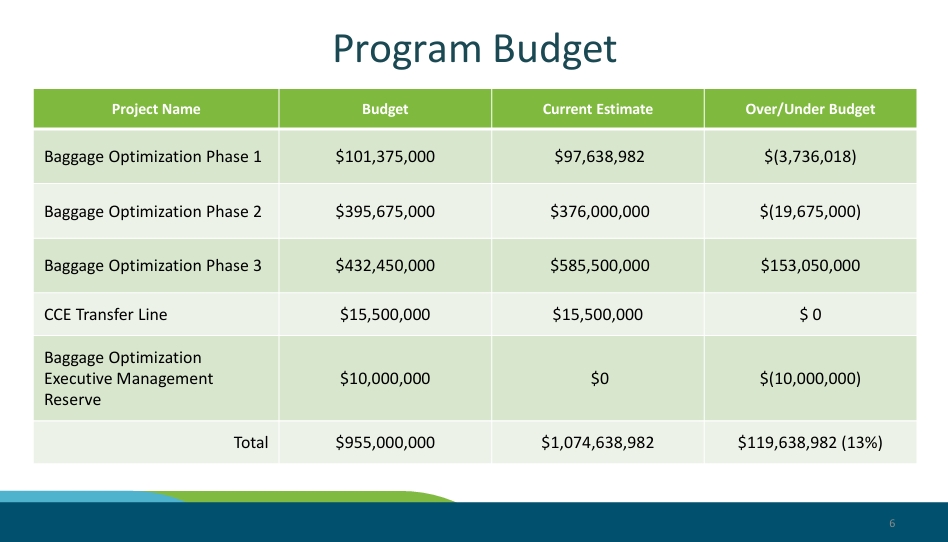 The Commission heard that the integration work on a $1B baggage system is coming to a conclusion. We always remind readers convenience means capacity. The airport would not be spending this kind of money simply to improve the traveling experience. The faster it can process baggage, the faster it can turn airplanes.
Fly Quiet
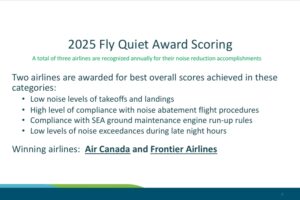 The Port also discussed the evolution of its Fly Quiet Awards , a voluntary program designed to recognize airlines that minimize noise. One small win from community pressure: the Port now releases a complete list of airlines scores, including those performing poorly. Unsurprisingly, late-night cargo and long-haul international flights tend to dominate the bottom of the list.
Of note: unlike the DNL65, which determine aircraft noise based on modeling, not actual sound measurements, the Fly Quiet program relies on data from four microphones stationed near the airport to determine noise exceedance and rank winners and losers.
In these real world tests, airlines which rely on Airbus aircraft consistently score better. We hope that Boeing adds this to its long list of fixes in order to regain public trust.
Although the Port touts Fly Quiet as “new,” similar voluntary noise efforts have existed since the 1980s, periodically revived based on community pressure builds. Without sustained public engagement from groups like StART, there is no guarantee the current program will persist.
2024 Finances
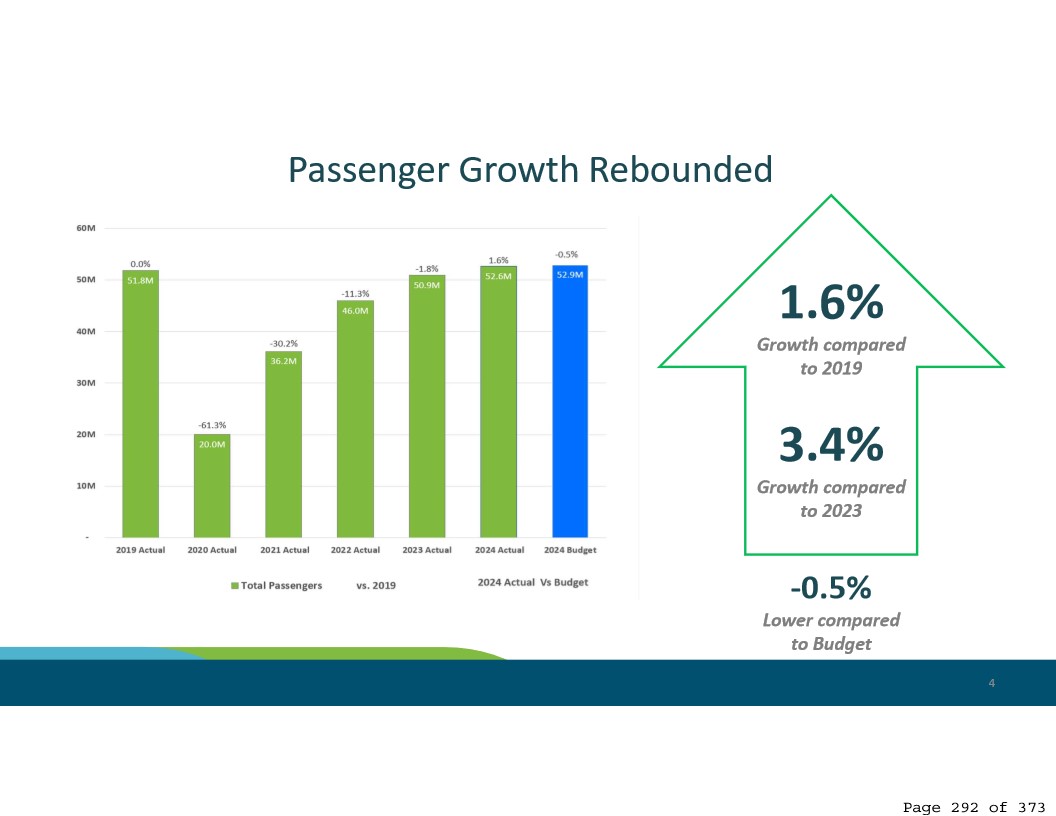
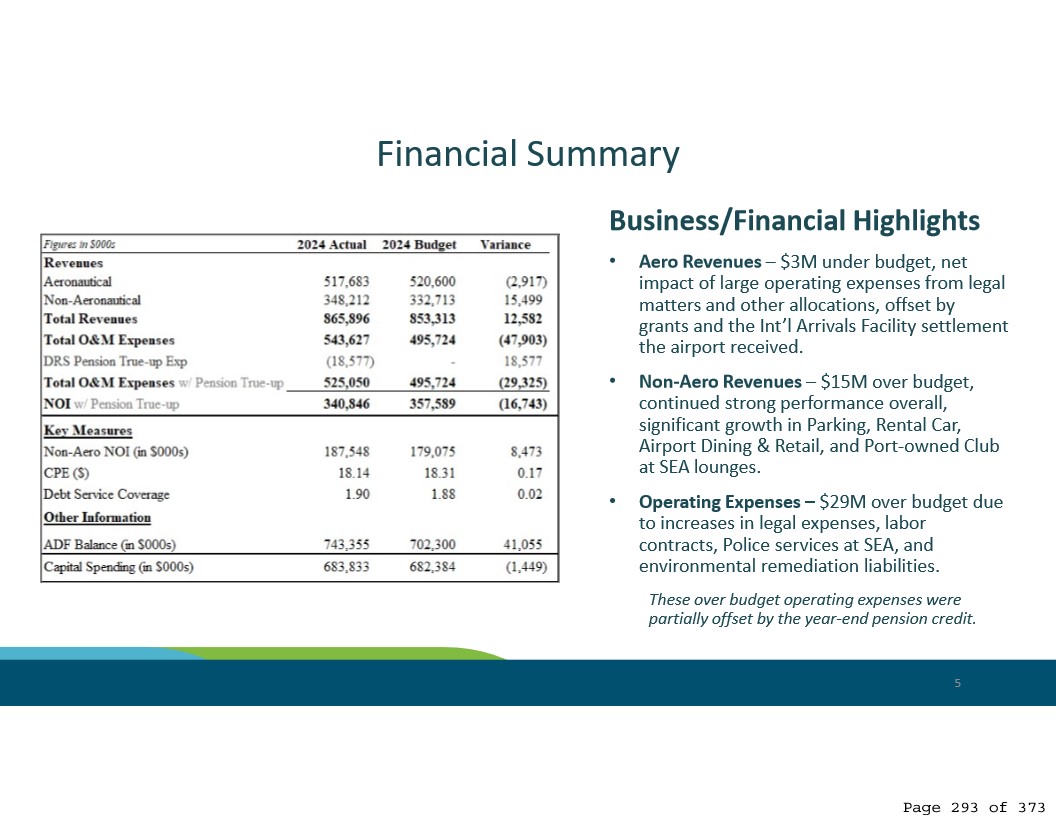
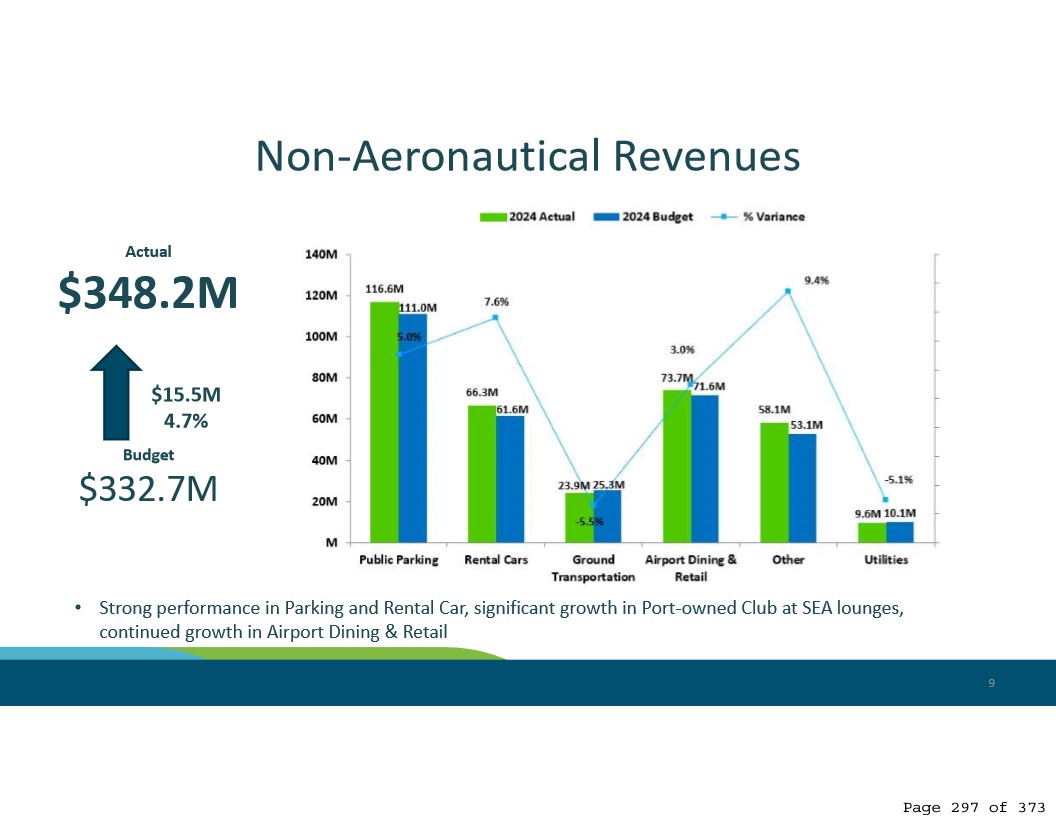
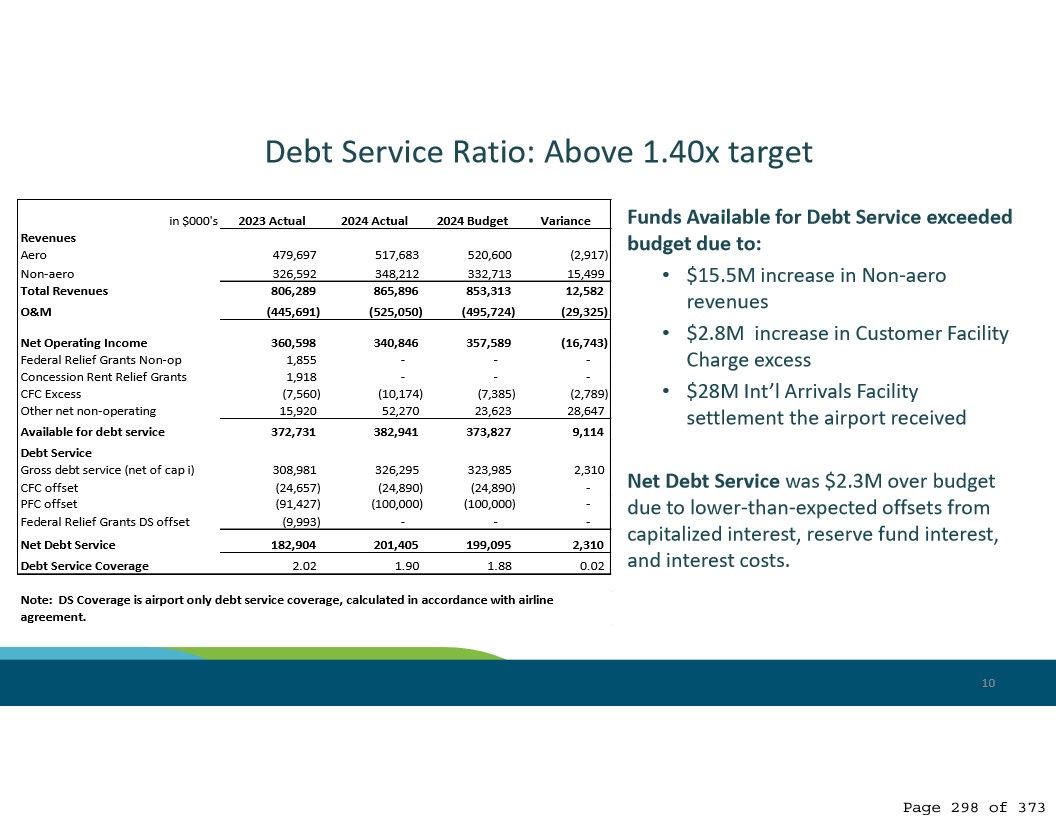
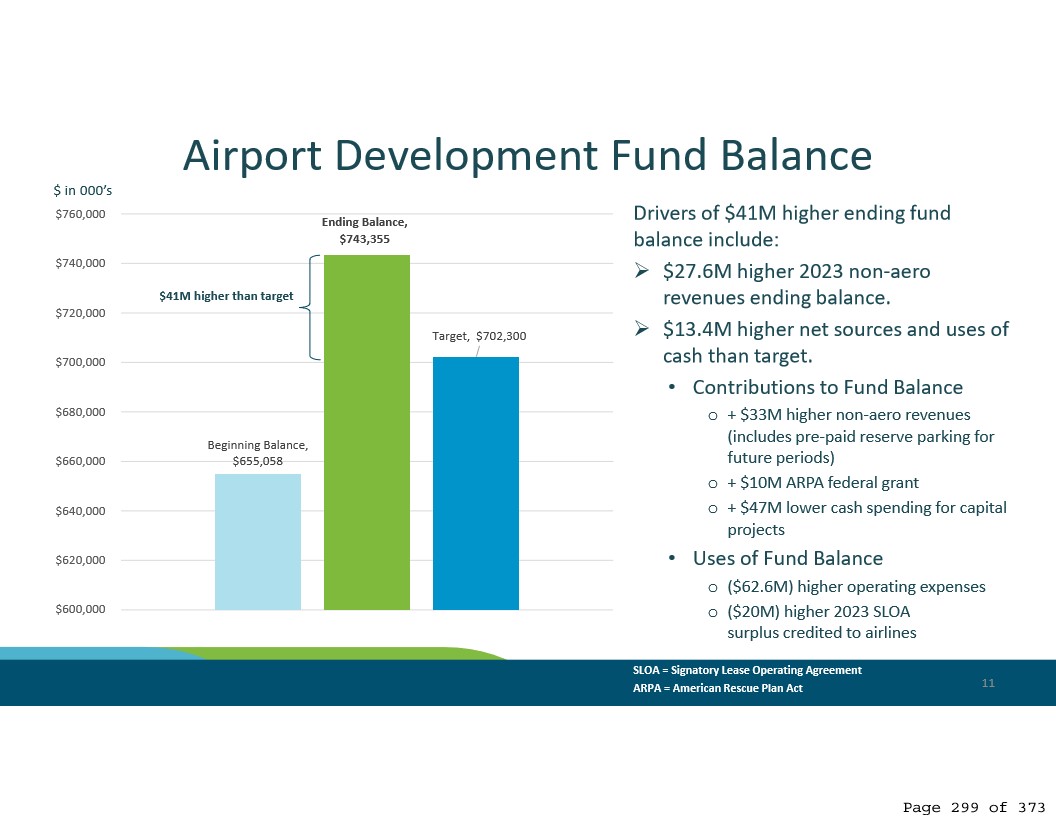
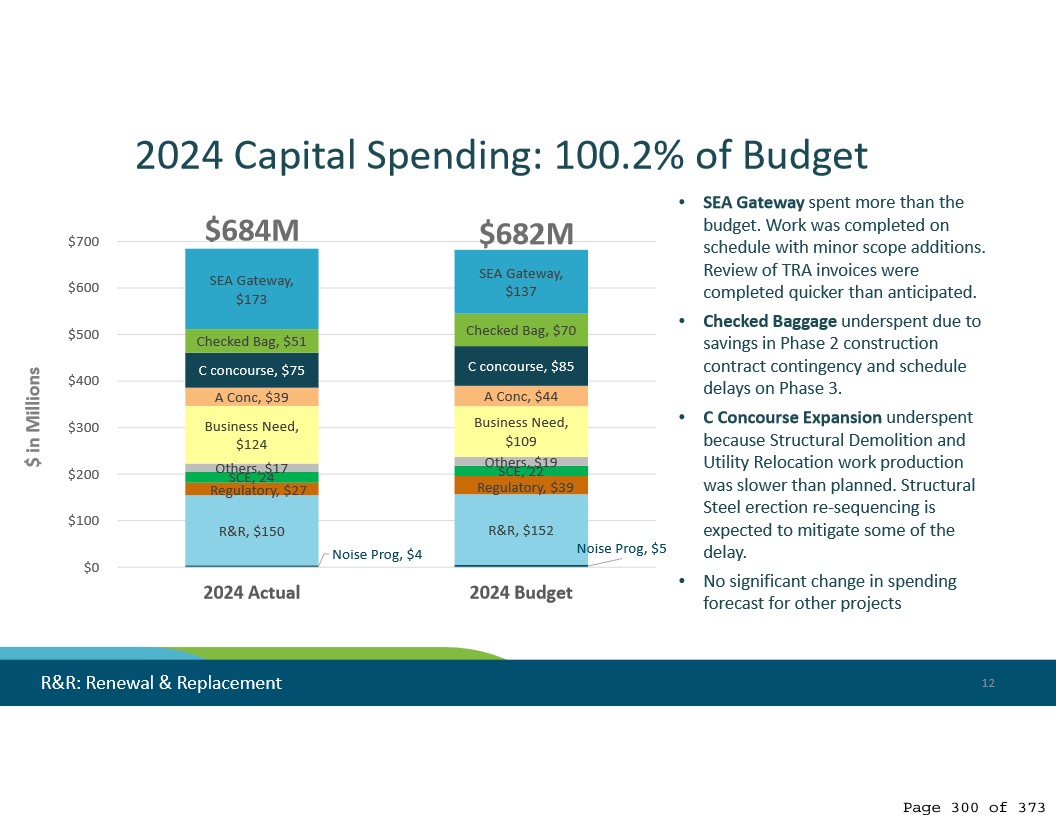
Meanwhile, the Port’s financial performance remains strong. Total revenues crossed $1B for the first time and they will only continue to go up. At the airport, record passenger volumes continue and the airport hit all its main targets – this despite the Sustainable Airport Master Plan (SAMP), the largest capital investment in its history — over five times the cost of the Third Runway. These massive expenditures are not acts of charity. The Port expects a return, not just in passenger volume but in long-term revenue growth. For those who keep insisting the airport cannot grow, just look at the numbers.
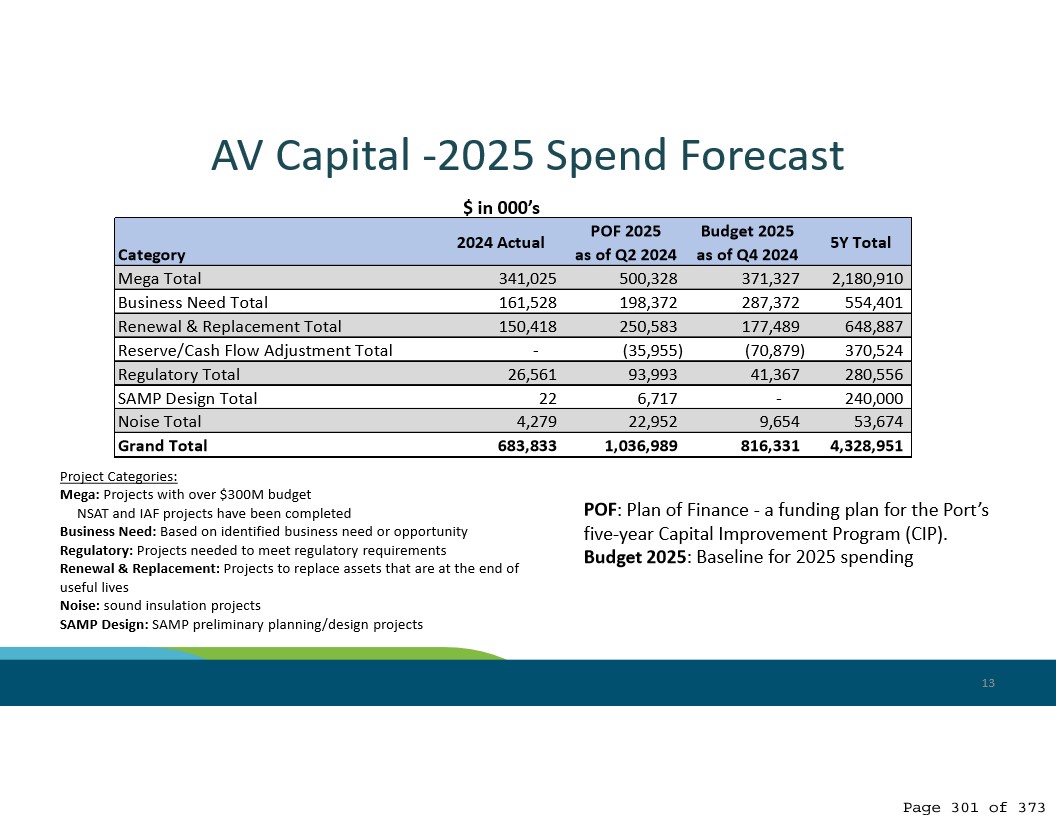
Non-operating costs create head winds
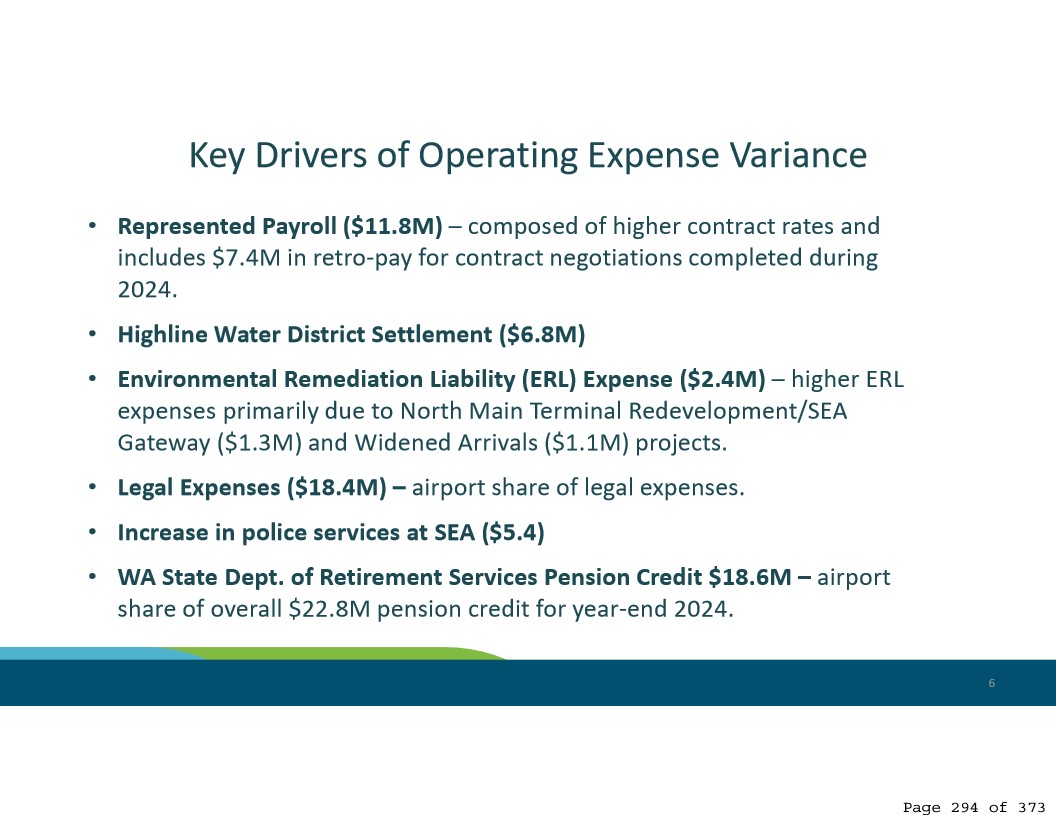
Environmental Remediation: The Port had several legal expenses across the empire which made results seem slightly weaker than they really are. For example, they are booking $91M in environmental remediation related to future cleanup costs at the Duwamish. Overall, these will run into many billions of dollars over many years. We mention them from time to time to demonstrate that the Port’s tremendous ability to absorb these kinds of mitigation and remediation costs.
PFAS: At the airport, the Port paid out a $6.8M settlement with Highline Water District over PFAS – which the Port signaled as problematic over a decade ago. This should be a canary in the coal mine for the rest of airport communities which only now have begun monitoring PFAS.
IAF Cost Overruns/Legal: Another legal expense came over a settlement on the flawed construction of the International Arrivals Facility (IAF). As we’ve reported many times, the IAF was built incorrectly — accommodating only 16 aircraft instead of the 20 required in the design. This mistake caused the project to triple in cost to over $1B, a legal dispute, and $18.4M in legal expenses.
Adding insult to injury, the IAF was built outside of the official SAMP (Sustainable Airport Master Plan) process, in a side agreement with the City of SeaTac. That decision prevented the project from obtaining regional oversight — and arguably contributed to the scale of the mistake.
This failure makes clear that every SAMP project must undergo stronger review. There are 31 projects in the SAMP. If there are mistakes of this size in one, surely there are plenty of others yet to be discovered. The SAMP represents billions of dollars and generational impacts on health, environment, and local economics.
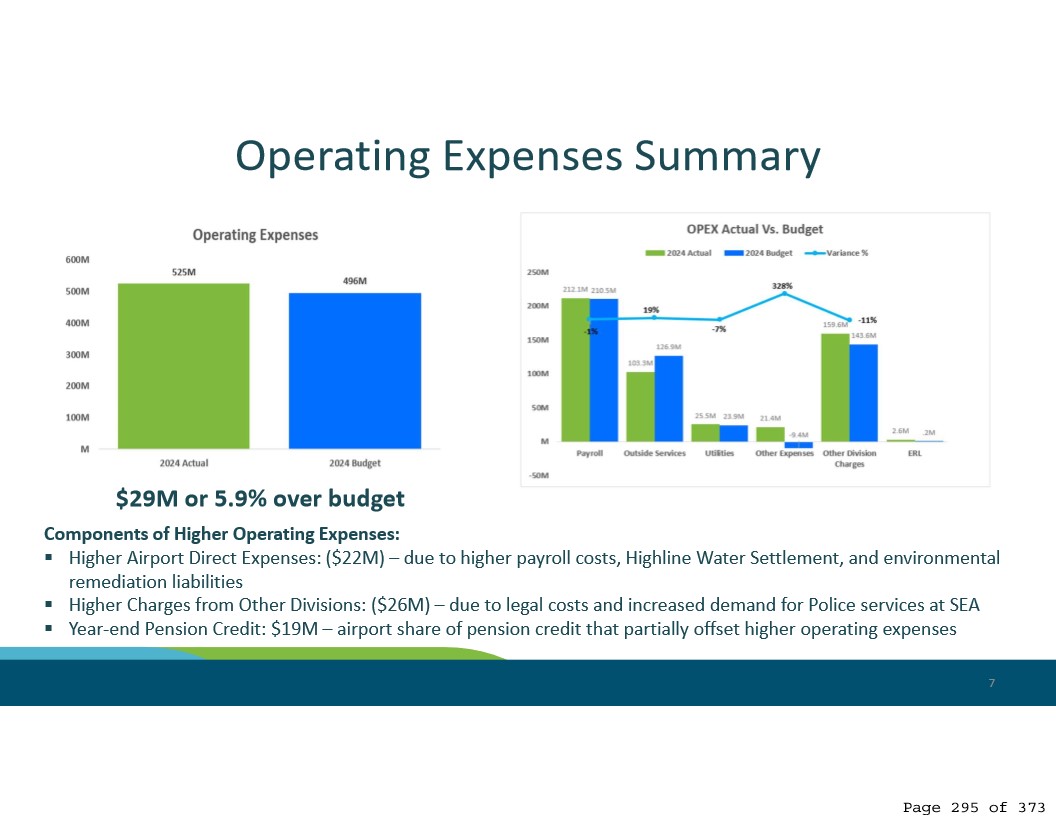
Policing: As a final note, airport policing was 16.7% ($5.4M) over budget. No explanation was provided, but given the increase in passenger volumes, we are concerned. Community-wide public safety costs are one of the negative externalities of any major airport that go unacknowledged. If the Port is experiencing an uptick in policing activity, surrounding communities should be monitoring closely for knock-on effects.
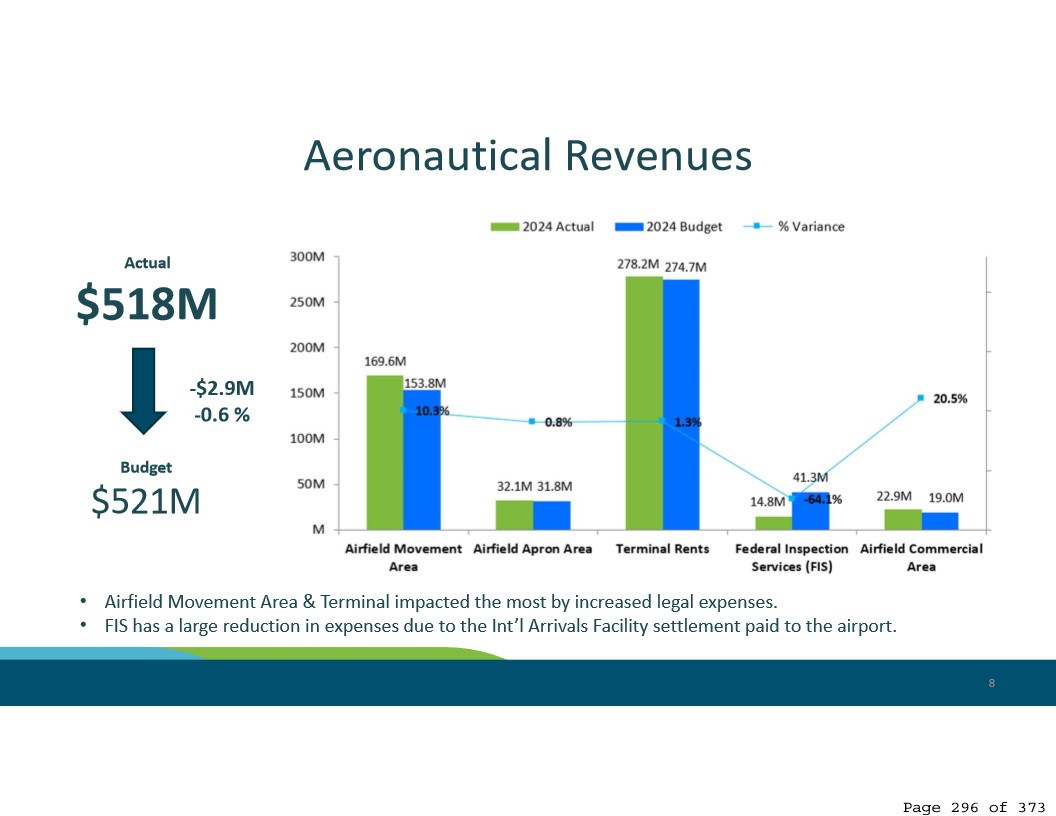
Sam Cho made a comment that airport revenues were ‘essentially a wash’. They’re supposed to be. Under FAA and state law, the Port is not supposed to ‘profit’ from essential airport operations. SLOA agreements and capital spending are meant to accurately cover costs.
However, unlike a for profit corporation, the Port is a monopoly. There are no penalties or consequences for cost overruns, or legal gaffes. If the IAF (or Third Runway) go wildly over-budget? If there are legal expenses from PFAS or contract disputes? Even if airlines experience wild swings in revenue–as they do every few years? Somehow, operations just keep heading up, up and away.
The Port can absorb these costs almost at will – what airline can take its routes somewhere else? Because there are no shareholders to be accountable to, no news coverage to speak of, candidates for commissioner have no reason to make this an issue. But no, Commissioner, aeronautical revenue is far from being a wash.
What does make money? Parking. Retail. Rentals. The non-aeronautical revenue. Where there is a profit interest, the Port tends to act much more like a business. Real estate–a tiny subset of Port operations always seems to get much more interest from Port Commissioners. At today’s meeting there were several times more questions regarding those topics than the entire aviation budget.
Coda: Out of Sight, Out of Mind
 One criticism we receive from the Port is our constant focus only on airport issues, when many (if not most) Commission meetings are at least half about non-airport matters. The complaint is that we are not providing ‘complete coverage’. It is true that the Port is a very complex beast, with four main divisions, each which could (and probably should) have its own governing body.
We focus on the airport because that is our issue and that is where over 80% of the Port’s revenues derive. And with each year, that percentage keeps rising.
But though the airport is over 80% of the money, the Port does not spend 80% of its efforts on the airport. The Port has been praise for its almost ‘miraculous’ ability to optimize airport operations – to continue to achieve growth on the smallest footprint of any major airport. The seaport and all the Port’s myriad economic development programs still take up half of the Commission’s time and that is indicative of a larger truth.
With each passing year, the Port of Seattle is becoming, functionally, a large airport with a huge boat anchor of much smaller businesses that require a massive amount of effort and cannot be similarly optimized.
The political bases that elect commissioners tend to be centered on Seattle/Waterfront businesses and that is, in fact, where the personal interests of a majority of the Commission lie. It is also notable that the Port’s HQ remains at Pier 69.
We mention all this from time to time because, in addition to all the other challenges we have in achieving justice, one large one is simply getting the Port Commissioners to focus on Sea-Tac.
Out of sight, out of mind.
“I want to conclude by addressing…the START Committee [meeting] being closed. When the Port of Seattle Commission holds a strategic planning meeting, it’s open to the public — and it should be. This is a public port; we have nothing to hide.
The START Committee is a public entity meant to give communities concerned with or interested in airport operations the opportunity to see what’s going on. Planning for the future of this program — especially the activities for the coming year — is something the public should absolutely have visibility into, if not the opportunity to comment on.
I’m deeply concerned. I understand that the public isn’t allowed into the technical subcommittees, and they can’t participate in the Noise Committee, which frankly drives me nuts. They should at least be allowed to observe. But the idea that they can’t even sit in on a planning committee for the following year’s program development — I find that to be contrary to the Port’s mission.
I realize the Port of Seattle isn’t the only member of the START Committee. But the reason it exists is because of us, and I believe we should be able to insist that the public can at least observe — if not provide public comment. So thank you, for bringing that to our attention.”