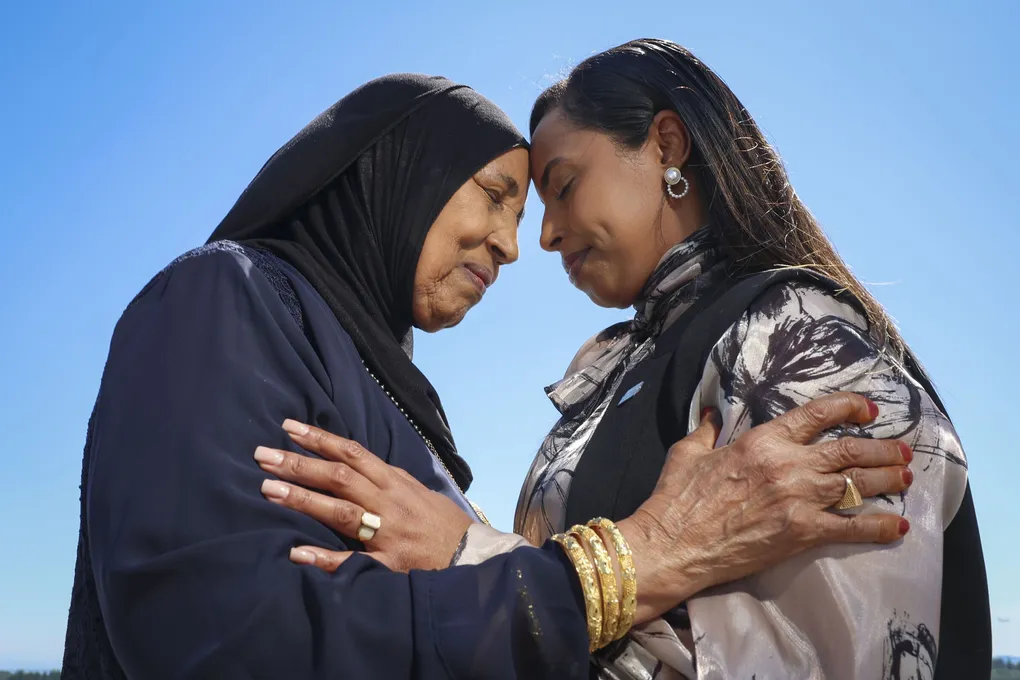
Asha Heid, 73, and her daughter, Port of Seattle Commissioner Hamdi Mohamed, right, at Seattle-Tacoma International Airport in July. “I carry her stories and her values in the way that I do my work,” Mohamed said of her mother, who fled civil wars in Somalia to Kenya with her children before immigrating to the United States. (Ivy Ceballo / The Seattle Times)

Seattle Times staff reporter
Hamdi Mohamed manages immigration issues for a major American city and directs policy at one of the country’s busiest airports. She’s a political rising star who wields significant influence across the Seattle area.
Yet Mohamed’s mother started carrying her U.S. passport in her purse this year, because she’s anxious about attempts by President Donald Trump’s administration to mass deport immigrants and restrict international travel.
“It’s what she told me the other day — ‘I’m taking no chances,’” Mohamed said about her Somali American mother, a longtime naturalized U.S. citizen.
The conversation helps explain not only what motivates Mohamed but also what local government leaders like her can’t control, as federal agents detain travelers at Seattle-Tacoma International Airport and residents on the streets of the region.
Although she works as director of the Seattle Office of Immigrant and Refugee Affairs and serves part time as an elected Port of Seattle commissioner, Mohamed’s power to counter Trump’s agenda is limited in critical ways. It’s a situation many blue-state officials and activists are struggling with.
“My day-to-day work looks like making sure that people know their rights,” said Mohamed, 35, who took that approach with her mother. “I’m like, ‘Mom, you don’t have to (carry your passport). But maybe have a picture of it.’ ”
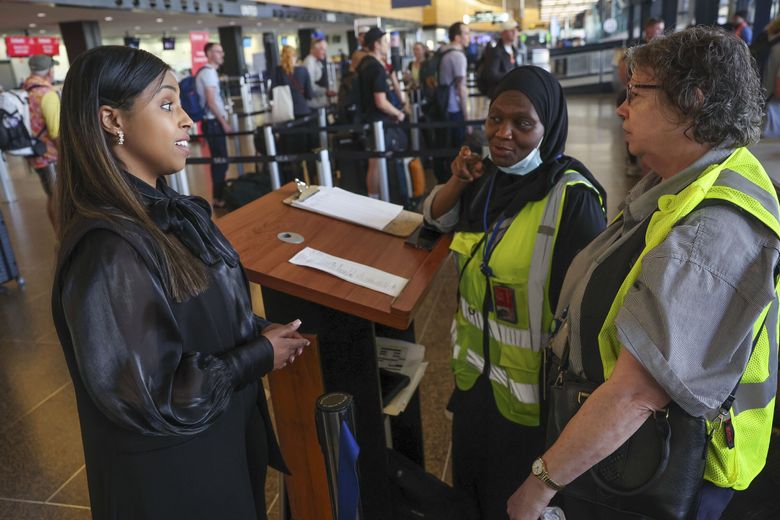
Port of Seattle Commissioner Hamdi Mohamed, left, who is also director of the Seattle Office of Immigrant and Refugee Affairs, speaks with airport workers Evelyn Makukwi and Carol Worman at Seattle–Tacoma International Airport in July. (Ivy Ceballo / The Seattle Times)
Port of Seattle Commissioner Hamdi Mohamed, left, who is also director of the Seattle Office of Immigrant and Refugee Affairs, speaks with airport workers Evelyn Makukwi and Carol Worman at Seattle–Tacoma International Airport in July. (Ivy Ceballo / The Seattle Times)
Refugee roots
Mohamed was born in Somalia but doesn’t remember the civil war that her family fled. Instead, some of her earliest memories are of going to elementary school in Seattle’s Central District, after her family arrived here as refugees.
“I watched my mom juggle multiple jobs,” including as a car-rental attendant at the airport and a day care teacher, she said in an interview this summer.
Mohamed drew on those stories later, in jobs with U.S. Rep. Pramila Jayapal, D-Seattle, and at King County, leading an effort to train 15,000 employees during Trump’s first term on the county’s “don’t ask” policy for citizenship status.
She unseated an incumbent Port commissioner in 2021, saying she’d bring a community focus to the agency that oversees the airport and Seattle’s shipping terminals. The Port has since doubled its workforce-development spending, said Mohamed, running unopposed for reelection this year.
Navigating a volatile immigration landscape, both at the Port and in the Seattle City Hall role Mohamed started in 2022, has proved more challenging. A surge of asylum-seekers through Seattle to a Tukwila church put Mohamed in an uncomfortable spot in 2023, as she balanced pleas to solve the problem with City Council funding constraints and Mayor Bruce Harrell’s guidance.
“I would never say Hamdi didn’t do enough. I would say she had an uphill battle,” partly because council members didn’t want Seattle involved, said the church’s pastor, the Rev. Jan Bolerjack. “She was doing what she could within her fence line.”
Following months of chaos, Mohamed helped coordinate a multigovernment task force and the Washington Legislature allocated $32 million for housing and legal aid, she said.
“Soft power”
With Trump now back in the White House, Mohamed is walking another tightrope, balancing Seattle’s pro-immigrant political values alongside anxieties about civil unrest and restraints on how the city can take action.
Her office has developed a $240,000 “rapid response” program to help local nonprofits provide Seattle immigrants with legal support, civil rights education and safety planning amid waves of detentions and deportations.
But there isn’t much Mohamed can do to stop U.S. Immigration and Customs Enforcement from detaining people at immigration hearings, she noted, partly because the city doesn’t have jurisdiction in the federal courthouse.
“People do message us about it all the time, and we have to explain,” Mohamed said, advising immigration crackdown critics to document and alert advocates about street arrests while staying safely out of the way.
It’s similar at the airport, where border agents have at least twice detained green card holders flying home from the Philippines. Mohammed can’t halt the practice, she said. The Port Commission may soon pass a resolution requesting transparency from the feds, directing staff to track immigration-related interactions and reaffirming the Port’s commitment to partner with community organizations that serve immigrants, among other things.
“We don’t have direct control over these federal agencies. However, we can still make some impact and use our soft power” by amplifying travelers’ stories and pressing the agencies to uphold travelers’ rights, Mohamed said.
The Port Border agents have the ability to schedule deferred inspections rather than detain people suddenly at the airport for days, she added.
“Why aren’t we exercising that? Because I personally do not want people to be detained at our airport if they don’t need to be,” Mohamed said.
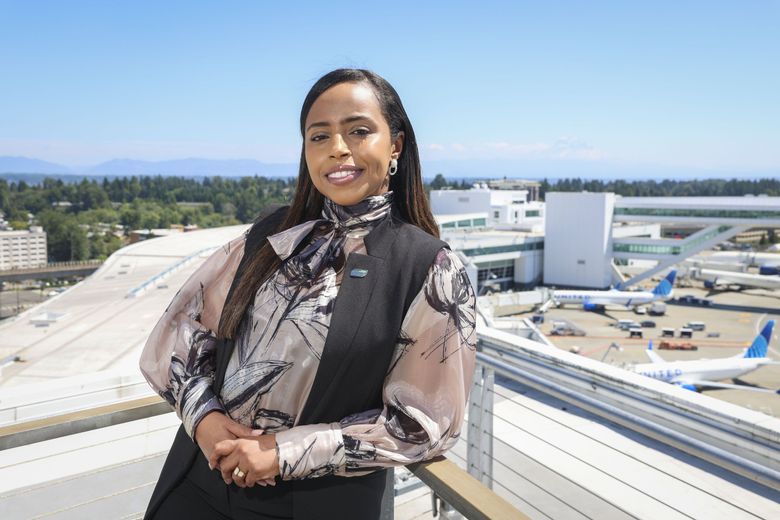
Port of Seattle Commissioner Hamdi Mohamed at Seattle-Tacoma International Airport in July. The international arrivals terminal is behind her. (Ivy Ceballo / The Seattle Times)
Port of Seattle Commissioner Hamdi Mohamed at Seattle-Tacoma International Airport in July. The international arrivals terminal is behind her. (Ivy Ceballo / The Seattle Times)
Mounting pressure
Trump’s new travel ban includes Somalia. Had it existed in the 1990s, the policy could have stopped Mohamed’s family from coming to the U.S., Mohamed said. Some of her constituents may agree with the president, while many of her supporters are counting on her to push back as hard as possible.
Roxana Norouzi, who leads a Seattle-based immigrant-rights nonprofit, talks with Mohamed on a regular basis. She sees Mohamed pulling inside the political system to help advocates pushing outside. It’s not always easy.
“I think she definitely feels the pressure” to do more, especially from immigrant community members with comparable backgrounds, said Norouzi, executive director at OneAmerica. “In a way, we’re all feeling that right now.”
These days, Mohamed said she thinks about the gritty example set by her mother, who escaped war zones multiple times before reaching the U.S. As a child, Mohamed helped her mother study for her naturalization test.
The day her mother returned home after passing the test, “She came in and she was just lit up with excitement and she said she was a U.S. citizen,” Mohamed remembered. “We were all so happy, jumping up and down.”
This coverage is partially underwritten by Microsoft Philanthropies. The Seattle Times maintains editorial control over this and all its coverage.
Daniel Beekman: 206-464-2164 or dbeekman@seattletimes.com. Daniel Beekman is a reporter at The Seattle Times, where he covers politics and communities, telling stories that explain how government decisions affect people across Washington.